Yes, chickens can eat small amounts of plain garlic, but there is little reason to make it a regular part of a backyard flock’s diet. Think of garlic as an optional extra rather than an essential supplement.
That distinction matters because garlic for chickens is often promoted online as a natural dewormer, immune booster, respiratory remedy, or disease treatment. Research has explored garlic-derived compounds in poultry, but those controlled studies do not establish a home dosing schedule for raw cloves, garlic powder, or garlic water.
For a small backyard flock, the safer priority is much simpler: provide an age-appropriate complete poultry feed, clean drinking water, and only modest extras that do not displace the balanced ration. University of Georgia Cooperative Extension and Mississippi State University Extension both emphasize that complete poultry feeds are formulated to supply the nutrients chickens need and that excessive extras can upset that nutritional balance.
YardRoost is not a veterinary service. Garlic should not be used to diagnose, prevent, or treat illness in place of qualified poultry care.
Can Chickens Have Fresh Garlic?
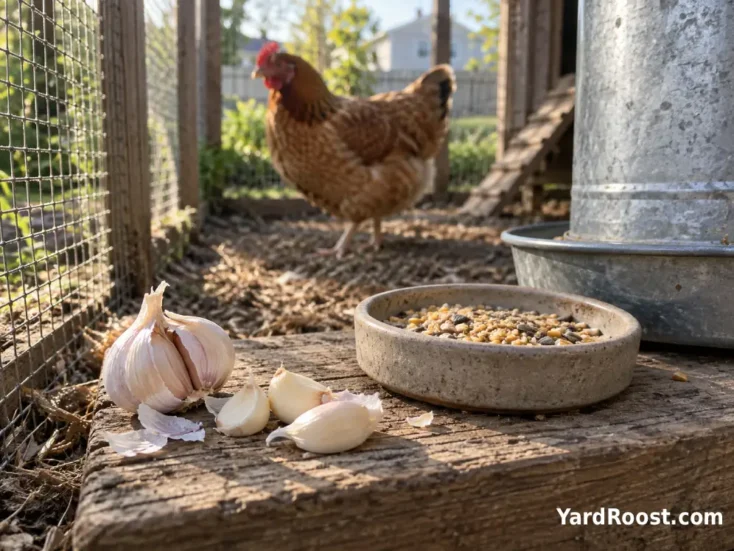
Healthy adult chickens may peck at plain raw garlic, although individual birds vary. Some investigate almost anything offered in the run; others may leave strongly flavored foods untouched.
If you decide to offer garlic, keep it firmly in the treat category. A few small pieces mixed into an occasional vegetable treat is a more sensible approach than adding large amounts to the feeder. Your chickens should still show normal interest in their regular ration.
The important question is not whether garlic contains potentially interesting plant compounds. It is whether adding it improves the overall diet. A commercial complete feed has already been formulated around chickens’ protein, energy, vitamin, and mineral requirements. Mississippi State University Extension specifically cautions that adding other ingredients can dilute that nutritional balance.
If the flock starts filling up on extras instead of its normal feed, pull back on the treats. Our broader layer feed guide explains why the complete ration should do most of the nutritional work.
Is Garlic Good for Chickens?
Garlic contains biologically active sulfur compounds, and researchers have investigated garlic-related ingredients as poultry feed additives. That makes the subject more complicated than simply calling garlic either useless or a proven health supplement.
USDA Agricultural Research Service studies have examined defined garlic metabolites and other Allium-derived ingredients in commercial broiler research. Some experiments reported changes in immune responses or intestinal health measures. However, the researchers were testing specified compounds, controlled diets, and experimental conditions—not telling backyard keepers to put crushed grocery-store garlic into a waterer.
For a backyard flock, that means the research is interesting but should not be stretched into claims that garlic:
- prevents worms or other parasites,
- treats bacterial or respiratory disease,
- replaces vaccines, medication, or veterinary care,
- guarantees stronger immunity or better egg production.
A YardRoost rule of thumb is to separate an interesting feed ingredient from a treatment. Garlic may fall into the first category. It should not be promoted as the second.
There is another reason to avoid the more-is-better approach. Garlic belongs to the Allium genus. The Merck Veterinary Manual documents dose-related Allium toxicosis in several animal species and notes particular concerns with concentrated products such as powders, although it does not establish a toxic backyard-chicken garlic dose. That absence of a useful chicken-specific home dose is a good reason to stay conservative rather than experiment with concentrated amounts.
How to Offer Garlic Without Disrupting the Diet
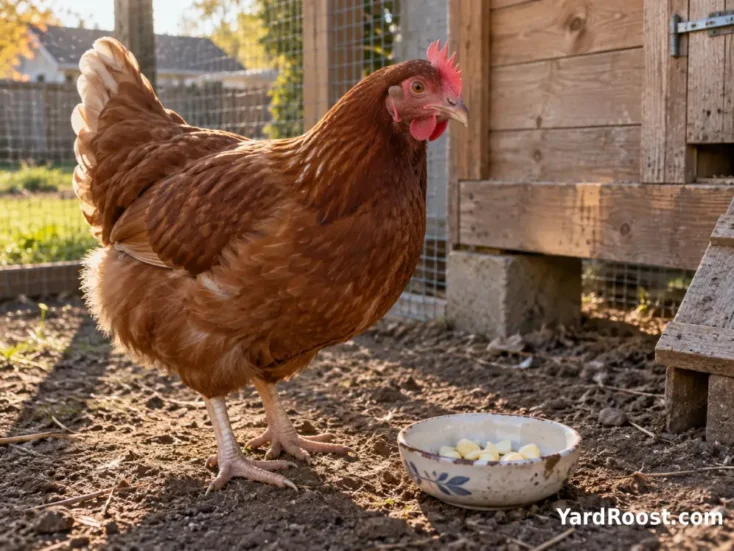
If you want to see whether your chickens like fresh garlic, keep the experiment simple. You do not need a recipe, supplement schedule, or complicated preparation.
- Use plain, fresh garlic without salt, oil, sauces, or seasoning blends.
- Offer a small amount as part of an occasional treat rather than mixing it through the main feed.
- Keep the birds’ normal complete ration freely available.
- If the chickens consistently ignore the garlic, remove it instead of trying to persuade them to eat it.
- If treats are reducing interest in regular feed, stop the extras and return to the normal ration.
Do not leave wet chopped foods sitting around the run long enough to become spoiled or dirty. University of Georgia Cooperative Extension advises that food scraps offered to chickens should be fresh and should never include spoiled feedstuffs.
After handling chickens, feeders, waterers, or equipment in their environment, wash your hands with soap and water. The CDC notes that apparently healthy backyard poultry can still carry Salmonella and recommends handwashing after contact with birds, eggs, feed or water equipment, and their surroundings.
Garlic Powder and Garlic Water Need More Caution
Garlic powder for chickens deserves more caution than a few pieces of fresh garlic because drying and grinding produces a concentrated ingredient. There is no widely accepted Extension-backed backyard dosing schedule that we would recommend following at home.
The same applies to garlic water. USDA research has investigated defined garlic-related preparations in poultry water and feed, but experimental applications should not be converted into DIY dosing instructions. In at least one USDA-reported experiment involving garlic and cinnamaldehyde, the researchers themselves described further studies and dose testing as necessary.
| Garlic Form | YardRoost Approach | Why |
|---|---|---|
| Fresh plain garlic | Optional occasional extra | Easy to keep separate from the balanced ration |
| Plain garlic powder | Do not routinely dose | More concentrated and no practical backyard dose is established |
| Garlic water | Prefer plain drinking water | Reliable water intake matters more than an unproven supplement routine |
| Garlic supplements or extracts | Use only with qualified guidance | Concentration varies and research products are not interchangeable |
For everyday care, plain, clean drinking water is the uncomplicated choice. If you ever add something to a waterer and notice birds hesitating to drink, replace it with plain water rather than waiting to see whether they adapt. This is especially important during hot weather, when maintaining normal water intake matters.
A common mistake we see is assuming that something described as natural can be added indefinitely without downside. Natural ingredients still contain active chemicals, and concentrated preparations are not automatically safer than commercial products.
Can Chickens Eat Garlic Bread?
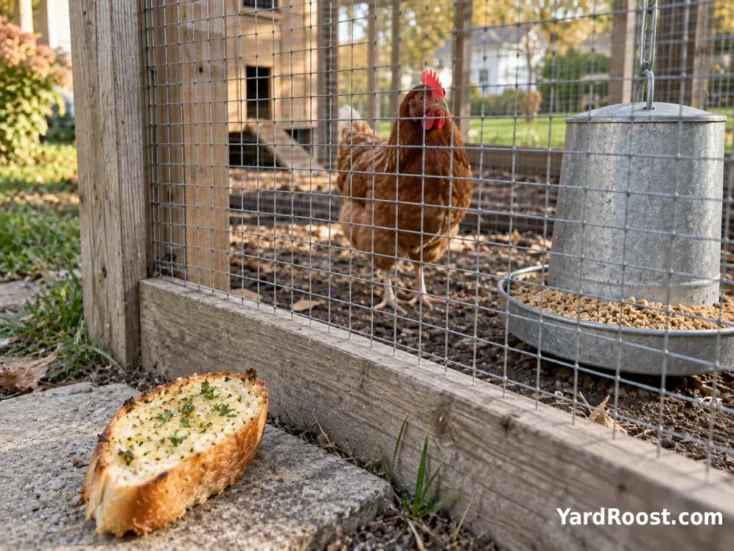
Garlic bread is a different question from plain garlic. A chicken grabbing a tiny crumb is unlikely to turn an ordinary feeding mistake into an emergency, but garlic bread is not something we would deliberately use as a flock treat.
Most garlic bread is primarily refined bread plus butter or oil, salt, and seasonings. None of that improves a chicken’s balanced ration, and seasoned products can contain additional ingredients you did not intend to feed.
Bread itself may be offered only as an occasional extra in some Extension guidance, but it should never crowd out nutritionally complete poultry feed. Spoiled or moldy bread should not be fed at all.
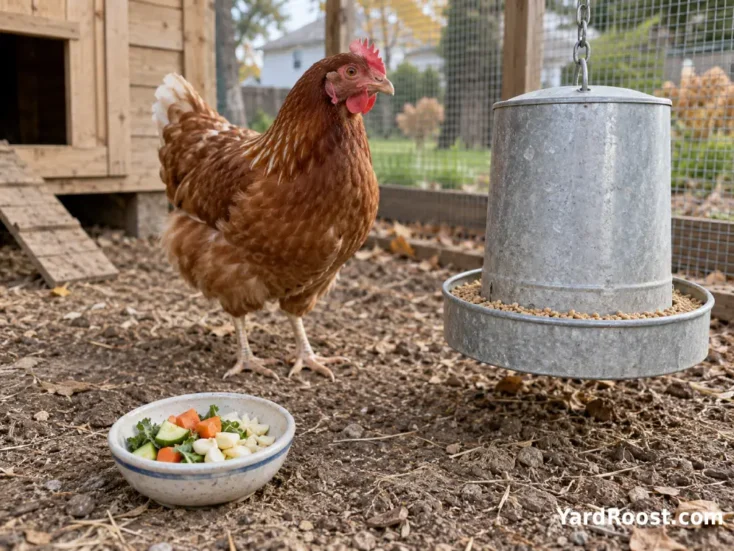
If you have vegetable scraps you want to share instead, check our guide to foods chickens can eat and keep variety secondary to the flock’s regular feed.
Common Mistakes to Avoid With Garlic
Most garlic problems in backyard flocks come from expectations rather than from the occasional tiny food scrap. The trouble starts when an optional ingredient becomes a routine treatment plan.
- Do not replace complete feed with homemade garlic-heavy mixtures.
- Do not assume more garlic means more benefit.
- Do not use garlic powder as a homemade medication.
- Do not add garlic to every source of drinking water if birds have no plain-water option.
- Do not use garlic to delay veterinary help for a sick chicken.
- Do not deliberately feed heavily salted, oily, spoiled, or moldy garlic foods.
Another common mistake is seeing one promising poultry study and copying the ingredient at home. Commercial poultry research may use purified compounds, carefully formulated diets, controlled environmental conditions, and measured concentrations. A clove tossed into a backyard waterer is not the same intervention.
For beginners, the safer move is usually boring in the best possible way: balanced poultry feed, dependable water, sensible treats, sanitation, and close observation of the birds.
When Garlic Is Not the Answer
If a chicken is lethargic, stops eating, develops diarrhea, has difficulty breathing, shows unusual swelling or discoloration, becomes uncoordinated, or suddenly declines, garlic should not be your troubleshooting strategy. Those signs can have many possible causes, and guessing from symptoms alone can delay appropriate help.
USDA APHIS lists loss of energy or appetite, respiratory signs, diarrhea, coordination problems, swelling, discoloration, changes in egg production, and sudden unexplained death among warning signs that poultry owners should take seriously. Some of these signs can occur with highly contagious poultry diseases, so unusual illness across several birds deserves prompt professional guidance.
Safe first steps are to separate an obviously ill bird from the flock when practical, minimize unnecessary movement between poultry areas, provide the bird’s normal feed and plain water, and contact an avian or poultry veterinarian, your state veterinarian, or a local Cooperative Extension office. USDA’s Defend the Flock guidance also urges owners to report sick or dying birds rather than waiting when serious infectious disease is a possibility.
Garlic may be a food ingredient. It is not a substitute for diagnosis, biosecurity, or veterinary care.
The Bottom Line on Garlic for Chickens
So, can chickens eat garlic? Yes, a healthy adult chicken can be offered a small amount of plain fresh garlic as an occasional extra. There is no good reason, however, to make garlic a major part of the diet or to treat it as an everyday health product.
The practical hierarchy is straightforward. Start with a nutritionally complete poultry feed. Keep plain drinking water available. Use treats sparingly. If you want to offer a little fresh garlic and the chickens enjoy it, fine. If they ignore it, nothing important is missing.
We would be more cautious with garlic powder, extracts, and garlic in chicken water because concentrated ingredients are harder to judge and authoritative backyard-flock guidance does not provide a clear home dosing standard. Research into garlic-derived poultry feed additives is interesting, but it does not turn garlic into a proven home remedy.
If your real concern is worms, respiratory symptoms, poor appetite, diarrhea, abnormal behavior, or another health problem, skip the DIY garlic treatment and get advice from an avian veterinarian, poultry veterinarian, state animal-health professional, or local Extension office. Your flock will benefit far more from accurate care than from another supplement in the feeder.