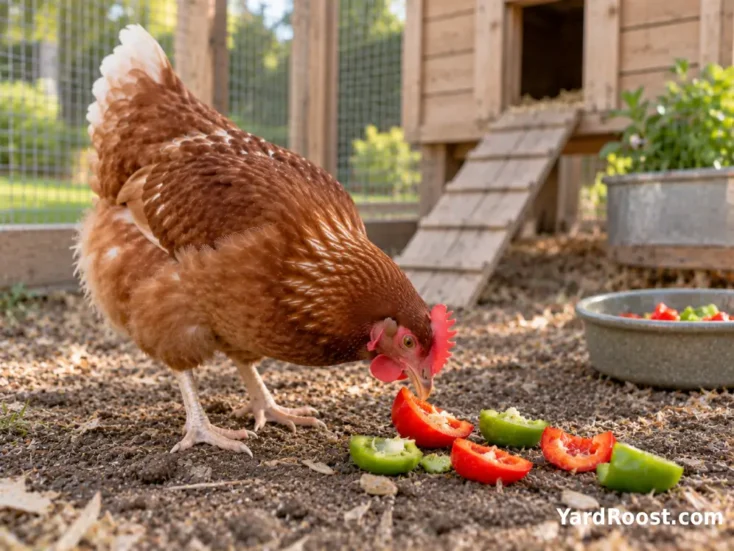
Yes, chickens can eat capsicum. For US readers, that usually means sweet or bell peppers—the familiar green, red, yellow, and orange peppers found in grocery stores and backyard gardens. The fresh pepper fruit can be offered to healthy adult chickens as an occasional treat, and you generally do not need to remove the seeds.
Capsicum should still be treated as a bonus food rather than part of the flock’s main diet. Penn State Extension recommends feeding chickens a complete ration appropriate for their age and production stage, while Extension guidance on fruits and vegetables emphasizes keeping treats moderate so they do not dilute a balanced diet.
There is one useful distinction for gardeners: feeding a harvested pepper is different from letting chickens eat whatever parts of a pepper or nightshade plant they find. For the simplest, safest routine, offer the pepper fruit and keep stems, garden plant material, spoiled produce, and heavily seasoned kitchen scraps out of the treat bowl.
Capsicum Is Fine As an Occasional Chicken Treat
Bell peppers belong to the genus Capsicum. North Carolina State Extension notes that birds can eat the fruits of Capsicum annuum and are not affected by capsaicin in the same way mammals are. That also helps explain why birds readily eat and disperse pepper fruits in nature.
For a backyard flock, though, the useful question is less about whether peppers contain something beneficial and more about whether they fit into a balanced feeding routine. They do—as a small extra. A couple of leftover pepper pieces from dinner prep can become useful flock enrichment without turning the treat bowl into a substitute for poultry feed.
You can offer capsicum raw. Chickens will usually peck manageable pieces from a halved pepper, or you can cut it into strips or chunks if that makes cleanup easier.
Are Capsicum Seeds Safe for Chickens?
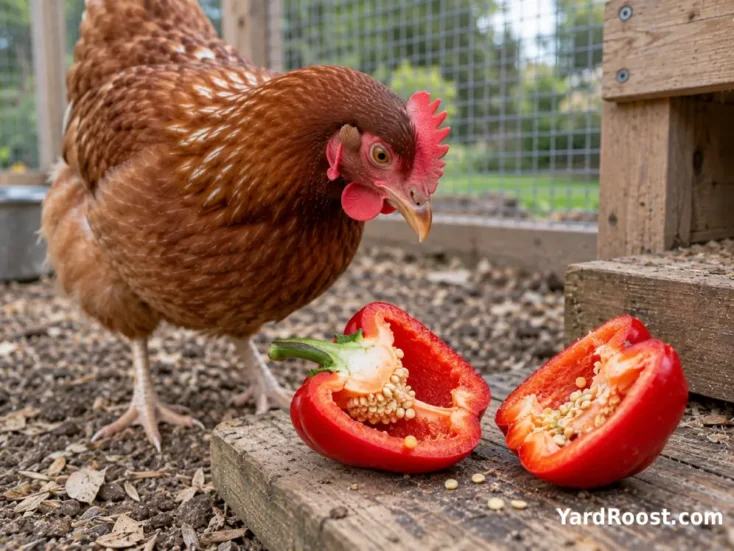
The small seeds inside a fresh capsicum do not normally need to be removed before you give the pepper to adult chickens. Birds naturally consume pepper fruits, and research on peppers describes birds eating the fruit and passing the seeds as part of the plant’s seed-dispersal strategy.
That makes preparation pleasantly simple: rinse the pepper, remove the tough stem, check that the fruit is fresh, and offer it with the seeds still attached if you like. There is little practical reason to spend time scraping every seed from a bell pepper before it goes into the run.
The important distinction is between normal pepper seeds and seeds from unrelated fruits that may carry their own hazards. Do not assume that because capsicum seeds are acceptable, every fruit seed or pit is suitable for chickens.
Can Chickens Eat Red Capsicum?
Yes, chickens can eat red capsicum. The same basic advice applies to green, yellow, orange, and other common sweet-pepper colors.
Color often reflects the cultivar and stage of maturity rather than a meaningful change in how you should feed the pepper. Utah State University Extension notes that peppers occur in green, red, yellow, orange, purple, and other colors, while many peppers develop fuller color as they mature.
| Capsicum Type | For Adult Chickens? | Practical Approach |
|---|---|---|
| Red bell pepper | Yes, as a treat | Serve fresh with or without seeds |
| Green bell pepper | Yes, as a treat | Offer the harvested fruit, not garden plant material |
| Yellow or orange bell pepper | Yes, as a treat | Cut or halve if convenient |
| Hot Capsicum peppers | The fruit is generally acceptable to birds | Keep portions modest and avoid seasoned preparations |
There is no need to buy a particular color specifically for your chickens. Leftover fresh pepper from your own kitchen is the more practical use.
How To Serve Capsicum Safely
Capsicum does not need complicated preparation. The goal is simply to keep the treat fresh, recognizable, and separate from foods that could introduce unnecessary salt, grease, mold, or spoilage.
- Rinse off visible soil or garden debris.
- Remove the tough stem and any obviously damaged or moldy areas.
- Offer the pepper whole, halved, or cut into manageable pieces.
- Leave the seeds in if you prefer; removing them is optional.
- Serve plain pepper rather than pepper cooked with salty sauces, oils, or heavily seasoned foods.
- Remove uneaten pieces before they become soft, dirty, moldy, or attractive to rodents and flies.
In a small flock, scattering a few pieces around a clean run can also encourage normal pecking and foraging. If you use food for enrichment regularly, rotate small amounts rather than leaving a large pile of scraps available all day.
For more everyday feeding ideas, see our guide to foods chickens can eat.
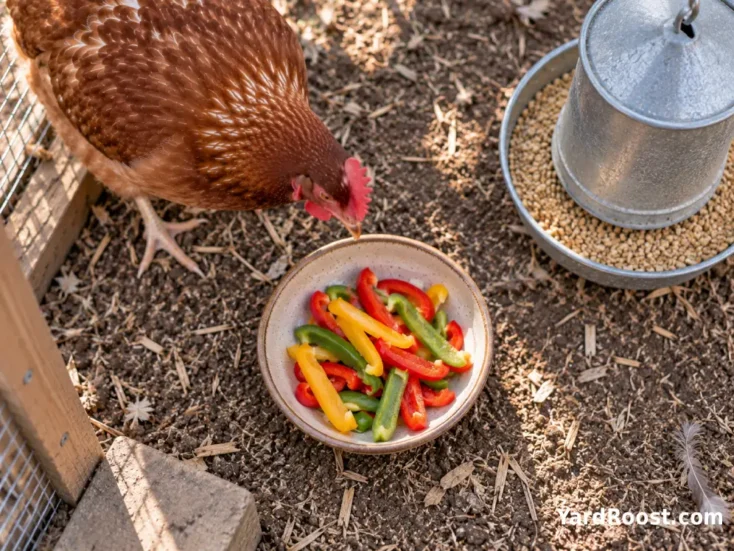
How Much Capsicum Should Chickens Eat?
Think of capsicum as a side snack, not a meal. Chickens need nutritionally complete feed formulated for their age and stage of production. Filling up on vegetables and other extras can reduce the amount of balanced feed they eat, which is why Extension poultry guidance recommends moderation with treats.
For a typical small backyard flock, a practical routine is to offer only an amount the birds can peck through fairly quickly rather than dumping several whole peppers into the run every day.
- Let complete poultry feed remain the main food available.
- Use capsicum as an occasional addition or enrichment food.
- Scale the treat down if significant pieces are still sitting in the run later.
A common mistake we see with backyard treats is assuming that a healthy food for people should be fed to chickens in large quantities. The nutritional issue is usually not the individual vegetable—it is what that vegetable displaces. A hen that fills up on scraps has less room for the balanced ration designed to meet her nutritional needs.
What Parts of a Capsicum Plant Should Chickens Avoid?
We recommend feeding the harvested pepper fruit rather than treating the whole pepper plant as chicken food. The fruit has the clearest basis for use: North Carolina State Extension specifically notes that birds can safely eat Capsicum annuum fruits.
The wider nightshade family deserves more caution. University of Maryland Extension poultry material lists nightshade among plants poisonous to poultry, and veterinary references describe toxic compounds in some nightshade species. That does not mean a bell pepper fruit should be treated like poisonous nightshade; it does mean that tossing unidentified leaves, weeds, and garden trimmings into the run is a poor habit.
Direct poultry-specific guidance on deliberately feeding pepper foliage is much thinner than guidance on the fruit. For beginners, the sensible rule is simple: harvest the capsicum, feed the fruit, and compost or dispose of the plant trimmings elsewhere.
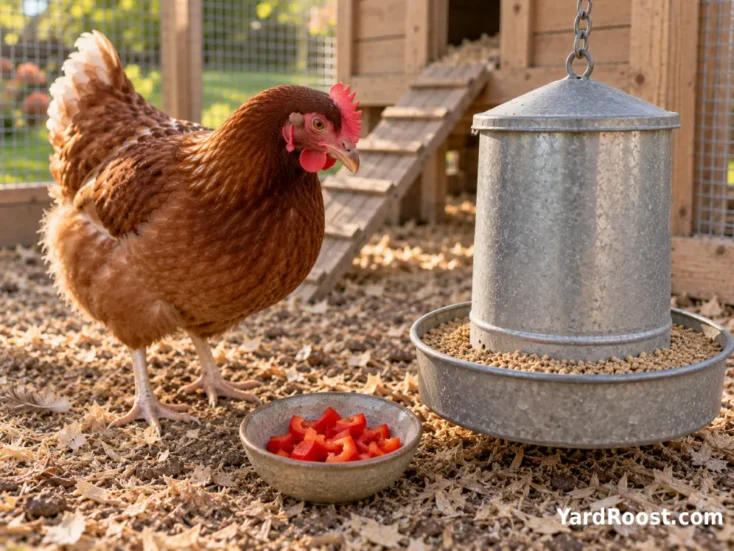
Common Mistakes To Avoid
Capsicum is an easy treat, but a few small habits make the difference between useful enrichment and an unnecessary mess.
- Feeding spoiled peppers: A soft pepper that is merely past its best is different from one showing mold, rot, or an unpleasant odor. When in doubt, discard it.
- Replacing regular feed with vegetables: Keep the flock’s complete ration as the nutritional foundation.
- Dumping large amounts into the run: Leftover produce can become dirty, attract pests, and spoil.
- Feeding seasoned leftovers: Plain capsicum is the easier choice. Skip peppers coated in salty sauces or mixed into heavily processed foods.
- Assuming all garden plants are edible: Identify plant material before allowing chickens to consume large quantities of garden trimmings.
One practical rule works well here: if you would hesitate to handle or eat the pepper because it is moldy, slimy, or badly spoiled, it does not belong in the chicken run either.
When To Get Professional Help
Eating a few pieces of fresh capsicum should not normally create a health problem for an otherwise healthy adult chicken. If you are concerned because a bird ate a large amount of unidentified plant material, spoiled food, or something you suspect may be toxic, do not rely on a home remedy.
Watch the bird closely and contact an avian veterinarian, poultry veterinarian, or your local Extension office if you notice significant weakness, trouble standing, breathing difficulty, severe digestive upset, or a sudden major change in normal behavior. Poultry poisoning can involve many different substances, and the right response depends on what was actually eaten.
Keeping a photo or sample of the plant or food involved can also make it easier for a qualified professional to identify the potential exposure.
Bottom line: Chickens can eat capsicum, including red, green, yellow, and orange bell peppers. The flesh is suitable as an occasional treat, and the ordinary seeds inside the pepper can generally stay in. Serve peppers fresh and plain, keep portions modest, and let a complete poultry ration do the real nutritional work. For backyard gardeners, stick to feeding the harvested fruit rather than turning pepper stems, leaves, or unidentified nightshade-family plants into flock treats.
That is usually all the preparation this treat needs: rinse it, remove the tough stem, toss a small amount into the run, and let the flock decide whether peppers make today’s snack list.