The Salmon Faverolle chicken stands out before it even takes a step. A full beard and muffs frame the face, light feathers cover the legs, and five toes appear on each foot instead of the usual four. Add the dramatically different coloring of hens and roosters, and this French breed is difficult to mistake for anything else.
Looks are only part of the appeal. Faverolles were developed as practical, dual-purpose chickens, and today they remain useful birds for keepers who want moderate egg production, curious personalities, and an ornamental breed that can still earn its space in the coop. The Livestock Conservancy describes them as adaptable, people-friendly birds suited to beginning owners, while Oklahoma State University notes their abundant plumage, medium size, and distinctive physical traits.
They are not the right match for every flock. Their feathered feet need dry ground, their gentle manner can be a disadvantage around forceful hens, and an unexpected rooster can create problems where local rules restrict crowing birds. Here is what beginners and experienced small-flock keepers should know before bringing home Salmon Faverolle chicks.
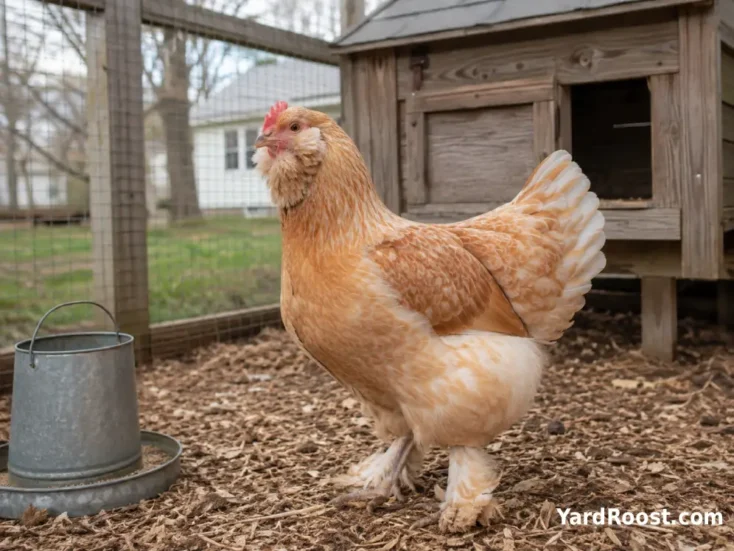
Salmon Faverolle Breed Snapshot
| Trait | What to Expect |
|---|---|
| Origin | France, near the village of Faverolles |
| Original Purpose | Egg and meat production |
| Standard Weight | About 8 pounds for a mature rooster and 6.5 pounds for a hen |
| Egg Color | Tinted to light brown, sometimes with a pinkish cast |
| Comb | Single comb |
| Distinctive Features | Beard, muffs, feathered shanks, and five toes on each foot |
| APA-Recognized Varieties | Salmon and White in the United States |
| Best Fit | Calmer backyard flocks with dry housing and room to forage |
The breed was developed in France from several established chicken breeds, with selection focused on useful production qualities. Salmon was admitted to the American Poultry Association Standard of Perfection in 1914, followed by the White variety in 1981. The familiar fluffy outline hides a compact, medium-sized frame rather than an exceptionally large bird.
You may see both Salmon Faverolle and Salmon Faverolles used in hatchery listings and casual conversation. Both generally refer to the salmon-colored variety of the Faverolles breed.
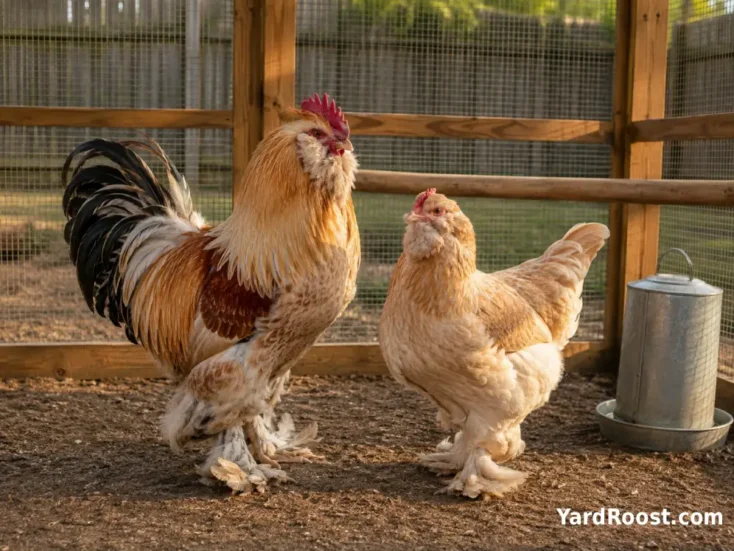
Salmon Faverolle Rooster Vs. Hen
Adult Plumage Differences
Adult hens and roosters are much easier to distinguish than newly hatched chicks. A Salmon Faverolle hen normally has a soft cream-colored body with salmon, tan, or warm brown coloring across the back, wings, and upper body. Her overall appearance is pale and blended.
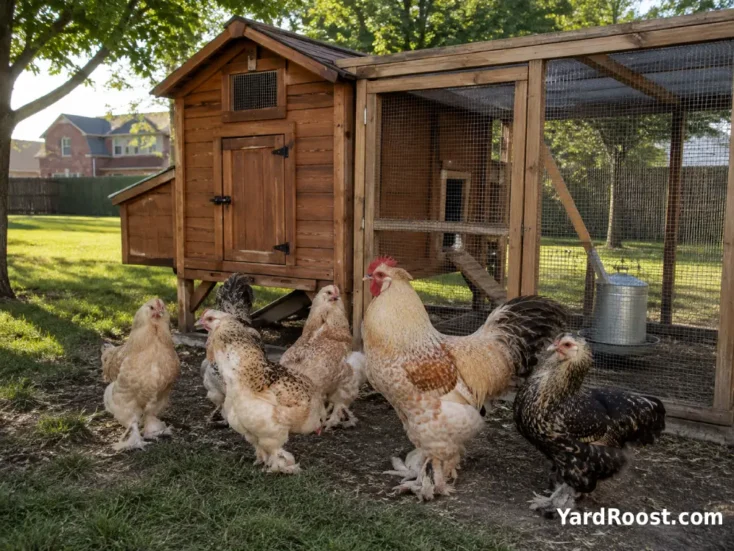
A mature rooster is far more contrasting. Dark feathers become prominent on the breast, underside, beard, and tail, while lighter straw or cream feathers appear around the neck and upper body. Individual lines vary, especially when birds are bred for backyard quality rather than exhibition, but the male and female color patterns should become clearly different with maturity. The Livestock Conservancy describes the male pattern as a light Golden Duckwing type and the female as a light Wheaten type.
Roosters also tend to develop a larger, redder comb, more upright posture, pointed saddle and hackle feathers, and eventually crowing behavior. Hens retain rounder feather shapes and the softer salmon-and-cream pattern.
How to Sex Salmon Faverolle Chicks
Do not count on accurately sexing a Salmon Faverolle chick from its hatch-day down. Newly hatched males and females generally lack obvious secondary sex characteristics unless a breed or cross carries a specific feather-sexing or color-sexing pattern. University of Kentucky poultry guidance recommends watching chicks develop rather than relying on folk methods, which perform little better than guessing.
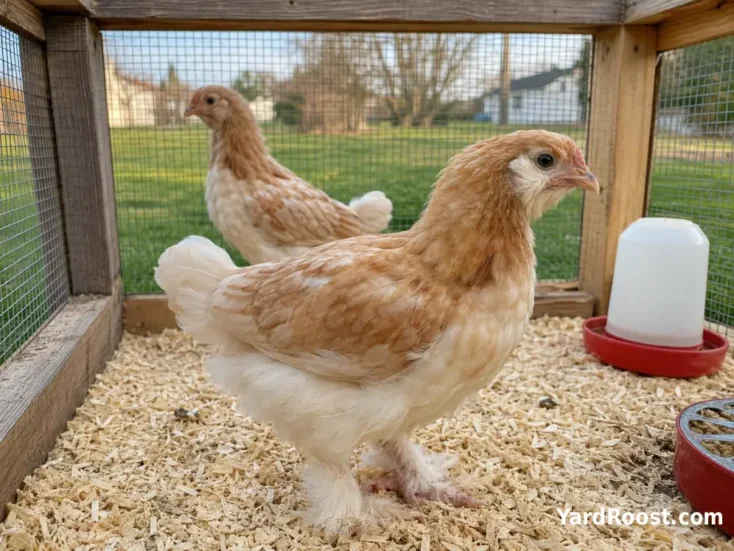
As juvenile feathers replace the chick down, prospective cockerels may begin showing darker areas while pullets retain a lighter, warmer pattern. Comb development, posture, feather shape, and behavior gradually add more clues, but no single early sign is a guarantee.
- At hatch: Treat color-based guesses as provisional.
- During juvenile feathering: Compare several traits rather than one dark feather.
- As maturity approaches: Adult plumage, pointed saddle feathers, and crowing provide much stronger evidence.
Vent sexing is not a suitable do-it-yourself shortcut. Mississippi State University Extension notes that it requires specialized training and is generally performed by experienced hatchery personnel. Improper handling can stress or injure a chick.
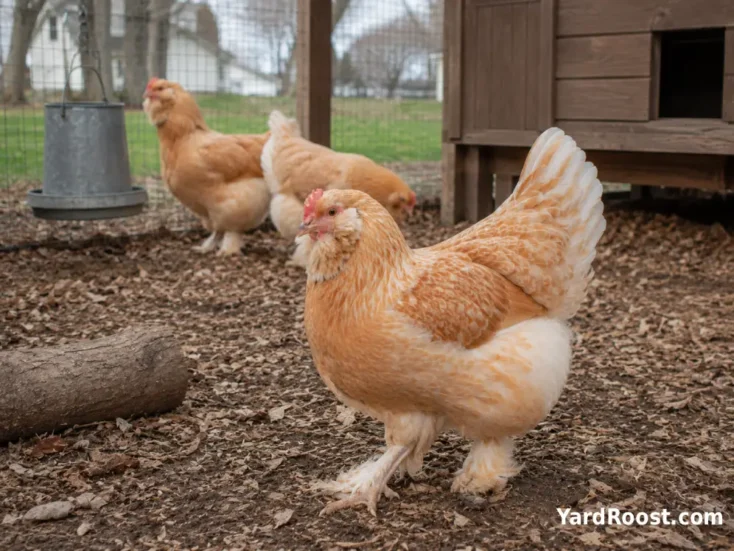
Temperament And Mixed-Flock Compatibility
Faverolles are generally curious, active, and comfortable around routine human activity. The Livestock Conservancy considers them adaptable family birds that can forage when given space but also adjust to confinement when housing is managed well. They may sound an alarm when an unfamiliar animal approaches, so “quiet” should not be confused with silent.
In a small backyard flock, personality matching matters as much as breed reputation. A calm Faverolles hen may live comfortably with Orpingtons, Cochins, Sussex, or other relatively steady birds. A highly assertive flock can be harder. Watch the feeder at dusk and shortly after it is refilled: if one hen repeatedly waits at the edge or leaves without eating, add a second feeding point where a dominant bird cannot guard both.
Facial feathers can also make subtle pecking damage harder to notice. During introductions, check beneath the beard and around the back of the head rather than judging only from a distance. Visual barriers, more than one water station, and enough run structure for a subordinate bird to step out of sight can prevent normal pecking-order behavior from becoming constant harassment.
Keepers still deciding which breeds belong together may find our beginner-friendly chicken breed guide helpful.
YardRoost Editorial Note: Breed descriptions tell you the average tendency, not the personality of every individual. A confident Faverolles hen may lead the flock, while another from the same hatch may avoid conflict completely.
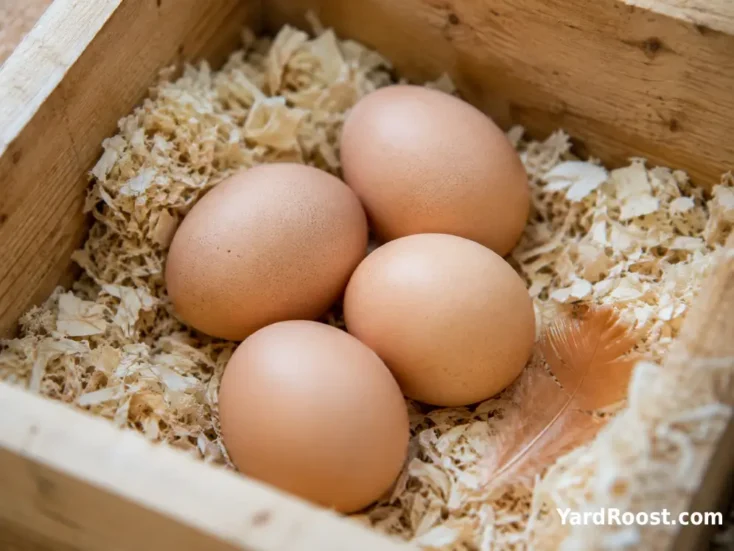
Salmon Faverolle Eggs And Laying Expectations
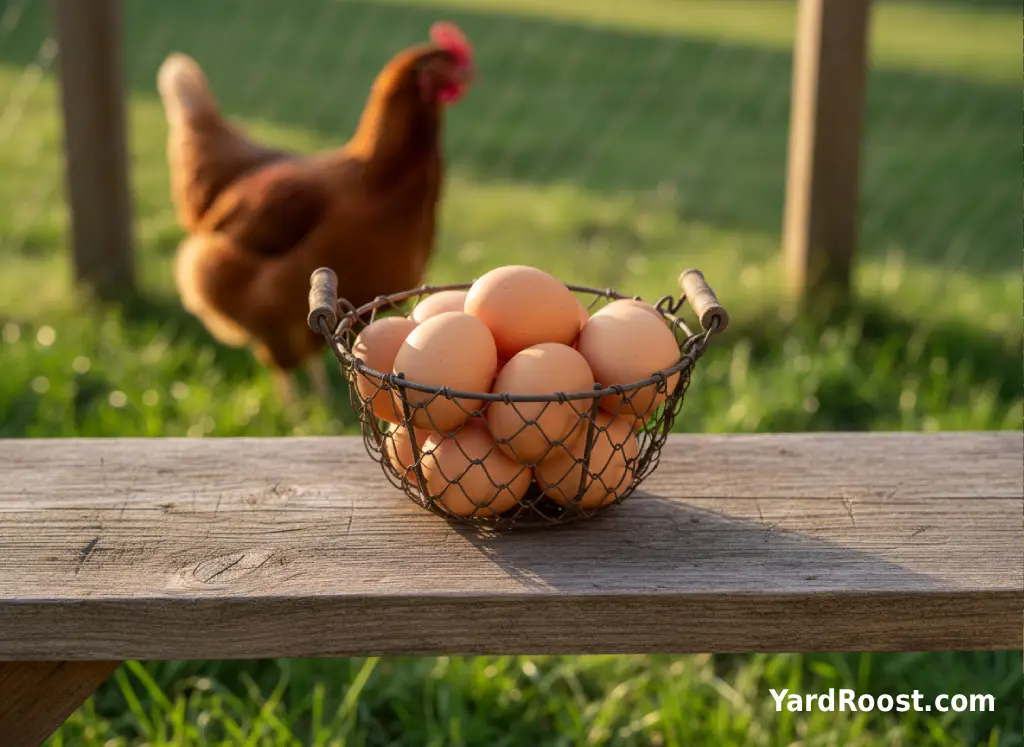
Salmon Faverolle eggs are usually described as tinted or light brown. Some hens produce shells with a cream or pinkish appearance, but this is still a light-brown egg breed—not a blue, green, or dark chocolate layer. Egg shade varies among breeding lines and can also look slightly different from hen to hen. Oklahoma State University lists the breed’s shell color as light brown, while The Livestock Conservancy notes that pink-tinted examples are possible.
Historical breed references commonly place annual production somewhere around 150 to 200 eggs under favorable conditions. Treat that as a broad breed range, not a promise for a backyard hen. Age, genetics, molt, daylight, weather, stress, nutrition, and individual health all influence the number of eggs that reach the basket.
For practical planning, think of Faverolles chicken eggs as a useful but moderate contribution. A small group may supply eggs steadily at times, but this is not the breed to choose when maximum egg volume per pound of feed is the only goal.
A Salmon Faverolle rooster is unnecessary for normal egg production. Hens lay without a male; a rooster is needed only when you want fertile eggs that may be incubated.
Housing And Seasonal Care
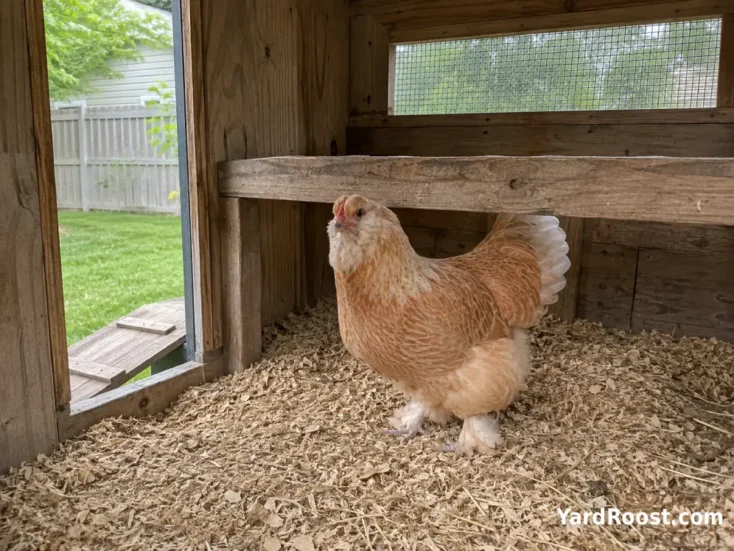
The most important breed-specific housing detail is simple: keep the foot feathers dry. Wet clay, deep mud, icy slush, and manure buildup can cling to feathered toes and conceal irritation or injury. Put waterers on a stable platform, repair roof runoff that lands beside the pop door, and add dry footing to heavily traveled sections of the run.
During muddy weather, inspect the feet rather than automatically bathing the entire bird. Look between the toes and beneath the light leg feathering. If dirt has formed a hard clump, soften it gradually in a warm, sheltered area instead of pulling on feathers or toes.
Faverolles carry abundant plumage that provides useful insulation, but thick feathers do not make a damp, stuffy coop safe. Ventilation should remove humid air and odors without directing a cold draft across roosting birds. Upper vents, dry litter, and prompt repair of roof leaks usually matter more than trying to make the coop airtight. Oklahoma State University notes the winter protection provided by the breed’s plumage, while poultry-extension guidance emphasizes air exchange in small-flock housing.
A broad, stable roost with a clear landing area works well for these compact birds. Avoid forcing them to jump through crowded obstacles or land on slippery flooring. During hot weather, dense feathering makes shade and airflow especially important. Offer more than one water station when temperatures climb, particularly if dominant birds control the main waterer. University of Minnesota Extension recommends watching flock behavior and improving ventilation, shade, and water access when heat stress becomes a concern.
For a closer look at moisture control and air exchange, see our backyard coop ventilation guide.
Raising Salmon Faverolle Chicks
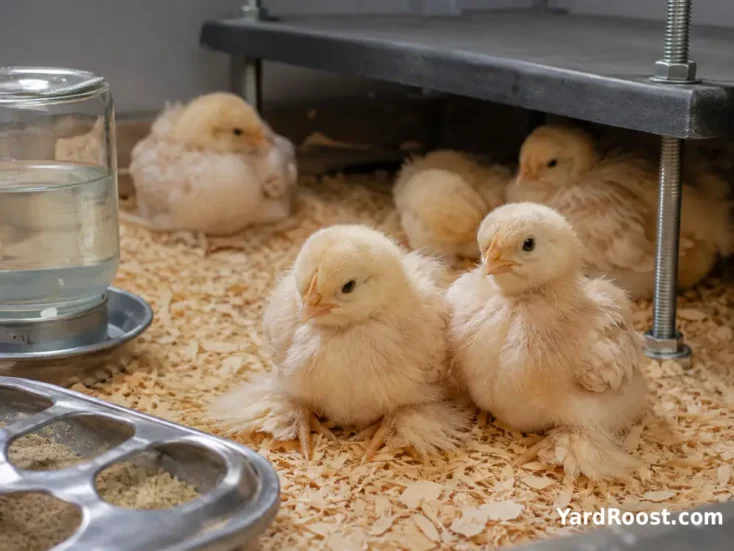
Salmon Faverolle chicks need the same fundamentals as other large-fowl chicks: a clean brooder, adjustable warmth, complete chick feed, dependable water, dry bedding, and enough room to move away from the heat.
- Prepare before arrival. Warm and test the brooder the day before the chicks come home.
- Begin around 90–95°F at chick level. Lower supplemental heat by roughly 5°F each week while using chick behavior as the final guide.
- Provide a cooler zone. Every chick must be able to walk away from the heat source.
- Use complete starter feed. Do not dilute it with large amounts of treats or scratch grain.
- Keep the water area dry. Raise the waterer gradually as the chicks grow, but keep it low enough for easy access.
Comfortable chicks spread out, eat, drink, explore, and settle with quiet peeping. Chicks tightly packed beneath the heat are probably cold; chicks avoiding the warm area may be too hot. University of Minnesota Extension recommends starting chicks at 90–95°F and reducing the setting by about 5°F per week until supplemental heat is no longer needed.
Check each chick’s feet when it arrives. Five toes and light leg feathering are normal breed characteristics. What matters is whether the chick can stand, walk, reach feed and water, and move without repeatedly falling or dragging a limb.
Chicks may look clean and healthy while carrying germs that can make people sick. The CDC advises washing hands immediately after touching poultry, eggs, bedding, or coop equipment and keeping poultry supplies outside the home. Children younger than 5 should not handle chicks or spend time in their living area.
Buying Standard, Blue Salmon, Or Backyard-Quality Birds
Salmon and White are the two Faverolles varieties recognized by the American Poultry Association in the United States. You may also encounter advertisements for Blue Salmon Faverolles, black birds, splash birds, or other project colors. These can be attractive backyard chickens, but they should not automatically be presented as APA-recognized varieties. Ask the breeder what genetics are involved and whether the birds are being sold for exhibition, breeding, or simply as nonstandard-colored flock members.
A blue Salmon Faverolle hen may not reproduce her color consistently unless the breeder understands and explains the mating behind it. Color should also come after sound structure, vigor, mobility, and temperament. Five toes alone do not prove that a bird is well bred or even purebred.
Before ordering, confirm whether the chicks are sold as sexed pullets or straight run. Straight-run groups can include multiple cockerels, and early sex identification may remain uncertain. Make a humane, legal rooster plan before the box arrives rather than after crowing starts.
Useful questions for a hatchery or breeder include:
- Are these chicks sold as pullets, cockerels, or straight run?
- What hatch date and health records come with them?
- Can you show clear photographs of the parent birds?
- Are the birds standard Salmon Faverolles or a nonstandard color project?
- What steps does the source take to reduce disease risk?
Keep newly purchased or returning birds separate from the resident flock for at least 30 days, with dedicated equipment and no shared runoff. USDA APHIS biosecurity guidance recommends a 30-day quarantine for new additions, while University of Minnesota Extension gives the same minimum for birds entering or returning to backyard flocks.
Common Mistakes And Health Red Flags
Most problems associated with this breed are management mismatches rather than mysterious Faverolles-only conditions. The fluffy appearance can tempt a keeper to assume the bird is comfortable without checking what is happening under the feathers.
- Choosing only for appearance: Confirm temperament, source quality, sex, and rooster plans before buying.
- Trusting hatch-day sex guesses: Wait for several traits to develop or buy professionally sexed chicks.
- Housing them on wet ground: Correct drainage and replace soaked bedding before foot feathers become packed with debris.
- Using only one feeder: Add a second station if a quieter hen is being pushed away.
- Expecting commercial-layer output: Plan around moderate heritage-breed production rather than a guaranteed daily egg.
- Skipping quarantine: Keep every new or returning bird separate before flock introduction.
YardRoost Editorial Note: A common mistake we see is checking only the top of a fluffy bird. Part the beard, look beneath the wings, and examine the feet. Dense feathers can hide weight loss, peck marks, damp skin, or debris until the problem is advanced.
Separate a bird for observation when it cannot reach feed or water, is repeatedly attacked, or shows a sudden change in activity. Provide a quiet, secure space with normal feed and clean water while you contact an avian veterinarian, poultry veterinarian, or local extension office.
Prompt professional help for persistent lameness, labored breathing, uncontrolled bleeding, repeated collapse, inability to eat or drink, rapidly worsening weakness, or several birds becoming sick at once. Do not guess at antibiotics, dewormers, or other medications based only on online symptom lists. USDA APHIS advises isolating sick birds and contacting a veterinarian or animal-health official when serious flock illness is suspected; extension personnel can also direct small-flock owners to qualified help.
Is A Salmon Faverolle Right For Your Flock?
A Salmon Faverolle can be an excellent choice when you value personality, unusual appearance, moderate egg production, and a bird that fits naturally into a hands-on backyard flock. The breed is especially appealing to keepers who enjoy watching chickens forage and interact rather than treating the flock only as an egg-producing unit.
Pause before buying when your run remains muddy for long periods, your existing hens are relentlessly aggressive, or you have no acceptable plan for a surprise rooster. Also remember that fluffy, cold-tolerant plumage does not eliminate the need for summer shade, winter ventilation, dry bedding, or routine hands-on checks.
The best match is a keeper who can provide secure housing, dry footing, more than one feeding point when needed, and enough daily observation to notice when a quiet bird is being excluded. Start with healthy stock from a responsible source, quarantine every addition, and let mature plumage—not wishful thinking—settle the rooster-versus-hen question.
With those basics in place, Salmon Faverolles bring a memorable combination of utility and character to a small flock. Before ordering chicks, walk through your coop and rooster plan once more; solving those details now is much easier than improvising after the birds arrive.