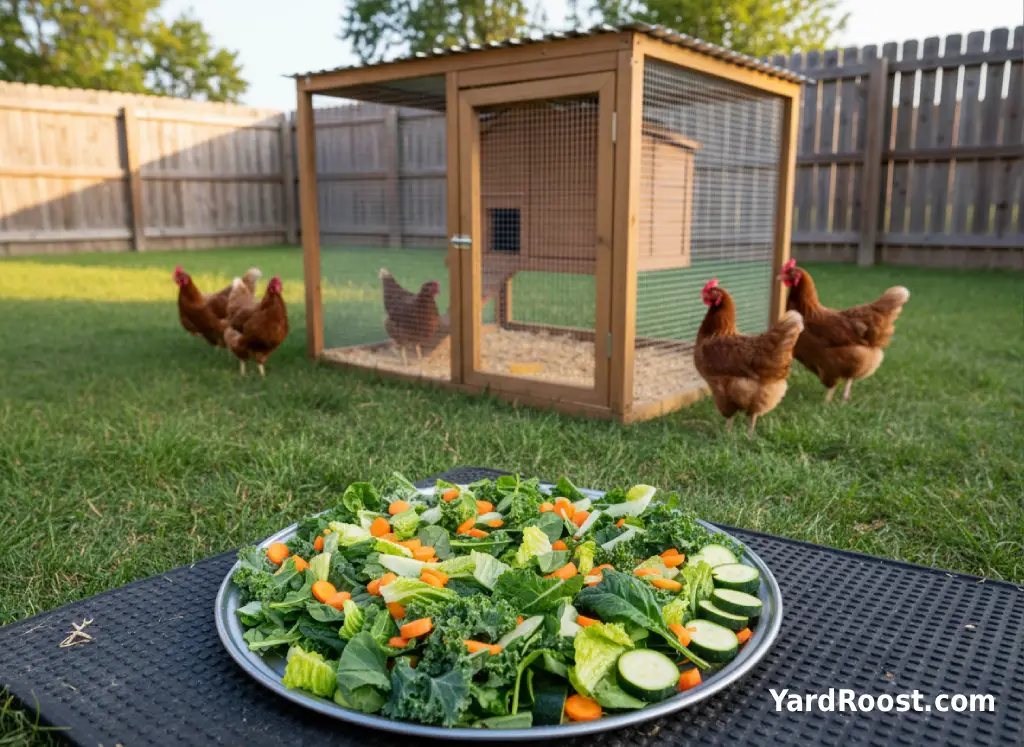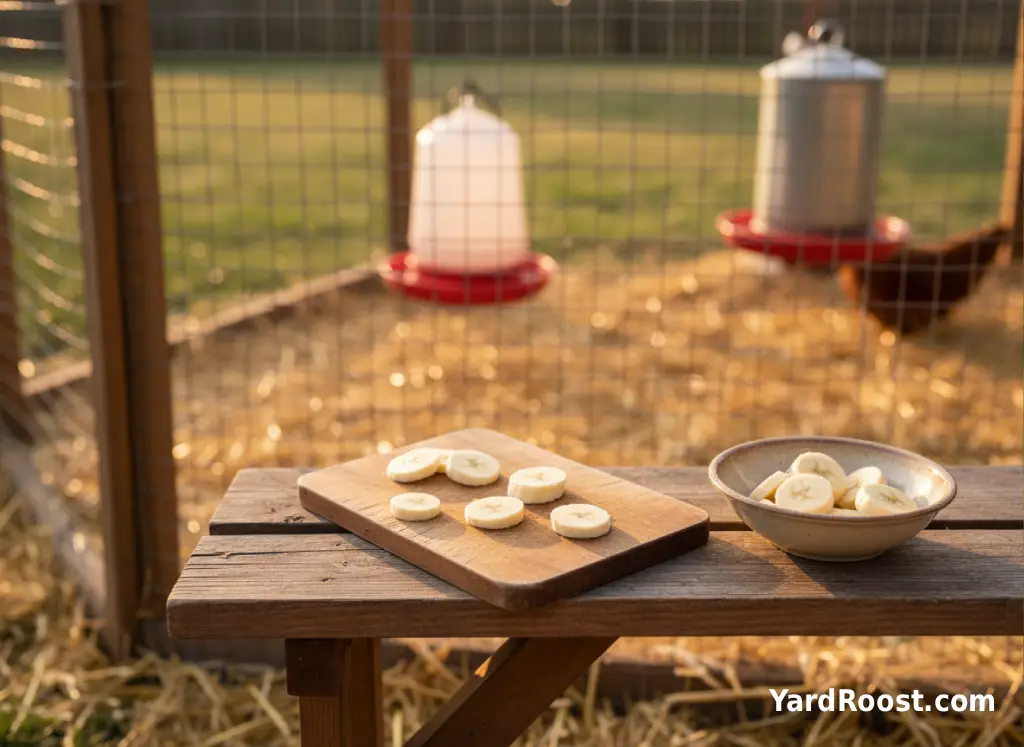
Yes—most backyard chickens can eat cabbage, and many flocks treat it like a crunchy, boredom-busting “toy” that also happens to be food. It’s not magic nutrition, and it’s not a substitute for a balanced layer ration, but cabbage can be a solid treat when you serve it clean, plain, and in sensible amounts. That goes for green cabbage, napa, savoy, and the colorful varieties people ask about most: red cabbage and purple cabbage.
The two big goals are simple: keep your birds’ main diet as complete feed, and keep treats (including cabbage leaves) from turning into a messy, sour pile in the run. Cabbage is mostly water and fiber, so it’s great for pecking and foraging… but too much can mean watery droppings, picky eating, or a run that smells like a compost bin. We’ll walk through the safest ways to offer raw cabbage, cooked cabbage, and whole heads—plus common mistakes we see and how to fix them.
The Quick Answer: Cabbage Is a Safe Treat in Moderation
Cabbage is generally safe for chickens to eat as a treat. The practical “yard rule” is to keep treats from crowding out their nutritionally complete feed—because that complete feed is where the balanced vitamins, minerals, amino acids, and calcium live. Merck Veterinary Manual notes that poultry diets are typically formulated to be nutritionally complete, and nutrition can go sideways when birds fill up on non-complete foods. Sources: Merck Veterinary Manual.
One more key: treats shouldn’t sit around. Extension resources warn that excessive table scraps/greens can hurt productivity, and that scraps should not be left to rot because of botulism risk. That’s less about cabbage itself and more about what happens when “treat time” turns into “compost time.” Sources: eXtension (poultry.extension.org).
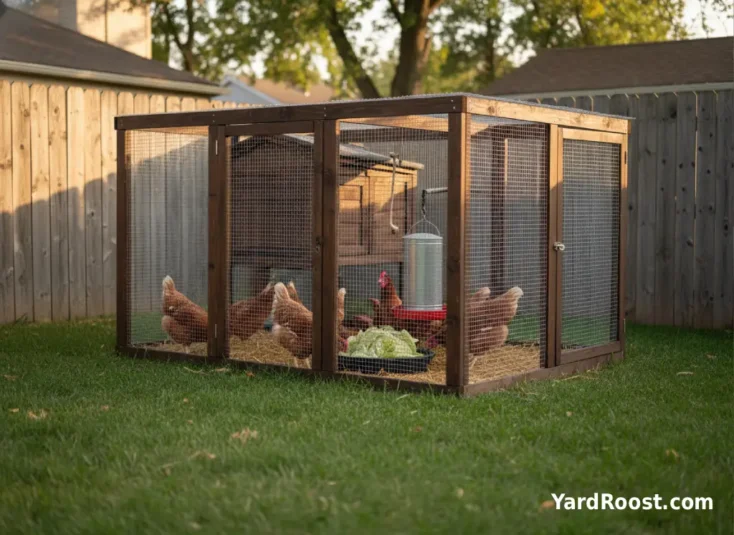
Why Chickens Love Cabbage (And What It Actually Adds)
Cabbage checks three boxes flock keepers care about: it’s cheap, it’s easy, and it encourages natural pecking/foraging. Nutritionally, it’s mostly moisture and fiber with small amounts of vitamins and plant compounds. That means it can be a nice “something to do” snack—especially when the ground is frozen or your birds are stuck inside the covered run—without loading them up on sugary fruit or starchy scratch.
What cabbage does not do: replace a complete ration, “boost” laying on its own, or fix nutrition problems caused by too many scraps. If egg production, shell quality, or body condition is slipping, the first move is usually to tighten up the basics (feed quality and access) before tweaking treats. For a deeper nutrition refresher, see our guide at Chicken Layer Feed.
Best Ways to Serve Cabbage Leaves and Heads
If you want your birds to enjoy cabbage without turning your run into a soggy salad bar, think “small, clean, and easy to finish.” Here are flock-tested options:
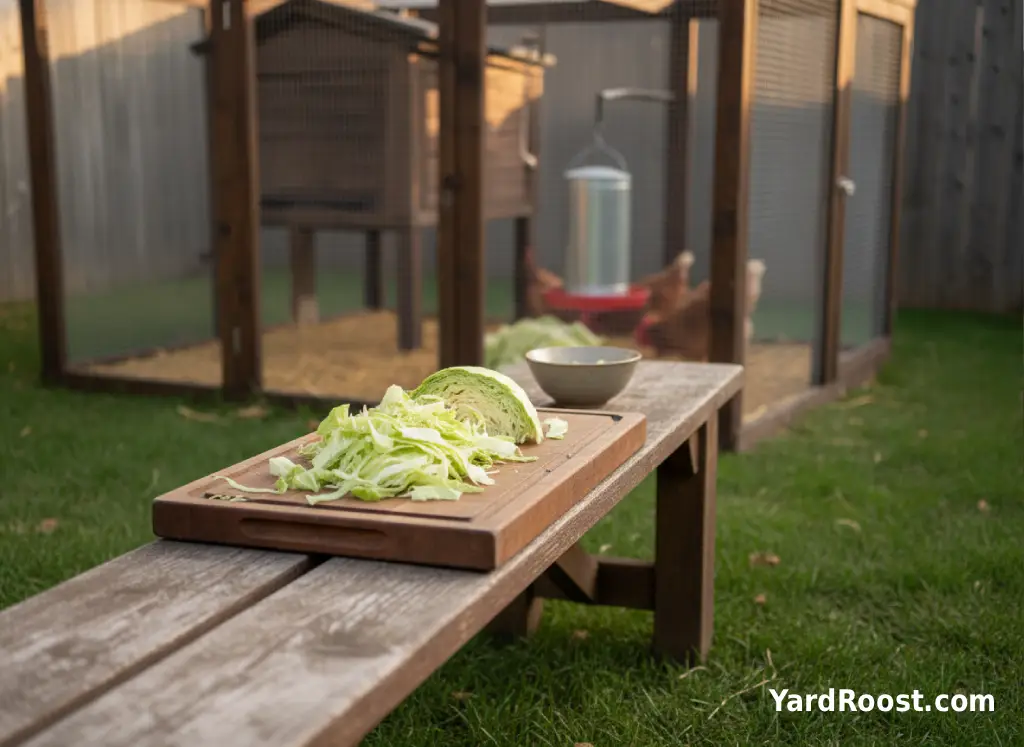
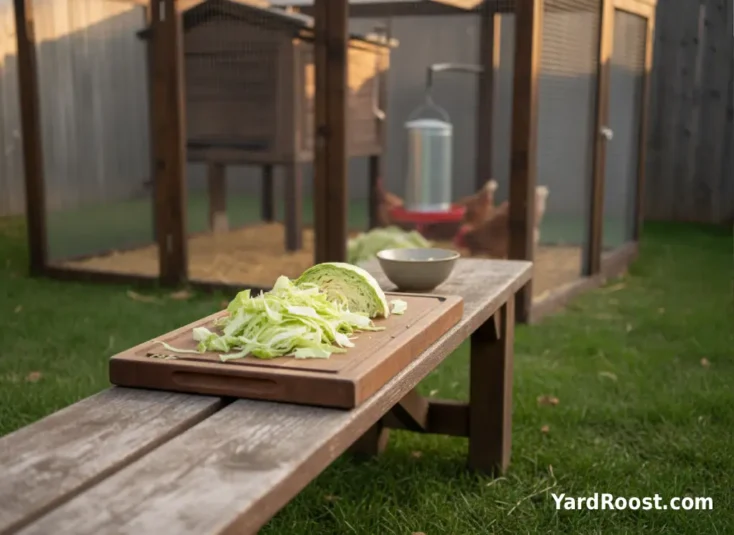
- Shred it: Slice cabbage into thin ribbons (easy to grab, less tug-of-war). Spread a small handful over clean ground so they forage instead of pile on top of each other.
- Offer whole leaves: Tear big leaves into smaller pieces and toss them around the run. This cuts down on one dominant hen “claiming” the entire treat.
- Hang a head for enrichment: Suspend a whole cabbage from a rope or bungee so it swings. Keep it low enough to peck but high enough that it stays cleaner (and doesn’t become bedding).
A common mistake we see is hanging the cabbage too high “so it stays clean.” The hens then jump repeatedly, miss, and lose interest—or the boldest bird gets all the pecks. Aim for a height where an average hen can peck it while standing normally, with just a little stretch.
Can Chickens Eat Raw Cabbage?
Yes—chickens can eat raw cabbage. Raw leaves are crunchy and hold up well to pecking, which is why cabbage is such a popular “hang it in the run” treat. If you’re offering raw cabbage, the biggest practical concerns are cleanliness (no slimy leaves) and portion size (don’t let it replace feed).
Two easy tips that prevent most cabbage-related headaches:
- Rinse and dry: Especially if it came from a grocery store bin or garden soil. Excess moisture speeds up spoilage in a humid run.
- Remove the outer leaf if it’s beat up: The outer layer is often where you’ll find bruising, dirt, or early spoilage.
If you’re worried that offering raw cabbage means tossing in big chunks, yes, chickens can eat it that way — but you’ll usually get less waste and fewer run messes if you shred it or tear it into manageable pieces.
Can Chickens Eat Cooked Cabbage?
Yes—chickens can eat cooked cabbage as long as it’s plain. Cooked cabbage gets soft, which some birds prefer (especially older hens), but it also turns mushy faster once it hits the ground. So it’s a “serve small, pick up leftovers” situation.
Keep cooked cabbage safe by following a simple rule: if you wouldn’t eat it after it sat warm in the sun, don’t offer it to your flock. And skip the extras—no butter, no heavy salt, no spicy seasonings. Extension guidance also cautions against strong-flavored scraps like onions for laying hens because flavors can carry over into eggs, so keep your “cabbage batch” simple and onion-free. Sources: eXtension (poultry.extension.org).
Can Chickens Eat Red Cabbage and Purple Cabbage?
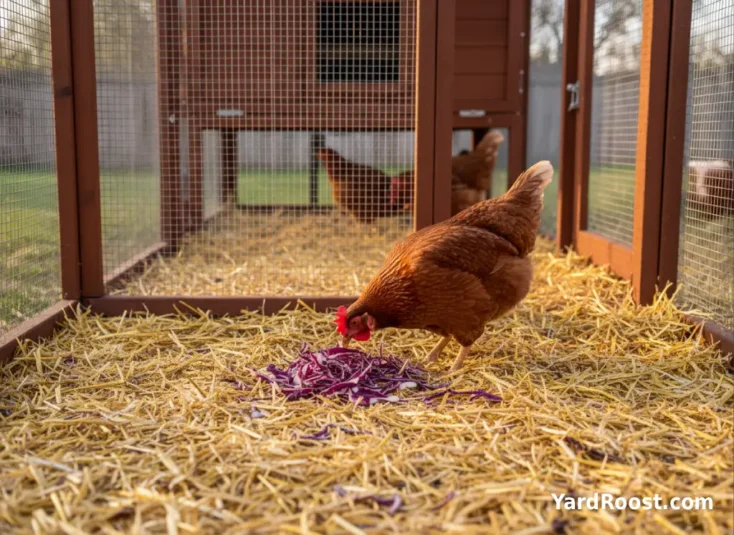
Red cabbage and purple cabbage are fine for chickens in the same way green cabbage is: clean, plain, and in moderation. The color comes from natural pigments (anthocyanins), and the biggest “difference” you’ll notice is purely visual—your run may look like a toddler’s craft project for a bit.
If you’re feeding cabbage leaves from your garden, use the same approach across all colors: rinse well, avoid wilted/slimy pieces, and don’t let treats become the main course.
How Much Cabbage Can Chickens Eat?
Think of cabbage as a treat, not a “free feed.” A practical extension-based guideline for scraps/greens is to offer only what the flock can finish in about 20 minutes, and avoid leaving leftovers to rot.
For most small backyard flocks, that usually looks like:
- 2–3 times per week: a small handful of shredded cabbage per 3–5 hens, or a few torn leaves scattered around.
- For a hanging head: use it as a once-in-a-while enrichment item, then remove what’s left when it starts getting dirty or soggy.
- Always: make sure the feeder still gets priority. If they mob the cabbage and ignore the feed, reduce the treat size next time.
If you’re trying to manage weight or keep laying consistent, treats are the first lever to adjust. Keep the “fun foods” small and predictable.
Food Safety: Clean, Fresh, and Gone Before It Spoils
Most “cabbage problems” aren’t actually cabbage problems—they’re spoilage problems. Wet greens, warm weather, and bedding contact can turn leftovers into a funky mess fast. Extension guidance specifically warns against allowing scraps to rot because of botulism risk.
Use this simple checklist:
- Rinse grit and soil off (garden cabbage especially), then shake/dry.
- Skip anything slimy, moldy, or sour-smelling. When in doubt, compost it.
- Pick up leftovers if they’re not eaten promptly—especially cooked cabbage.
- Avoid cross-contamination: keep flock treats stored and handled cleanly, and don’t set “chicken food” bowls back on the kitchen counter without washing them.
And a quick people-safety reminder: backyard poultry can carry Salmonella even when they look healthy, so wash hands after handling birds, eggs, or anything in their environment. Sources: CDC.
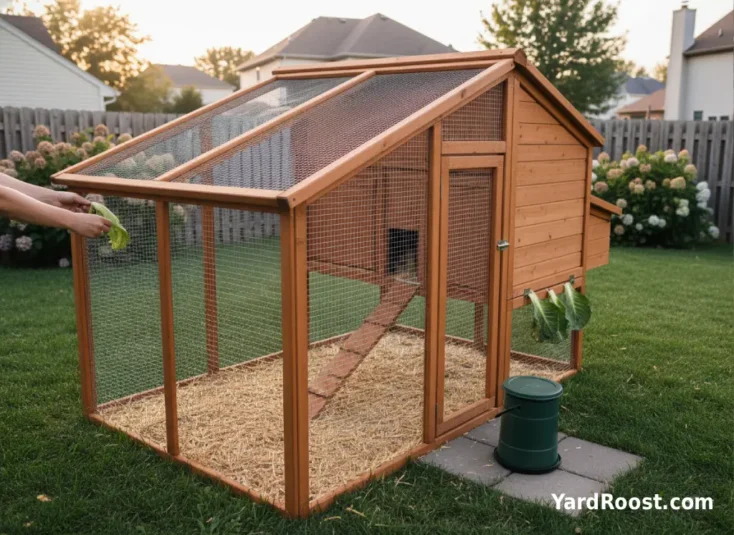
Seasonal Cabbage Ideas: Winter Boredom and Summer Heat
Cabbage shines as a seasonal tool because it’s sturdy. In winter, a hanging cabbage gives birds something to peck at when the yard is frozen and boredom kicks in. In summer, a few crisp, rinsed cabbage ribbons can be a light snack—just don’t confuse “watery treat” with hydration. Water intake still comes from clean water access, not vegetables.
Two timing tips that work in real backyards:
- Hot days: offer cabbage early morning or near sunset so it doesn’t wilt into a warm, wet pile.
- Wet seasons: avoid tossing cabbage into muddy runs—use a hanging method or a clean pan you can remove.
Common Mistakes to Avoid
- Overdoing treats: If hens rush treats and “meh” the feeder, you’re likely giving too much cabbage (or too many extras overall). Reset by offering feed first, then a smaller cabbage portion later.
- Leaving leftovers: Cabbage that turns wet and sits can spoil. Remove uneaten portions before they rot. Sources: eXtension (poultry.extension.org).
- Serving seasoned leftovers: Keep cooked cabbage plain and skip onions/spicy mixes. Sources: eXtension (poultry.extension.org).
- Creating a “bully buffet”: One big leaf can become a dominance game. Tear it up and scatter it so timid birds get a chance too.
- Ignoring hygiene: Treats bring hands into the coop space—wash up after. Sources: CDC.
A common mistake we see is using cabbage to distract hens from a management issue (crowding, boredom, or not enough feeder space). Treats are great enrichment, but if you’re constantly “bribing peace,” it’s worth checking your setup and routine. Our ventilation and space basics are a good place to start: Chicken Coop Ventilation .
When to Call an Avian Vet
Most flocks handle a small amount of cabbage just fine, but any new food can occasionally upset a bird’s system. If you notice mild, short-lived loose droppings after a treat, the safest first step is to stop treats for a few days and make sure your birds are eating their normal complete feed.
Contact an avian vet (or an experienced poultry veterinarian) promptly if you see any of these signs—especially if more than one bird is affected:
- Marked lethargy, weakness, or a bird staying fluffed and apart from the flock
- Not eating or not drinking
- Persistent diarrhea, blood in droppings, or worsening droppings over 24–48 hours
- Labored breathing, severe swelling, or sudden decline
We’re backyard keepers, not a veterinary service—when a chicken looks truly unwell, fast professional guidance beats internet guessing every time.
So—can chickens eat cabbage? Absolutely. Raw cabbage, cabbage leaves, red cabbage, purple cabbage, and plain cooked cabbage can all fit into a backyard flock’s routine as a simple treat. The “success formula” is boring on purpose: keep complete feed as the foundation, serve cabbage clean and plain, and offer only what the birds will finish before it turns into a wet pile.
If you want the easiest win, shred a small amount and scatter it so everyone gets a chance. If you want enrichment, hang a whole head and remove it once it’s dirty or ignored. And if anything about your flock’s behavior or droppings shifts in a way that concerns you, pause treats and lean on your vet for real medical help. Cabbage can be a fun add-on—but your flock’s health and consistency come from the basics done well.