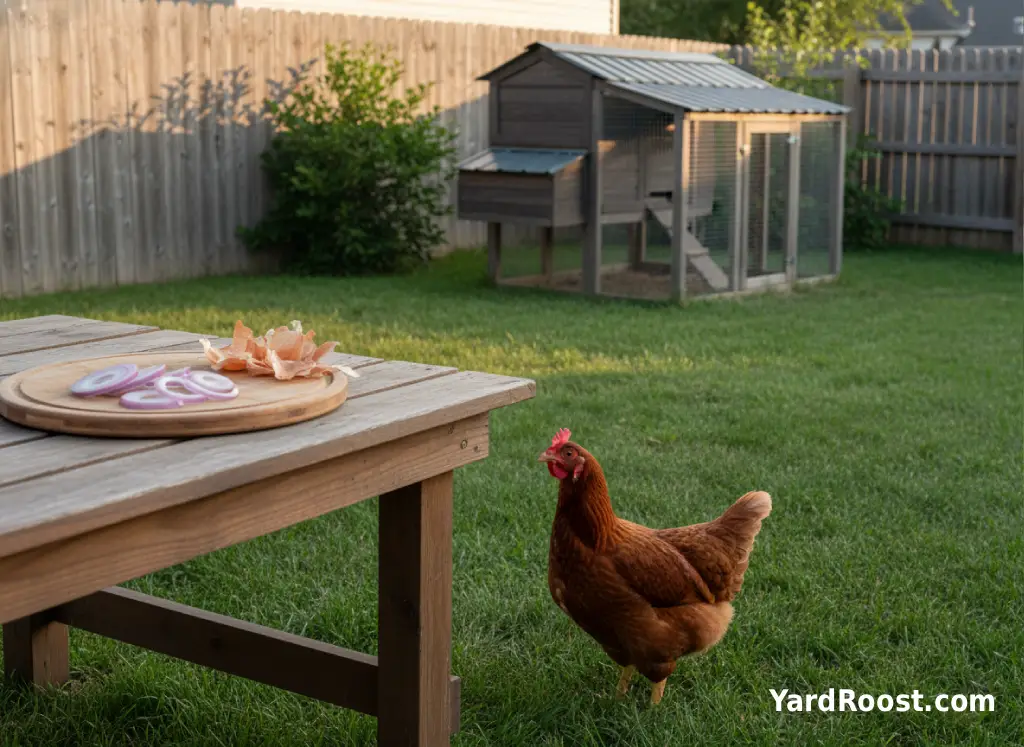
Onions show up in almost every kitchen—peels in the compost bucket, scraps on the cutting board, a few slices left in the skillet. So it’s completely normal to wonder: can chickens eat onions, or is that a “nope” food?
Here’s the YardRoost take: it’s best to avoid feeding onions on purpose—including onion scraps, onion greens, green onions, and cooked onions. While a chicken grabbing a tiny accidental bite isn’t always an emergency, onions are part of the Allium family (along with garlic, leeks, and chives), which contains sulfur-based compounds that can damage red blood cells in animals when enough is eaten. The risk can be higher with concentrated forms (like dried onion flakes or powder).
We’re backyard keepers, not veterinarians. If your bird is acting “off,” we’ll walk through safe, practical next steps—and when it’s time to call an avian vet.
The Quick Answer: Should Chickens Eat Onions?
If you’re choosing treats, skip onions. That applies whether they’re raw, cooked, or red — the general guidance is the same: avoid them.
Why the caution? Veterinary toxicology references describe onion and garlic (Allium spp.) toxicosis as a problem tied to oxidative damage to red blood cells after ingestion, and note that raw or cooked onions can be involved. They also highlight that toxicosis has been reported in food-producing animals and that concentrated forms can be a bigger issue.
Two practical rules that keep most flocks out of trouble:
- Don’t intentionally feed onions as a “kitchen scrap treat.” If it’s in the Allium family, treat it as a pass.
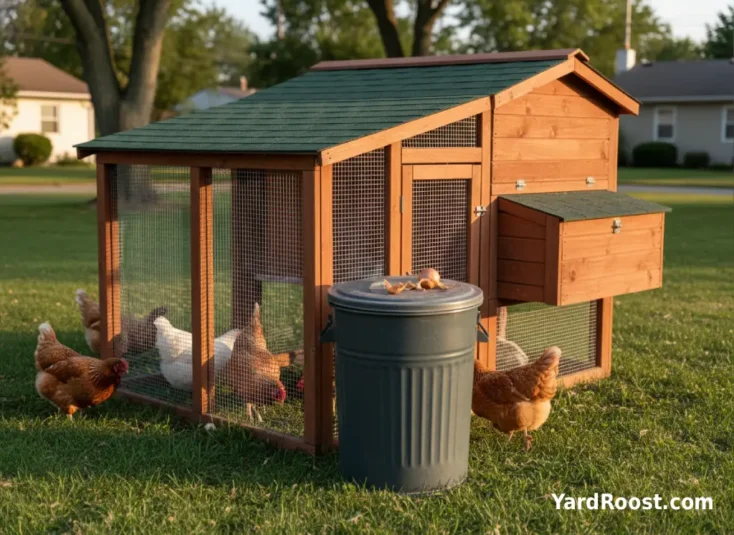
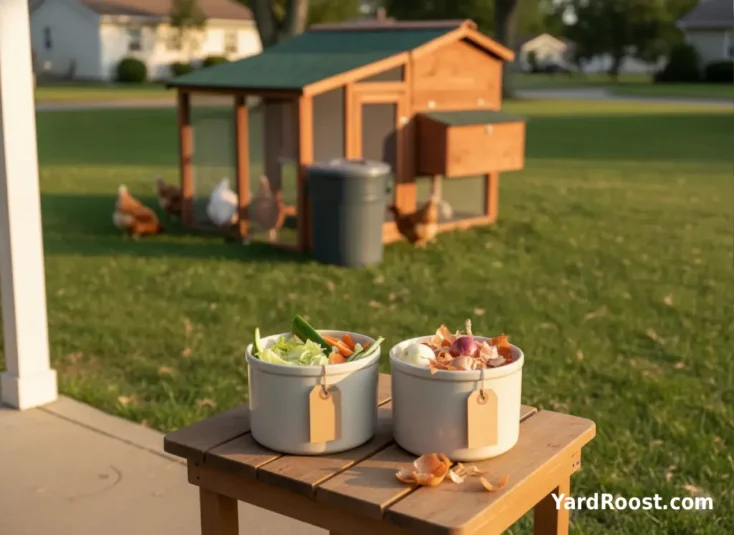
- Keep onion waste contained. Use a lidded compost pail or trash can so chickens can’t binge on scraps or peels.
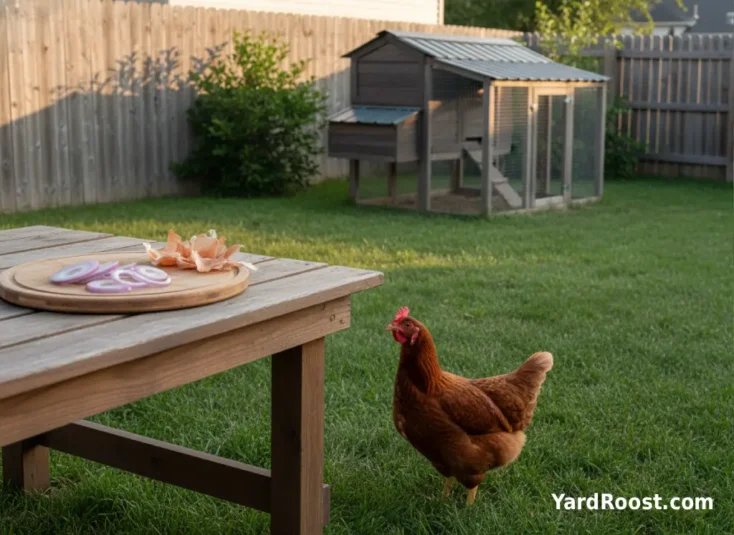
Why Onions Are Risky for Chickens (Even If They Seem Fine)
Most of the time, the onion question comes from a good place: “It’s a vegetable—surely it’s healthy?” The tricky part is that onions (and their Allium cousins) contain sulfur-containing compounds that, at sufficient amounts, can contribute to red blood cell damage in animals. Veterinary references describe this as an oxidative process affecting red blood cells.
With backyard chickens, the risk isn’t usually “one accidental nibble.” The bigger risk is repeated access—like a compost pile they can raid daily, or kitchen scraps routinely tossed into the run. And the more concentrated the onion form (think dehydrated flakes/powder), the less margin you have for “oops.”
A common mistake we see is assuming that cooked means safe. Cooking changes texture and smell, but it doesn’t magically turn an avoid-list food into a smart treat.
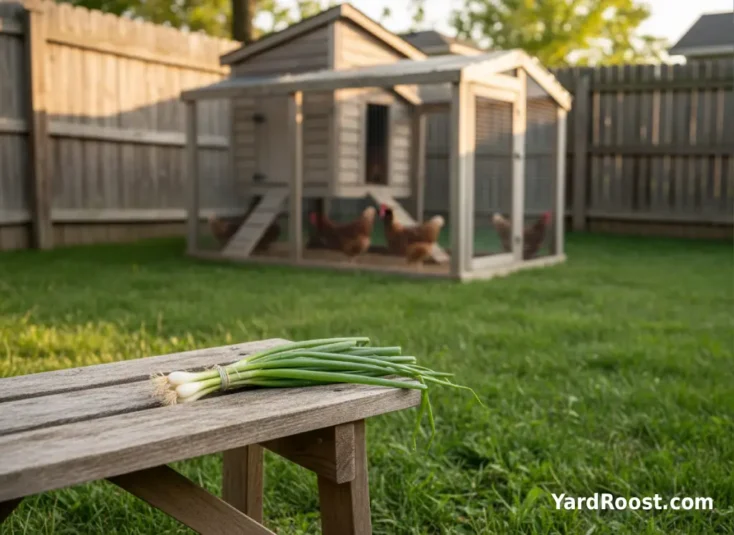
Can Chickens Eat Green Onions, Onion Greens, or Scallions?
If you’ve wondered about green onions or onion greens, you’re not alone. The short answer is to treat them like other onions. Green onions and scallions are still Alliums—just at a different stage—so the same general guidance applies: don’t feed them on purpose.
In real life, chickens sometimes graze the garden and sample plants. If you grow onions or scallions, your best move is management:
- Fence off Allium beds (temporary garden fencing works) so “sampling” can’t turn into “buffet.”
- Pull onion-family plants before letting the flock do garden cleanup at season’s end.
Some extension guidance for gardeners specifically lists onions among crops that are unsafe for chickens to consume.
Raw vs Cooked Onions: Does It Change Anything?
Whether the onions are cooked or raw, the safest approach is the same: don’t feed them to chickens intentionally.
From a safety standpoint, “cooked” doesn’t automatically mean “OK.” Veterinary toxicology references describe toxicosis after ingestion of raw or cooked onions in susceptible animals, and they flag concentrated forms as especially concerning.
From a “quality of life” standpoint, there’s another reason keepers avoid onions: strong-tasting scraps can carry through into eggs. One backyard poultry feeding reference recommends that scraps with strong taste, such as onions, not be fed to laying hens because eggs may pick up those flavors.
Onion Scraps, Peels, and “A Little Bit Won’t Hurt” Thinking
Onion scraps are where problems usually start. Questions about chopped onion leftovers, whole onion pieces, or even the peels usually come down to two things: access and quantity.
Here’s the pattern we’ve seen in backyard flocks: a keeper tosses a “small amount” into the run… then does it again tomorrow… then the chickens discover the compost pile and help themselves. Over time, the amount stops being small.
Better habits that still let you share scraps:
- Use a “yes bucket” and a “no bucket” while cooking. Onion ends and skins go straight into a lidded container.
- Keep treats to a side dish. Some extension guidance suggests offering only as much supplemental scratch or table scraps as birds can finish in about 15–20 minutes, so they still eat a balanced ration.
- Skip dried onion products entirely. Powder/flakes are concentrated and easier to overdo.
What To Do If Your Chickens Ate Onions
First: don’t panic. Most “my chicken stole a bite” stories end with a perfectly normal chicken.
What matters is how much and whether they can keep accessing onions. Your safest next steps are simple:
- Remove the source immediately (scraps pile, compost access, dropped food).
- Offer normal feed and water and keep the day as routine as possible.
- Watch the flock closely for the next couple of days for any signs that a bird is not acting like themselves (low energy, not coming to eat, unusually pale comb/wattles, weakness, or collapse).
We’re not trying to turn you into a nervous wreck—just giving you a practical “observe and manage” plan. Allium toxicosis descriptions note that signs related to red blood cell damage may take time to show up after exposure.
When To Call an Avian Vet
If your chickens ate onions and you notice any serious or worsening signs, it’s time to get professional help. Call an avian vet (or an experienced poultry veterinarian) promptly if you see:
- A chicken that is too weak to stand or collapses
- Marked lethargy (won’t move, won’t eat, isolating)
- Very pale comb/wattles compared to normal
- Breathing distress or rapid breathing at rest
- Anything that feels like a rapid decline, especially after known access to onion scraps
Bring context, not guesses: tell the clinic what was eaten (raw/cooked, scraps/peels, approximate amount, and when), and whether access may have continued. Veterinary references describe Allium exposure as a potential cause of serious red blood cell damage in animals after sufficient intake, and severe signs should be treated as urgent.
Common Mistakes To Avoid With Onions and Kitchen Scraps
This is the section that saves you from “repeat mistakes” more than anything else.
- Tossing onion scraps into the run “just this once.” Fix: make onion waste a hard rule—straight into a lidded bin.
- Letting chickens free-range near compost. Fix: fence compost or use a closed tumbler; chickens can overdo it fast.
- Assuming green onions are different. Fix: scallions and onion greens are still Alliums—same avoid list.
- Overfeeding any scraps. Fix: keep treats small so a balanced ration stays the main diet (extension guidance commonly recommends limiting scraps and offering only what can be eaten quickly). Source: poultry.extension.org.
A common mistake we see is thinking the “no list” is only about toxicity. Sometimes it’s also about flock management—strong foods can affect egg flavor, and messy scraps attract rodents and other unwanted visitors.
Safer Treat Alternatives (That Chickens Actually Love)
If the goal is enrichment and variety, you have plenty of options that don’t come with onion-style worries. A few keeper-favorites:
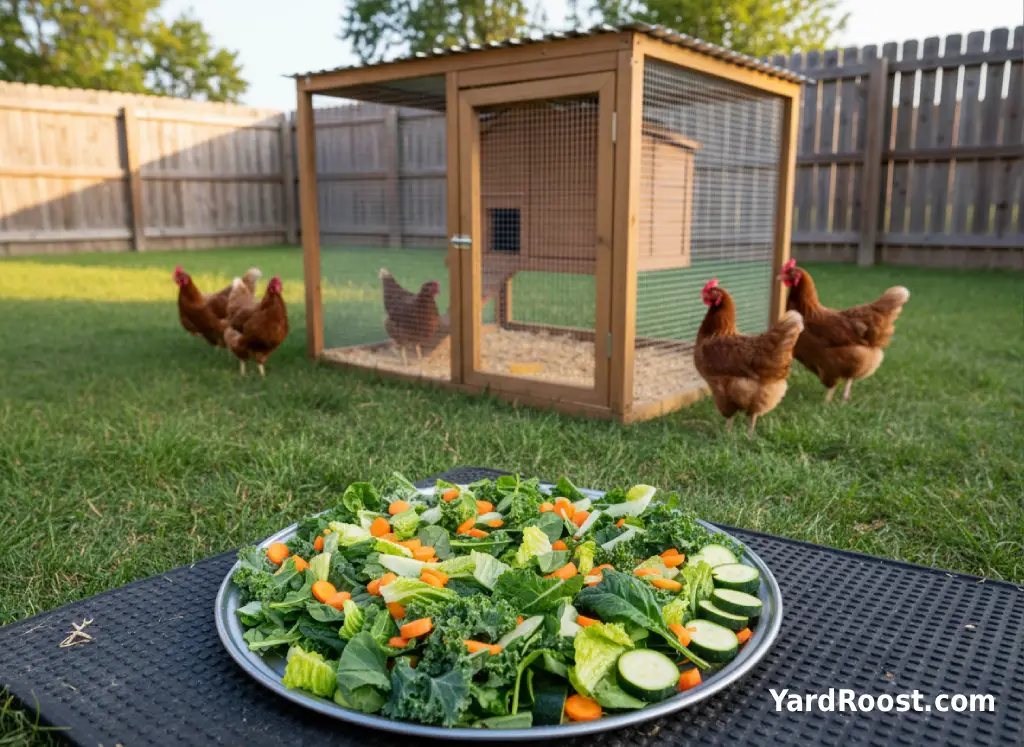
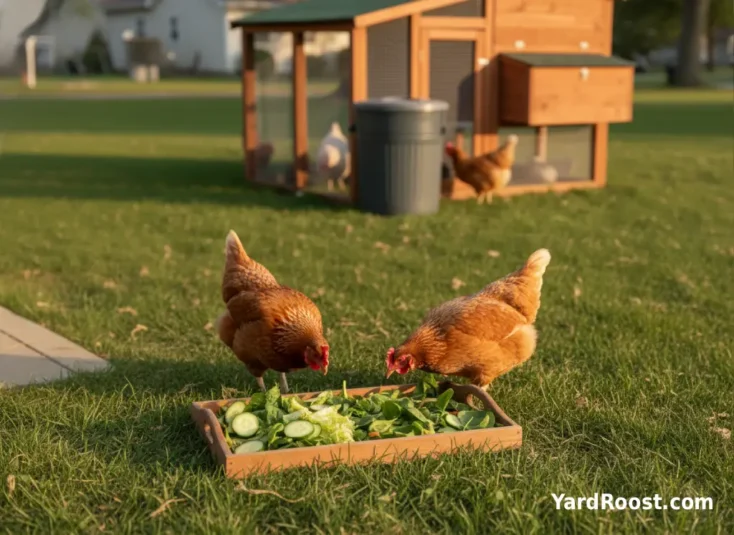
- Crunchy water treats: cucumber, watermelon rind (small amounts)
- Greens: romaine, kale, pasture weeds you can identify confidently
- Protein snacks: a small handful of mealworms as a training treat
- Flock entertainment: hang a cabbage so they can peck and “play”
Keep the main idea simple: treats are a side dish. Your best nutrition comes from a complete feed appropriate for age and purpose (layers vs growers), with scraps staying occasional.
Scrap Feeding Hygiene: Protect Your Family, Too
Whenever kitchen scraps meet chickens, remember there’s a human-health angle, too. The CDC recommends washing hands with soap and water right after touching backyard poultry, their eggs, or anything in their environment (and using hand sanitizer if soap and water aren’t available). Source: CDC backyard poultry guidance.
Two easy routines that help:
- Keep “coop shoes” outside so you don’t track coop mess into the house.
- Supervise kids and make handwashing non-negotiable after chicken time.
This doesn’t mean chickens are “dirty pets.” It just means good habits keep everyone safer—especially in spring and summer when backyard poultry contact tends to increase.
So, can chickens eat onions? In practice: avoid feeding onions and onion scraps on purpose, fence off access to onion plants and compost, and don’t rely on “they seem fine” as your safety plan. If a chicken snatches a tiny bite, remove access and monitor—but if you see serious signs like weakness, marked lethargy, or a rapidly worsening bird, call an avian vet promptly.
Your flock will be happier (and your cooking routine easier) when you have a simple system: onions and Alliums go in the lidded waste bin, while chicken treats come from a short “yes list.” That’s one of those small habits that pays off for years.