Yes, chickens can eat Brussels sprouts as an occasional treat. Plain raw sprouts, cooked sprouts, and Brussels sprout leaves can all work for a healthy adult flock, provided they are fresh, offered in manageable pieces, and fed in moderation.
The bigger consideration is not whether a Brussels sprout is acceptable—it is how much vegetable food replaces the flock’s nutritionally balanced feed. Backyard chickens are enthusiastic eaters, and a bowl of kitchen scraps can disappear surprisingly fast. That does not mean scraps should become a major part of their diet.
For most small backyard flocks, think of Brussels sprouts as enrichment with some nutritional value rather than a meal. Keep the birds’ age-appropriate complete feed available, offer vegetables in modest portions, remove leftovers before they spoil, and avoid heavily seasoned table scraps. The same approach works for many foods covered in our guide to what chickens can eat.
The Short Answer: Yes, in Moderation
Brussels sprouts fall into the broad category of plain vegetable scraps and leafy greens that can be used as supplemental foods for chickens. Colorado State University Extension includes leafy greens and vegetable scraps among foods that can be offered while emphasizing that treats should remain a small portion of the diet.
The practical rule is simple: Brussels sprouts should complement a complete poultry ration, not compete with it. A hen that fills up on vegetables has less room for feed formulated to provide the protein, energy, vitamins, minerals, and other nutrients she needs.
This matters especially for laying hens, growing birds, molting chickens, and any bird already struggling to maintain body condition. Oregon State University Extension cautions that excessive kitchen scraps and garden leftovers can dilute the nutrition supplied by a formulated ration.
Raw, Cooked, and Brussels Sprout Leaves
Can Chickens Eat Raw Brussels Sprouts?
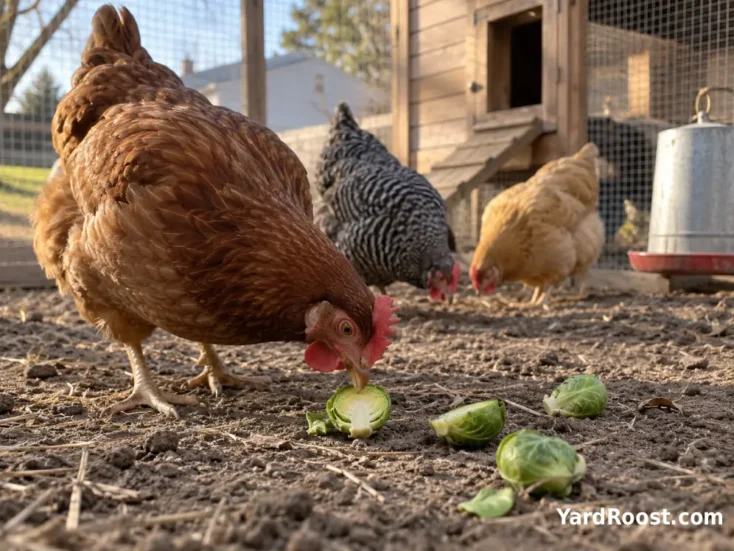
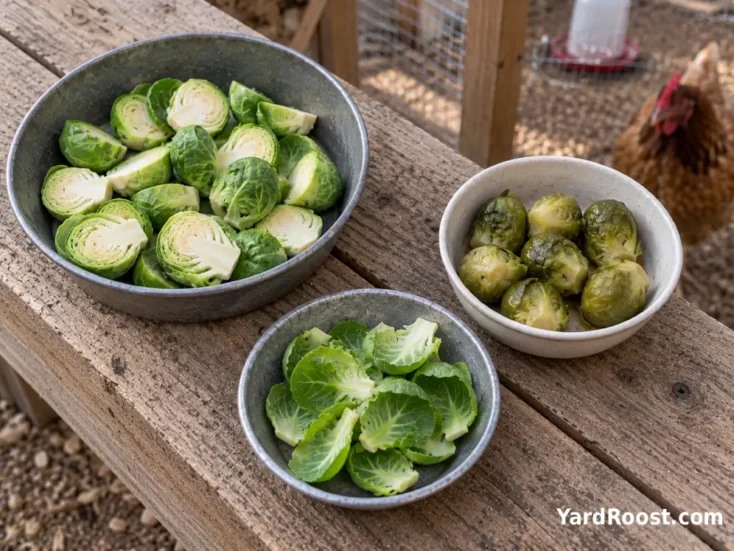
Yes. Raw Brussels sprouts can be offered fresh. Because a whole sprout is compact and firm, cutting it in half, quartering it, or shredding it makes the treat easier for several hens to share.
You do not need to cook Brussels sprouts simply because they are being fed to chickens. In fact, scattering a few chopped raw pieces through a run can encourage normal scratching and pecking behavior.
Can Chickens Eat Cooked Brussels Sprouts?
Plain, cooled cooked sprouts are also suitable as an occasional treat. Steamed or boiled leftovers are the simplest choice.
The problem is usually what humans add during cooking. Brussels sprouts covered in salty sauce, butter, bacon grease, or other rich ingredients are better kept out of the chicken treat bowl. If you plan to share dinner vegetables with the flock, setting aside a small unseasoned portion before preparing the rest is an easy habit.
Can Chickens Eat Brussels Sprout Leaves?
Yes, fresh outer leaves and leaves picked from a garden plant can be offered in the same moderate way as other leafy greens. Tear very large leaves into a few pieces or hang a small bunch where the flock can peck at it.
Do not use wilted produce that has become slimy, moldy, or rotten. Garden leaves should also be free of pesticide residues or other chemicals that are not approved for the intended use. If a crop has been treated, follow the product label rather than guessing about when the foliage is safe to offer.
How Much Brussels Sprout Can Chickens Have?
There is no useful universal rule such as one Brussels sprout per hen. Sprouts vary in size, and chickens vary considerably in age, breed, body size, activity, and nutritional needs.
A better boundary is to keep all treats combined—not just Brussels sprouts—to about 10% or less of the diet. Colorado State University Extension uses a 10% ceiling for treats, while Oregon State University Extension similarly recommends keeping scraps and supplemental greens limited so they do not displace formulated feed.
For a small backyard flock, that means a few chopped or halved sprouts shared among the birds is much more appropriate than dumping a large bowl of vegetables into the run.
- Offer the normal complete feed first.
- Start with a small amount of Brussels sprouts.
- Watch whether every bird can get a few pecks without a feeding frenzy.
- Remove uneaten pieces rather than leaving them to become wet or spoiled.
- Count other snacks given that day as part of the same treat allowance.
YardRoost editorial note: A common beginner mistake is treating every healthy-looking kitchen scrap as a free extra. Once fruit, vegetables, scratch grain, and mealworms are all added together, the flock may be getting considerably more supplemental food than it appears.
How to Serve Brussels Sprouts to Your Flock
You can make Brussels sprouts easy to share without turning feeding time into a project. For most flocks, a cutting board and a few seconds of preparation are enough.
- Raw sprouts: Halve, quarter, or shred them.
- Leaves: Tear large leaves loosely or offer a small bunch for pecking.
- Cooked sprouts: Let them cool and serve them plain.
- Garden extras: Shake off excessive soil and check for spoilage or unwanted chemical contamination.
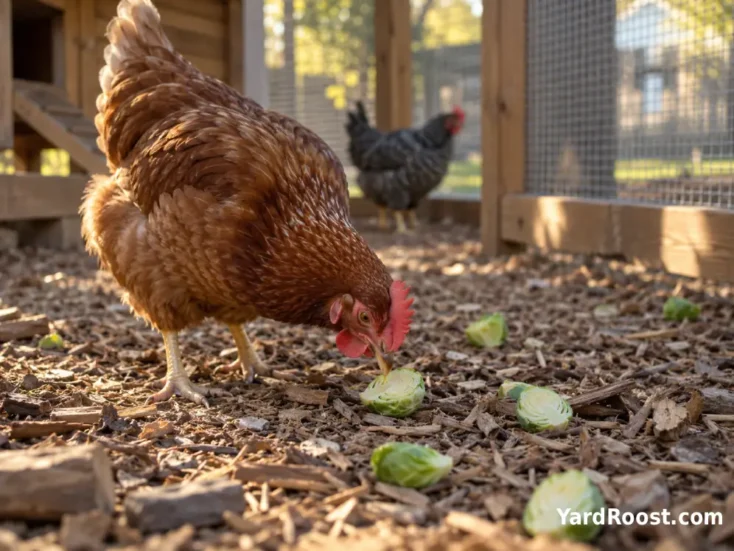
Scattering pieces over a clean section of the run can provide a little enrichment, especially when chickens have been confined by rain or snow. Another option is placing a few pieces in a dedicated treat dish so leftovers are easy to collect.
Avoid putting a large pile of moist vegetables directly into dirty bedding. Anything the chickens do not finish can become mashed into the ground, attract pests, or simply turn into unpleasant cleanup. Oregon State University Extension likewise recommends making sure kitchen scraps are consumed rather than leaving them decomposing around the flock area.
Why Complete Chicken Feed Still Comes First
Brussels sprouts contain plant nutrients and fiber, but that does not make them a replacement for poultry feed. Chickens need a ration formulated for their life stage, and the balance matters more than whether any one vegetable is considered nutritious.
Utah State University Extension recommends keeping appropriate formulated balanced feed available even for chickens that forage for greens, seeds, and insects. Oregon State University Extension makes the same basic point: supplemental greens and scraps can dilute a carefully balanced diet when they become too prominent.
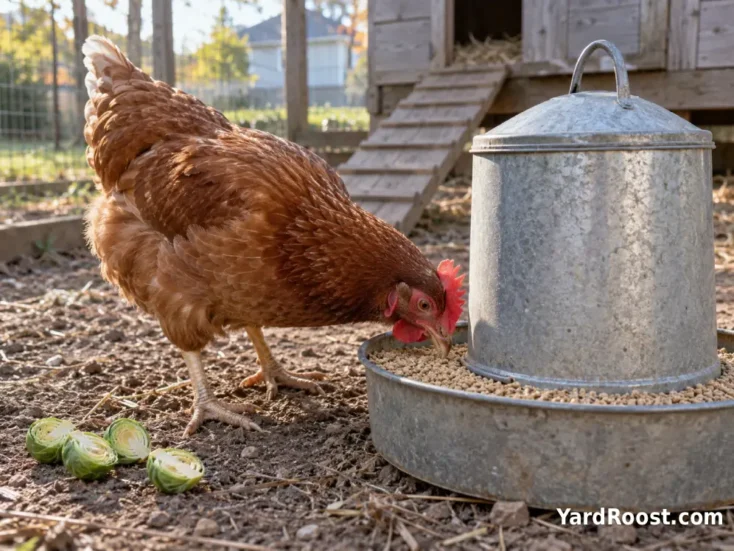
For beginners, the safer feeding order is straightforward: use an age-appropriate complete ration as the nutritional foundation, then add modest treats for variety and enrichment. Our chicken layer feed explains the difference between complete feed and supplemental foods in more detail.
This is particularly worth remembering when a flock loves a certain treat. Chickens being excited about Brussels sprouts tells you they enjoy eating them; it does not tell you how much they nutritionally need.
Common Brussels Sprout Feeding Mistakes to Avoid
Most problems with vegetable treats come from portion size, spoilage, or preparation rather than the vegetable itself.
- Serving too much: A large bowl of scraps can reduce how much complete feed the flock eats.
- Using spoiled leftovers: Discard produce that is moldy, rotten, slimy, or smells questionable. Utah State University Extension advises removing moldy or otherwise questionable feed rather than offering it to poultry.
- Sharing heavily seasoned dinner leftovers: Set aside plain Brussels sprouts before adding rich sauces, large amounts of salt, or cooking fats.
- Leaving scraps overnight: Pick up uneaten vegetables so they do not become a food source for rodents and other unwanted visitors.
- Forgetting the rest of the day’s treats: A little scratch, a few mealworms, fruit, and vegetables can collectively become a substantial portion of the diet.
One more practical point: do not bring poultry feeding dishes into food-preparation areas after they have been used around the flock. The CDC notes that apparently healthy backyard poultry can carry germs such as Salmonella and recommends washing hands with soap and running water after handling birds, their food, or equipment from their environment.
When to Get Professional Help
Eating a small amount of fresh Brussels sprouts should not require special monitoring beyond the normal attention you give your flock. However, do not assume a new symptom is simply caused by a vegetable treat.
If a chicken becomes unusually weak or lethargic, repeatedly refuses feed or water, develops persistent abnormal droppings, has trouble breathing, or shows other significant changes in behavior, remove questionable food and contact an avian or poultry veterinarian. A local land-grant university Extension office can also help you identify appropriate poultry resources.
If the concern involves spoiled food, a chemical product, or suspected contamination, keep the packaging or product information available for the professional you contact. Avoid trying to diagnose or treat the bird based solely on an internet symptom list.
Bottom Line on Brussels Sprouts for Chickens
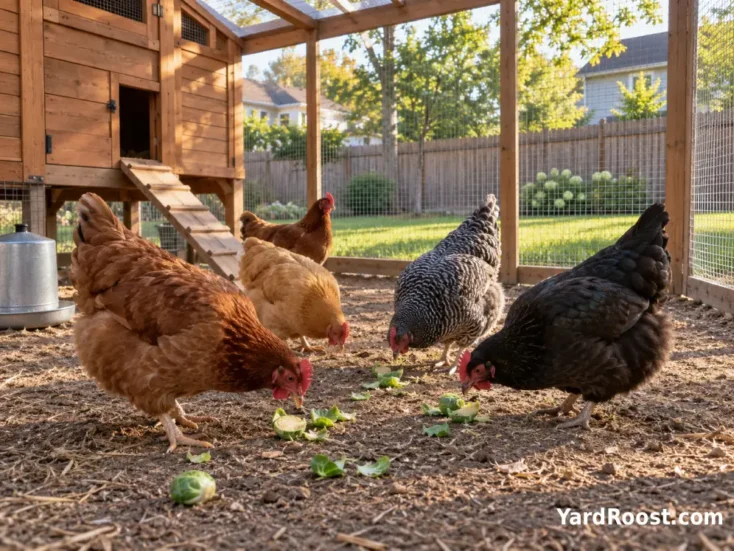
So, can chickens eat Brussels sprouts? Yes. Fresh Brussels sprouts can be a perfectly reasonable occasional treat for a backyard flock, whether they are served raw, plainly cooked, or as fresh leaves from the plant.
Keep the portions modest, make complete poultry feed the foundation of the diet, and skip sprouts that are spoiled or mixed into heavily seasoned leftovers. Cutting firm raw sprouts into smaller pieces also makes them easier for a small flock to share without one determined hen running off with the entire treat.
The useful rule is the same one that applies to most chicken treats: variety is fine, but nutritional balance still comes first. A few Brussels sprouts can add interest to the run; they do not need to become a regular meal.
If you have another vegetable sitting in the refrigerator and are wondering whether your flock can share it, check its safety first rather than assuming that every plant food is suitable for chickens.