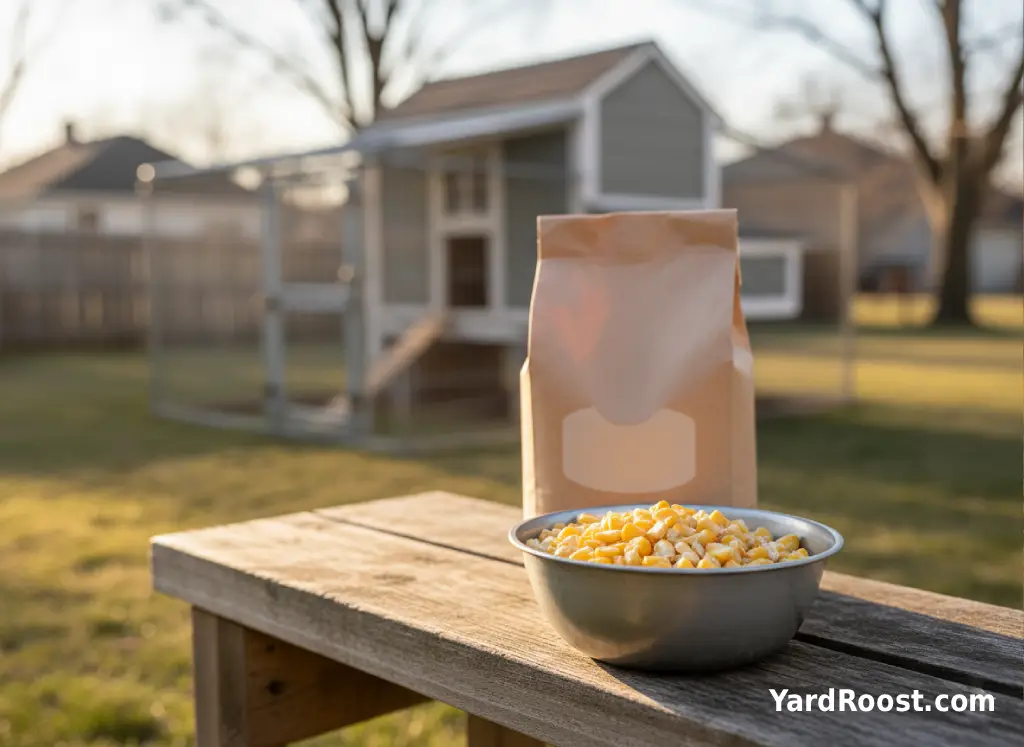
Cracked corn for chickens is one of those classic “they go crazy for it” feeds—because it’s tasty, easy to peck up, and packed with quick energy. It’s also one of the easiest ways to accidentally dilute a flock’s nutrition if it starts replacing a balanced ration. Think of cracked corn (and most scratch grain mixes) as the chicken version of snack food: fine in moderation, not a meal plan. University guidance for backyard flocks routinely frames scratch and cracked grains as treats, not complete feed.
In this guide, we’ll keep it practical: what cracked corn is, whether it’s “good” for your birds, and how to feed it without triggering picky eating, weight gain, rodent problems, or messy wet feed. We’ll also tackle the common questions backyard keepers ask—can chickens eat corn on the cob, do chickens eat corn husks, and what’s the deal with whole corn vs cracked corn—using safety-first, small-flock logic.
What Cracked Corn Is and Why Chickens Love It
Cracked corn is simply whole corn kernels that have been broken into smaller pieces. That smaller size makes it quick for chickens to pick up, and it’s often included in “scratch” mixes alongside other grains. Chickens are natural scratchers, so tossing a little cracked corn on the ground doubles as enrichment: they peck, scratch, and stay busy. Extension poultry educators often point out that scratch grains encourage normal foraging behavior—but they don’t replace the nutrition of a complete feed.
A common beginner misconception is that “corn = grain = feed,” so it’s fine to keep a feeder of cracked corn out all day. The problem is simple: a chicken that fills up on cracked corn has less appetite for the balanced protein, vitamins, and minerals in a formulated ration. That can show up as poorer feather quality, sluggish molts, or disappointing egg output over time (and it’s frustrating because it’s avoidable). Sources we trust for the big picture here include the University of Kentucky (via poultry.extension.org) and University of Minnesota Extension.
Is Cracked Corn Good for Chickens?
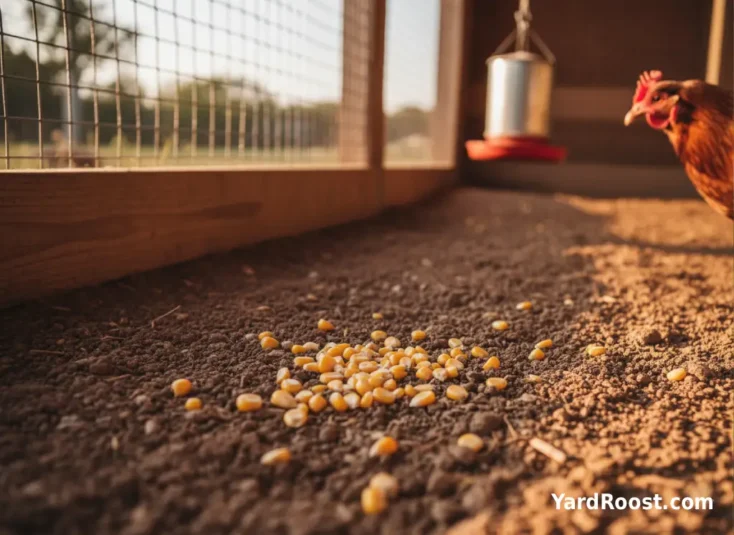
Cracked corn can be a perfectly fine treat—especially as an occasional boredom-buster or a quick energy add-on during cold snaps. But it’s “good” only in the way most treats are good: it helps you manage your flock (training, coop time, distraction during chores) and adds calories, while your complete feed does the heavy lifting nutritionally. University of Georgia poultry nutrition guidance is blunt on this point: scratch-style cracked grains are not a complete feed and can throw off diet balance if they start replacing formulated rations.
Two practical rules we use at YardRoost:
- Feed the balanced ration first. Treats are for after the flock has eaten what they need.
- Make “treat time” short. If it’s still on the ground long after the flock loses interest, you likely offered too much (and you’re inviting rodents).
Sources we lean on for treat framing and “don’t dilute the diet” messaging: University of Maryland Extension and poultry.extension.org (University of Kentucky).
How to Feed Cracked Corn Without Throwing Off the Diet
If you want a simple, evidence-based “how” for scratch and cracked corn, two university-backed guidelines are consistently useful:
- Keep scratch grains to roughly 10% of total daily intake. University of Maryland Extension gives this as a practical target for scratch grains like corn, oats, and wheat.
- Offer it late in the day, and only what they’ll clean up quickly. Poultry.extension.org suggests feeding scratch after birds have eaten complete feed, then offering only what they can finish in about 15–20 minutes.
Editorial note: A common mistake we see is using cracked corn to “get them to eat” when a bird seems off. If a chicken’s appetite is reduced, piling on treats can hide the real problem (and it can worsen digestive slow-down if a bird isn’t eating/drinking normally). Instead, keep things boring—complete feed and water—and watch closely.
One more practical piece: if your flock eats mostly pellets/crumbles and rarely forages in soil, think about grit when you add whole or cracked grains. Guidance from Oregon State University Extension and poultry.extension.org emphasizes that grit helps birds grind whole grains in the gizzard; birds on prepared feeds alone typically don’t need grit, but whole grains can change that.
Cracked Corn Vs Whole Corn: Which Is Better?
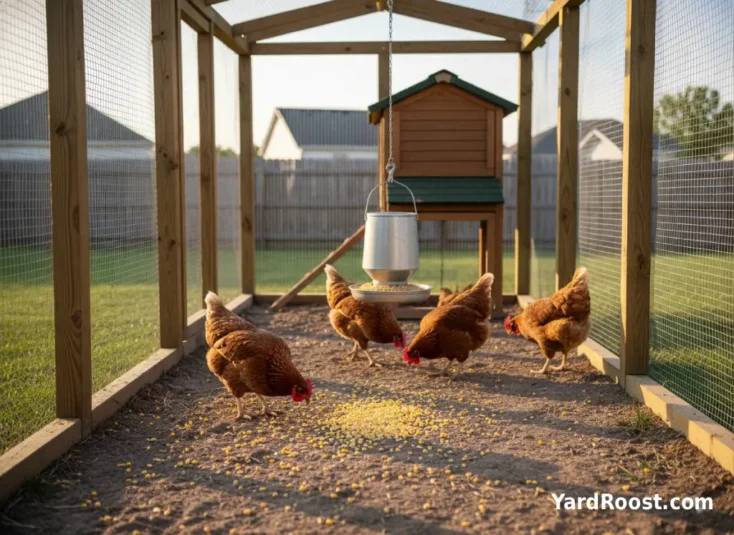
Most backyard flocks can handle either cracked corn or whole corn as an occasional treat. The “better” choice is really about practical management—what gets eaten cleanly, what gets wasted, and what fits your flock’s age and setup.
| Option | Why People Like It | Watch Outs | Best Use |
|---|---|---|---|
| Cracked corn | Easy for birds to pick up fast; good for quick training and short treat time | Easy to overfeed; small bits can disappear into litter (and attract rodents if left) | Scatter lightly so it’s finished quickly |
| Whole corn | Slower pecking; fewer tiny bits; can be less messy in deep litter | May need grit support if birds don’t forage in soil | Offer small amounts, ideally after the main feed |
For young birds, be extra conservative with scratch-type grains. Oregon State University Extension notes scratch (often wheat + cracked corn) should not be considered feed and is not suitable for young birds.
Can Chickens Eat Corn on the Cob or Whole Corn Kernels?
Can chickens eat corn? Yes—corn is commonly used in poultry feeding, and backyard keepers often offer it as cracked corn or as part of scratch grains.
Can chickens eat whole corn kernels? In most adult flocks, whole kernels are usually fine as an occasional treat. The main “gotchas” are overdoing calories and forgetting grit support if your birds don’t have access to small stones/soil. University sources emphasize grit’s role in grinding whole grains in the gizzard.
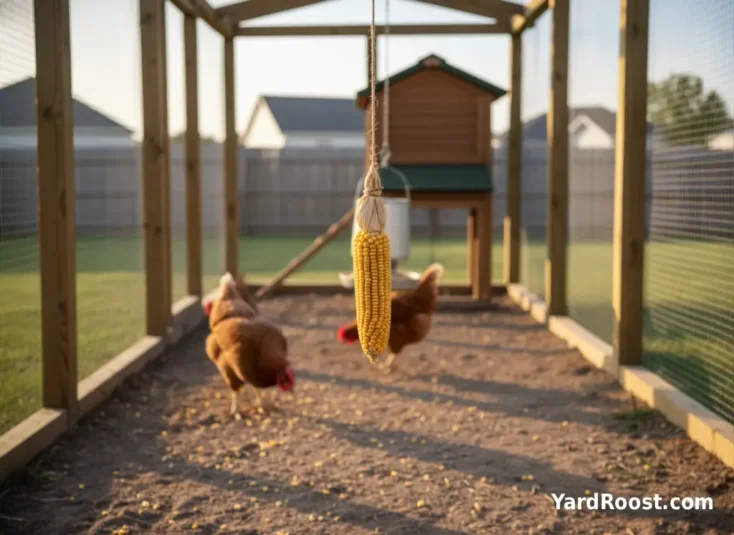
Can chickens have corn on the cob? If you want to use it, treat it like enrichment: hang it or place it where it stays dry, let the flock peck kernels off, and remove it before it turns into a wet, mold-prone mess. The cob itself is mostly fiber; your goal is pecking activity, not a big dietary “add.” If it gets rained on or starts smelling off, toss it.
What About Corn Husks and Silks?
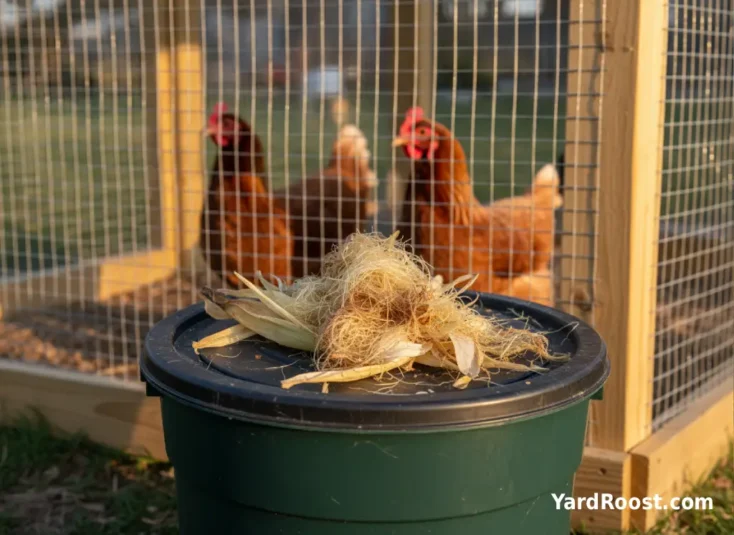
This is where we get picky about safety. Husks and silks are stringy and mostly fiber, and they don’t add much nutrition compared with a balanced ration. If you offer them at all, treat them as “something to peck at,” not a food source, and manage the physical risk:
- Keep portions tiny and short. Chop long, stringy pieces so they’re less likely to tangle or be gulped.
- Remove leftovers fast. Wet plant material in a run is a magnet for mold and pests—especially in humid weather.
- When in doubt, compost it. Most flocks don’t need husks, and it’s not worth creating a run-cleanup problem.
If you want safer “green-ish” enrichment, aim for things that don’t turn into long strings. And no matter what treat you’re offering, keep basic hygiene in mind—especially with kids: the CDC recommends washing hands right after handling poultry, eggs, or anything in their environment.
How to Store Cracked Corn to Avoid Mold and Pests
Cracked corn spoils the same way any grain does: moisture + time = mold risk. And mold isn’t just “gross”—corn can be a target for aflatoxins produced by Aspergillus molds, which are well-documented livestock and poultry hazards. University of Missouri Extension and Purdue Extension both discuss aflatoxins and their association with corn and feed contamination.
Practical storage steps (that actually work in backyards):
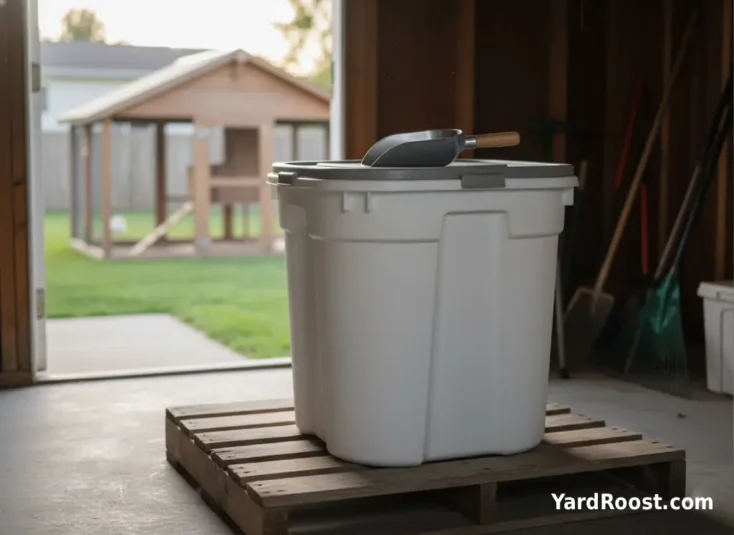
- Store it dry, sealed, and rodent-proof. University of Maryland Extension recommends keeping feed in a clean, dry, rodent-free area and notes that storing bags off concrete helps reduce moisture pickup.
- Buy amounts you’ll use fairly quickly. Poultry.extension.org notes feed can lose quality and become susceptible to mold when stored too long; use older feed first and don’t let grain sit around season after season.
- Do a smell-and-look check every time. Musty odor, clumping, visible fuzz, or “hot” damp grain are all reasons to toss it.
If you ever suspect mold, don’t try to “dilute it out” by mixing with good grain. Mississippi State Extension emphasizes that grain containing aflatoxin is toxic to animals—especially poultry—so play it safe.
Organic Cracked Corn and Treated Seed Corn: What to Know
Organic cracked corn for chickens can make sense if you’re already buying organic feed and you prefer the same standard for treats. Nutritionally, though, “organic” doesn’t change the big rule: it’s still scratch-style grain, so it should stay in the treat lane—not the main ration lane. (If you’re rebuilding your feed plan, start with our basics: /chicken-feed-basics/.)
The bigger safety issue is treated seed corn. Planting seed is often coated with pesticides and is not meant for food or feed. The National Pesticide Information Center explains treated seeds are coated with pesticides and often dyed as a warning, and the Minnesota Department of Agriculture notes treated seed labeling can include “Do not use for food, feed, or oil purposes.” In backyard terms: don’t buy “seed corn” for chickens, and don’t use leftover planting seed as feed.
How to Crack Corn for Chickens at Home
If you can only find whole corn, cracking it yourself is doable. You don’t need perfection—just smaller pieces that are easier to peck up and less likely to be wasted.
- Easiest: a hand-crank grain mill or small electric grain mill (set to “coarse”).
- Budget method: pour a small amount into a sturdy bucket and lightly crush using a clean tamper or a short 2×4 (eye protection helps—kernels can pop).
- What to avoid: turning it into corn flour. Fine powder can get damp fast and turn into sticky waste in litter.
Once cracked, store it the same careful way you’d store any feed: sealed, dry, and used before it goes stale or musty.
Common Mistakes to Avoid
- Leaving cracked corn out free-choice. Chickens will often choose scratch grains over balanced feed, which dilutes nutrition.
- Overfeeding “because it’s cold.” Extra calories can help, but it won’t fix drafts, wet litter, or poor ventilation. If you use scratch in winter, keep it small and controlled. (Ohio State University’s backyard winter guidance mentions scratch mixes with cracked corn as something chickens enjoy—just don’t let “enjoy” become “main diet.”)
- Skipping grit when feeding whole grains. University guidance notes grit supports grinding whole grains; provide it separately when needed.
- Feeding scratch to young birds. Scratch isn’t a starter feed, and OSU Extension notes it’s not suitable for young birds.
- Using damp, musty, or questionable grain. Mold risk and aflatoxin risk are real with corn—when in doubt, toss it.
When to Call an Avian Vet
Feeding cracked corn usually isn’t a medical issue—but treats can complicate things when a bird is already not doing well. If you notice any of the signs below, pause treats (including corn), stick to complete feed and water, and contact an avian vet or a poultry-knowledgeable clinic:
- Refusing feed for more than a day, or not drinking
- Repeated straining, swelling, or obvious distress
- Marked lethargy, trouble standing, or sudden decline
- Foul odor from the beak, repeated regurgitation-like behavior, or ongoing watery droppings
Editorial note: A common mistake we see is trying to “tempt them” with more treats when they’re off. It can delay real help. When behavior changes sharply, a fast call is usually the best move.
Bottom Line: Use Cracked Corn Like a Tool, Not a Diet
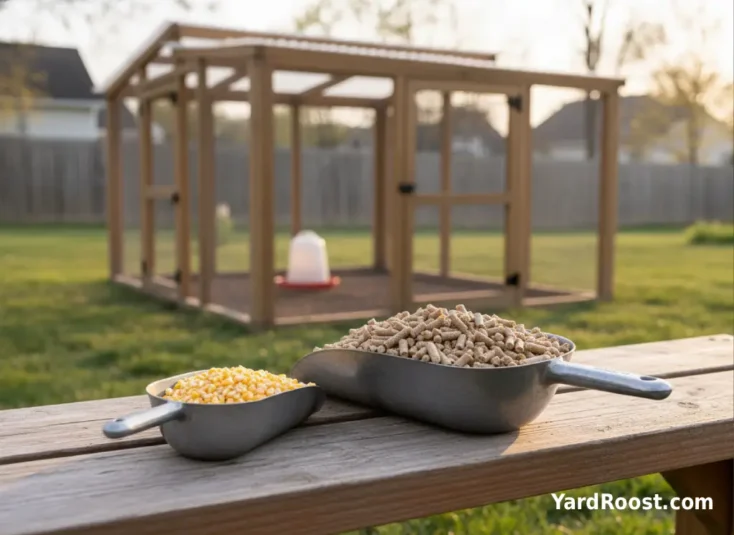
Cracked corn can absolutely have a place in a backyard flock—just keep it in its proper role. It’s a quick-energy treat, a training helper, and an enrichment option that gets chickens scratching and moving. What it isn’t: a balanced feed, a winter “fix,” or something to leave out all day. University-backed guidance consistently points to the same guardrails: limit scratch grains (including corn) so they don’t dilute the carefully formulated nutrition in complete feed, offer them after the flock has eaten their ration, and keep the amount small enough that it disappears quickly.
If you take one action from this article, make it this: pick a simple treat routine you can repeat—same time of day, small amount, fast cleanup. Your birds stay happier, your feed costs stay more predictable, and you’ll spend less time battling rodents and wet run messes.