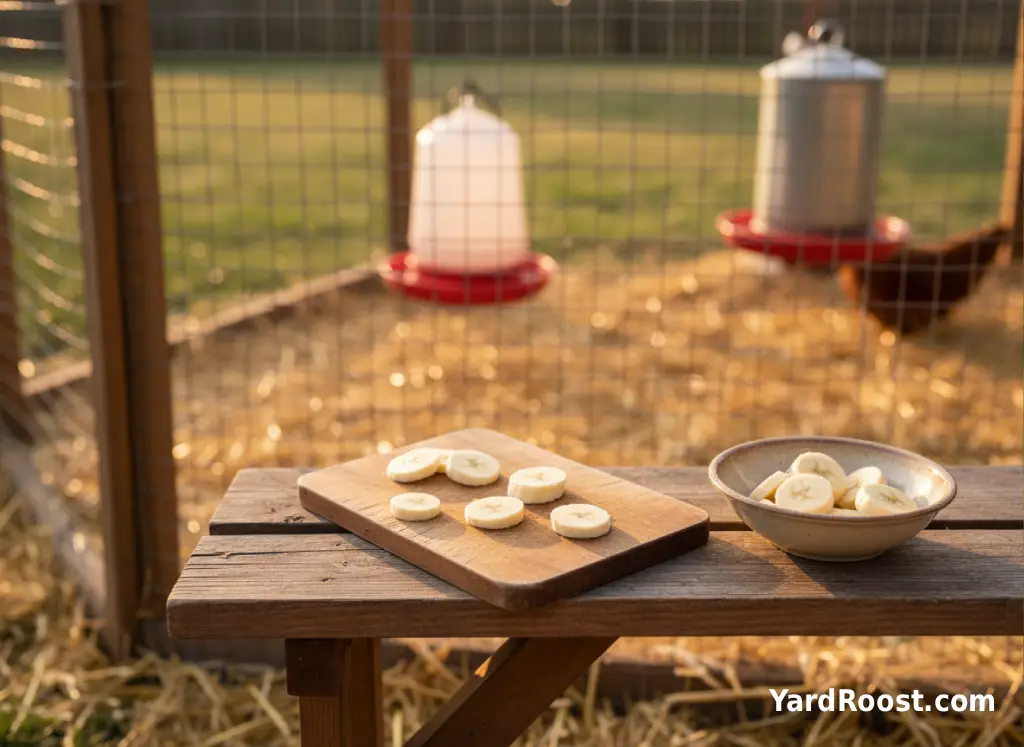
Mushrooms are one of those backyard “surprise snacks” that show up overnight—especially after rain—and it’s normal to wonder if your hens (or ducks) can safely nibble them. Here’s the straight answer: chickens can eat some mushrooms you’d buy for your own kitchen, but wild mushrooms in the yard are a different story. The hard part is that telling safe from unsafe mushrooms is genuinely tricky, and cooking doesn’t reliably make toxic mushrooms safe.
This guide is written for beginner-to-intermediate backyard keepers with small US flocks. It focuses on practical, low-risk choices: what you can offer, what to avoid, and what to do if your birds beat you to a mushroom you didn’t even know was there. We’re not veterinarians, and we can’t diagnose illness—but we can help you make safer feeding decisions and know when it’s time to call an avian vet.
The Quick Answer: Yes, But Only the Mushrooms You’d Serve at Your Table
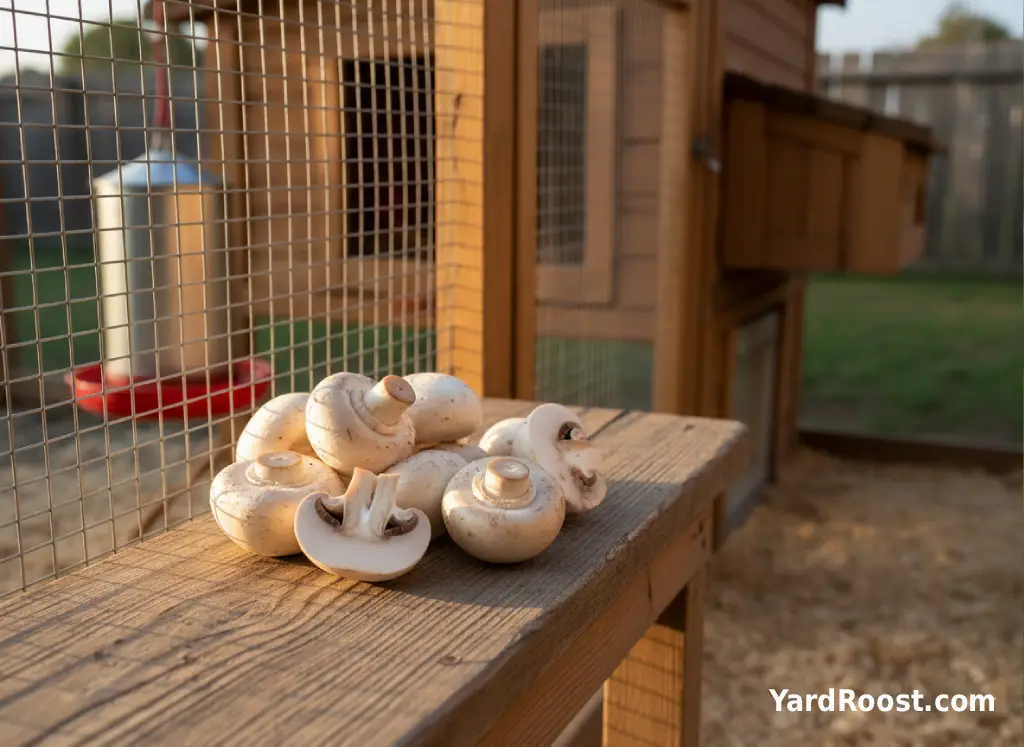
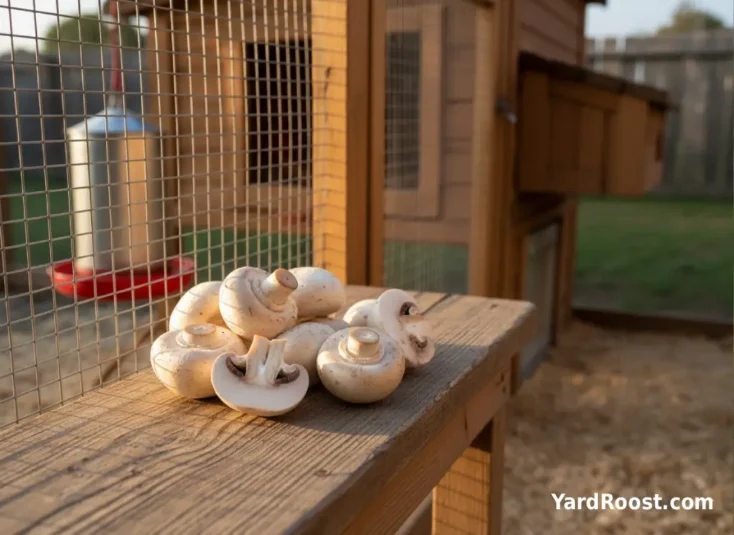
When people ask about feeding chickens mushrooms, they usually mean the common store-bought kinds—button, white, cremini, portobello, shiitake, oyster, and similar varieties. If it’s a standard culinary mushroom you’d feel comfortable eating yourself, it’s generally the lowest-risk category to offer in tiny amounts as an occasional treat.
What we do not recommend: letting mushrooms found in the yard become a regular snack. Many wild mushrooms can cause mild to severe poisoning in animals, and experts caution that toxins in poisonous mushrooms are not reliably destroyed by cooking or drying. That’s why the “mystery mushroom in the grass” situation is where caution matters most (Oregon State University Extension; Merck Veterinary Manual; CDC).
Practical rule of thumb for backyard flocks: treat mushrooms like you treat unknown plants—if you can’t confidently identify it as a safe culinary species from a trusted source, don’t offer it, and try to keep birds from eating it.
Why Wild Mushrooms Are a Bigger Deal Than Kitchen Mushrooms
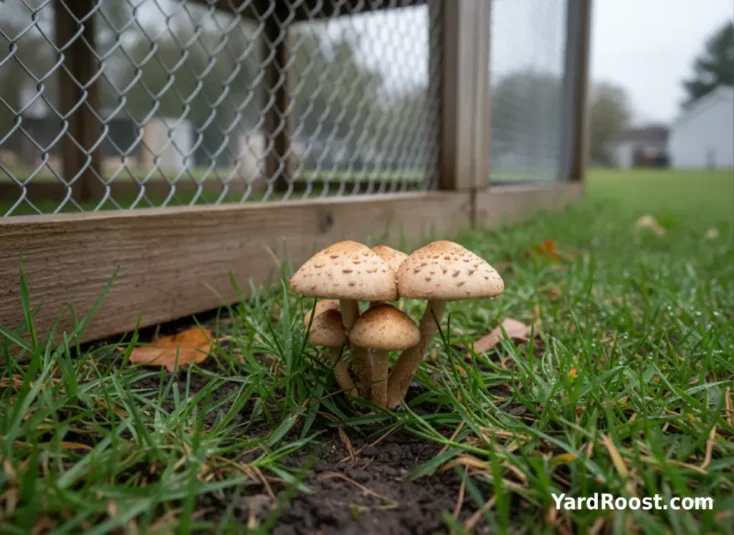
Wild mushrooms aren’t “automatically poisonous,” but the identification risk is real. Public health authorities repeatedly warn that distinguishing edible from poisonous mushrooms is difficult, and that serious poisonings can happen when people guess wrong. The CDC has emphasized that many wild mushroom poisonings are preventable and can be severe (CDC; CDC MMWR).
The other issue is reassurance myths. Two common ones we hear in backyard chicken circles:
- If animals eat it, it must be safe. Not a reliable test—different species tolerate toxins differently, and birds may sample things out of curiosity.
- Cooking makes it safe. Not dependable for poisonous mushrooms; some toxins are not reliably inactivated by cooking or drying (Oregon State University Extension; CDC MMWR).
In short: your birds don’t need mushrooms nutritionally, so there’s no upside big enough to justify gambling on wild ones.
Can Chickens Eat White Mushrooms, Raw Mushrooms, or Cooked Mushrooms?
If you’re sticking to store-bought culinary mushrooms, preparation matters mostly for digestion and flock management, not because cooking somehow makes a dangerous mushroom safe. Here’s what tends to work best for small backyard flocks:
- White mushrooms: Button mushrooms from the grocery store are the most common low-risk option to offer in small amounts.
- Raw mushrooms: Some chickens will peck at them, but raw pieces can be a little tougher to break down. If you try them, keep the pieces very small and finely chopped, then watch for loose droppings.
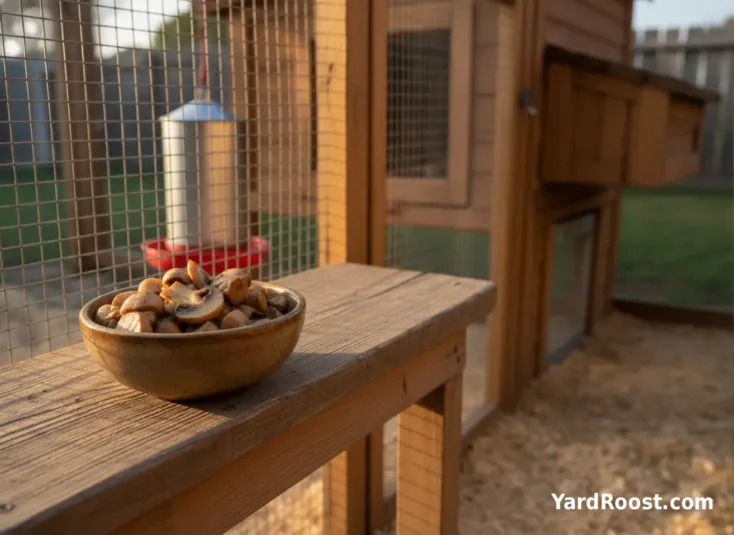
- Cooked mushrooms: Plain cooked mushrooms, with no salt, butter, oil-heavy seasoning, or sauces, are often the easiest form for birds to handle.
Two simple, safety-first feeding tips:
- Keep it boring. No onion/garlic-heavy mixes, no creamy sauces, no greasy pan drippings. Offer mushrooms plain, as a tiny add-on to their normal ration.
- Use a “treat tray” rule. Put treats in one spot for 10–15 minutes, then remove leftovers. Mushrooms (raw or cooked) get slimy fast, and spoiled food is never a win for poultry.
A common mistake we see is tossing a whole portobello cap into the run and assuming the flock will “self-regulate.” Some birds will, some won’t—and you can end up with one hen gorging while others get none. Chopped pieces spread thinly prevents binge-eating and keeps mess down.
What If Chickens Eat a Mystery Mushroom Before You Can Stop Them?
This is the stressful situation behind so many questions about chickens and mushrooms: you look out, and one of your birds has already taken a bite. Don’t panic—but don’t shrug it off, either. The goal is to limit any further exposure and watch closely for concerning signs.
Safe first steps you can do right away:
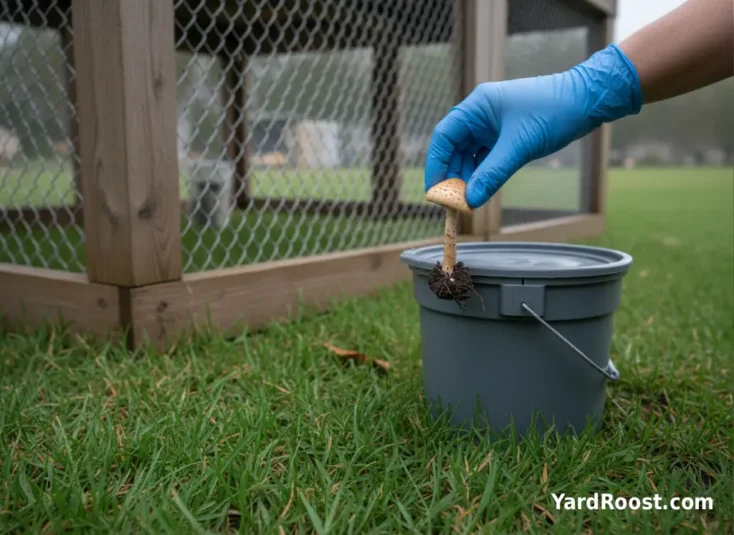
- Remove access. Move birds to the run/coop temporarily and pick up any remaining mushrooms (wear gloves if you can).
- Save a sample. If you can, place the mushroom (or a clear photo of it) in a bag/container in case a veterinarian needs it later.
- Watch the clock. Note the time you saw the bird eating it. If symptoms show up, that timeline helps your vet.
- Keep treats simple. Don’t “counterbalance” with extra scraps. Stick to normal feed and water while you observe.
A common mistake we see is assuming that if a bird looks fine for an hour, the risk is over. With some toxins, serious illness can develop later, and cooking doesn’t reliably neutralize mushroom toxins (CDC MMWR; Oregon State University Extension).
Keeping Mushrooms Out of the Coop Run and Free-Range Areas
Mushrooms love moisture, shade, and decaying organic material—conditions that can show up around coops and runs if waterers leak or bedding stays damp. You don’t have to sterilize your yard, but you can make mushrooms less likely to pop up where birds forage.
Try these practical changes (pick the ones that fit your setup):
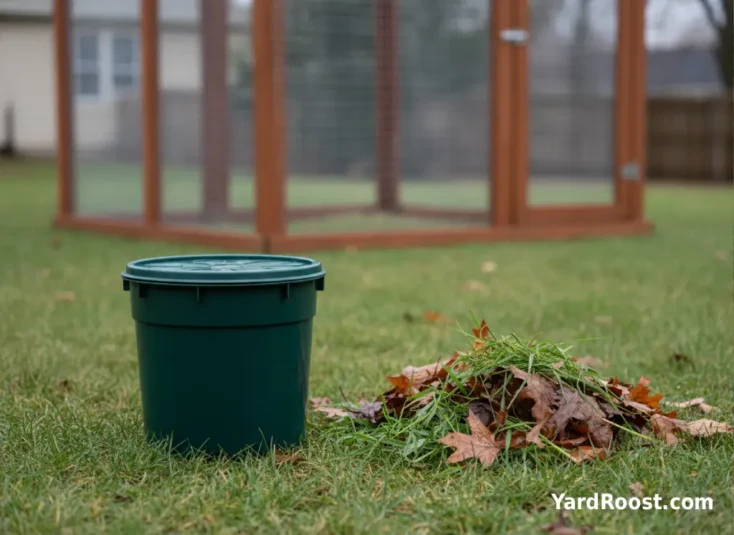
- Fix wet spots fast. If the ground stays soggy under the waterer, move it and add dry footing (coarse sand or wood chips can help keep the surface drier).
- Keep run bedding “fluffy,” not packed. A compacted, damp run floor is a mushroom invitation. Rake and top up as needed—especially after heavy rain.
- Fence off the “mushroom corner.” If one shady area always sprouts fungi, block it off during wet weeks rather than fighting a losing battle.
Ventilation matters here too: damp coops create damp litter. If your coop smells ammonia-like or feels humid inside, fix airflow before you keep adding bedding. Related: Chicken Coop Ventilation.
Common Mistakes to Avoid With Mushrooms and Poultry
- Feeding yard mushrooms because “they’re natural.” Natural doesn’t mean safe—and identification is the big problem (CDC; Oregon State University Extension).
- Assuming cooking makes any mushroom safe. It doesn’t reliably inactivate toxins in poisonous varieties (Oregon State University Extension; CDC MMWR).
- Offering seasoned leftovers. Mushrooms sautéed with lots of salt, butter, onion, or rich sauce are not a smart poultry treat.
- Letting scraps rot in the run. Spoiled food attracts pests and creates the damp conditions mushrooms like.
- Not keeping notes after an “oops.” If a bird ate an unknown mushroom, write down time, amount (best guess), and any signs you see. That record is surprisingly helpful if you end up calling a vet.
Editorial note: if you only follow one rule, make it this—avoid wild mushrooms in chicken areas. There are plenty of safer treats that don’t come with a “guess the species” problem.
Can Ducks Eat Mushrooms Too?
If you’re wondering about ducks too, the same safety logic applies. Ducks are curious foragers and can sample things quickly, so it’s best to stick to known, store-bought culinary mushrooms offered plain and in small amounts. Avoid wild mushrooms, since identification is unreliable and some toxins can cause serious illness (CDC; Merck Veterinary Manual).
One duck-specific practical tip: ducks make messes with wet food fast. If you offer any chopped mushroom, do it on a washable tray or dish and remove leftovers promptly so it doesn’t become a slimy, fly-attracting mess.
When to Call an Avian Vet
If you suspect a chicken (or duck) ate an unknown mushroom and you see concerning signs, it’s time to involve a professional. Mushroom toxins vary widely, and the safest move is to get veterinary guidance rather than trying home fixes.
Call an avian vet promptly if you notice any of the following after possible mushroom exposure:
- Repeated vomiting/regurgitation attempts, severe diarrhea, or signs of dehydration
- Weakness, wobbliness, tremors, seizures, or unusual sleepiness
- Collapsed posture, inability to stand, or rapid worsening over minutes to hours
- Multiple birds showing signs after foraging the same area
When you call, share what you can: when it happened, how much might have been eaten, and a photo or sample of the mushroom if you safely collected one.
(Reference context on mushroom toxicosis: Merck Veterinary Manual; public health warnings about severity and delayed serious outcomes: CDC MMWR.)
Simple Decision Guide for Feeding Mushrooms
| Situation | Safest Move | Why |
|---|---|---|
| You have store-bought button/cremini/portobello | Offer a tiny amount, chopped, plain; remove leftovers quickly | Known culinary species; easiest to control portion and spoilage |
| You have cooked mushrooms from dinner | Only if plain (no heavy seasoning/sauce); offer sparingly | Seasonings and rich leftovers can be a bigger issue than the mushroom |
| Mushrooms popped up in the yard/run and you can’t ID them | Remove access; pick and dispose; don’t feed | Poisonous look-alikes are hard to distinguish; toxins may be severe (CDC; OSU Extension) |
| A bird already nibbled a wild/mystery mushroom | Prevent more eating; observe closely; call an avian vet if signs develop | Risk varies by species/toxin; professional guidance is safest (Merck Veterinary Manual) |
Conclusion: Keep Mushrooms a Controlled Treat, Not a Foraging Gamble
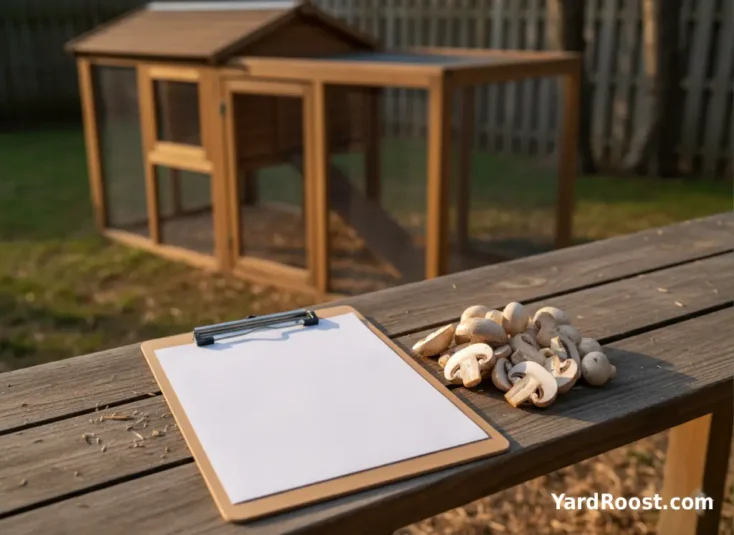
So—can chickens eat mushrooms? Yes, with a big caveat: treat mushrooms like a food you control, not something your flock “finds.” If you want to offer mushrooms, stick with clean, store-bought culinary varieties and serve them plain and chopped in small portions. Cooked is often easier than raw, but the biggest win is removing leftovers before they spoil and attract pests.
Where backyard keepers get into trouble is wild mushrooms. The identification risk is real, serious poisonings are documented, and cooking doesn’t reliably neutralize toxins in poisonous mushrooms. The most practical approach is prevention: reduce damp run conditions, clean up organic debris, block off high-sprout areas during wet weeks, and remove mushrooms promptly when they appear.
If your birds beat you to a mystery mushroom, focus on preventing further access, noting the time, and watching closely—then get an avian vet involved if you see concerning signs. For more low-risk treat ideas that won’t pop up overnight after rain, check out your feeding routine and keep treats as a small add-on to a balanced ration.
Sources referenced in this article include Oregon State University Extension, the CDC (including MMWR reporting), University of Florida IFAS Extension, and the Merck Veterinary Manual.