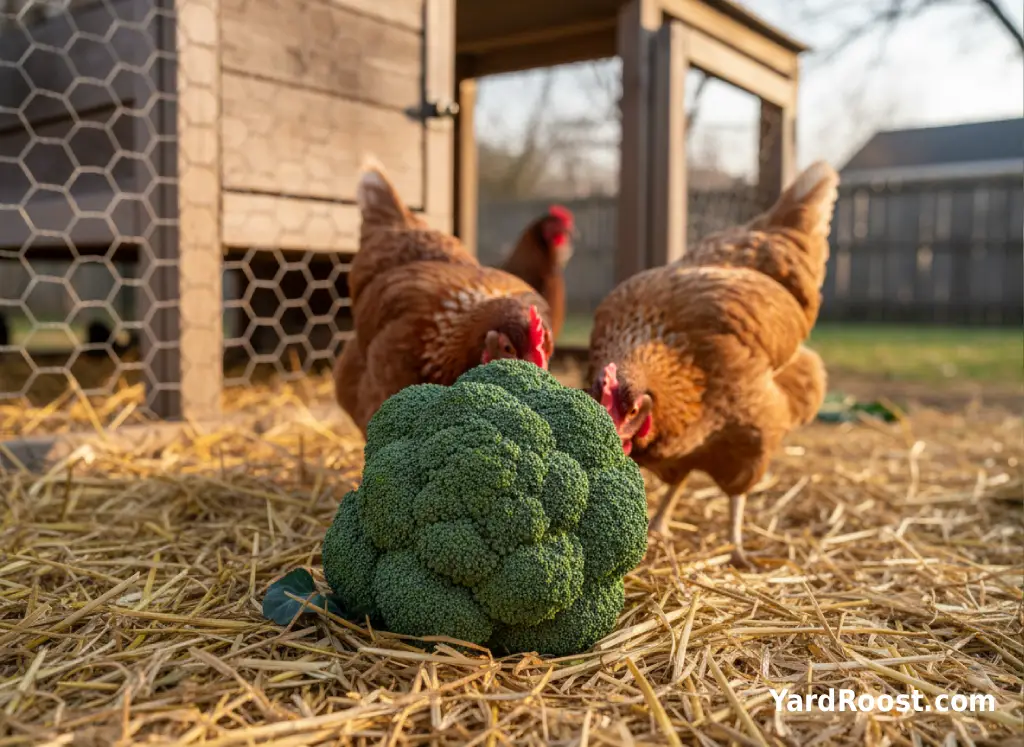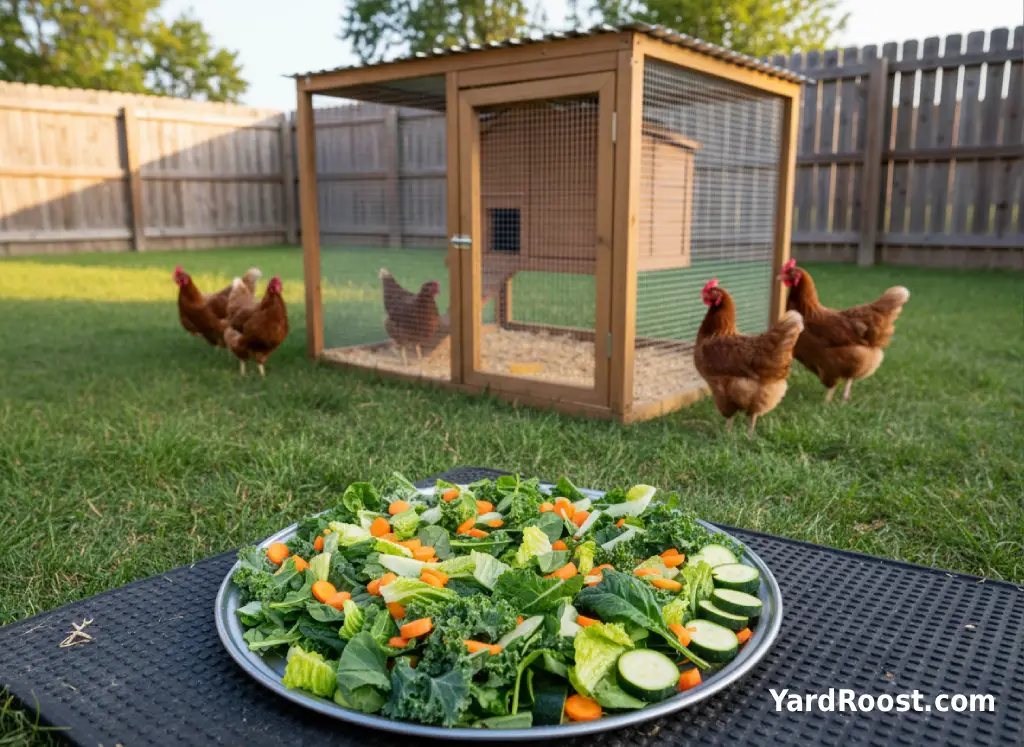
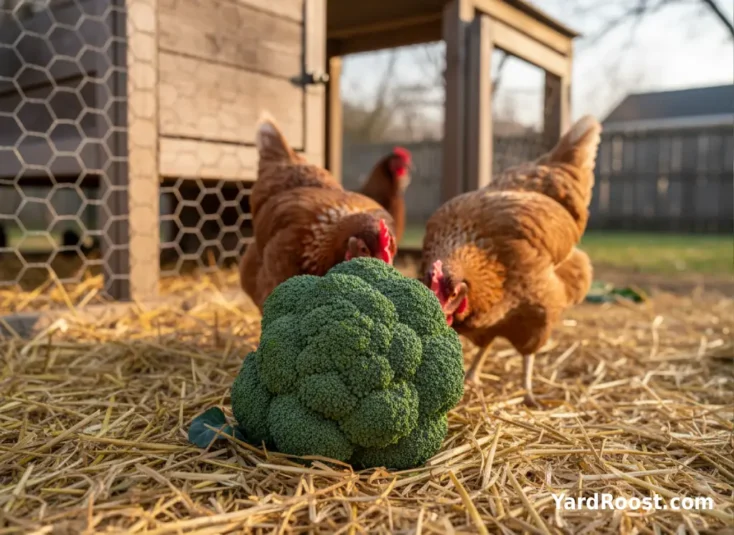
Yes—can chickens eat broccoli? They can, and most flocks do great with it as an occasional, simple treat. Broccoli is basically a crunchy green snack: useful for variety and enrichment, but not a replacement for a complete poultry feed. The goal is to keep your birds’ “real diet” doing the heavy lifting (protein, vitamins, minerals), and let treats like broccoli stay in the fun-but-small category.
If you’ve wondered can chickens have broccoli raw, can chickens eat cooked broccoli, or whether stems and leaves are okay, you’re in the right place. We’ll cover portions, prep, and the easiest ways to serve broccoli so it doesn’t get ignored (or turn into a soggy mess). We’ll also touch on ducks—because the same question comes up fast once one neighbor sees the other neighbor’s flock.
Broccoli for Chickens: The Short Answer
Broccoli is generally a safe vegetable treat for chickens when it’s fresh, clean, and served plain. Chickens are omnivores and can eat a range of fruits and vegetables, but they still need a balanced prepared feed as the main diet.
So, do chickens eat broccoli? Many do—especially once they learn it’s food. Some birds dive into the florets immediately, while others stare at it like it’s suspicious shrubbery. If you’ve ever asked will chickens eat broccoli, the honest answer is: usually yes, but presentation matters (we’ll get to the “hang it up” trick that works for a lot of flocks).
How Much Broccoli Is Too Much?
The easiest way to keep treats safe is to keep them small. University poultry guidance commonly recommends limiting “extras” so birds don’t fill up on low-protein snacks and skip their balanced ration. Two keeper-friendly rules you can actually use:
| Rule of Thumb | What It Looks Like in Real Life |
|---|---|
| Keep scratch/treats around 10% of daily intake | Broccoli is a treat, not “the salad bar.” Most of the day’s calories should still come from complete feed. |
| Offer only what they can finish quickly | If the broccoli is still sitting there after a short snack window, you offered too much (or it’s not their favorite today). |
University of Maryland Extension notes scratch grains are generally about 10% of total daily consumption, and Oregon State University Extension applies a similar limit to table scraps and greens—aim for only what they can clean up in about 20 minutes.
A common mistake we see is turning “healthy greens” into a big daily buffet. The flock looks thrilled, but the egg basket (and body condition) can quietly drift the wrong way if balanced feed gets crowded out. If you want broccoli often, go smaller and rotate it with other produce so it stays an occasional add-on, not the main event.
Raw vs. Cooked Broccoli: What’s Better?
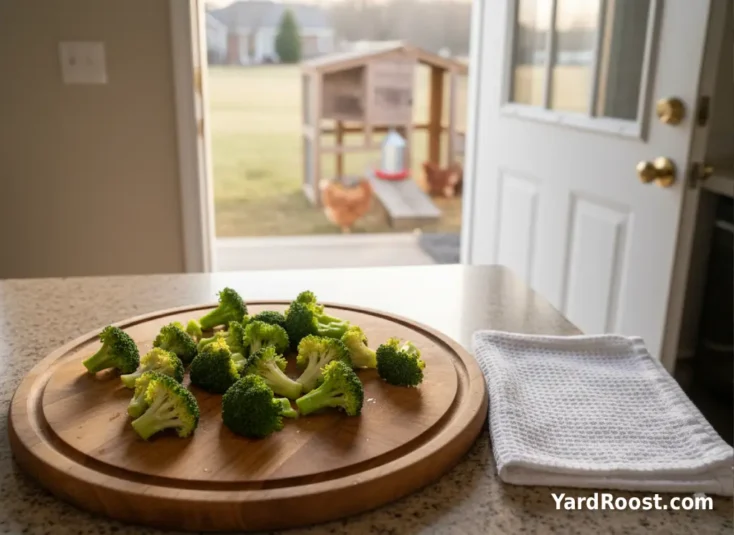
Can chickens eat raw broccoli? Yes—raw is fine for many birds. Can chickens eat cooked broccoli? Also yes, as long as it’s plain. The main difference is texture: lightly steaming can soften stems and make broccoli easier for younger birds or picky eaters to break down.
Keep it simple:
- Serve plain only. Skip salt, butter, oils, spicy seasonings, and cheese sauces.
- Cool cooked broccoli first. Warm is fine; hot is not.
- Cut stems smaller than you think you need to. If a piece looks “choke-able,” it probably is.
Also: don’t let “cooked” turn into “leftovers from the dinner table.” A broccoli casserole has ingredients chickens don’t need, and it’s easy to overserve when it’s already mixed into a big dish.
Don’t Waste the Plant: Stems and Leaves Count
If you’re wondering can chickens eat broccoli stems or can chickens eat broccoli leaves, the practical answer is: those parts can be useful, too—especially when you chop stems into small pieces and offer leaves like other greens.
There’s even published poultry research interest in broccoli by-products. A UC Agriculture and Natural Resources newsletter summarized studies using dried broccoli stems and leaves meal in layer diets, noting improvements in yolk pigmentation at certain inclusion rates, and also cautioning that brassica compounds (glucosinolates) can be a problem when included too heavily. In backyard terms: enjoy the stems and leaves, but don’t make broccoli the bulk of your birds’ daily “extras.”
Practical keeper tip: the stem is the part most likely to get left behind if it’s woody. If your knife struggles, your hens will struggle more—slice thinner or lightly steam it.
Easy Serving Ideas and a Trick for Picky Birds
Broccoli gets eaten fastest when you make it fun. Instead of tossing pieces onto the ground (where they turn into muddy confetti), try one of these:
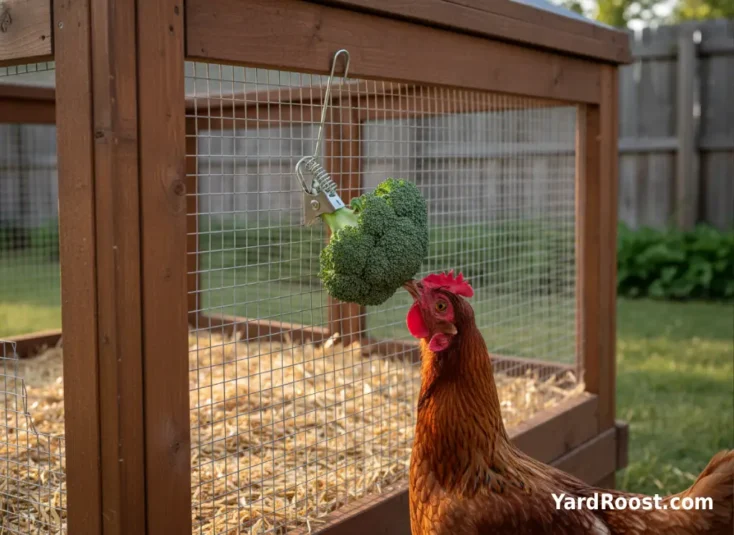
- Hang a whole head just above chest height so they have to peck and stretch.
- Use a suet cage (the kind sold for wild bird seed cakes) and pack florets in loosely.
- Scatter-chop stems and sprinkle them through dry bedding so the flock has to “forage.”
- Lightly steam and cool for a softer texture if your flock ignores raw broccoli.
Colorado State University Extension specifically suggests hanging a broccoli (or cauliflower) head for hens to peck at and play with—one of those simple ideas that feels almost too easy until you try it.
A common mistake we see is leaving the hanging head up all day in damp weather. It can turn slimy, attract rodents, and become “that gross thing” the chickens kick around. Treat broccoli like any other scrap: if it’s not getting eaten, remove it and try again later with a smaller amount.
Seasonal Ways to Offer Broccoli
Broccoli is a cool-season veggie, but it can work year-round with a little strategy:
In summer: offer small amounts early or late in the day, and consider frozen florets as a short-lived enrichment snack. Keep portions modest—especially in heat—so it doesn’t melt into a mess.
In winter: hanging a head gives birds something to do when they’re stuck inside a covered run more often. If you’re supplementing because boredom pecking is creeping in, prioritize enrichment plus a steady balanced diet.
Year-round: rotate greens instead of repeating the same brassica every day. Variety helps you avoid “treat tunnel vision” and keeps your birds interested.
Food Safety, Mold, and Salmonella Basics
Broccoli itself isn’t the usual problem—old broccoli is. Fresh produce can get slimy fast in warm weather, and any scrap can attract rodents if it lingers. Multiple poultry resources emphasize storing feed and offering supplements in ways that don’t invite spoilage or pests, and to avoid moldy feed because toxins can remain even if you scrape the visible mold away.
Keep it safe with a simple routine:
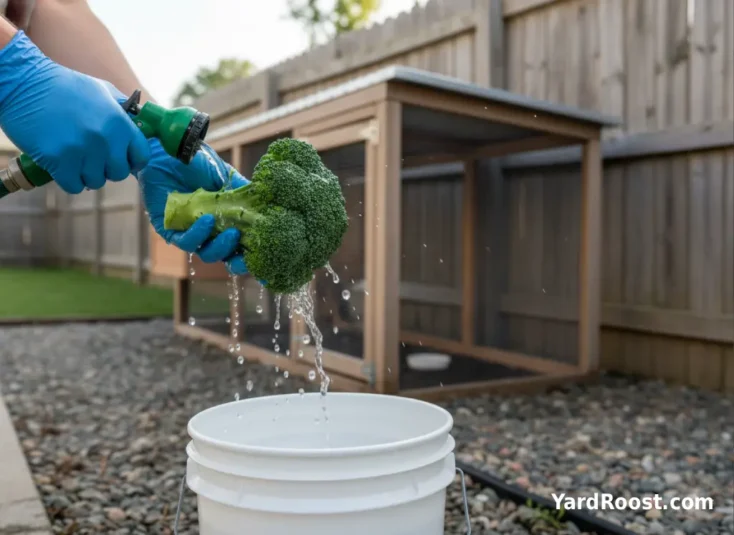
- Wash and inspect. Skip anything slimy, smelly, or visibly moldy.
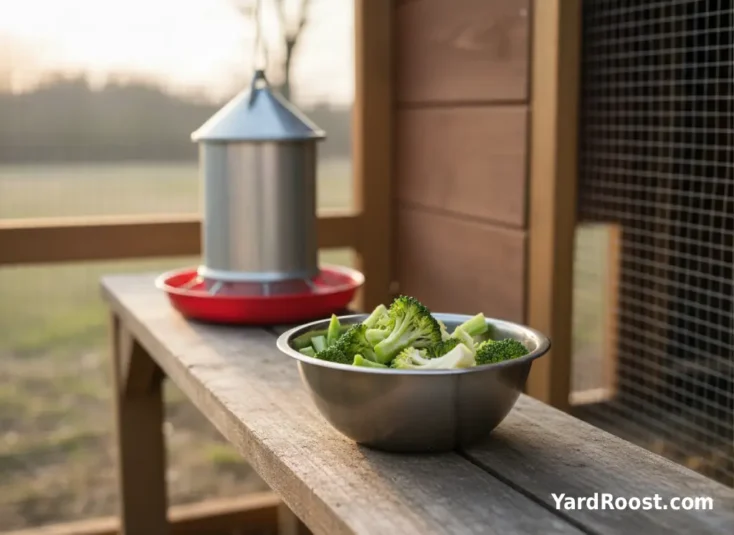
- Serve on a clean surface. A dish, a tray, or hung up beats the mud.
- Remove leftovers promptly. Use the “short snack window” rule so scraps don’t sit around.
- Handwashing matters. The CDC reminds keepers that backyard poultry can carry Salmonella even when they look healthy—wash hands after handling birds, eggs, or anything in their area, and supervise kids closely.
Can Ducks Eat Broccoli?
If your yard includes ducks, you can treat broccoli similarly: small, fresh portions offered alongside their normal complete feed. One extra caution: ducks are famously messy eaters and need ready access to water when they eat, so avoid big chunks and keep the area from turning into wet, spoiled sludge.
NC State Extension’s poultry science guidance also notes ducks are extremely sensitive to mold toxins—another reason to keep produce and feed fresh and remove leftovers quickly.
Common Mistakes to Avoid
- Feeding broccoli as a “meal” instead of a treat. Keep the balanced feed as the foundation.
- Offering huge chunks of stem. Chop small or lightly steam so birds can break it down.
- Serving seasoned leftovers. Plain is the rule; skip salty or oily preparations.
- Letting scraps linger. Leftovers attract pests and can spoil; offer only what they’ll finish quickly.
- Forgetting hygiene. Wash hands after coop time and supervise kids—CDC’s guidance exists for a reason.
When to Call an Avian Vet
A new treat like broccoli can occasionally cause mild digestive upset in some birds—especially if they get too much too fast. Back off treats and return to their normal balanced feed if you notice loose droppings after a treat day.
Call an avian vet (or your local extension poultry contact) if you see any of the following, especially if it lasts more than a day or two:
- Refusing feed or water, or acting unusually lethargic
- Persistent watery diarrhea
- Labored breathing, discharge from eyes or nose, or rapidly worsening condition
- Sudden drop in egg production paired with obvious illness signs
The CDC’s backyard poultry guidance lists multiple signs of sick poultry and encourages contacting a veterinarian when illness is suspected.
So, can chicken eat broccoli? Yes—and it’s one of the easier greens to use well because it can double as enrichment. Keep portions modest, serve it plain, and think “snack” rather than “salad.” If your birds ignore it raw, try lightly steaming and cooling, or hang a whole head so they can peck at it over a short snack window.
The big wins are simple: keep treats small enough that balanced feed stays the main diet, remove leftovers before they spoil, and follow basic hygiene around backyard poultry. If you keep ducks too, broccoli can work there as well—just be extra strict about freshness and water access.