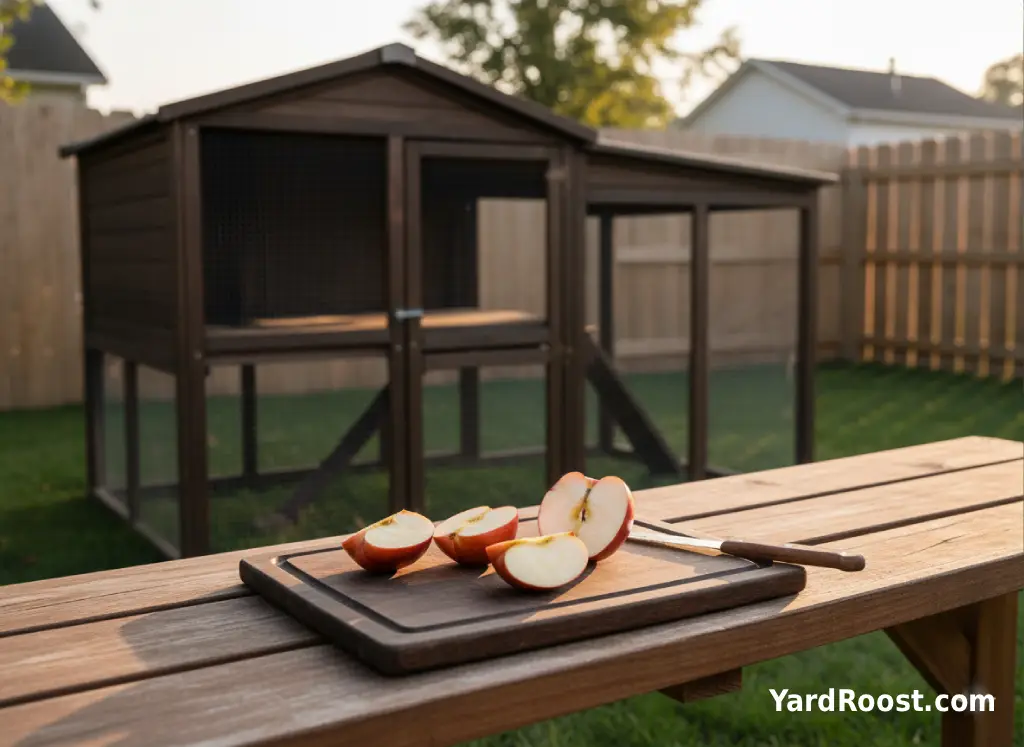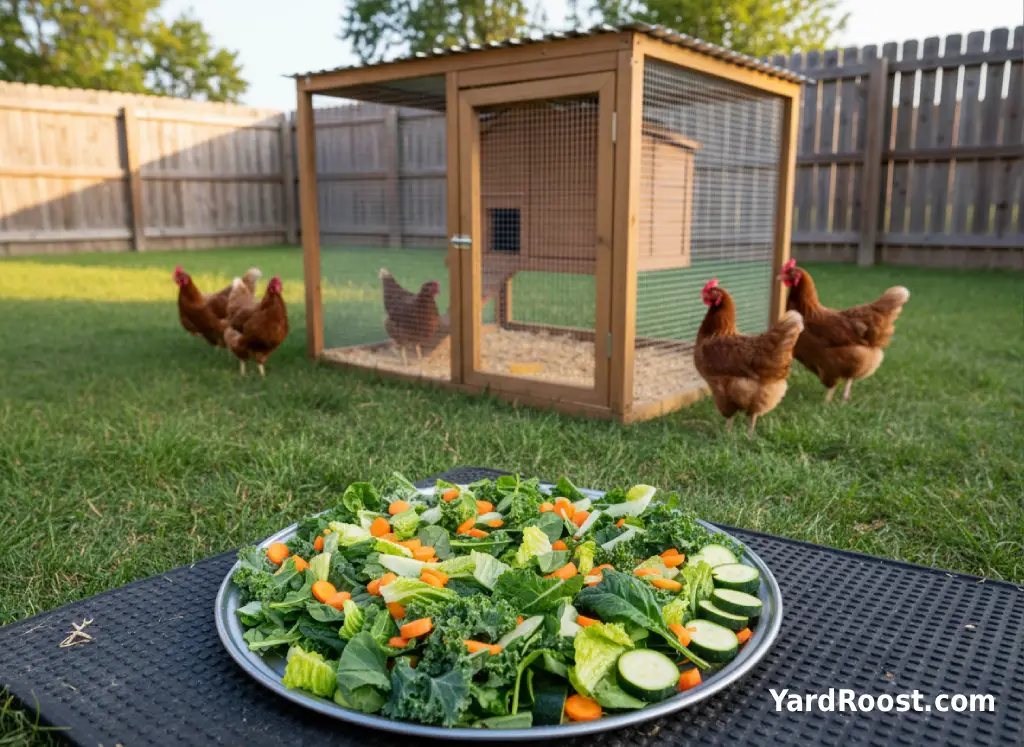
Yes—most backyard chickens can eat apples, and plenty of flocks go absolutely feral for crunchy apple slices. Apples are mostly water and fiber with some natural sugar, so they fit best as a fun “extra,” not a daily staple. Think of apples the same way you’d think of scratch grain: a treat that adds variety, but shouldn’t crowd out a complete feed that’s balanced for eggs, growth, and overall health (Merck Veterinary Manual; University of Minnesota Extension).
The part that trips people up is the “apple parts” question: can chickens eat apple peels, can chickens eat apple cores, and especially can chickens eat apple seeds. This is one of those times where being a little picky is worth it. Apple flesh and peels are generally fine when washed and cut to a safe size. Seeds are the piece we recommend skipping because apple seeds contain amygdalin, a compound that can release cyanide when chewed or digested (Cornell University Department of Animal Science; University of Connecticut CAHNR). The risk from a stray seed is usually low, but there’s no benefit to feeding them—so we keep it simple: remove seeds.
One more safety note we always include for beginner→intermediate keepers: any treat can increase mess, attract rodents, and add salmonella risk if you’re handling feed scraps and then going back into the house. Basic hygiene—like washing hands after working around your birds and their environment—matters (CDC). You don’t need to be anxious about it; you just need a routine.
Quick Answer: Apples Are Fine, Seeds Are Not Worth the Risk
If you just want the “do/don’t” list:
- Yes: apple flesh, apple peels/apple skins (washed), soft bits of apple (no mold), small pieces of crab apples (prepped the same way).
- Usually yes: green apples (they’re just more tart—still treat-only).
- Skip: apple seeds (including “apples seeds”), and any core that still has seeds attached.
- Hard no: moldy apples or fermented/boozy apple scraps (trash them, don’t “compost-feed” them).
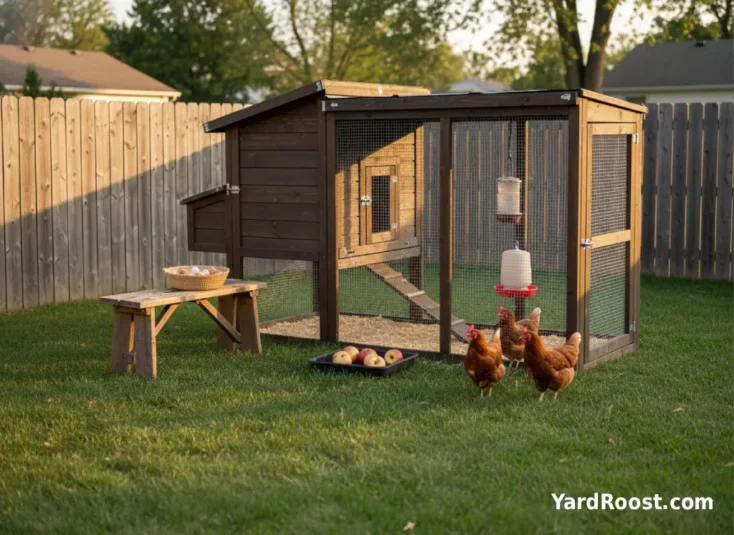
A common mistake we see is tossing a whole apple into the run and calling it enrichment. Chickens will peck at it, but the “whole apple bowling ball” tends to get dirty fast, invites rodents, and leaves you with a sticky, half-eaten core full of seeds. You’ll get better results (and less mess) by slicing apples and removing the seed pocket first.
Why Apple Seeds (and Seed-Filled Cores) Are a No-Go
Apple seeds contain amygdalin, which can release cyanide when the seeds are crushed/chewed and metabolized. That’s not backyard-chicken folklore—universities that track plant toxicities note this specifically for apple seeds (Cornell University Department of Animal Science; University of Connecticut CAHNR). The “dose makes the poison,” and an occasional swallowed seed may not cause a problem, but chickens aren’t great at “portion control” when they find a pile of scraps.
Since seeds don’t offer a real nutritional upside, the safest, simplest household rule is: feed the apple, not the seeds.
What about apple cores? Cores are mostly tough fiber plus the seed chamber. If you remove the seed pocket completely, the remaining core “walls” aren’t inherently toxic—but they can be stringy and gulpable if a bird tries to swallow a long strip. Our practical take:
- If you’re offering cores, cut them into small pieces after you’ve removed seeds.
- If you don’t want to fuss with it, compost the core and just feed slices. Simple wins.
Also skip stems and any leaves/twigs that come along with orchard drops. Chickens will usually ignore them, but you’ll be happier keeping “treat time” tidy and predictable.
Can Chickens Eat Apple Peels, Skins, and Peelings?
In most backyard setups, apple peels/apple skins are fine for chickens. The bigger question is cleanliness and chemical exposure, not the peel itself.
Here’s the prep routine we use for peels (and recommend to friends):
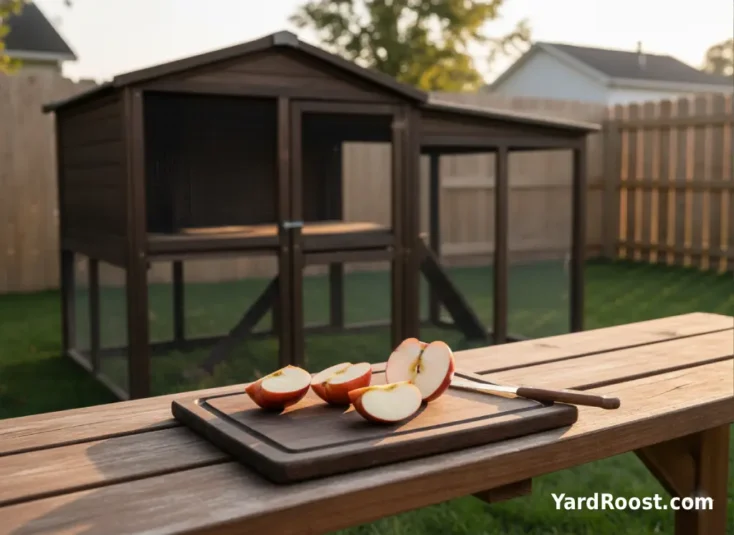
- Wash first. Rinse apples under running water and rub the surface. (Peels are where residues and dirt hang out.)
- Offer peels only if they’re fresh. Slimy or dried-out peelings are more likely to get ignored or ground into bedding.
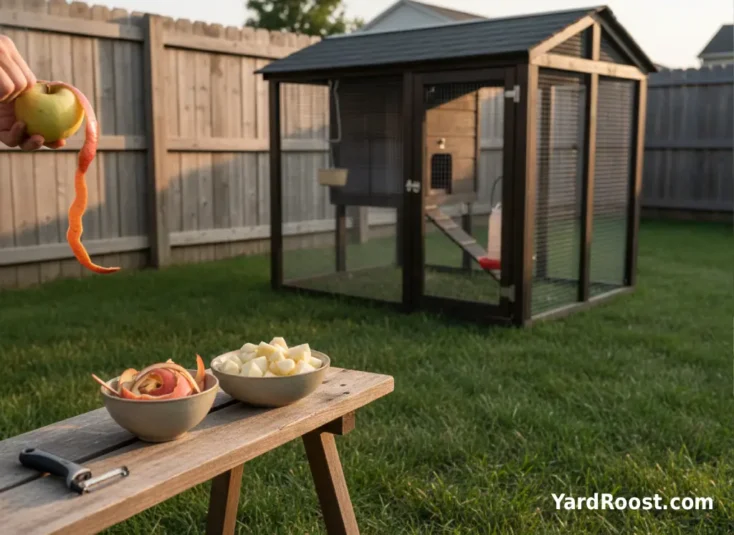
- Cut long peels into shorter lengths. Long ribbon-y peelings can be fun, but they can also get dragged through droppings fast. Snip them into 1–2 inch pieces to reduce the “gross factor.”
A quick YardRoost reality check: if your chickens free-range in a yard treated with lawn chemicals, they’re already exposed to more than just apple peels. If you’re trying to keep inputs clean, start with your yard practices and run surfaces—not just the fruit.
How Much Apple Can Chickens Have? A Simple Portion Rule
Apples are a treat, so the “how much” is really about protecting the nutrition in your main ration. Poultry diets need a balanced mix of nutrients to support growth, feathering, and egg production (Merck Veterinary Manual). Extensions also commonly note that fruit and vegetable scraps are fine in moderation but don’t replace a complete feed (University of Minnesota Extension).
Here’s an easy portion rule that works for most small flocks:
Offer apples 1–3 times per week in small amounts that are gone in 10–15 minutes. If apple pieces are still sitting there after that, you served too much (or your flock just isn’t in the mood—also normal).
Two practical tips that prevent 90% of treat-related issues:
- Serve treats after birds have eaten feed. Morning is usually “real food” time; treats do better late morning or afternoon.
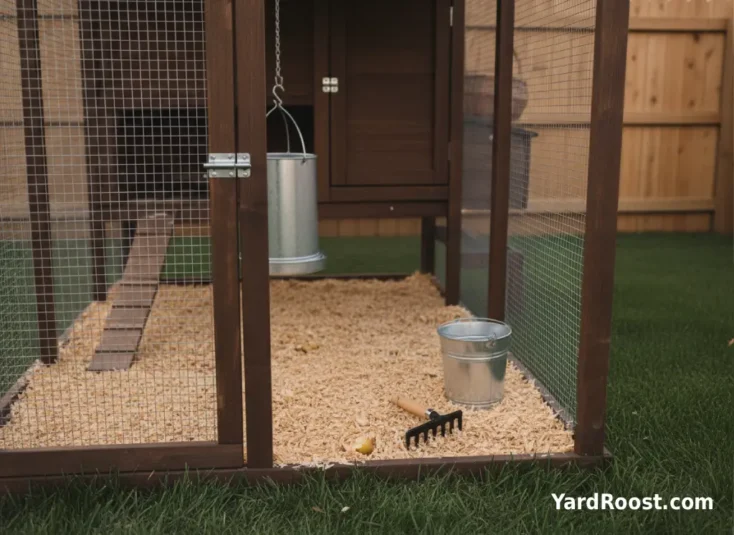
- Pick up leftovers. Apple bits + damp bedding = fruit flies, rodents, and sour smells.
If you’ve got a small run and you’re fighting mice already, tighten up treats first. It’s the easiest “management lever” you can pull.
Best Ways to Serve Apples to Chickens (Safe Prep Steps)
If you want a quick, repeatable routine, do this:
- Wash the apple. Dirt and residues stick to skins.
- Cut it open and remove the seed pocket. This is the big one for anyone asking can chickens eat apple seeds or can chickens eat apple cores.
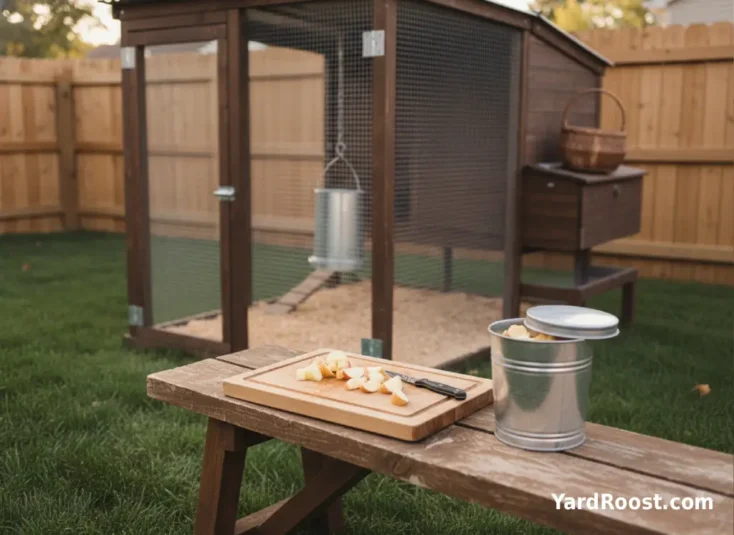
- Slice into bite-size pieces. For standard hens, 1-inch chunks or thin slices work well. For bantams, go smaller.
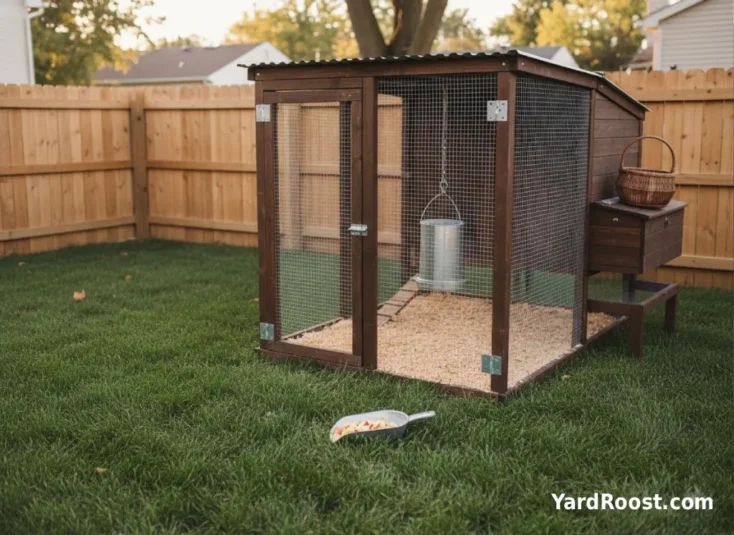
- Serve on a tray or flat rock. Keeps apples off bedding, which keeps apples out of poop (everybody wins).
- Pick up leftovers within 30 minutes. Especially in warm weather.
If you’re serving apples for enrichment, try “skewered slices” on a hanging treat holder—just keep it low enough that timid birds can reach it, and remove it when it gets grimy.
Crab Apples and Green Apples: Are They Different?
Can chickens eat crab apples? Generally, yes—if you prep them like regular apples: wash, remove seeds, cut to size. Crab apples are smaller and often more tart, so you may see less enthusiasm from some birds. Others will act like you just served dessert.
Can chickens eat green apples? Yes—green apples aren’t “unripe poison” for chickens. They’re just more acidic/tart and still sugary enough to count as a treat. The same rules apply: keep portions modest, remove seeds, and don’t leave leftovers to ferment.
One extra note for orchard drops (common with crab apples): skip anything moldy, bruised, or already fermenting. If it smells like cider, it belongs in your compost—not in your flock.
Apple Parts Safety Table: What to Feed vs. What to Skip
| Apple Part | Okay for Chickens? | YardRoost Notes |
|---|---|---|
| Flesh (slices/chunks) | Yes | Best option; cut to bite size and serve as a treat. |
| Peels / Skins / Peelings | Yes | Wash first; snip long peel strips into short pieces to reduce mess. |
| Core (seed pocket removed) | Sometimes | Only after removing all seeds; chop small to avoid “gulping” long strips. |
| Seeds | No | Contain amygdalin that can release cyanide; no benefit, easy to avoid (Cornell; UConn). |
| Moldy/fermenting apples | No | Higher risk of digestive upset and attracting pests; compost instead. |
Common Mistakes to Avoid (So Apples Don’t Become a Problem)
- Leaving apples overnight. This is how you get ants, fruit flies, rodents, and sour bedding. Treats should disappear fast or get picked up.
- Feeding seed-filled cores. If you’re asking can chickens eat apple cores, the correct answer is “not like that.” Remove seeds first, then chop.
- Using treats to replace feed. Chickens need balanced nutrition for health and egg production (Merck Veterinary Manual). Apples are “extra,” not “the meal.”
- Serving whole apples in the mud. It looks cute; it turns gross. Use a tray, flat rock, or hanging holder instead.
- Forgetting hygiene. Handling scraps around poultry is a reminder to wash up—especially before you eat or help kids with snacks (CDC).
Editorial note: If you’re ever unsure whether a food is “worth it,” ask yourself: “Does this add nutrition without adding chaos?” Apples can be great. A sticky apple core in wet bedding is chaos.
When to Call an Avian Vet (or Get Professional Help)
We’re not veterinarians, and food-related issues can look similar even when the cause isn’t food. If you think your birds got into something they shouldn’t (including a large amount of apple seeds), it’s smart to involve a professional sooner rather than later.
Call an avian vet (or an experienced poultry veterinarian) promptly if you see:
- Repeated vomiting/regurgitation-like motions, or fluid coming from the beak
- Severe lethargy, inability to stand, or worsening weakness
- Trouble breathing, open-mouth breathing at rest, or bluish/pale comb concerns
- Signs of significant digestive distress that don’t improve after removing treats and returning to normal feed and water
Safe first steps while you’re arranging help: remove all treats, provide normal feed and fresh water, and keep the bird in a calm, comfortable space away from flock bullying. If you can, bring a note about what was eaten and roughly how much.
Conclusion: Apples Can Be a Great Treat If You Keep Them Simple
So, can chickens eat apples? Absolutely—apples are a perfectly reasonable treat for backyard hens, and they’re an easy way to add variety without buying anything fancy. The “best practice” version is simple: wash the apple, remove the seed pocket, cut it into bite-size pieces, and serve an amount your flock can finish quickly. Apple peels and apple skins are generally fine, and crab apples and green apples follow the same rules.
The main thing we want you to remember is the part that isn’t worth experimenting with: apple seeds. Since seeds contain amygdalin (a compound that can release cyanide), skipping them is the easiest safety win you’ll get all week (Cornell; UConn). Pair that with basic cleanup and handwashing habits (CDC), and apples stay what they’re supposed to be: a fun, crunchy flock treat that doesn’t create extra problems for you later.