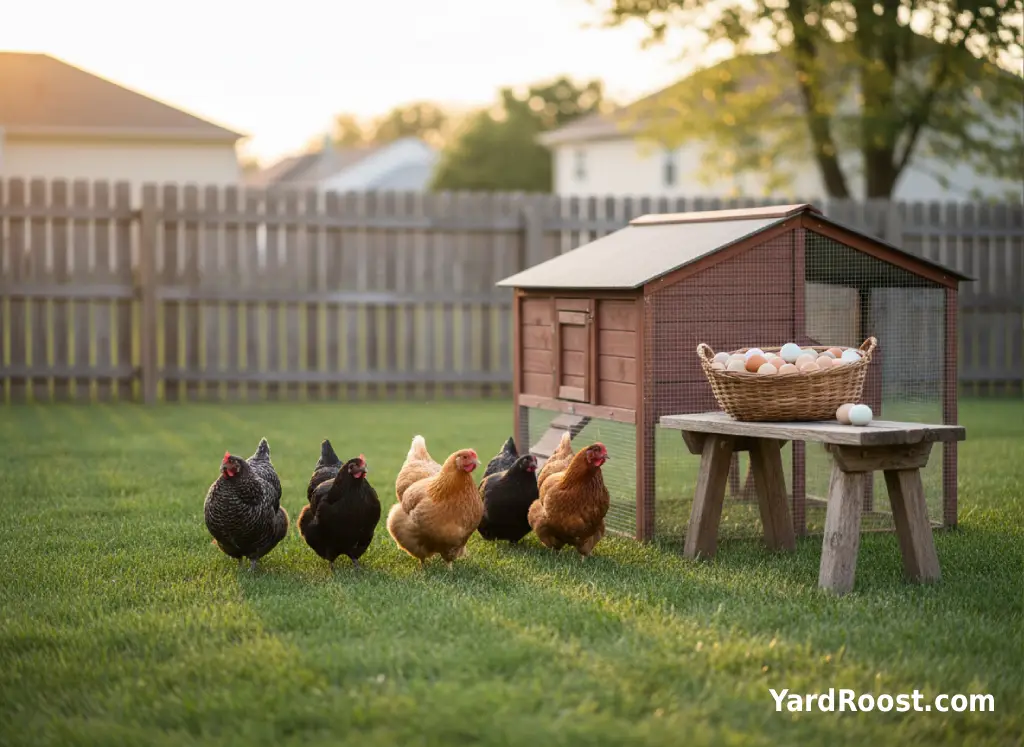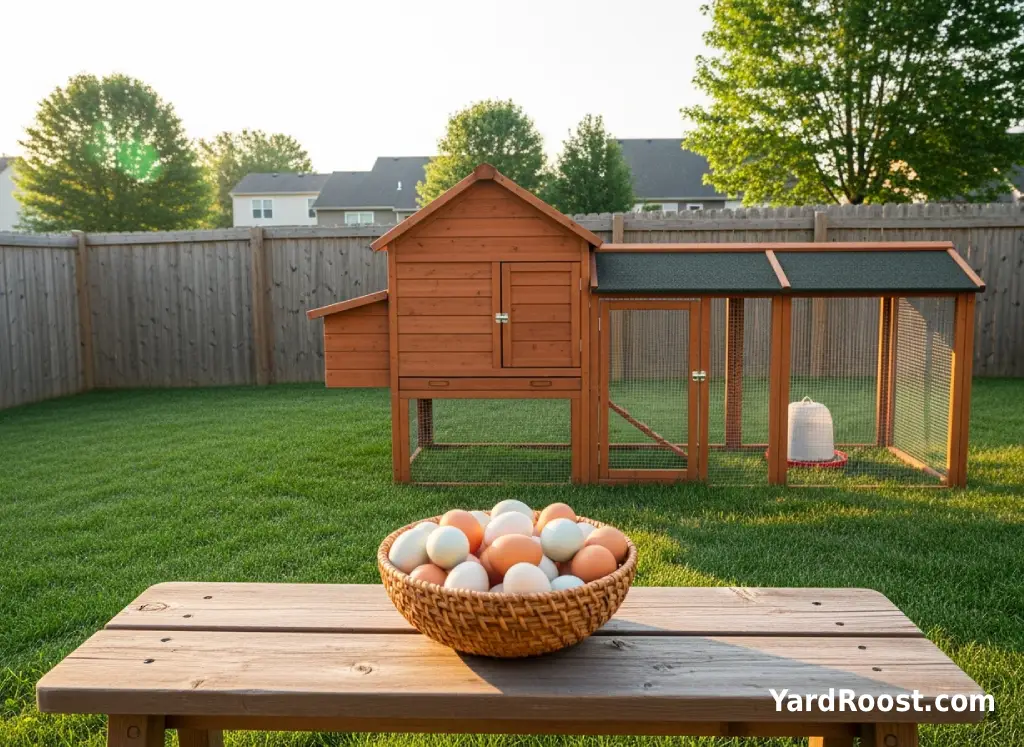
If you’ve ever stared at your backyard and wondered whether keeping chickens at your address is even legal, you’re not alone. Chicken laws can be confusing, especially when you see neighbors with hens but aren’t sure what’s actually allowed. The tricky part is that there’s no single US rule — every city, township, county, and even homeowners association (HOA) can set its own standards on keeping hens in town, flock size, and whether roosters are permitted.
This guide walks you through how to find the real answer for your exact address, not just a general “usually” online. We’ll talk about typical rules for chickens in the city limits, how many chickens you can have in your backyard in different kinds of areas, and why roosters are treated differently. We’ll also touch on common hotspots like Texas, Houston, Pennsylvania, New Jersey, and even Ontario as examples of how local these decisions really are.
Think of this as your pre-chicken homework: a simple checklist to avoid fines, angry neighbors, or having to re-home birds you’ve already fallen in love with. Once you know what’s allowed, you can move on to fun planning like coop design, safe space per bird, and beginner-friendly breeds using resources like our beginner chicken breeds overview.
Backyard Chickens and Local Laws: Why One Answer Won’t Fit Everywhere
One of the most confusing parts of getting started with backyard chickens is that your friend in another state might be allowed a big flock, while you can’t legally keep a single hen. Chicken rules are hyper-local. City councils, townships, counties, and even HOAs all have the power to say “yes,” “no,” or “yes, but only under these conditions.”
Even within one state, urban cores, suburban neighborhoods, and rural townships can all have completely different expectations for chickens in the city limits. Some places treat hens as household pets with tight limits (like four to six hens, no roosters), while others treat them as livestock and regulate them through agricultural zoning or “right-to-farm” rules.
Because of this patchwork, any article that tells you “you can have chickens in your backyard in Texas” or “you can’t keep chickens in city limits in New Jersey” without naming a specific town and ordinance is oversimplifying. The safest assumption is that you need to check rules for your exact address before you order chicks, build a coop, or tell the kids you’re getting chickens.
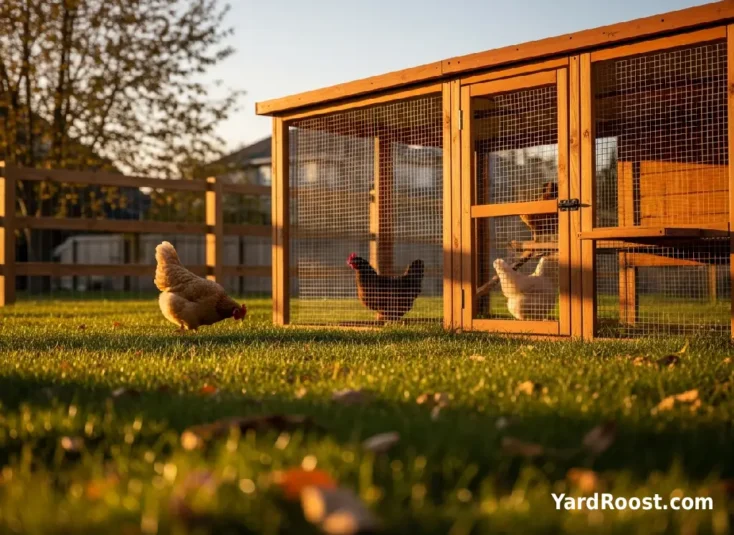
Step-By-Step: How To Find Out If You Can Have Chickens Where You Live
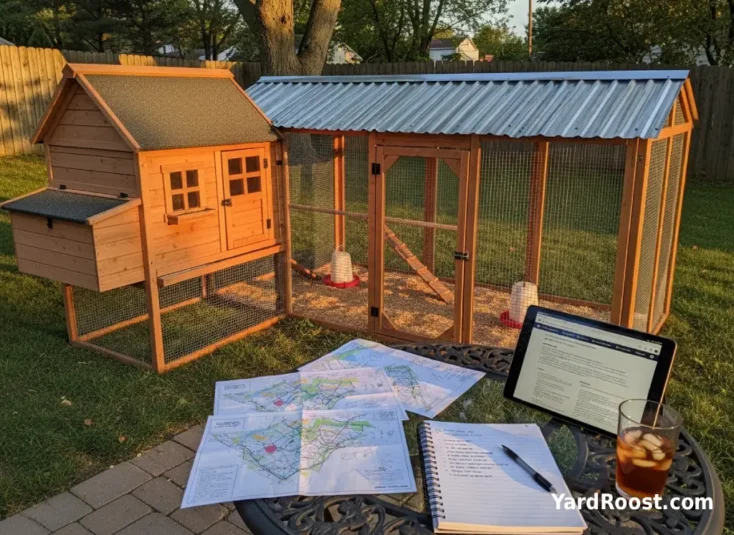
Instead of guessing or relying on social media, use a simple process to get a clear, defensible answer for your address. Here’s a practical way to do it:
- Step 1: Look up your city or county chicken ordinance. Search “[your city] backyard chickens ordinance” or check the “code of ordinances” section on your city or county website. Many will have a specific section for “chickens,” “poultry,” or “urban agriculture.”
- Step 2: Find your zoning and parcel type. Use your city or county’s online GIS or property search to see whether you’re zoned residential, agricultural, or something else. Backyard chicken rules often apply only to certain residential zones.
- Step 3: Call the office that enforces the rule. If the code language is confusing, call the planning/zoning office, code enforcement, or animal control. Politely ask, “At [your address], can I keep backyard chickens? If so, how many hens and are roosters allowed?”
- Step 4: Check HOA, lease, and neighborhood covenants. Even if your city allows chickens in the city limits, your HOA, landlord, or private covenants can still say “no.” You usually must follow the strictest rule that applies.
- Step 5: Ask about permits, fees, and coop rules. Some places require a backyard chicken permit, neighbor sign-off, or a one-time inspection. Ask about coop placement, setbacks from property lines, and sanitation requirements while you have someone on the phone.
- Step 6: Save everything in writing. If you get approval by email or letter, keep it. If you talk on the phone, write down who you spoke with and the date. This isn’t legal advice, but having notes is helpful if questions come up later.
A common mistake we see is people only asking neighbors or a feed-store employee if chickens are allowed. Neighbors can be a great sanity check, but only your local ordinances and agreements (like an HOA) really answer the question: “Can I raise chickens in my backyard at this address?”
What “Chickens in City Limits” Usually Looks Like
Every city writes its own rules, but once you read a few urban ordinances side by side, a pattern appears. In many US cities that do allow chickens in the city limits, ordinances commonly:
- Limit flocks to a small number of hens, often around four to six.
- Prohibit roosters because of crowing and noise complaints.
- Require a permit or registration and sometimes neighbor notification.
- Set basic coop rules: setbacks from property lines and homes, no front-yard coops, and sanitation requirements to control odors and pests.
Examples from county and city programs around the US include limits like four hens with roosters prohibited, or up to five or six hens with specific coop placement and odor rules. These details change from place to place, but they show the general direction many urban communities are going: “yes to small backyard flocks, as long as they don’t create a nuisance.”
If you live in an apartment, townhouse, or multi-family building, you may find that chickens are not allowed at all, even if single-family homes nearby can have them. Watch for phrases like “single-family dwelling,” “detached dwelling,” or “residential lot” in your local code.
Suburbs, Small Towns, and Rural Areas: Different Rules, Different Options
Once you get outside dense urban cores, chicken rules usually loosen up, but you still can’t assume anything. Some suburbs copy big-city style ordinances with small flocks and no roosters, while others treat chickens more like livestock and regulate them through general nuisance or agricultural rules.
In small towns and rural townships, you’re more likely to see:
- More generous or acreage-based flock sizes.
- Specific setback distances for coops or barns from neighboring homes.
- Broad “nuisance” or “odor” language instead of detailed chicken-only rules.
Even in rural areas, though, you can still run into restrictions — especially in platted subdivisions with covenants or HOAs, or in “estate” developments that ban livestock completely. The safest approach is the same: look up your zoning, read the actual language, and confirm with your local office if anything is unclear.
If you’re lucky enough to have agricultural zoning, you may find far fewer limits on how many chickens you can keep in your backyard. At that point the more important questions become: “How many chickens can I comfortably house and care for?” and “What flock size makes sense for my family’s egg needs?”
How Many Chickens Can I Have in My Backyard?
There are really two different questions here:
- How many chickens can I have legally in my backyard?
- How many chickens should I have based on space, care, and eggs?
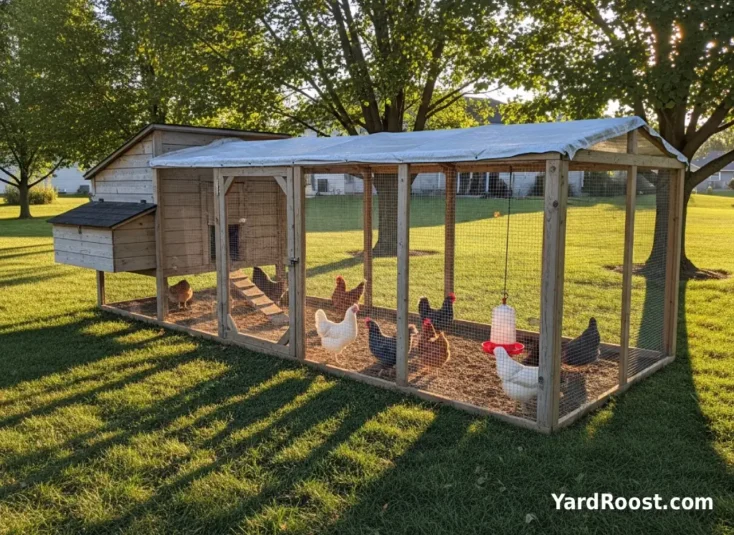
Legally, your city or county might set a hard number (for example, “up to four hens”) or a limit based on lot size or zoning. Practically, extension services often recommend planning your flock around both family egg needs and available space per bird. Many university extension resources suggest roughly 2–4 square feet of coop space per chicken and around 8–10 square feet of outdoor run space per bird to prevent crowding and stress, especially when birds are confined most of the time.
| Question | How To Decide |
|---|---|
| Legal maximum | Check your ordinance or permit; obey the strictest limit that applies (city, county, HOA, lease). |
| Space per bird | Use extension-style guidance (several square feet in the coop plus a roomy run) and avoid crowding. |
| Egg needs | Most laying hens give fewer than 6 eggs per week over the long term; plan a small cushion but not a huge surplus. |
A common mistake we see is starting with the biggest number allowed on paper instead of what you can realistically house and afford. It’s usually smarter to start with a small flock — maybe 3–5 hens — see how they fit your routine, and only scale up if you have both legal room and physical space for more.
Can You Have a Rooster in City Limits?
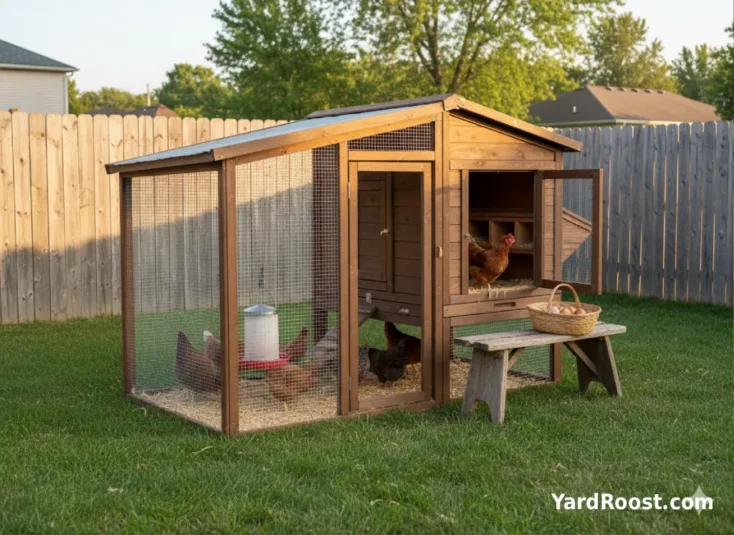
This is one of the most common questions: “Can you have a rooster in city limits?” In many urban and suburban ordinances that allow backyard chickens, the answer is “no,” even when hens are allowed. Roosters crow loudly and often, starting long before sunrise, and that puts them squarely in the crosshairs of noise and nuisance rules.
When you read your local ordinance, look for language like:
- “Hens only” or “roosters prohibited.”
- “Female chickens” instead of “chickens” in general.
- Noise or nuisance provisions that apply to all animals, not just poultry.
If you live in an area that does allow roosters — more likely in rural or agricultural zones — it’s still worth thinking carefully before bringing one home. Crowing behavior can strain neighbor relationships, and even in rooster-friendly areas, ongoing noise complaints can cause trouble. If you simply want eggs, a rooster is not required; hens lay without one. If you want the quick explanation of how that works, see our guide on whether chickens need a rooster to lay eggs.
One more important note: If you order chicks through the mail, even “pullets only” orders can sometimes include an accidental rooster. Be sure you have a backup plan in case you need to re-home that bird quickly to stay within your local rules.
Special Cases: Texas, Houston, Pennsylvania, New Jersey, and Ontario
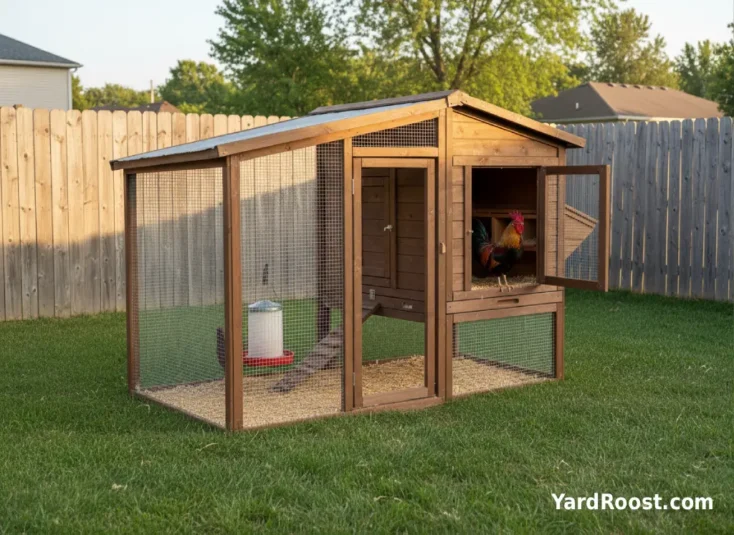
Many people search online to see whether they can keep backyard chickens in specific places — for example in Texas, in big cities like Houston, or in states such as Pennsylvania and New Jersey. The reality is that none of these areas has a single state-wide rule that covers every city or township.
Here’s the big picture, without trying to be a legal directory:
- Texas & Houston: Many Texas communities allow backyard hens with restrictions, but details vary widely between large cities (like Houston, Austin, Dallas) and surrounding suburbs or counties. Houston’s rules, for example, live in its city code — they don’t automatically apply to nearby towns.
- Pennsylvania & New Jersey: These states have a patchwork of borough, township, and city ordinances. Some allow small flocks in residential zones with setbacks; others treat chickens as livestock and restrict them to certain districts.
- Ontario (and other Canadian provinces): Municipal bylaws control whether you can have chickens in the city limits or suburbs. One town may allow hens as a pilot project, while the next town over bans them entirely.
Because rules change over time — and sometimes quickly, as communities revisit backyard chicken debates — any specific list of “these cities allow chickens, these don’t” goes out of date fast. The safest play is to use the step-by-step process earlier in this article for your exact address, regardless of which state or province you’re in.
Common Mistakes To Avoid With Chicken Laws
We’ve seen a lot of new keepers get into trouble not because their birds were wild or aggressive, but because they skipped the boring paperwork and neighbor relations. Here are some of the big “don’ts” to avoid:
- Not checking the rules before buying birds. Falling in love with chicks at the feed store and only then checking whether chickens are allowed in city limits is a recipe for heartbreak.
- Ignoring HOA or lease rules. Even if your city allows chickens in your backyard, your HOA or landlord may not. Violating those terms can be expensive.
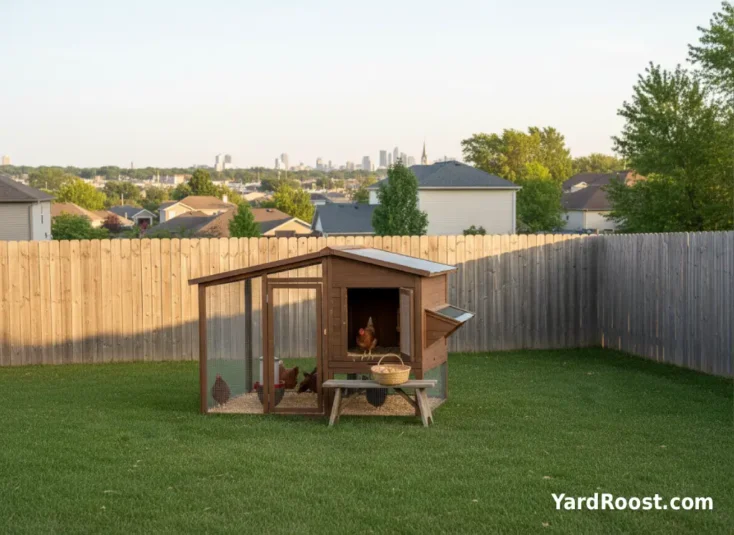
- Overcrowding the coop. Keeping the legal maximum number of hens in a tiny coop can lead to noise, odor, and neighbor complaints — and more stress for your birds.
- Placing the coop right on the property line. Even when the ordinance allows it, pushing the coop into your neighbor’s line of sight can sour relationships fast.
- Skipping routine cleaning. Most ordinances have a “nuisance” clause that can be enforced if odor, flies, or rodents become a problem.
A common mistake we see is treating the law like a ceiling (“I’m allowed 6, so I’ll keep 6 no matter what”) instead of a boundary. It’s better to treat the legal limit as the outer edge and aim for a number that keeps your birds comfortable and your neighbors happy.
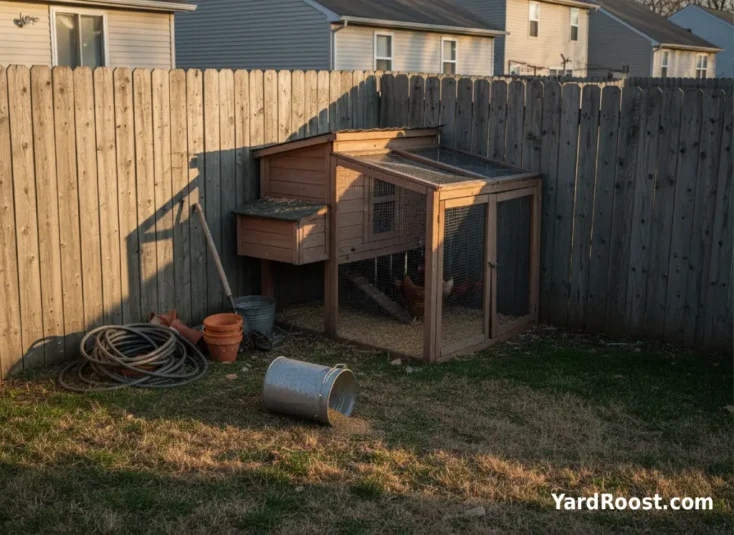
If Chickens Aren’t Allowed Where You Live (Yet)
Sometimes the honest answer to “Can I have a chicken in my backyard?” is simply “Not right now.” That doesn’t mean you’ll never keep chickens — but it does mean you should pause before bringing birds home and hoping nobody notices.
If your local code or HOA currently says “no” to chickens in the city limits, you still have options:
- Look for a local group already working on change. Many communities have residents who have successfully petitioned councils for backyard chicken pilot programs.
- Offer examples of good ordinances. When officials see how other cities handle permits, flock limits, and sanitation, they may be more open to change.
- Consider community or shared flocks. Some areas have community farms or gardens where you can learn the basics of how to start raising chickens before you’re able to keep them at home.
- Use the time to learn and plan. While you wait, you can research breeds, coop designs, predator-proofing, and daily care so you’re ready to go if the rules change in your favor.
It’s tempting to “try it anyway and see,” but quiet, legal progress is usually better for long-term backyard chicken acceptance in your community. Responsible keepers who follow the rules and manage odor, noise, and predators well make it easier for others to get backyard chickens approved later.

Bringing It All Together
Figuring out if you can have chickens where you live comes down to three things: reading the actual local rules, understanding what “chickens in city limits” usually looks like, and being realistic about how many birds you can responsibly keep. There’s no one-size-fits-all answer for Texas vs. Pennsylvania vs. New Jersey or even for different neighborhoods within the same city. The only answer that really matters is the one you get for your specific address.
Once you confirm that you’re allowed backyard chickens — and you know whether roosters are off the table — you can focus on the fun parts: choosing beginner-friendly breeds, designing a predator-proof coop and run, and deciding how many hens make sense for your space and egg needs. Extension services and official poultry resources can help with the flock-care side of things, while your city or county code spells out the legal side.
If you’re just getting started and wondering “how do I start raising chickens?” it helps to combine this legal checklist with practical, step-by-step information on basic care, coop setup, and predator-proof housing. Take your time up front, do the paperwork, and build a setup that keeps your hens comfortable and your neighbors happy — your future flock (and future self) will thank you.
Sources mentioned in this article include land-grant university and cooperative extension programs (such as Colorado State University Extension, University of Delaware Cooperative Extension, and UConn Extension) and examples from US city and county backyard chicken ordinances, used to illustrate common patterns rather than give location-specific legal advice.