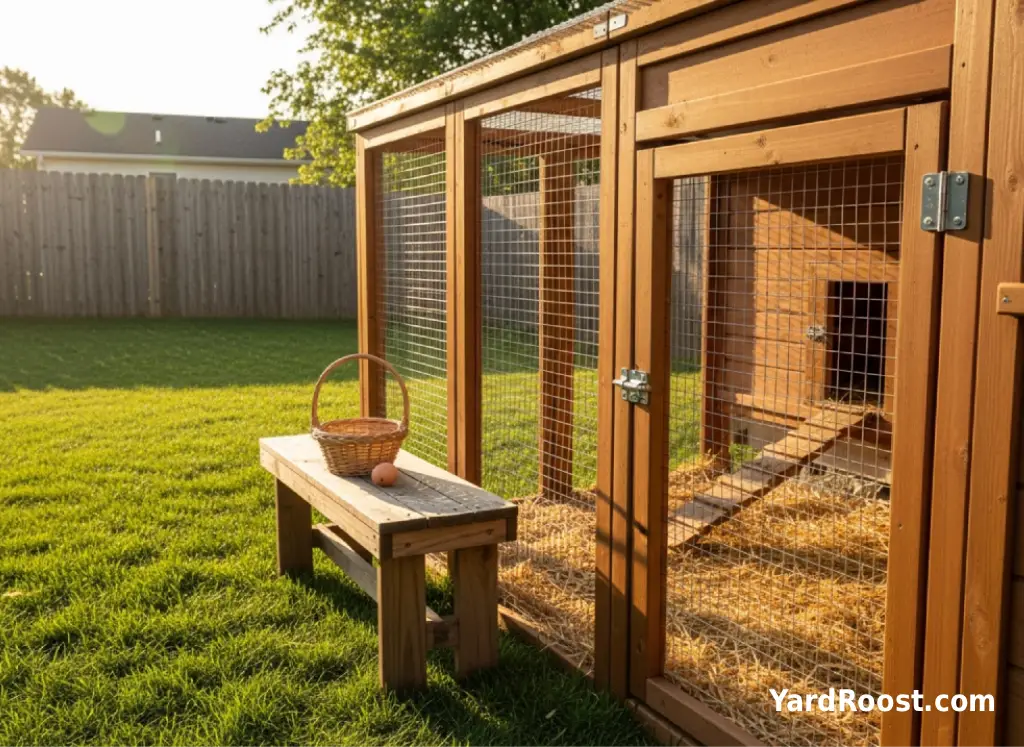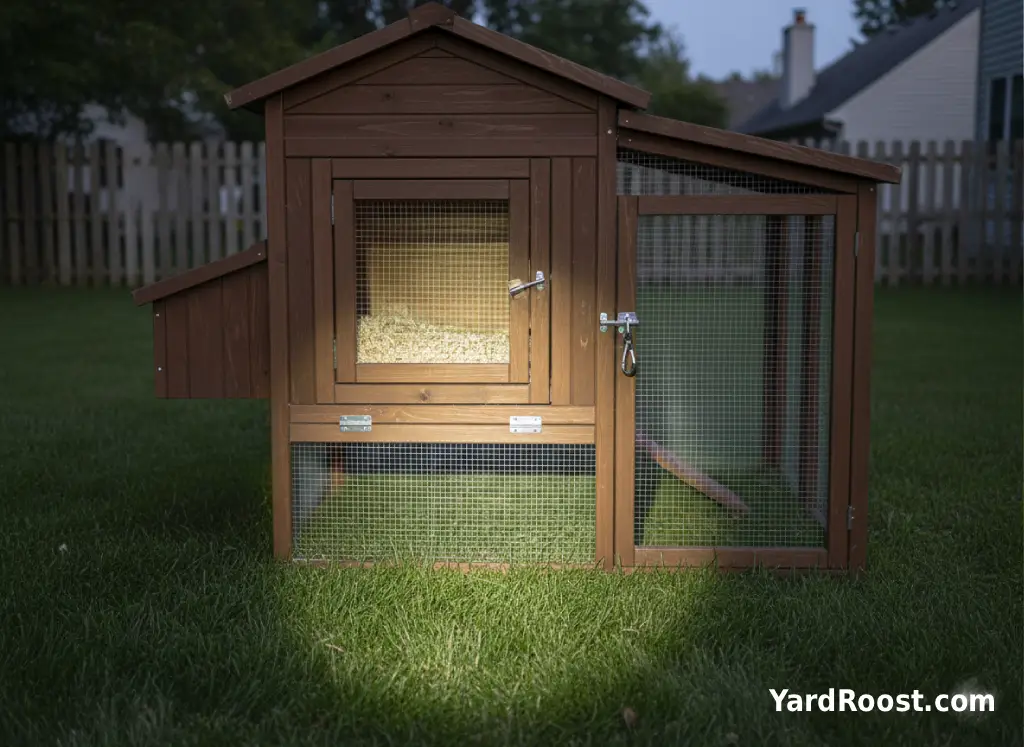
Raccoons absolutely can eat chickens. They can also kill chickens and leave most (or all) of the bird behind. Both are common, and both are heartbreaking—especially because raccoon attacks often happen at night when you’re asleep and your flock can’t fight back. The “why would it kill and not eat it?” question is one of the top things we hear from new chicken keepers, and the answer usually comes down to access, interruption, and raccoon behavior (they’re handsy, persistent, and opportunistic).
This guide focuses on what backyard keepers need most: how raccoon attacks typically look, what clues point to raccoons, and the practical upgrades that make a coop and run far harder to break into. We’ll stick to safe, realistic steps you can do with basic tools—plus what to do after an attack to reduce stress on the flock and lower health risks for your household.
Yes, Raccoons Can Kill and Eat Chickens (and Eggs)
Raccoons are opportunistic predators. If they can get to your birds, they may kill and eat parts of a chicken, and they’re also known to go after eggs. Some raids are “grab what you can and leave,” while others look like a full break-in where multiple birds are attacked in the same night.
One detail that surprises people: raccoons don’t have to fully enter a coop or run to do damage. If there’s loose mesh or a fence with openings large enough, raccoons can reach through, grab a bird, and pull body parts through the wire.
Do Raccoons Eat Chickens or Just Kill Them?
Both happen, and it often depends on what the raccoon can access and how long it has. If a raccoon gets inside the coop, it may attack and feed—commonly on the breast/crop area and sometimes more—then come back again on a later night once it “learns” your coop is a food source.
If it can’t get fully in, you may see the “through-the-fence” pattern: a bird is grabbed through openings, and only whatever can be pulled through gets eaten (often the head or limbs). That can look like senseless killing, but it’s usually a limitation problem, not a “sport” problem.
Practical takeaway: When people ask “does raccoon eat chicken?” the more useful question is “can a raccoon reach a chicken?” If the answer is yes—through a gap, under a door, or through big mesh openings—you’re in the danger zone.
What a Raccoon Attack Looks Like (Clues and Patterns)
Predator ID is never perfect from a single clue, but raccoons have some repeat patterns noted by multiple extension resources.
| What You See | Why It Can Point to Raccoons | First Fix to Try |
|---|---|---|
| Missing head or severe head/neck damage near the fence | Raccoons can reach through openings and pull heads through loose mesh | Switch to smaller openings, tighten mesh, add an interior “no-reach” buffer |
| Missing limbs (legs) or birds injured near wire | Raccoons can grab legs through mesh-style pens | Add a solid lower wall or double-layer barrier near roosting/edge zones |
| Breast/crop area chewed, entrails sometimes eaten | Raccoons commonly feed in these areas during coop raids | Lock birds inside at night, seal entry points, reinforce doors and vents |
| Eggs missing (sometimes found eaten away from the nest) | Raccoons may remove eggs and eat them nearby | Collect eggs daily and secure nest box access points |
| Attacks at night, especially dusk-to-dawn | Many mammalian predators, including raccoons, are active at night | Make “lock-up at dusk” non-negotiable; use a camera to confirm timing |
The biggest clue we see in real backyards is the “reach-through” problem: the run is technically enclosed, but the openings are big enough (or loose enough) that a raccoon can still grab a bird at the edges. UNH Extension specifically notes raccoons pulling a chicken’s head or legs through wire fence openings.
Quick action tip: Put a basic wildlife camera (or an old phone set to record through a window) on the coop/run for 2–3 nights. Virginia Tech notes cameras can help identify predators near the flock, and it’s often the fastest way to stop guessing and start fixing the right weak point.
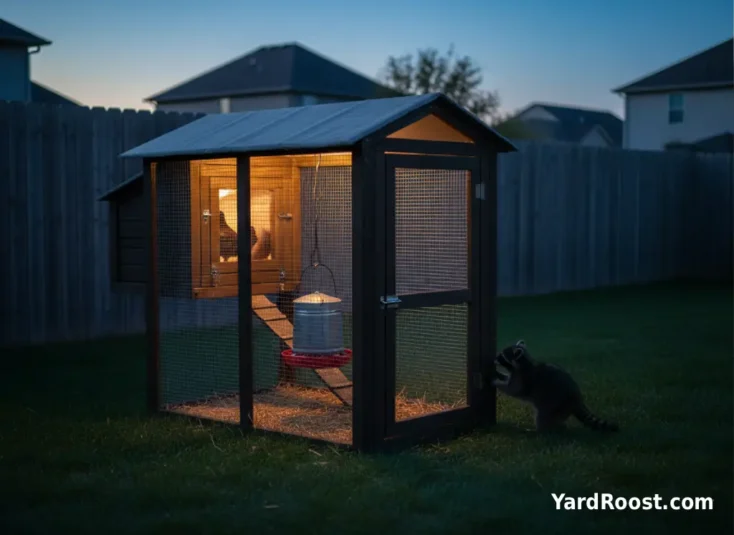
Why Raccoons Kill Chickens and Don’t Always Eat Them
If you’ve ever walked out to a dead bird that looks barely eaten, you’re not alone. Here are the most common “why” explanations that match what extension resources describe about raccoon behavior and attack patterns:
They couldn’t get full access. If a raccoon can only reach through a fence, it may grab and injure or kill a bird, then only eat what it can pull through the openings (often the head). That can feel pointless, but it’s a physics problem.
They got interrupted. Lights coming on, a dog barking, or you stepping outside can stop feeding behavior. The bird may be left behind even if the raccoon intended to return.
They took multiple birds because they could. Poultry Extension Collaborative notes raccoons may enter poultry houses and take several birds in one night. Once a raccoon “solves” your coop, it may repeat the behavior.
They were after eggs or easy calories. Eggs, feed smells, and spilled scraps can draw raccoons close—then your birds become the next available food source. Ohio State University Extension emphasizes removing attractants like feed and securing the setup to reduce predator pressure.
How to Protect Chickens From Raccoons: The Fast Checklist
If you want the “do this first” list, here it is. These steps line up with extension guidance about preventing reach-through, digging, and overnight raids.
- Lock birds inside a solid-sided coop at dusk. UNH Extension calls night lock-up one of the most important and effective steps because many predators are most active between dusk and dawn.
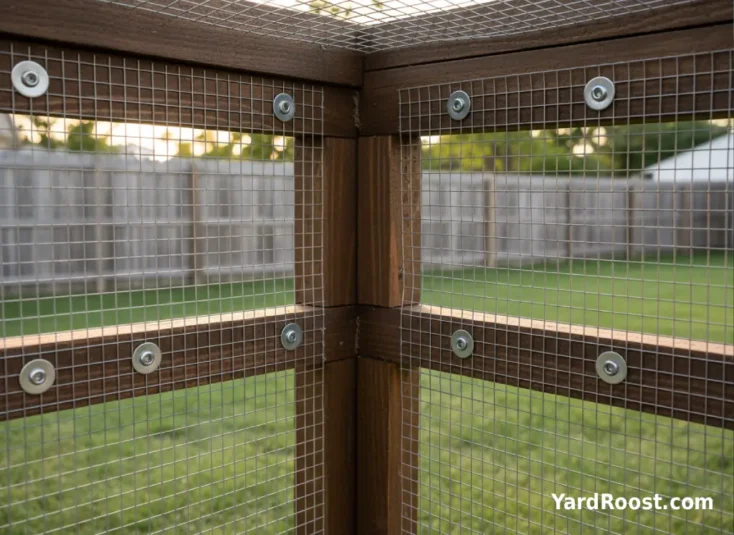
- Use mesh openings smaller than 1 inch for enclosures. UNH Extension specifically recommends openings smaller than one inch to prevent predators from reaching through.
- Stop digging with buried mesh. UNH Extension recommends burying mesh at least 1 foot deep around the sides of the enclosure; Virginia Tech also notes burying wire (about 1–2 feet) or using a skirt to prevent digging.
- Cover the run top if birds spend time out there. Overhead cover helps with aerial predators and also keeps climbers from dropping in.
- Remove attractants. Secure feed, pick up scraps, and keep trash tight-lidded; OSU Extension notes removing/locking attractants like feed and waste reduces predator pressure.
A common mistake we see is trusting a “closed run” that uses wide chicken wire or has slack panels. If a raccoon can fit a hand through the opening, it can still injure a bird. Fixing reach-through issues is often faster (and cheaper) than rebuilding everything.
Upgrade Your Coop and Run for Raccoon Pressure
Think like a raccoon for five minutes: they push, pry, pull, and reach. Your goal is to remove “handholds,” eliminate gaps, and make every access point either solid or tightly meshed.
Start with these high-impact upgrades:
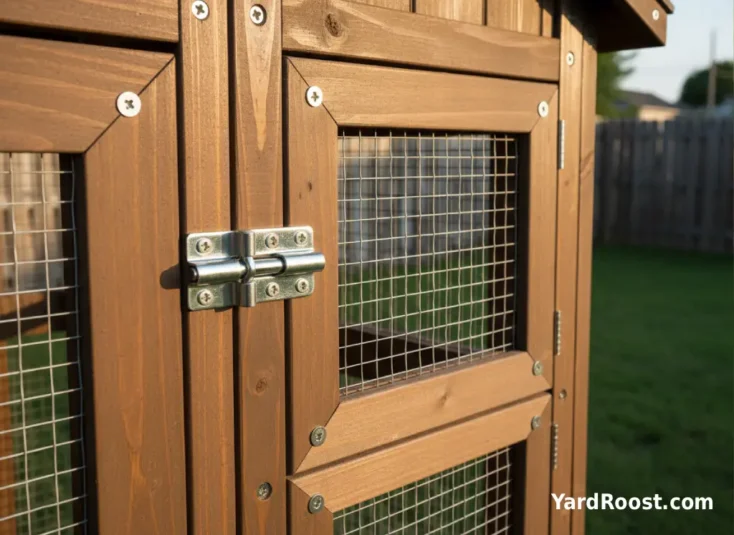
- Doors and pop doors: Make sure every door closes flush (no warping, no corner gap). Add a secondary closure so the door can’t be flexed open.
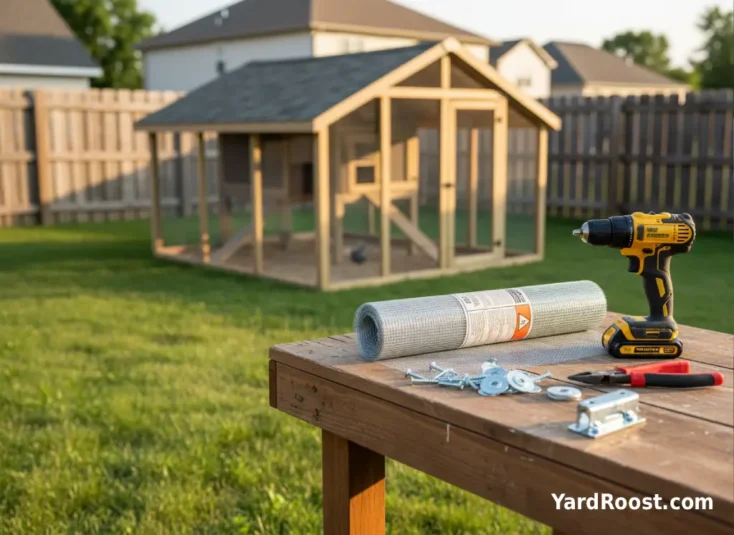
- Vents and windows: Cover all openings with strong mesh and fasten it with screws and washers (not just staples). Even small vents are entry points.
- Run perimeter: Use small-opening mesh and make the bottom edge dig-resistant by burying mesh at least 1 foot deep or using a skirt around the outside.
One extra move that pays off in “raccoon country” is an interior buffer: keep roosts and sleeping birds away from run walls and mesh. Ohio State University Extension describes raccoons reaching through openings and grabbing birds; simply moving the roost line away from the wall can reduce reach-through risk while you work on bigger upgrades.
Night Routine That Actually Works (No Fancy Gear Required)
If you do one thing consistently, do this: close and securely fasten the coop at dusk, then open it in the morning. UNH Extension notes that locking chickens indoors at night is the most important step for free-range birds because many predators are active between dusk and dawn.
Make it easy on yourself:
Tip 1: Feed inside the coop in the evening for a week. UNH Extension notes birds can be trained to go inside by feeding and watering inside at dusk.
Tip 2: Do a “two-minute perimeter check” before bed: look for a popped latch, a new dig spot, or a loose panel. The goal isn’t perfection—it’s catching the obvious failure before you lose a bird.
When you’re tired, simple systems win. Keep a small flashlight or headlamp hung by the coop door so lock-up doesn’t become a chore you “skip just once.”
After an Attack: Clean-Up, Biosecurity, and Safer Disposal
An attack is stressful for the flock and gross for you. It’s also a moment to tighten hygiene, because backyard poultry environments can carry germs that make people sick. The CDC emphasizes washing hands with soap and running water after touching poultry or anything in their area, and supervising kids’ handwashing.
Here’s a safe, practical sequence:
- Secure the living birds first. Close the coop, then move calmly—panicked chasing makes stress worse.
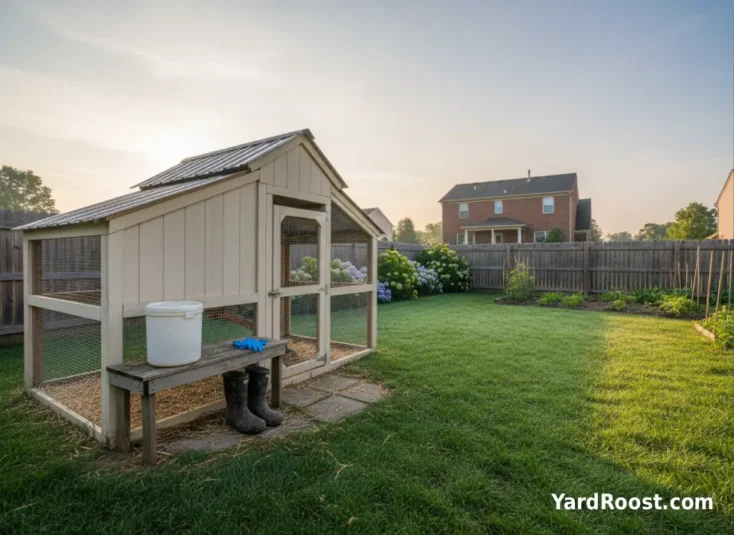
- Wear gloves and use dedicated tools. Keep “coop-only” boots and a small cleanup kit outside.
- Remove carcasses promptly. USDA APHIS guidance emphasizes planning ahead for carcass disposal, collecting carcasses as soon as possible (at least daily), and storing/disposing in a way that doesn’t attract other animals.
- Clean, then wash hands. Do cleanup outdoors, then wash hands thoroughly (CDC).
YardRoost note: Disposal rules vary by location. USDA APHIS specifically notes disposal should follow local, state, and federal laws, so check your area’s rules (and your trash service requirements) before you assume what’s allowed.
Common Mistakes to Avoid
Most raccoon losses we see don’t come from “bad luck.” They come from one of these fixable weak points:
- Assuming a run is safe because it’s “enclosed.” If openings are large enough to reach through, birds at the edges are still vulnerable (OSU, UNH).
- Leaving birds out after dark. Nighttime is when many mammalian predators are active, and night lock-up is a top protective step (UNH, Virginia Tech).
- Not addressing digging. Bury mesh at least 1 foot deep (UNH) or use a buried wire/skirt approach (Virginia Tech).
- Leaving attractants out. Feed spills, open trash, and unattended eggs raise predator pressure (OSU; Poultry Extension Collaborative notes raccoons are attracted into human areas and then seek backyard poultry).
A final mistake: making five small upgrades but ignoring the one obvious gap. Do a slow walk around the coop and run in daylight and look for: a corner you can flex by hand, a door that doesn’t sit flush, or any hole you can fit fingers into. Those are raccoon invitations.
When to Call an Avian Vet
Predator encounters can cause punctures, crushing injuries, shock, and internal trauma—even if the outside wounds look small. We can’t diagnose injuries here, but you should strongly consider contacting an avian vet (or an experienced poultry veterinarian) if you see any of the following:
- Deep puncture wounds, torn skin, or exposed tissue
- Heavy bleeding that doesn’t stop quickly
- Labored breathing, extreme weakness, inability to stand, or “not acting like themselves” after an attack
- Swelling around the head/neck, or signs the bird can’t eat or drink normally
- Multiple birds injured at once (triage is hard; getting professional help matters)
If you’re unsure, call anyway. A quick phone consult can help you decide what’s urgent and what can be safely monitored. While you arrange help, keep the bird warm, quiet, and separated from flock chaos (low light, minimal handling), and focus on preventing further injury.
Raccoon attacks are awful—but they’re also one of the most preventable backyard chicken problems once your coop and run stop being “easy.” The main theme is simple: eliminate reach-through, block digging, and make night lock-up automatic. Extension resources consistently point to sturdy housing, small openings, buried barriers, and dusk-to-dawn lock-up as the practical core. Add good hygiene and a calm post-incident plan, and you’ll protect both your flock and your household.