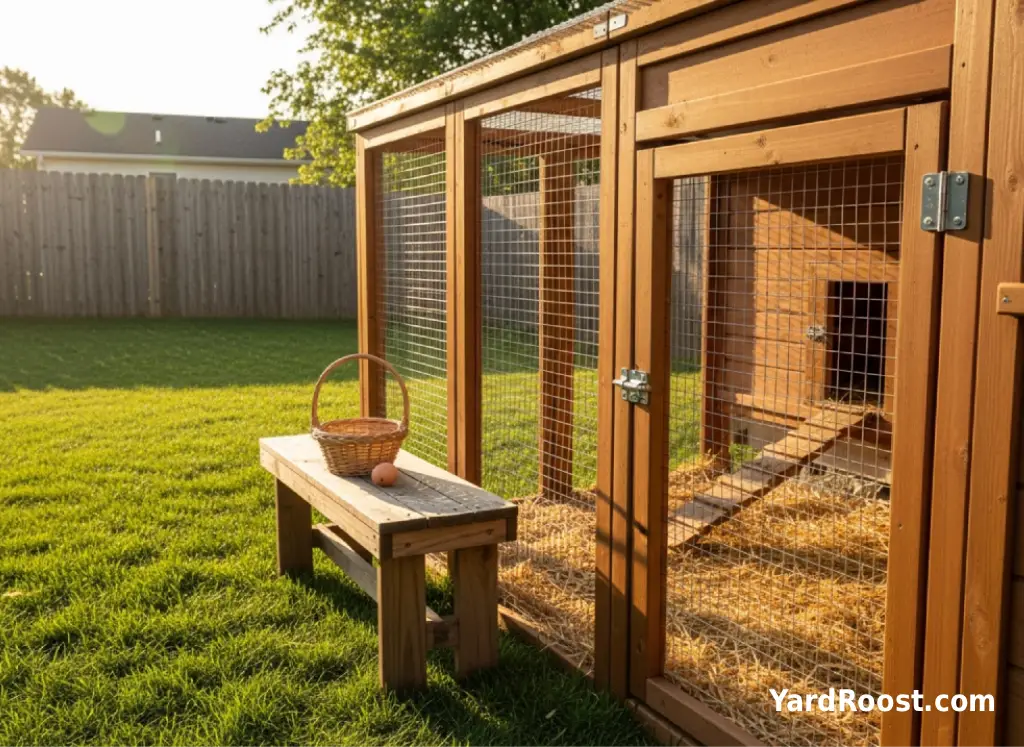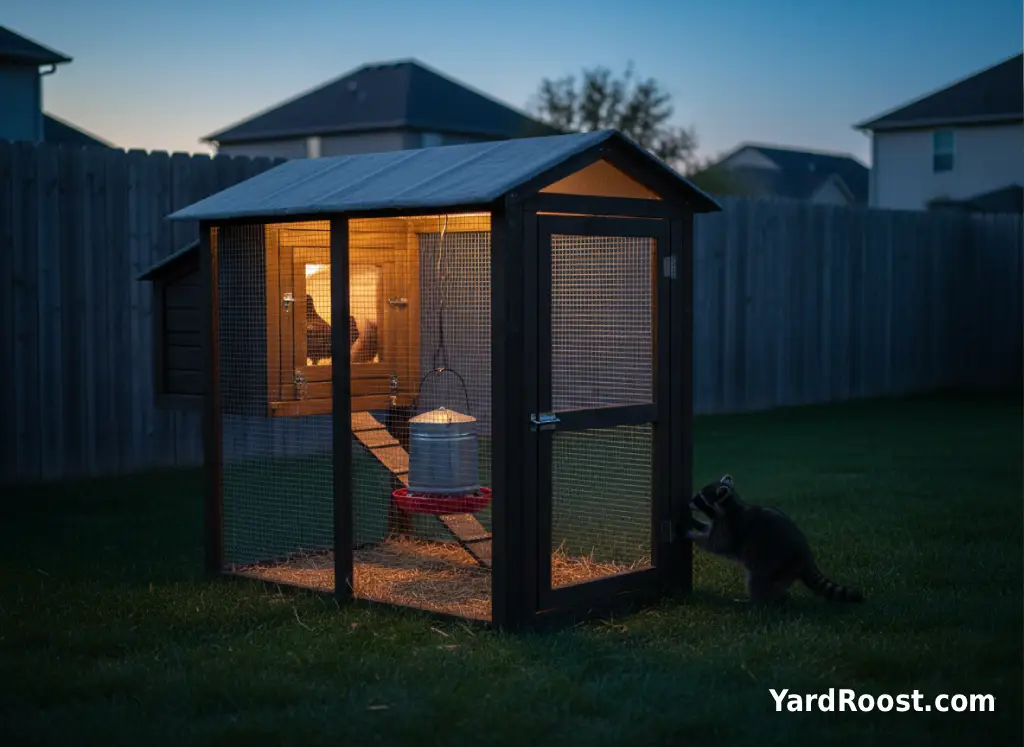
Opossums (often called “possums”) show up in a lot of backyard chicken stories—usually starring as the sneaky night visitor blamed for missing eggs, injured hens, or an uneasy coop. So, do possums eat chickens? They can. But the more helpful question is: when do opossums actually kill chickens, what does it look like when they do, and what coop upgrades stop the problem for good?
Here’s the practical truth: opossums are opportunistic. If your coop is tight and your run is secure, they usually move along. If there’s an easy meal—like accessible eggs, a small chick, or a bird trapped near a weak spot—they may take advantage. University extension resources list opossums among common poultry predators, especially at night, and emphasize predator-proof housing as the best protection.
Quick note from the YardRoost team: we’re not veterinarians. If a bird is badly injured, an avian vet is the safest next step. We’ll cover what to look for and what you can do immediately—without guessing diagnoses or offering “home treatments.”
Do Opossums Eat Chickens or Just Eggs?
Opossums are best described as “take what’s easy.” Extension and poultry management resources note that opossums may target eggs, chicks, and—when the opportunity presents itself—adult birds. They’re not the predator that typically wipes out a whole flock in one night, but they can still do real damage.
Two common scenarios we see:
- Egg raids: If nests are accessible (especially in a ground-level box or a run with gaps), eggs may be damaged or missing.
- “One bird” incidents: Opossum attacks are often described as a single bird killed per visit, sometimes with messy feeding patterns.
So yes—an opossum can eat a chicken. But most of the time, your bigger “win” is making eggs and birds hard to reach, rather than trying to guess which critter is “meaner.” Prevention beats detective work.
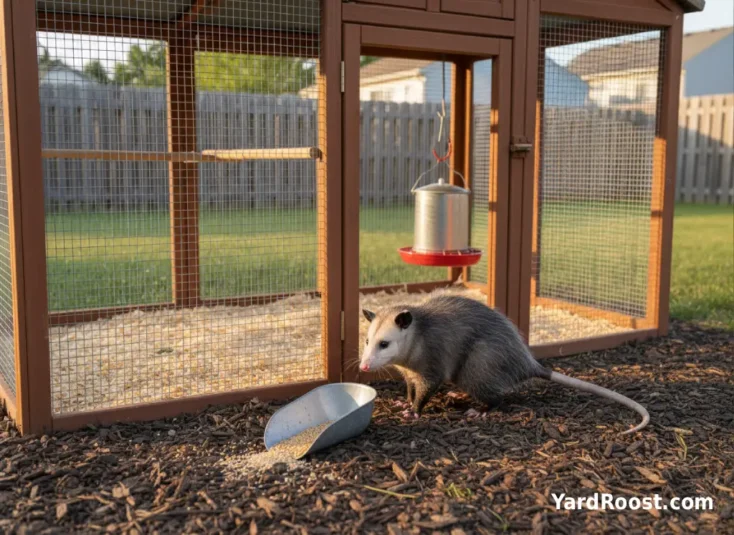
When Opossums Usually Go After Your Flock
Most mammalian chicken predators do their work at night, and opossums are commonly listed among nocturnal threats. That’s why “lock-up at dusk” is still the most effective habit you can build.
Risk tends to climb when:
- Your coop has easy entry points. Gaps around doors, loose vents, or weak screens create an invitation.
- Feed smells travel. Spilled grain, open bins, or compost near the run can attract scavengers (and then predators follow the traffic).
- Birds roost in the run. Chickens that sleep near the run wall are easier for nighttime visitors to stress, grab, or injure through openings (even if the predator can’t fully get in).
YardRoost editorial note: a common mistake we see is upgrading the coop but leaving the run gate as the weak link. Predators don’t care which part you spent the most time on—they look for the one failure point.

How to Tell If an Opossum Did It
Predator ID can get messy fast, and many night predators overlap in what they take. Still, extension resources describe some patterns that can help you narrow it down—especially when you combine “evidence” with a trail camera.
| What You Notice | What It Can Suggest | Why It Matters |
|---|---|---|
| One bird killed; feeding looks messy | Opossum (or owl in some cases) | Points you toward sealing entry gaps and night lock-up |
| Eggs missing or damaged; shell pieces left behind | Opossum (also skunk/raccoon/others) | Tells you nests need protection and access control |
| Birds injured near the vent area | May be opossum or certain other predators | Escalate your response quickly—injuries here can be serious |
Two practical tips that beat guessing:
- Use a cheap trail camera for 3–7 nights. Place it facing the run gate and the coop door seam (not the feeder). You’re trying to catch the approach route.
- Track time of day. Nocturnal patterns lean you toward opossums/skunks/raccoons/owls, while daytime hits can involve dogs, hawks, or human-related issues.
Make Your Coop and Run Opossum-Resistant
If you only remember one thing: opossum problems are usually a construction issue, not a “wildlife personality” issue. University extension guidance emphasizes sound housing, tight doors/windows, and barriers that prevent tunneling or squeezing in.
Start with these high-impact upgrades:
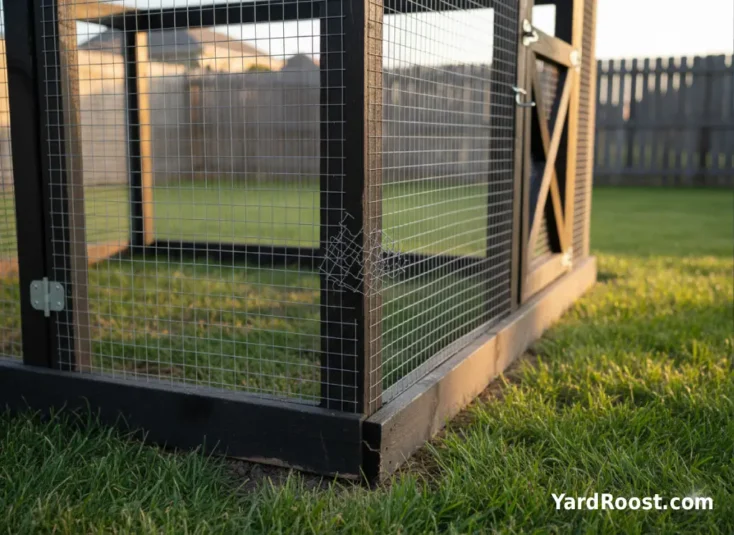
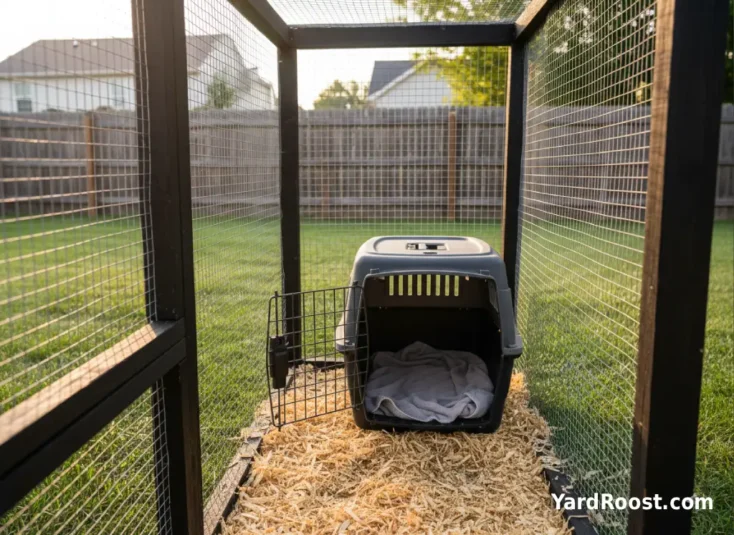
- Screen openings with hardware cloth or strong screening. Extension guidance notes using poultry netting or hardware cloth for screening and recommends openings be small (for example, holes smaller than 1 inch).
- Harden the bottom edge. Bury fencing along the lower portion (extension resources describe burying the lower 12 inches straight down to help prevent tunneling).
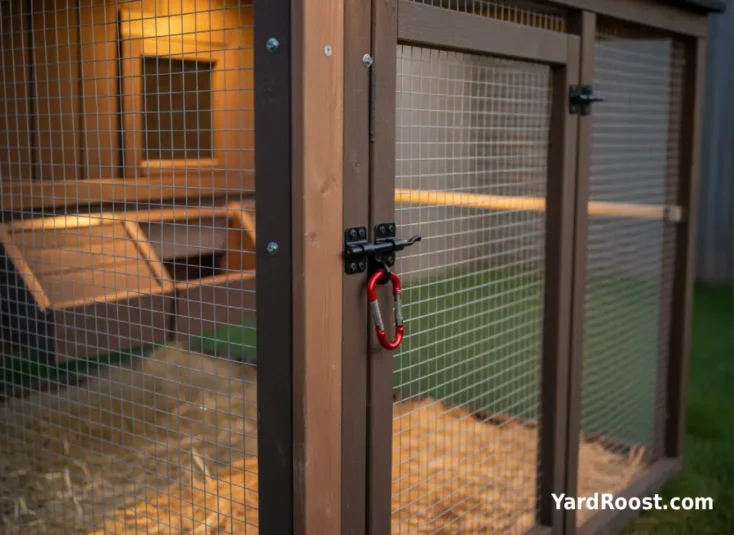
- Lock the run like a door, not like a “gate.” Use a latch that can’t be jiggled open, and add a simple secondary clip.
- Cover the run. A top reduces a lot of overnight trouble and also helps with daytime aerial threats.
A common mistake we see is relying on “looks sturdy” chicken wire on big openings. If a determined predator can bend it, pull it, or reach through it, you’ll eventually lose that argument. Aim for rigid mesh, tight fasteners, and no gaps around doors.
Can Dogs Protect Chickens From Opossums?
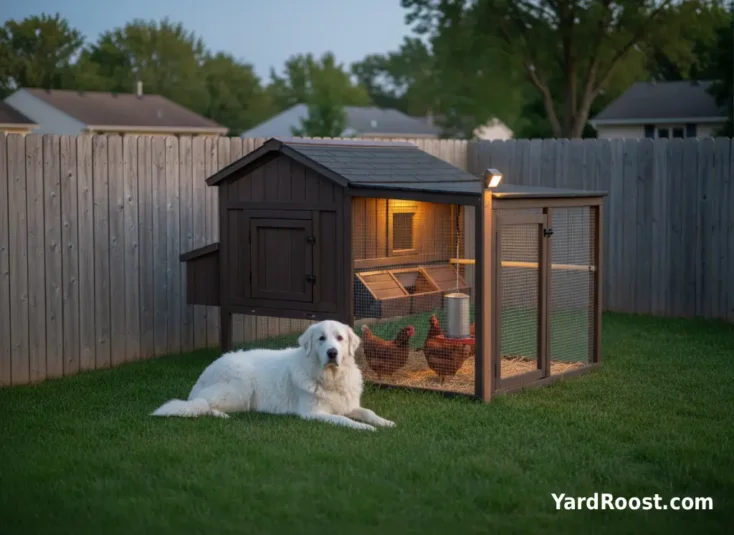
Dogs are a “sometimes yes, sometimes no” answer—and beginners get burned by this one. Some extension guidance notes that guardian dogs can be an effective predator-control option for free-range systems, but it also flags cost, training, care, and liability as real considerations.
Here’s the practical breakdown:
- Pet dogs aren’t automatically safe. University resources list domestic dogs among animals that can also prey on poultry. Translation: don’t assume your dog will “guard” instead of “chase.”
- Guardian dogs are a specific job, not a vibe. If you’re serious about this route, plan on training, containment, and supervision—especially around kids, neighbors, and delivery drivers.
- A secure coop still matters. Even a great dog sleeps, gets distracted, or is inside during bad weather. Your coop is the only guard that works 24/7.
If you’re wondering whether a possum will kill a chicken, a well-built run and a locked coop are more reliable than adding a dog to the mix.
What to Do After a Nighttime Predator Visit
When something gets in—or even tries to—your next 24 hours should be about safety and prevention, not panic. Extension guidance emphasizes prevention first: fix access points and tighten management before you think about removing wildlife.
A simple 6-step response that works:
- Secure the survivors immediately. Put birds in the most secure enclosure you have and lock it down before dusk.
- Do a full perimeter check in daylight. Look at door seams, vent screens, corners of the run, and the bottom edge where digging starts.
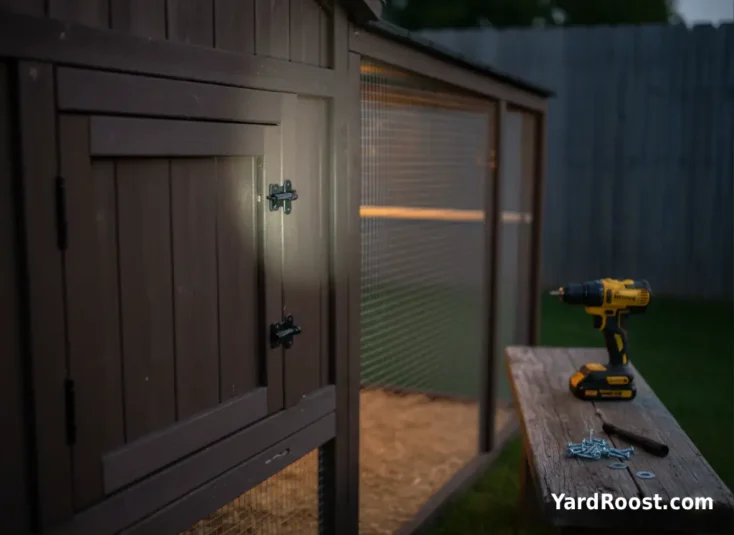
- Fix the easy stuff first. Tighten loose mesh, add screws with washers, reinforce latches, and patch gaps before the next night.
- Remove attractants. Clean up spilled feed, secure bins, and keep trash/compost away from the coop area.
- Add a trail camera. Aim it at the run gate and coop door, and leave it up for several nights.
- If you consider trapping/removal, check local rules. Regulations vary by location, and prevention is still the long-term fix.
YardRoost editorial note: the biggest “repeat attack” driver we see is a rushed patch job—like stapling over a hole without reinforcing the frame. Predators test weak points nightly. Make your repairs boringly solid.
Seasonal and Backyard Factors That Raise Risk
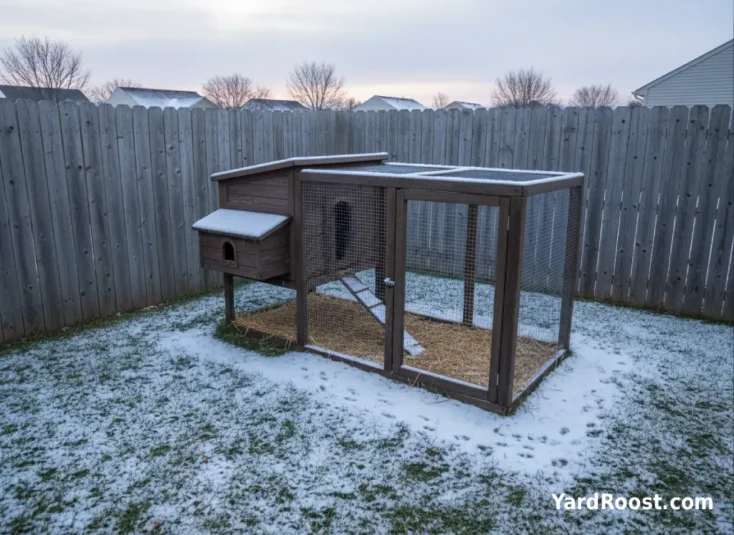
Opossum visits often spike when food is easier to find near people—think spilled feed, unsecured trash, or compost—and when nighttime access is simpler than hunting elsewhere. Predator pressure can also shift with seasons and weather, because many predators become more active around human structures when conditions are harsh.
Three practical “risk reducers” you can do in one weekend:
- Trim cover near the run. Short grass and less brush removes hiding spots (and makes camera footage clearer).
- Move feed storage away from the coop. Use a sealed bin with a lid that actually locks down.
- Improve lighting and visibility. A motion light won’t “solve predators,” but it can help you notice activity and check the coop perimeter faster.
Biosecurity and Family Hygiene After a Predator Event
After any predator incident, you’ll likely be handling feathers, eggs, bedding, and surfaces in the coop area. The CDC emphasizes washing hands with soap and water right after touching poultry, eggs, or anything in their environment. Setting up a simple coop-side handwashing or sanitizer station makes it much more likely your household actually does it.
Two easy rules we recommend (especially with kids):
- No food or drinks in the coop area. Finish chores, wash hands, then snack.
- Coop shoes stay outside. Keep a dedicated pair near the door and avoid tracking coop mess into the house.
Common Mistakes to Avoid
- Assuming “one quiet night” means the threat is gone. If an opossum found a weakness once, it may check again.
- Securing the coop but forgetting the run gate and corners. Predators test edges, seams, and latches first.
- Leaving feed accessible overnight. Spilled grain and open storage increases traffic.
- Depending on a pet dog as the primary defense. Dogs can also harm poultry, and even good dogs can’t replace solid housing.
- Using weak screening on vents/windows. Extension guidance specifically calls out screening and tight-fitting access points as key.
When to Call an Avian Vet
If an opossum (or any predator) injures a chicken, focus on safe triage and professional help rather than trying to “treat” things at home. Call an avian vet (or an experienced poultry veterinarian) promptly if you see any of the following:
- Heavy bleeding or bleeding that doesn’t stop quickly with gentle pressure
- Deep punctures, torn skin, or exposed tissue
- Injuries near the vent/cloaca (these can become serious fast)
- Weakness, collapse, labored breathing, or shocky behavior (pale comb, unresponsive, unable to stand)
Safe first steps while you arrange care: isolate the bird in a quiet, warm, dim area; limit handling; and keep the flock secure so you don’t have a second incident. If you’re unsure how urgent a wound is, it’s safer to call and describe what you’re seeing than to wait overnight.
Bottom Line: Yes, Possums Can Kill Chickens—But You Can Stack the Odds
So—do possums kill chickens? They can, and extension resources describe opossums as capable of taking eggs, chicks, and occasionally adult birds, often with one-bird-per-visit patterns and messy evidence.
But the bigger takeaway is encouraging: most “possum problems” are solvable with the same upgrades that protect you from raccoons, skunks, and other nighttime visitors. Lock birds up at dusk, tighten your screens and latches, bury the lower edge of fencing where digging starts, and remove attractants that turn your coop into the neighborhood buffet.
If you want the fastest, simplest plan: start with a secure door and gate latch, cover the run, and reinforce openings with hardware cloth or strong screening with appropriately small openings. Add a trail camera for a week to confirm the route and timing—then fix the one weak spot the footage reveals. That’s how you turn nighttime worry into a boring, safe routine (the best kind of chicken keeping).