Finding a chicken dead—but not eaten—feels confusing and personal. Most of us expect a predator to “take the whole bird.” But backyard flock losses don’t always look tidy, and some predators kill quickly, get spooked, or can only reach certain parts. The good news is that the scene usually leaves patterns you can use: missing heads, piled birds, scattered feathers, deep bites on the neck, or no mess at all.
This guide is for beginner-to-intermediate chicken keepers with small flocks in the U.S. We’ll walk through the most common “killed but not eaten” scenarios, what animals eat chickens (and what animals eat chickens at night), and what to do next to stop a repeat. We’re not a veterinary service—if you have injured birds, we’ll point out when an avian vet is the safest call.
Fast Answer: Why Chickens Get Killed but Not Eaten
“Killed but not eaten” usually happens for one of four reasons:
- The predator was interrupted (lights, barking, you stepping outside, motion alarms).
- The predator can’t carry the bird or can only reach part of it through fencing.
- The predator kills for opportunity or excitement and doesn’t need to feed immediately (this is common with dogs and some mustelids like weasels/mink).
- The predator cached or moved the meal (so it looks like “not eaten” when the bird is actually missing).
If you’re standing there thinking, “What animal kills chickens without eating them?”—start by looking for two big clues:
- Is anything missing? (heads, necks, organs, the whole bird) and
- How did the predator get access? (reached through wire, dug under, slipped through a gap, or attacked in the open).

Predator Clues at a Glance
Use this table as a quick starting point. Real-life scenes can be messy, so treat it like “most likely,” not a guarantee.
| What You See | Often Points To | Why It Happens |
|---|---|---|
| Bird dead, not eaten; parts intact; sometimes multiple birds | Weasel or mink | They may kill more than they consume; access through small gaps is common |
| Missing head/neck, body mostly left behind (especially near wire) | Raccoon; sometimes raptors (hawk/owl) | Raccoons can reach through openings and pull heads through wire; raptors may focus on head/neck |
| Birds mauled, left in yard; chaos but little feeding | Dog (often a loose neighborhood dog) | Chase/maul behavior; not always feeding-driven |
| Only feathers or signs of a struggle; bird missing | Fox or coyote | They commonly carry birds off to eat elsewhere |
| Feathers under a tree; attack happened in daylight | Hawk | Smaller birds may be carried to a perch; larger birds sometimes eaten near the kill site |
| Attack at dusk/night; birds missing or partially eaten | Owl | Owls hunt at low light and can grab birds quickly |
Sources we trust for predator ID patterns include The Ohio State University Extension (Ohioline), University of Maryland Extension, and University of Kentucky Extension publications.

What Animals Eat Chickens at Night?
If your losses happen overnight, think like a night hunter: raccoons, opossums, skunks, foxes, coyotes, owls, and members of the weasel family can all strike after dark.
Two helpful distinctions:
Night predators that often leave bodies behind include raccoons (especially when they can only reach through fencing) and dogs (if a dog gets access at night, it can still “play-chase” and leave birds).
Night predators that often remove birds include foxes and coyotes, which may leave only feathers and faint signs of a struggle.
Also note: owls can hunt at night and may carry birds off to eat elsewhere. University of Maryland Extension notes owl predation occurs in early morning, late evening, and at night, and that owls can carry birds off to consume them in another location. That’s one reason “no body found” can still be a night predator story.
What Animal Eats the Heads Off Chickens?
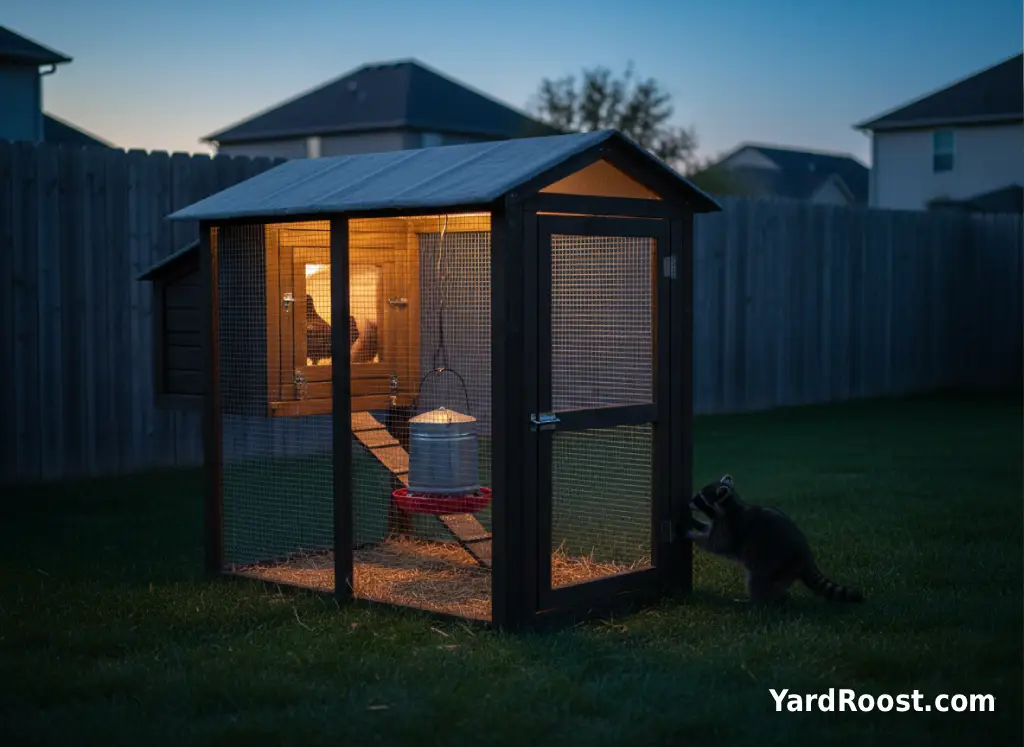
The “missing head” scenario is one of the most recognizable predator patterns—and it often involves access through wire. Multiple extension resources describe raccoons reaching through openings and grabbing birds, sometimes leaving most of the body behind. The Ohio State University Extension specifically notes raccoons can reach through openings and rip off a bird’s head through loose meshing/wire caging.
Raptors can also target the head/neck area. If you’re seeing missing heads plus signs of sharp tearing, deep cuts, or heavy feather scatter, it can point toward hawks or owls—especially if birds were spooked into fencing or attacked in low light.
Actionable fix: if you ever see a chicken able to put its head through run wire, the openings are too large for predator safety. Swap to tighter mesh (hardware cloth) and make sure it’s attached tightly so nothing can reach through and grab.
Weasels and Mink: The “Multiple Birds, Barely Eaten” Problem
If you walk out to several dead birds that look mostly intact, it’s natural to think, “This doesn’t make sense.” But it can—especially with the weasel family (including mink). University of Maryland Extension notes minks and weasels can kill without consuming the birds, often by grasping the back of the neck or head. A widely used predator management publication also notes members of the weasel family may kill more than they eat.
What makes this situation tricky is access. Weasels and mink can exploit surprisingly small gaps in poorly repaired housing. That’s why “it looked secure” isn’t always secure in mustelid terms.
Two practical steps that help fast:
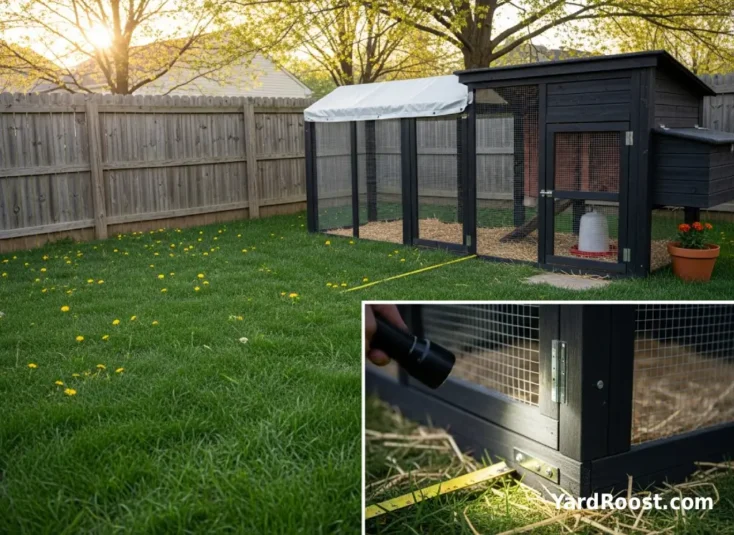
- Do a “credit-card check” on your coop: walk the perimeter and look for any gaps at corners, doors, rooflines, or where wood meets wire. If you can fit a fingertip into a gap, treat it as a fix-now priority.
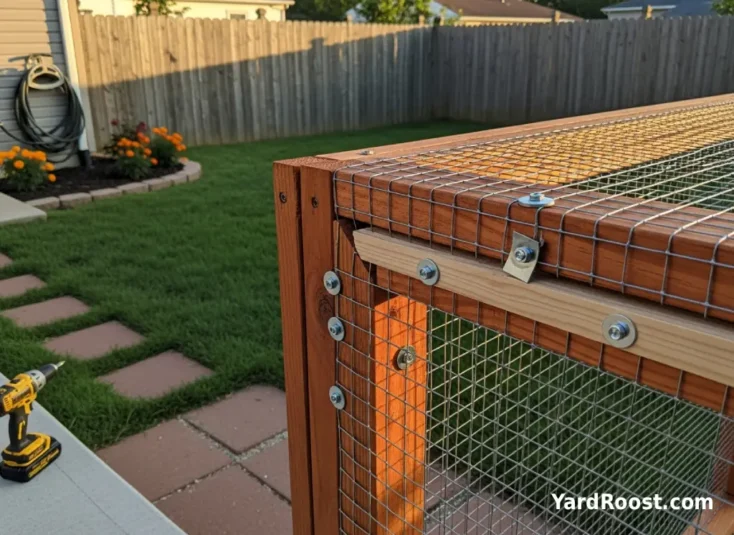
- Reinforce vents and windows: cover openings with tightly fastened hardware cloth and solid framing so nothing can pry or squeeze through.
A common mistake we see is patching a hole with light stapling and calling it done. Predators push, pull, and pry. Use screws with washers or heavy-duty fastening so mesh can’t be peeled back.
Dogs: The Surprising “Kills for Sport” Culprit
People don’t like this answer, but it’s common: a loose dog can chase, grab, and maul chickens and leave them behind. Extension resources describe dogs as frequent poultry predators and note they may leave birds lying around the yard after chasing and mauling.
If your scene looks chaotic—birds scattered, injuries without “clean feeding,” multiple victims in a short time—keep dogs high on the list. This is also one of the situations where your best fix is prevention: secure fencing, locked gates, and a run that can’t be pushed open.
Practical tips:
- Upgrade latches: if a gate can be bumped open by a shoulder, it’s not a latch—it’s a suggestion. Use locking, two-step latches on runs and coop doors.
- Reduce “line of sight” triggers: a solid lower panel or a double-fence buffer can reduce the chase instinct in some dogs.
What to Check at the Scene Before You Clean Anything
Before you rake, hose, or “make it nice,” do a quick 10-minute evidence sweep. This can save you from repeat losses.
- Look up: roof gaps, torn netting, open vents, or a branch that gives predators a landing spot.
- Look down: digging at corners, loose boards, gaps under doors, or a spot where wire lifts off the ground.
- Look through: any fencing your chicken can poke its head through is a reach-through risk.
- Scan for “pattern injuries”: neck/head trauma, deep punctures, or multiple birds lined up can matter for ID.
If you’re unsure, one low-effort trick is to place a light layer of fine sand or powder around the perimeter (outside the run) and check for tracks the next morning. Predator management guides describe this as a practical way to make mammal tracks easier to spot.
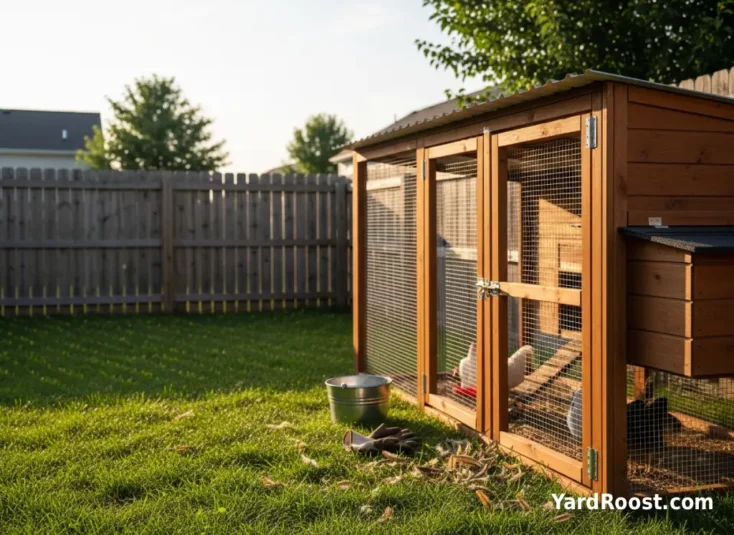
Predator-Proofing Moves That Stop Repeat Attacks
If you only do one thing, do this: make it physically impossible for predators to reach birds through the wire or slip into gaps.
University of Connecticut Extension specifically recommends covering openings with hardware cloth rather than chicken wire, noting predators can tear through chicken wire. Then address the two most common entry methods: digging under and popping latches.
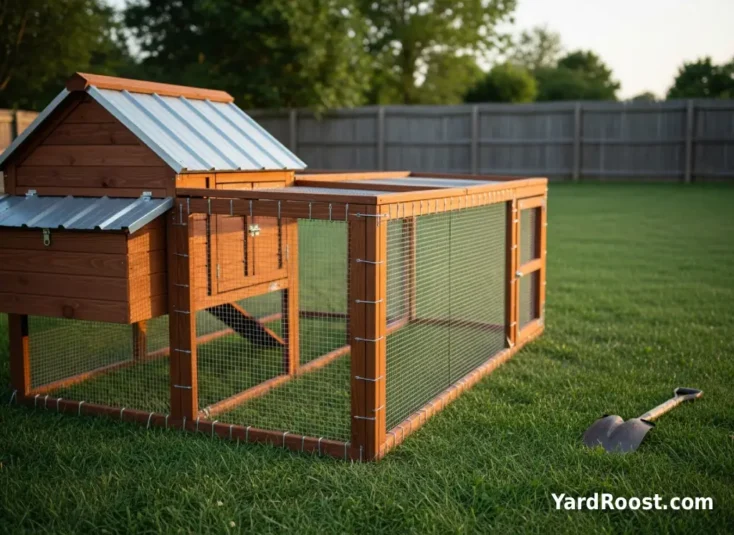
University of Maryland Extension guidance on predation prevention describes digging a trench around the coop and burying hardware cloth to deter digging predators (commonly described in the 12-inch to 1.5-foot range).
And predator ID resources note raccoons can manipulate simple latches—so assume anything “easy” will be opened eventually.
Quick checklist (no fluff)
- Mesh: Use tightly attached hardware cloth on run walls, windows, vents, and any openings.
- Fasteners: Screws + washers (or heavy-duty fasteners) beat staples for long-term hold.
- Dig barrier: Bury mesh vertically or create an apron at the perimeter so diggers hit wire before they hit your coop.
- Latches: Two-step or locking latches on every door and access panel.
- Cover: If you’ve had hawk/owl pressure, cover the run with secure netting or wire to block aerial entry.
After an Attack: Cleanup, Flock Safety, and Salmonella Hygiene
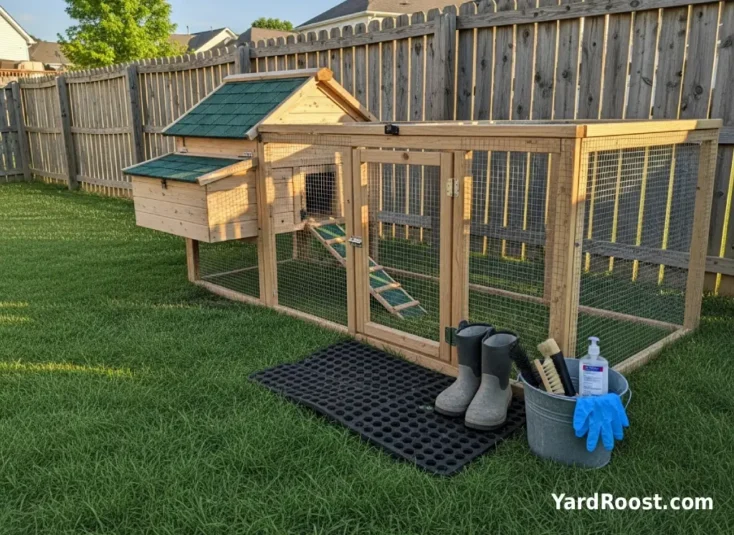
Predator visits can leave stress, injuries, and a mess you’ll want to handle quickly. Wear gloves, keep pets away from the scene, and separate any injured birds into a quiet, safe space while you evaluate next steps.
Even when birds look healthy, backyard poultry can carry Salmonella. The CDC advises washing hands with soap and water immediately after touching poultry, eggs, or anything in the area where they live and roam. Build that into your cleanup routine—especially if kids help with chores.
Two habits we like in real backyards:
- Coop-only footwear: keep a dedicated pair of boots at the coop so you don’t track manure into the house.
- Reset the “attractants”: secure feed in sealed containers, pick up spills before nightfall, and keep trash closed—easy calories invite repeat visitors.
Common Mistakes to Avoid
- Assuming chicken wire is “predator-proof.” It helps keep chickens in, but many predators can tear or reach through it. Upgrade openings to hardware cloth.
- Only fixing the obvious hole. Predators return. Do a full perimeter check—corners, rooflines, vents, and door edges.
- Using simple latches. If a human can open it with one easy motion, assume a raccoon will eventually figure it out.
- Leaving feed out overnight. Spilled feed attracts rodents, and rodents attract larger predators.
- Cleaning before you identify entry. The fastest way to lose more birds is to clean up and miss how the predator got in.
A common mistake we see is “temporary fixes” that become permanent: a quick staple job, a clip that doesn’t lock, a board leaned against a gap. Predators test your setup every night. Make repairs like you expect a determined animal to pull on them—because that’s exactly what happens.
When to Get Professional Help
Sometimes the safest next step isn’t another DIY patch—it’s getting the right help quickly.
- Call an avian vet if a bird has deep puncture wounds, labored breathing, severe bleeding, weakness/shock, or you’re unsure how serious the injuries are.
- Contact local animal control if a neighborhood dog is repeatedly entering your yard or if you need documentation for ongoing issues.
- Use a licensed wildlife professional if you’re dealing with repeat predation and need lawful, humane options for exclusion and control.
One more important note: many raptors (hawks, owls, eagles) are protected under federal law. Focus on exclusion—covered runs and secure housing—rather than “removal.”
Bonus: “What Animals Do Chickens Eat?”
This one pops up a lot in searches, so here’s the quick, backyard-real answer: chickens are omnivores and love high-protein foraging. They commonly eat insects (beetles, flies, grasshoppers), worms, and other small critters they can catch, along with greens and seeds. If you want to encourage healthy foraging without attracting predators, keep treats small, pick up leftovers before dusk, and avoid leaving open feed outdoors overnight.
Turn the Clues Into a Stronger Setup
When chickens are killed without being eaten, the scene is telling you something: access was possible, the predator was interrupted, or the predator’s behavior isn’t primarily about feeding.
Missing heads often points to reach-through situations (commonly raccoons, sometimes raptors). Multiple dead birds with minimal feeding can point toward weasels/mink. Mauled birds left behind can be a dog problem. And if birds vanish with only feathers left, foxes and coyotes move meals off-site.
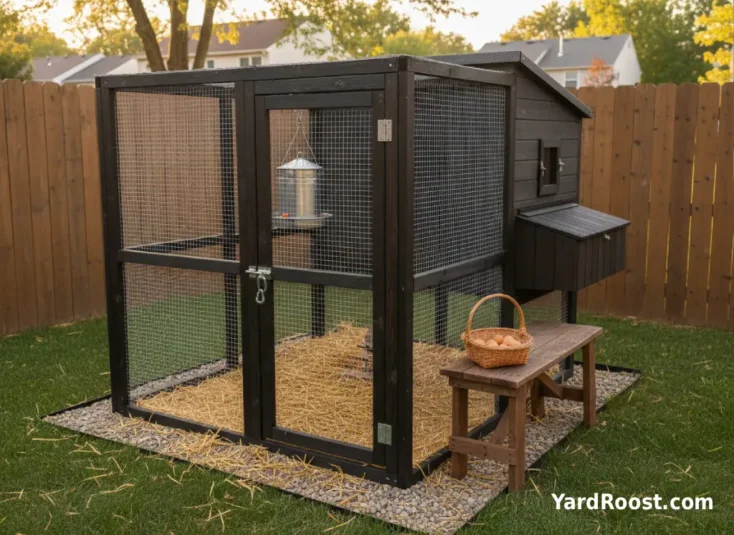
Your best long-term “predator ID” tool is a predator-proof build: tight hardware cloth, real fasteners, dig barriers, and latches that lock. Once you close the easy routes, most predators move on.
Sources (organizations referenced): The Ohio State University Extension (Ohioline), University of Maryland Extension, University of Connecticut Extension, Oklahoma State University Extension, University of Kentucky Extension, and the Centers for Disease Control and Prevention (CDC).