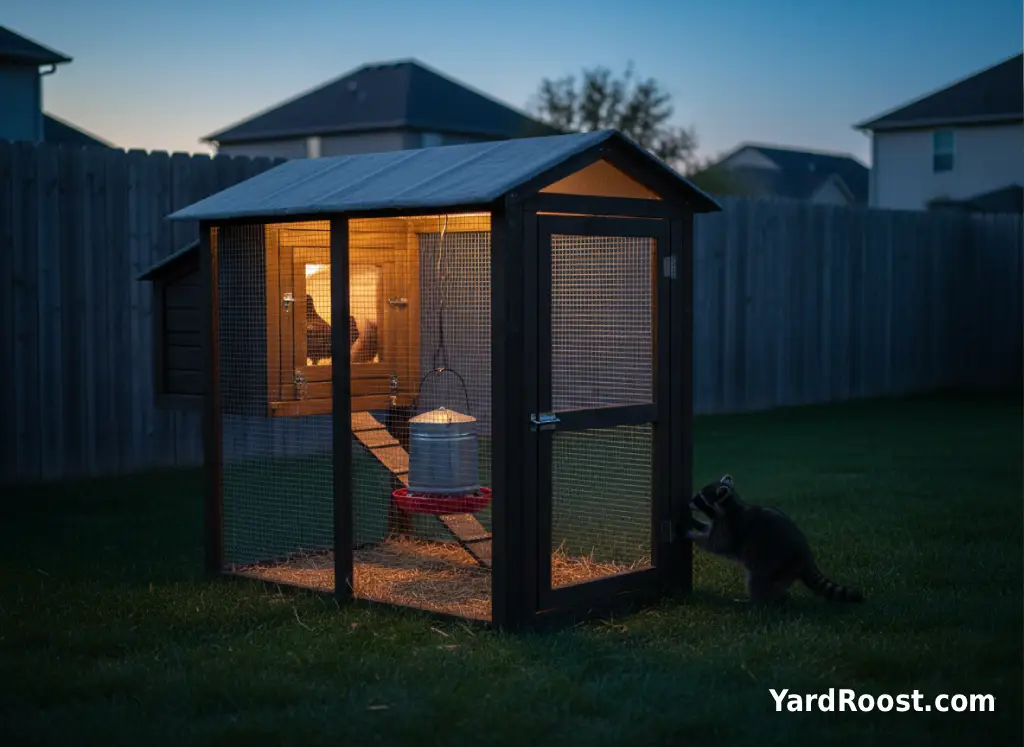
Chicken mites are one of those backyard flock problems that can go from “Huh, that’s odd” to “Why is everyone itchy and cranky?” faster than you’d expect. The tricky part is that not all mites behave the same way—some spend most of their time on the bird, while others hide in coop cracks and only feed at night. That’s why a “chicken mites cure” mindset usually backfires: the fix is almost always a repeatable system, not a one-and-done spray.
What we can do is help you spot what’s going on, take safe first steps, and know when it’s time to get professional help. Along the way, we’ll cover what do chicken mites look like, signs of chicken mites on birds and in the coop, chicken lice vs mites, and what to do if you’re dealing with chicken mites and humans (yes, that’s a thing).
Chicken Mites 101: What They Are and Why They’re So Persistent
Most backyard keepers use “chicken mites” as a catch-all, but there are a few common culprits. Some mites (like northern fowl mites) tend to stay on the bird and are often easiest to spot around the vent area and under feathers. Others (often called poultry red mites or chicken mites) are famous for hiding in the coop—cracks, roost joints, nest-box seams—and feeding mostly at night.
Here’s the part that makes them stubborn: under favorable conditions, mites can complete a life cycle in about a week to 10 days, and some can survive off the host for a while. That’s why the most effective “treatment for chicken mites” is almost always a two-part plan: address the birds and the coop, then repeat on a schedule based on that life cycle. If you only do one big cleaning or one “chicken mite spray” day and call it done, you usually end up right back where you started.
Sources we trust for mite basics: land-grant university extension poultry resources (e.g., Alabama Extension, Virginia Tech Extension, University of Nebraska–Lincoln Extension), plus the Merck Veterinary Manual for reference-level overviews.
What Do Chicken Mites Look Like?
When people ask “what does a chicken mite look like,” they usually want one simple answer—but mites can look different depending on the species and whether they’ve recently fed. A practical backyard description:
- Size: tiny—often appearing like moving pepper or pinpoints.
- Color: can look grayish before feeding and more reddish after feeding (especially for “red mite” types).
- Where you see them: on birds around the vent/under feathers (some types) or in coop cracks/roost ends (others, especially night feeders).
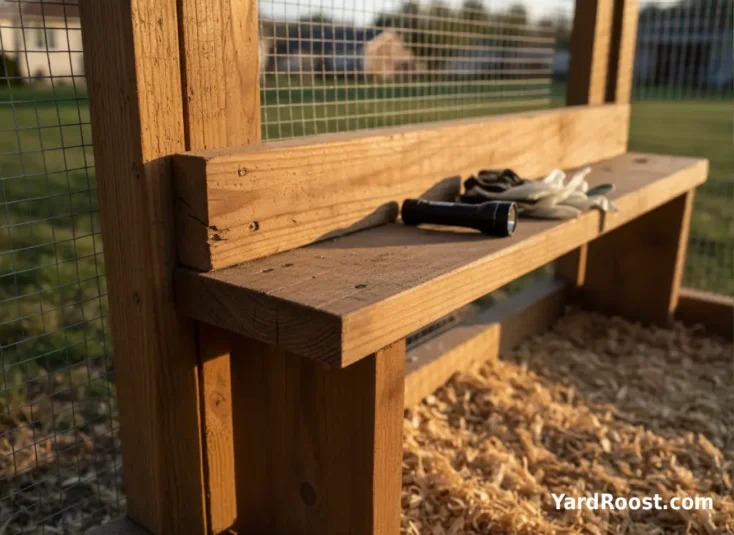
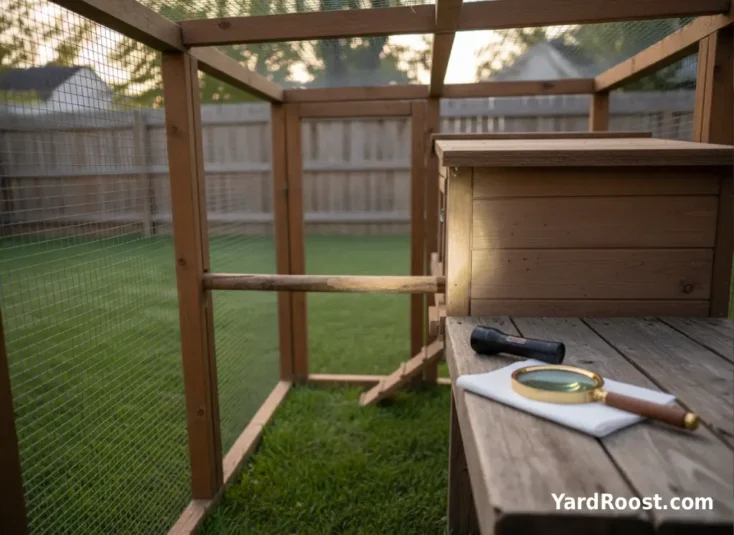
If you’re trying to confirm what you’re seeing, a quick “paper towel test” can help: wipe the ends of roost bars and tight seams with a white paper towel. Tiny dark smears can be a clue that something’s living there. Another tip: check after dark with a flashlight—night-feeding mites are more likely to be on the move then.
A common mistake we see is people checking only the birds at midday and declaring victory. If the mites are living in the coop and feeding at night, that midday inspection can look “fine” even when the infestation is brewing.
Signs of Chicken Mites on Birds and in the Coop
“Chicken mites symptoms” can show up as bird behavior changes before you ever spot the mites. Keep your eyes on:
- Restlessness at night: birds unwilling to roost, frequent shifting, or “sleeping” in odd places.
- Pale combs or seeming run-down: heavy infestations can stress birds significantly.
- Feather/skin irritation: more preening than usual, scabby-looking irritation around the vent, or feather damage from constant discomfort.
- Dirty-looking vent feathers: dark “peppery” staining can be a clue with some mite types.
- Coop clues: tiny moving specks in cracks, especially around roost ends, nest-box seams, and under perches; occasional small blood smears on eggs can happen with severe infestations.
Not every itchy, scruffy bird has mites—molting, pecking order drama, and dry winter skin can look similar. The difference is pattern: if multiple birds are irritated, nights are worse, and you find activity in roost cracks, you’re likely dealing with mites in the chicken coop.
Chicken Lice vs Mites: A Fast Backyard ID Guide
Chicken lice vs mites is a common point of confusion—and it matters because where they live changes your cleanup plan.
| Clue | Mites | Lice |
|---|---|---|
| Where you’ll find them | Often in vent feathers/skin or hiding in coop cracks (some feed at night) | Usually on the bird, moving through feathers; eggs (nits) stuck to feather shafts |
| Best time to check | Night flashlight checks can reveal coop-dwelling mites | Daytime feather-parting checks often show lice and nits |
| What the coop tells you | Cracks/roost ends can be “hot spots” | Coop may look normal; problem stays mainly on birds |
One fast trick: if you’re seeing lots of debris and activity around roost joints and nest-box seams, prioritize the coop. If you’re seeing clusters of eggs attached to feather shafts, lice move higher on your suspect list.
How to Get Rid of Chicken Mites: A Step-By-Step, Repeatable Plan
There isn’t a magic “treatment chicken mites” button. The winning approach is integrated pest management: reduce hiding places, physically remove what you can, then use only poultry-labeled controls (if you choose them) exactly as the label directs—and repeat because mites cycle fast.
Step 1: Confirm where the mites are living
Do a daylight feather check around the vent, and do a nighttime flashlight check on roost ends and seams. This tells you whether you’re fighting mostly “on-bird” mites, “in-coop” mites, or both.
Step 2: Do a coop reset that targets cracks and roosts
Pull removable roosts and nest-box inserts if you have them. Remove bedding and bag it. Scrub roost ends, brackets, and seams (the tight spots matter more than the big flat walls). A common mistake we see is a spotless floor with untouched roost joints—mites love joints.
Step 3: Reduce future hiding spots
Repair splintered roost ends, tighten loose boards, and consider making roosts easy to remove for regular inspection. If you’re reworking ventilation at the same time, keep air moving above roost level without drafts on birds—Chicken Coop Ventilation Guide is a good place to start.
Step 4: Choose controls carefully (and safely)
If you decide to use a chicken mite spray or other pesticide, choose products labeled for poultry and follow label directions precisely (including safety steps, where to apply, and how often to repeat). Avoid mixing “homebrew” chemicals in the coop—your birds’ respiratory systems are sensitive, and strong fumes can be dangerous.
Step 5: Repeat on a calendar
Because mites can complete a life cycle in roughly 7–10 days under favorable conditions, re-check and re-address hotspots on a repeating schedule for several cycles. If you only treat once, you may knock back adults and miss the next wave.
Step 6: Keep pressure low for a month
Plan weekly inspections for at least 4 weeks: roost ends, nest seams, and vent checks. The goal is “no surprises.”
Sources we trust for repeat-treatment logic and mite habits: University of Arizona Extension (mites’ life cycle and survival), Kansas State Research and Extension (red mite habits and coop hiding), and Virginia Tech Extension (northern fowl mites staying on birds).
Chicken Mites on Humans: Can Humans Get Chicken Mites?
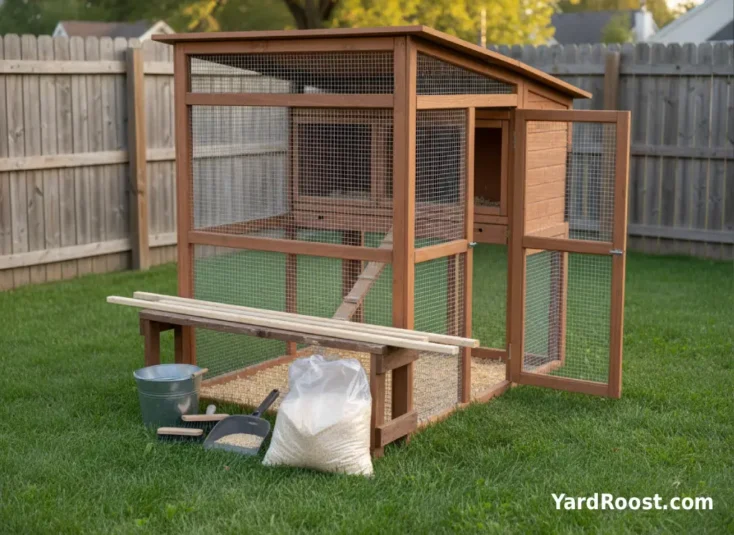
Yes, chicken mites and humans can overlap—mostly as itchy bites or rash-like irritation when mite populations are high in the coop or when wild birds nest nearby. The key point: bird mites may bite people, but they generally can’t live on humans long-term. If you’re seeing “chicken mites in humans” searches online, it’s usually describing bites and irritation—not a stable, reproducing infestation on a person.
What it can feel like: itchy red bumps or a rash-like reaction, often on areas exposed during coop chores (ankles, waistline, forearms).
What helps right now (safe, practical steps):
- Change clothes immediately after coop work and wash in hot water when fabric allows.
- Shower soon after handling bedding or cleaning roosts.
- Bag coop shoes/boots or keep them outside to avoid tracking mites indoors.
If bites are severe, spreading, or you’re unsure what’s causing them, consider checking in with a healthcare professional—especially if there are signs of infection from scratching or significant allergic reactions.
Seasonal and Setup Triggers That Make Mites Worse
Mites love the same things mold and stink love: hidden spots and conditions that stay comfortable. While mite species vary, these flock-and-coop realities tend to raise your risk:
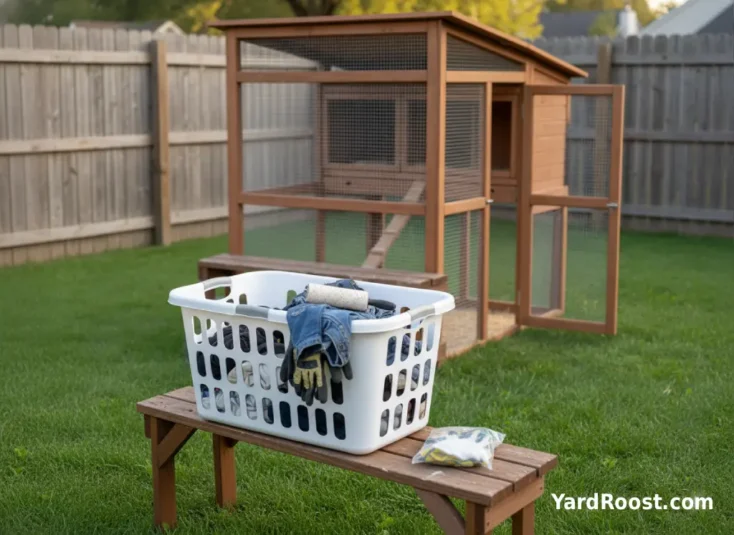
Cracks, seams, and clutter. Roost brackets, layered boards, decorative trim, and nest-box lids with gaps create perfect hideouts. If your coop is “cute but complicated,” build in removability—lift-out roosts and accessible seams you can actually scrub.
High stocking density. Crowding increases contact, stress, and the chance that parasites spread from bird to bird. You don’t need perfection—just avoid the “everyone sleeping on top of everyone” situation.
Wild bird traffic. Songbirds nesting in eaves, sharing feed, or hanging around the run can introduce mites. If you find a wild nest on or near the coop, remove it when empty and block the entry point.
Warm spells and mild winters. Parasites often surge when conditions allow fast breeding cycles. That’s when your inspection routine matters most: quick checks beat surprise infestations.

Common Mistakes to Avoid
- Only treating the birds (or only treating the coop). If mites live in the coop, the birds get re-exposed nightly. If mites live on-bird, a spotless coop won’t solve it by itself.
- One-and-done cleaning. Mites can cycle quickly, so skipping follow-up checks is how infestations rebound.
- Spraying “everything” without a plan. Over-application, mixing products, or using non-labeled chemicals can create respiratory risk and still miss the real hotspots (roost ends and seams).
- Ignoring the roost hardware. The ends of roost bars and their brackets are mite magnets—hit those first.
- Assuming every itch is mites. Molt, dryness, and pecking can mimic irritation. Confirm with targeted checks before you go all-in.
A common mistake we see is focusing on the coop floor because it’s visible and satisfying to clean—while the mites are thriving in the roost joints two feet above it. Put your effort where the mites actually live.
When to Call an Avian Vet
If you suspect mites, most flocks improve when you reduce exposure and keep the cycle from restarting. But some situations need professional eyes—especially because heavy external parasite burdens can contribute to serious stress and secondary issues.
Reach out to an avian vet (or a vet comfortable with poultry) if you see any of the following:
- Birds that seem weak, pale, or unusually lethargic, especially if multiple birds are affected.
- Ongoing weight loss, significant drop in egg production paired with obvious distress, or birds refusing to roost night after night.
- Skin that looks badly inflamed, bleeding, or infected from scratching/pecking.
- You’ve done a solid coop-and-bird plan with repeats over multiple mite cycles and the problem isn’t improving.
If you can, bring photos from a nighttime flashlight check and notes on what you observed (where mites were found, which birds are most affected, and what you’ve already changed).
Prevention: Keep Mites From Coming Back
Once you’ve fought mites, you don’t want a rematch. Prevention is mostly about consistent inspections and smarter flock management.
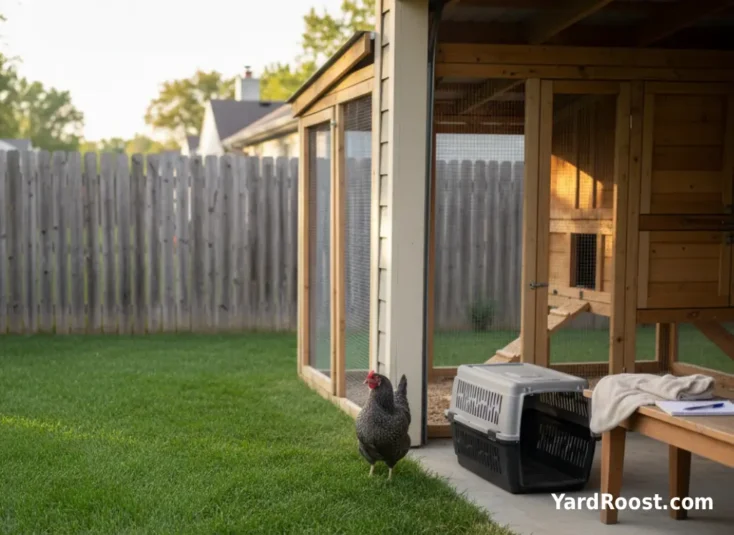
Quarantine new birds. A 30-day quarantine is a strong baseline used in official poultry biosecurity checklists, and it gives you time to spot parasites before they enter the main coop. During quarantine, do a weekly vent/feather check and a quick look at roost ends in the quarantine space.
Make inspection easy. The simplest “mite-proofing” upgrade is often removable roosts and nest-box inserts. If you can lift it out, you can inspect it. If you can’t inspect it, mites can.
Keep wild birds from moving in. Block nesting spots on/near the coop, keep feed contained, and clean up spills so you’re not inviting extra visitors.
Stay on a routine. A two-minute roost-end check once a week beats a two-hour emergency cleanup later.
Bottom Line: A System Beats a “Cure” Every Time
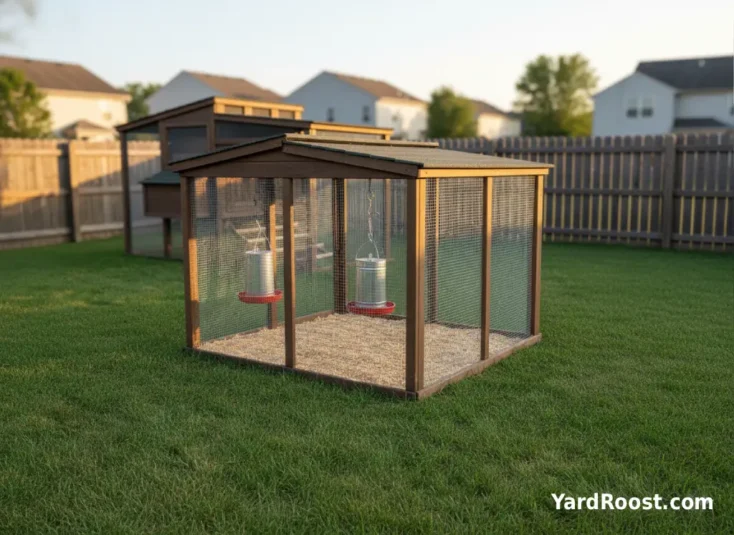
If you take one thing from this, let it be this: getting rid of chicken mites is rarely about finding a single chicken mite treatment that “works forever.” It’s about breaking the cycle. Confirm where the mites are living, hit the real hotspots (roost ends, seams, nest-box cracks), and repeat your checks on a schedule that matches how quickly mites can repopulate.
When you build your coop and routines around inspectability—removable roosts, fewer hiding spots, quick weekly checks—you stop mites from turning into a full-flock problem. And if you’re dealing with chicken mites on humans, the same principle applies: reduce exposure at the source (the coop), and use simple hygiene steps to keep carryover low.
If your birds look truly run-down or your best efforts aren’t moving the needle after multiple repeat cycles, that’s the moment to bring in an avian vet. A safety-first system is the closest thing backyard keepers have to a “cure”—and it’s one you can keep using season after season.