
Yes—cats can kill chickens, but the risk isn’t the same for every bird or every situation. Most backyard keepers who run into trouble are dealing with small targets (new chicks, bantams, or injured birds), a bold outdoor/feral cat, or a setup that gives a cat easy access to corners, gaps, and nighttime roosts. Several extension resources even list cats among common poultry predators, and specifically warn that cats can be deadly to chicks and young birds.
The good news is you don’t have to “win a war” with every neighborhood cat to keep chickens safely. You just need to remove the easy opportunities: secure the run, eliminate climb-and-drop entry points, tighten up doors and latches, and use smart routines when birds are smallest and most vulnerable. We’ll walk through realistic risk factors, how to tell when a cat is the culprit, and practical (and humane) prevention steps that work for beginner-to-intermediate backyard chicken keepers.
Do Cats Kill Chickens, or Is It Mostly Chicks?
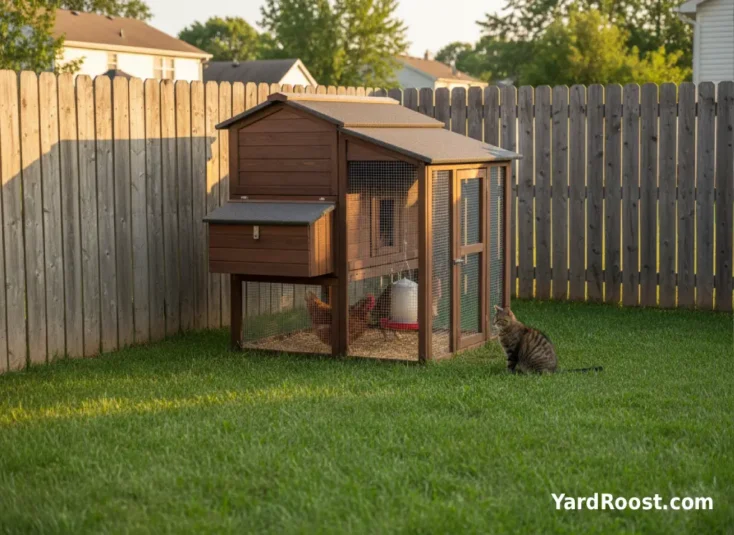
Cats are capable hunters, and they’re absolutely on the list of predators that may target poultry—especially chicks and young birds. In real backyards, the most common “cat problem” is a chick disappearing, a bantam getting pinned, or an injured bird being finished off when it can’t run or flap well. That said, some cats (including feral cats and bobcats) have been known to kill larger birds, particularly if the chicken can’t escape or the cat can ambush inside a run.
Think of risk as a mix of bird size + access + cat behavior. A confident outdoor cat with easy entry into a run is a bigger problem than a timid house cat that occasionally wanders by. And any “cornerable” chicken (tight space, no overhead cover, no hiding options) is at higher risk than a bird that can move freely and get under protection.
Sources to trust on predator lists and risk: University of Maryland Extension, Ohio State University Extension (Ohioline), Extension poultry resources (eXtension), and other land-grant extensions routinely include cats among poultry predators.
Which Chickens Are Most at Risk From Cats
In most neighborhoods, cats go for the smallest, easiest option. Here’s who needs the most protection:
Chicks (especially under about 8–10 weeks) are the highest risk. They’re small enough to be carried, they freeze instead of flee, and they’re usually kept in temporary setups that aren’t fully predator-proof.
Bantams and small breeds are also more vulnerable, particularly if they free-range without overhead cover. They’re easier for a cat to grab and harder for them to fight off.
Sick, injured, or slow-moving birds are a target for any predator. A chicken that can’t sprint, flap, or get to safety quickly is at higher risk—even if it’s full-sized.
Newly integrated birds can be vulnerable too. When the pecking order is unsettled, birds may hang back alone, and being separated from the group makes any chicken easier to pick off.
If you’re raising young birds, it’s worth reading up on predator-proofing basics early and building “kid gloves” protection into your setup from day one.

Signs a Cat Attacked Your Chicken
Predator ID can get messy fast, but you can still collect clues that help you fix the right weak point.
Cats often hunt by stalking and pouncing, and they may leave feathers scattered without the dramatic “torn-up” look you might see with a dog. Extension guidance notes that cats can take chicks entirely, and may leave wings/feathers with young birds—sometimes with the “meaty parts” eaten and the rest left behind.
Practical checks (without turning it into a crime scene):
- Look for access points first: gaps at doors, corners where mesh meets wood, or spots a cat could squeeze through or reach in.
- Scan for “reach-through” attacks: cats can hook a bird through wider openings if the mesh is too large or stretched.
- Check the perimeter: if there’s no digging, that doesn’t rule out a predator—cats often don’t need to dig if they can climb or slip in.
Ohio State University Extension (Ohioline) notes that many predators can remove chicks with little disturbance, especially at night. If you find missing chicks with minimal mess, assume your setup has an access issue until proven otherwise.
How to Cat-Proof Your Coop and Run
If you only do one thing, do this: make it physically hard for a cat to get a clean pounce or a clean grab. Cats are athletic—great climbers, great jumpers—so “tall fencing” alone is rarely the answer.
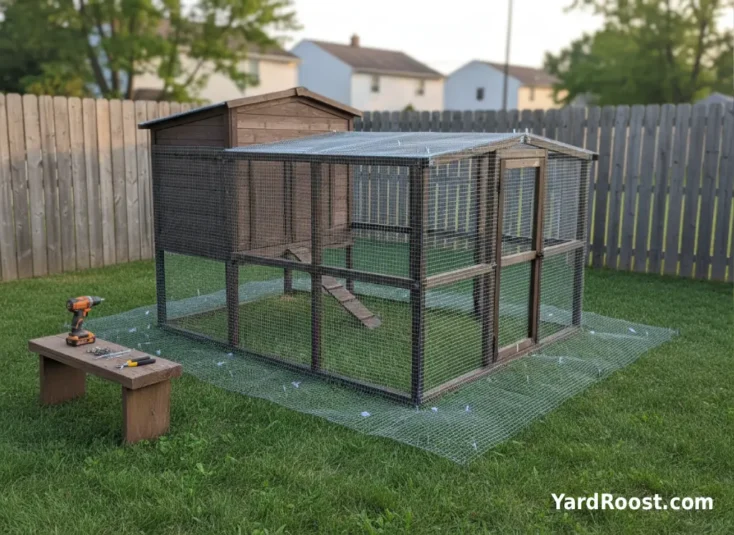
- Use sturdy wire mesh, installed tight. Hardware cloth is the go-to for predator-resistant builds; chicken wire is mainly a “keep chickens in” material, not a “keep predators out” material. (Many extension predator guides emphasize secure construction and predator-resistant barriers.)
- Cover the top of the run. Cats climb and drop in. A full roof (solid or mesh) removes one of their best advantages.
- Eliminate squeeze points. Check door frames, corners, and where panels meet—if you can fit two fingers through a gap, assume a determined animal will test it.
- Use predator-resistant latches. A simple hook can be bumped or jostled. Choose latches that close firmly and don’t pop open if a cat jumps on the door.
- Reduce “reach-through” opportunities. Keep roosts and favorite hangout spots away from the wire. Give birds space so they aren’t sleeping pressed against the perimeter.
One overlooked fix: night routine. Many losses happen after dark. Lock birds into the coop at dusk and confirm the door is fully seated (University of Maryland Extension predator resources commonly stress nighttime security as a key prevention step).
Outdoor and Feral Cats: Practical, Humane Prevention
“Outdoor cat” can mean anything from a neighbor’s pet on patrol to a truly feral cat living off rodents and birds. Your goal is the same either way: make your coop/run boring, hard to access, and not worth the effort.
- Remove attractants. Secure feed in sealed containers, clean up spilled grain, and don’t leave meat scraps outside. Feed spills bring rodents, and rodents can draw predators—including cats.
- Use deterrents that don’t harm. Motion-activated lights or sprinklers can discourage repeat visits in many yards, especially when paired with a fully covered run.
- Create a “no-loiter” perimeter. Trim brush piles, keep tall grass down near the coop, and block easy hiding spots that enable stalking.
- Coordinate with neighbors. If a pet cat is the issue, a calm conversation plus proof (time-stamped camera footage) often solves more than anything else.
If you’re dealing with a feral colony, many communities work with TNR (trap-neuter-return) groups. That’s not a “quick fix” for chicken safety, but it can reduce roaming and fighting over time. While that’s in progress, physical barriers and run coverage are still your best protection.

Free-Ranging With Cats Around: Smarter Routines
If cats are a known issue in your area, treat free-ranging like a privilege you earn with the right setup—not a default. Cats are most successful when they can stalk unseen and pounce in a tight window.
What helps most is predictable supervision and escape options. Let birds out when you’re already outside, and bring them back in before dusk. Avoid early morning and late evening “quiet times” when predators are more active and sightlines are worse.
Also, design the yard so chickens aren’t trapped in corners. A covered run or fenced “safe lane” back to the coop gives birds a place to retreat quickly. If you regularly see a cat stalking, pause free-ranging until you’ve upgraded coverage or deterrents. It’s not forever—it’s just until you’ve removed the easy win.
| Situation | Cat Risk Level | Best Practical Move |
|---|---|---|
| Chicks or bantams outdoors | High | Use a fully covered, chick-tight run or supervised time only |
| Adult hens in covered run | Low | Keep mesh tight, roof covered, and latches secure |
| Free-ranging near brush/cover | Medium–High | Trim hiding spots and limit free-range to supervised windows |
| Nighttime with coop not latched | High | Lock up at dusk; verify door and latch every night |
Common Mistakes to Avoid
A lot of cat-related losses come down to one of a few predictable setup mistakes—usually small ones that feel “fine” until the day they aren’t.
- Assuming “my cat wouldn’t.” Even well-fed pets may hunt; don’t rely on personality as a safety plan.
- Leaving the run uncovered. Cats climb and drop in. A roof is a bigger upgrade than a taller fence.
- Using lightweight barriers as predator-proofing. If mesh is loose, bent, or stapled sparingly, it can become a reach-through hazard.
- Letting birds sleep against the wire. Roost placement matters—keep sleeping birds away from the perimeter.
- Skipping the dusk checklist. One unlatched door can undo months of “no problems.”
A common mistake we see is putting tons of effort into the coop itself, then treating the run door like an afterthought. The “weakest hinge/latch” is where predators teach you expensive lessons. If you’re not sure where your weakest point is, set up a basic motion camera for a week—it’s often eye-opening.

After an Attack: Safety, Cleanup, and Biosecurity
After any predator incident, it’s tempting to rush in and “handle everything” at once. Slow down. Calm, organized steps are safer for you and for the flock.
First: secure the remaining birds in a closed, covered area. Remove any spilled feed. Then do a perimeter check for the access point—because repeat visits are common once a predator succeeds.
Biosecurity matters here. USDA APHIS recommends basic biosecurity practices like limiting visitors and washing hands before and after contact with poultry. The CDC also emphasizes washing hands with soap and water after touching poultry, eggs, or anything in their environment. If you’re cleaning up after an incident, treat it like “high-contact” work: dedicated shoes for the coop area, gloves if you have them, and thorough handwashing afterward.
If you have kids helping, this is a good time to reset rules: no coop shoes in the house, and handwashing immediately after chores. (Sources: USDA APHIS “Defend the Flock,” CDC backyard poultry guidance.)

When to Get Professional Help
Any cat attack can create punctures or crushing injuries that look small on the surface but are serious underneath. If a bird is injured, prioritize low stress and quick assessment by a qualified professional.
Consider contacting an avian vet (or an experienced poultry veterinarian) if you see any of the following:
- Deep punctures, heavy bleeding, or wounds near the head/neck
- Labored breathing, weakness, or inability to stand/walk normally
- Shock signs (very still, pale comb, cold feet/legs)
- Rapid decline over a few hours after the incident
While you arrange help, keep the bird warm, quiet, and separated from the flock to reduce stress and pecking. Avoid “DIY fixes” that delay real care—especially for punctures. This is one of those moments where fast professional guidance can make a big difference.
Bottom Line: You Don’t Have to Choose Between Cats and Chickens
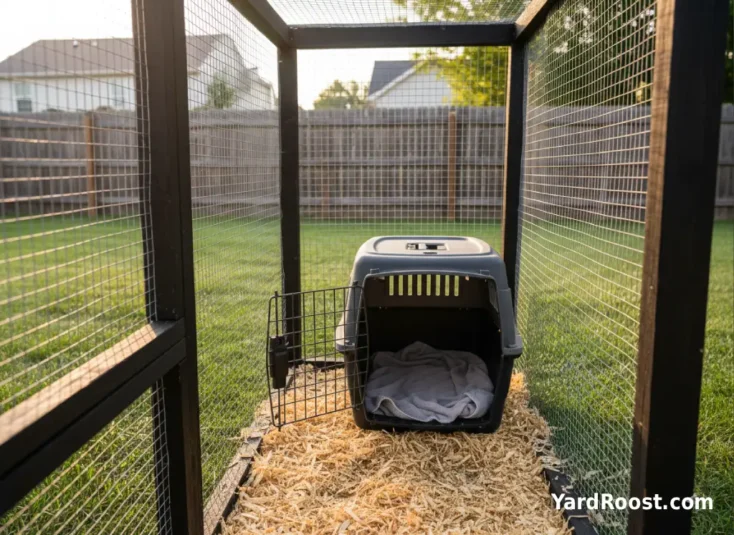
Cats can kill chickens—especially chicks, bantams, and any bird that can be cornered or caught in a weak run. But the “fix” isn’t panic, and it isn’t unrealistic perfection. It’s simple: remove easy access, cover the run, tighten latches and gaps, and use smarter routines during the most vulnerable stages of your flock’s life.
If you’re keeping chicks, assume they need a higher security level than adult hens. If you free-range, do it in supervised windows with good sightlines and a safe retreat back to the coop. If outdoor or feral cats are common in your neighborhood, focus on humane deterrents and—most importantly—solid physical barriers. Once your setup stops offering easy wins, most problems fade fast.
And if an incident does happen, prioritize safety and biosecurity: secure the flock, fix the access point, and wash up thoroughly (CDC and USDA APHIS both emphasize hand hygiene around poultry). With a few practical upgrades, you can keep chickens confidently—even in a world where cats roam.