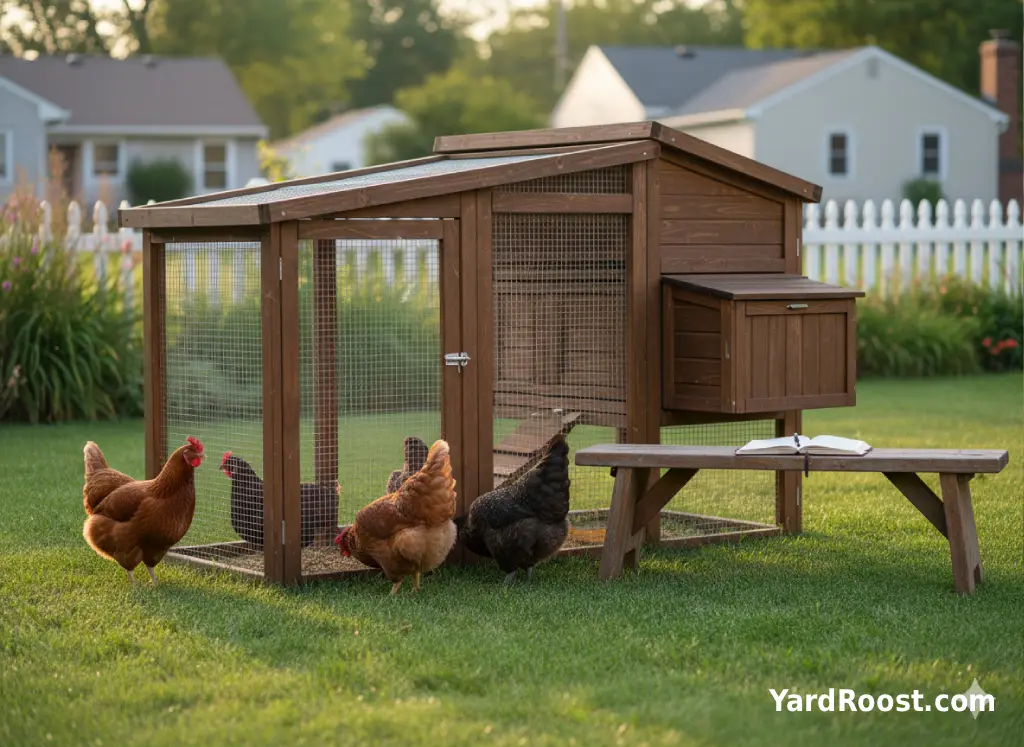
A lethargic chicken can be scary—especially when it looks like she’s “checked out,” sitting puffed up, or keeping her eyes closed. The tricky part is that chickens are experts at hiding problems, and by the time you notice something is off, you may be looking at a real issue, not just a “lazy day.” University of Maryland Extension describes lethargy as reduced standing and movement, more time resting, and often keeping the eyes closed.
YardRoost isn’t a veterinary service, and we can’t diagnose illness online. What we can do is help you sort “needs attention today” from “needs an avian vet now,” and walk through safe first steps that don’t make things worse. You’ll also see quick checks for a lethargic chick (temperature matters a lot), plus flock management basics like isolation and hygiene that protect the rest of your birds.
If your chicken is lethargic and not eating, think in two tracks: (1) immediate supportive care (warmth, quiet, easy access to water), and (2) smart observation so you can give a vet useful details if needed. Let’s get you a plan.
What “Lethargic” Looks Like (And Why It Matters)
“My chicken is lethargic” can mean different things depending on what you normally see in your flock. A bird who’s simply resting will still pop up to eat, drink, or investigate you. A bird who’s truly lethargic often looks like her battery is drained: she sits longer than usual, moves less, and may keep her eyes closed.
University of Maryland Extension also lists related “sickness behaviors” that often travel with lethargy—reduced interest in the environment, eating/drinking less (anorexia), self-isolating, and a hunched posture with ruffled feathers and head down.
Why it matters: lethargy is a signal, not a diagnosis. It can show up with stress (heat/cold), injury, nutrition problems, or disease. The safest approach is to stabilize the bird, reduce stress, and gather good observations—then escalate quickly if you see red flags.
A 10-Minute Lethargic Chicken Check
This is the fastest way we know to turn panic into a plan. Keep it simple: you’re checking environment first, then basic body/behavior clues.
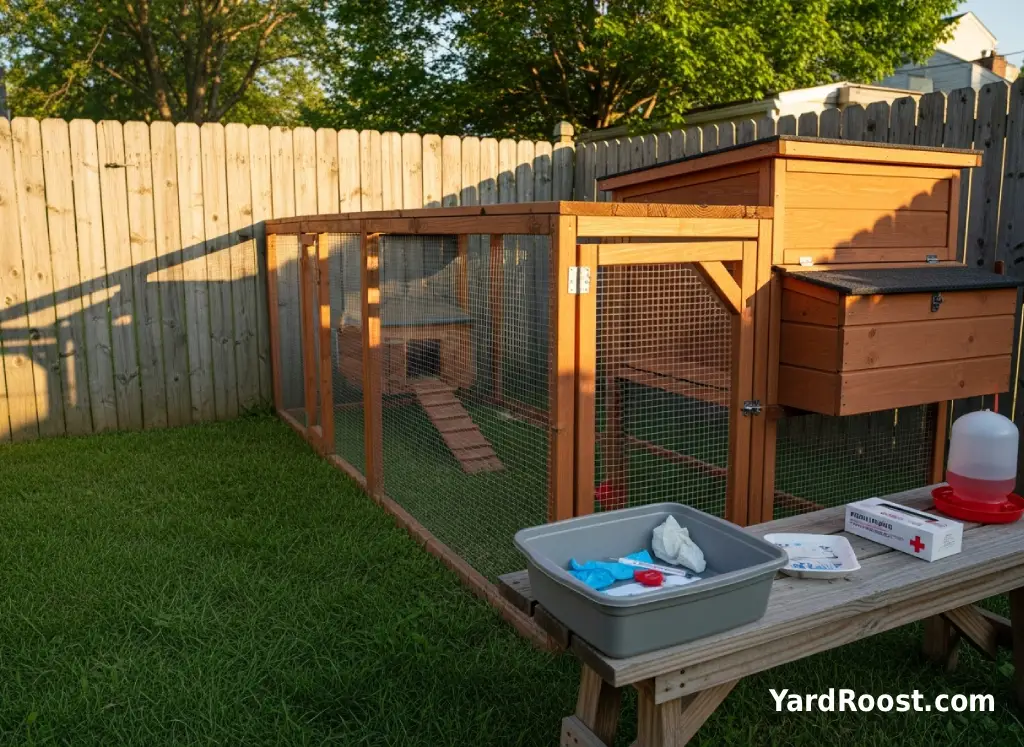
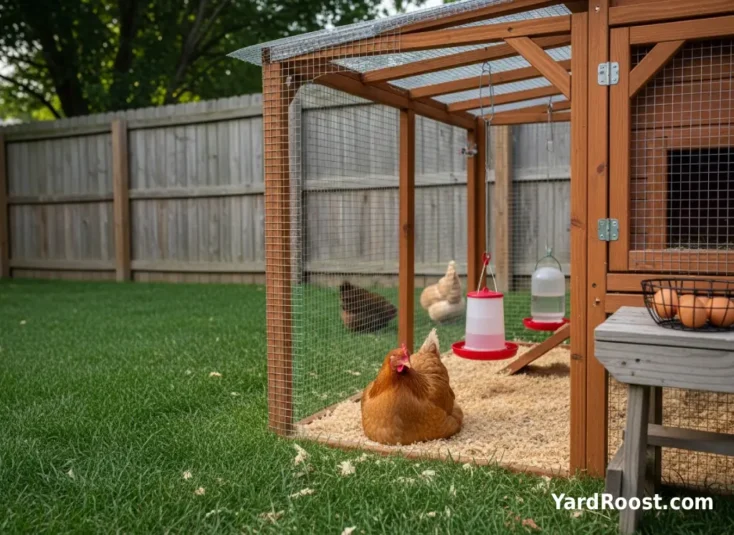
- Step 1: Separate and observe. Move the bird to a quiet, dim, draft-free “hospital” spot with bedding and easy-to-reach water. (This also helps protect the flock if something contagious is going on.)
- Step 2: Look for “can’t miss” danger signs. Trouble breathing, collapse, severe weakness, or inability to stand is an urgent situation—skip to “When to Call an Avian Vet.”
- Step 3: Check eating and drinking access. Can she reach water easily? Is the water frozen, tipped, or dirty? (A surprisingly common real-world cause.)
- Step 4: Scan the vent and droppings. You’re not diagnosing—just noting “normal vs very abnormal” (watery, bloody, very green, or none at all).
- Step 5: Feel the crop gently at dusk. It should generally feel like it’s emptied overnight. If it feels persistently very full, very hard, or unusually squishy with a sour smell, that’s useful information for a vet.
- Step 6: Quick body check. Look for limping, swelling, wounds, or signs she was bullied off food/water.
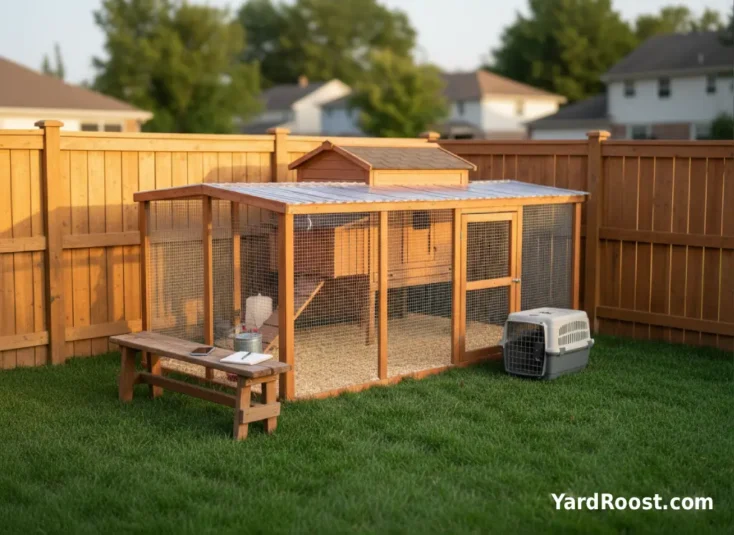
- Step 7: Take notes. Age, recent changes (new birds, new feed, heat wave), egg-laying status, and how long symptoms have lasted—this helps a vet and helps you see patterns.
A common mistake we see is skipping isolation because “she’ll be lonely.” In reality, a quiet separation space reduces stress, makes it easier to monitor droppings, and can protect your flock if you’re dealing with something infectious.
Common Non-Disease Causes: Stress, Heat, Cold, and Dehydration
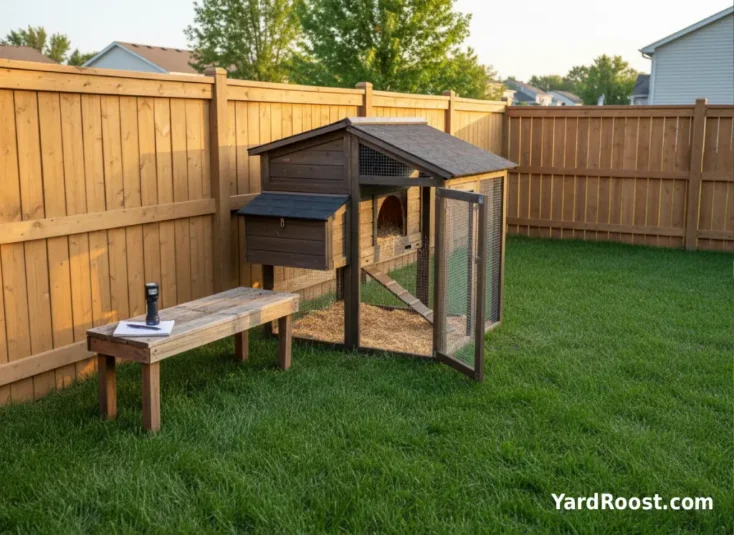
Before you assume “illness,” rule out environment. Heat stress alone can make chickens pant, drink more, eat less, and reduce activity. North Carolina State University Extension also lists heat-stress signs like open-mouth panting, reduced standing/walking, and decreased feed intake.
Cold stress can push birds into energy-saving mode (huddling, reduced movement), and damp, poorly ventilated coops raise the risk of frostbite conditions. (Yes—ventilation still matters in winter. “Dry and draft-free at roost level” is the goal, not “sealed up.”)
Safe first steps that help in most stress scenarios:
- Cool, fresh water where the bird can reach it easily (and check that flockmates aren’t guarding it).
- Shade + airflow during heat; dry bedding + draft protection during cold.
- Reduce “change stacking.” If you just switched feed, moved the coop, added new birds, and temperatures swung hard—stress can pile up fast.
If you’re dealing with a heat wave, prioritize ventilation and water access for the whole flock. If you’re dealing with a cold snap, prioritize dryness and keeping roosts out of direct drafts while still allowing moist air to escape.
Lethargic Chick: Warmth and Water Come First
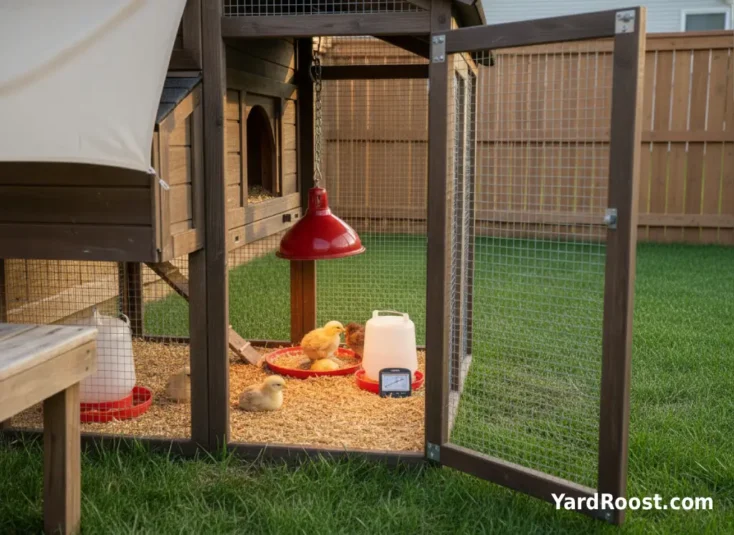
If a chick is lethargic, your first question is: “Is the brooder environment right?” Newly hatched chicks can’t regulate body temperature well early on, and they need a dependable heat source. University of New Hampshire Extension recommends keeping the brooder around 90–95°F for the first week, then decreasing by about 5°F each week.
Behavior is a useful clue: chicks that are cold tend to huddle under the heat; chicks that are too warm move away from it; and chicks that are comfortable spread out and act normally.
Safe, practical “how to help a lethargic chick” moves:
- Confirm temperature at chick level (not at your shoulder height), and make sure there’s a warm zone and a cooler zone so chicks can self-regulate.
- Check water access immediately. Make sure the waterer is shallow enough and stable enough for small chicks.
- Keep handling minimal. Over-handling a weak chick adds stress and can chill it quickly.
If a chick is weak, not drinking, repeatedly collapsing, or worsening over hours (not days), that’s beyond normal “settling in” and is a good time to contact an avian vet or an experienced poultry health professional.
Why Is My Chicken Lethargic and Not Eating?
Not eating often travels with lethargy. University of Maryland Extension lists “anorexia” as eating or drinking less than normal and notes that lethargy can include more sitting/resting and eyes closed. That combination—chicken lethargic and not eating—is one of the biggest reasons to move quickly with supportive care and careful observation.
Common (non-diagnostic) buckets that can explain the pattern:
Access problems: bullying at the feeder/waterer, frozen water in winter, tipped waterer, or a dominant bird guarding resources. Adding a second feeder/waterer in a separate spot is a simple test that often reveals what’s going on.
Stress load: heat, cold, predator scares, recent flock changes, coop moves, or transportation. Merck Veterinary Manual notes that in extreme heat, chickens pant, decrease activity, drink more, and eat less; behavior shifts like these can look like “sudden illness.”
Pain or physical trouble: injuries, foot issues, or egg-laying complications can make a hen “shut down.” You’re not diagnosing at home—your job is to notice clues (limping, straining, swelling) and escalate appropriately.
If your bird hasn’t eaten for a full day, seems significantly weaker than yesterday, or is rapidly losing function, treat it like a time-sensitive problem and move to the vet thresholds below.
Biosecurity While You Troubleshoot
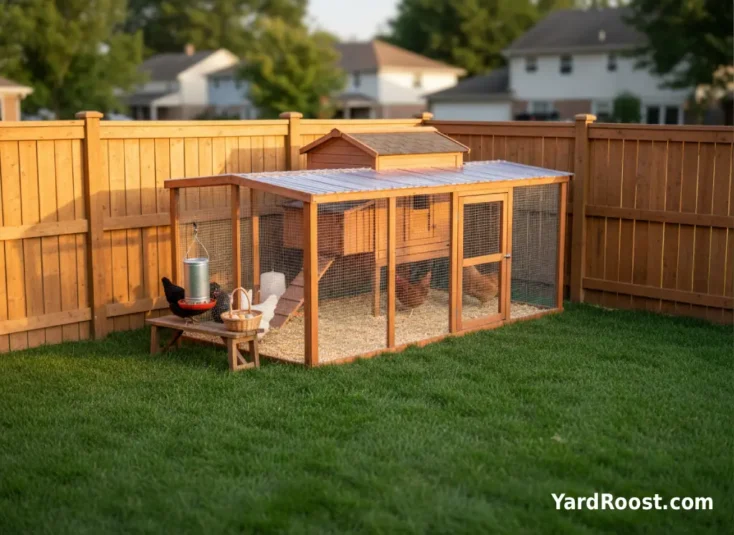
If you suspect illness (or you’re simply not sure), act like it could spread until proven otherwise. USDA APHIS recommends quarantining new poultry additions for 30 days and checking daily for signs of health issues. Even though your lethargic bird isn’t “new,” the separation concept still helps: it limits contact, reduces stress, and gives you cleaner observations.
Two practical rules that prevent a lot of headaches:
- Use “separate tools” when you can. A dedicated waterer and scoop for the isolation space reduces cross-contamination.
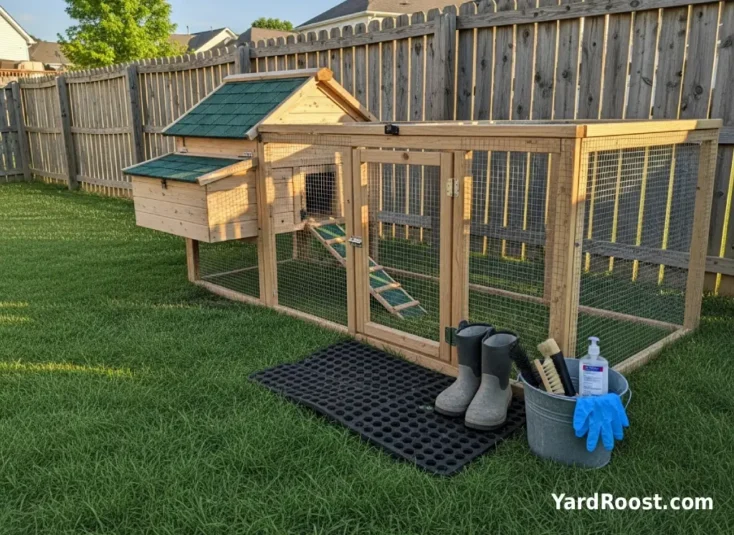
- Protect people, too. CDC recommends washing hands after touching poultry or anything in their area, and keeping poultry-related gear out of the house.
If kids help with chores, note that CDC advises that children younger than 5 should not handle chicks or other poultry, and adults should supervise handwashing.
Common Mistakes to Avoid
- Waiting “a few days” without isolating. Chickens can deteriorate quickly, and isolation makes it easier to monitor droppings, intake, and movement.
- Chasing a weak bird around the run. If she’s already lethargic, a stressful capture can make things worse. Dim the area, move slowly, and be gentle.
- Changing three things at once. New feed + new flockmates + weather swing = confusing symptoms. Change one variable when possible so you can learn what helped.
- Ignoring environment. Heat and cold stress can mimic illness (low activity, reduced appetite). Use shade/airflow or dry/draft protection as appropriate.
- Risky hygiene habits. Don’t eat or drink in poultry areas, and wash hands after contact—CDC emphasizes this for reducing Salmonella risk.
A common mistake we see is treating “closed eyes” as a cute nap. If it’s paired with sitting for long stretches, reduced interest in the flock, or not eating, it fits the “fatigue/lethargy” picture described by University of Maryland Extension and deserves a real check.
When to Call an Avian Vet
Use this as your “don’t second-guess it” list. If you see any of the following, it’s time to contact an avian vet (or an emergency vet who sees poultry):
- Trouble breathing (gasping, severe open-mouth breathing not explained by heat, or obvious respiratory distress).
- Inability to stand, repeated collapse, or extreme weakness (especially if rapid onset).
- Severe lethargy with eyes closed plus not eating/drinking and worsening over hours.
- Neurologic-type signs (loss of balance, head/neck twisting, seizures, inability to coordinate movement).
- Suspected poisoning/toxin exposure (chemical fumes, rodent bait access, unknown plants) or sudden multiple birds affected.
- Profuse bleeding, major injury, or suspected predator attack.
If you’re unsure, call anyway—especially for chicks and for birds that are deteriorating quickly. The most helpful info you can provide: when it started, what she ate/drank, droppings changes, recent stressors, and whether other birds are affected.
Quick Reference Table: What You See and What to Do Next
| What You’re Seeing | What Can Cause It (Broad Buckets) | Safe First Steps | Escalate Fast If… |
|---|---|---|---|
| Lethargic, eyes closed, sitting a lot | Illness behavior, pain, stress (heat/cold), injury | Isolate, quiet/dim space, easy water access, observe droppings | Worsening over hours; cannot stand; breathing trouble |
| Not eating + not drinking | Access issues, stress load, illness, complications with laying | Add a second feeder/waterer; check bullying; take notes | No improvement within a day or rapid decline |
| Panting, wings held away, low activity in heat | Heat stress | Shade, airflow, cool water access, reduce handling | Collapse, severe distress, multiple birds affected |
| Lethargic chick | Brooder too cold/hot, dehydration, stress | Confirm 90–95°F first week; adjust ~5°F/week; ensure water access | Weak/collapsing or not drinking; rapid worsening |
| New birds recently added | Biosecurity risk, stress, hidden infections | Separate groups; quarantine new additions for 30 days | Any respiratory signs or multiple birds affected |
When a chicken is lethargic, the most helpful mindset is “stabilize, observe, and escalate when needed.” Lethargy—especially when it includes more resting, less movement, and eyes closed—fits the sickness-behavior pattern described by University of Maryland Extension, and it deserves a real check, not a wait-and-see shrug. Start with the basics you can control: a quiet isolation space, easy water access, and an environment that isn’t pushing your birds into heat or cold stress. Then gather observations that actually mean something: appetite, droppings, breathing, mobility, and any recent flock changes.
For chicks, temperature and access to water are the first priorities—UNH Extension’s brooder guidance (90–95°F first week, then dropping about 5°F per week) gives you a solid benchmark to verify quickly. For adults, don’t underestimate stressors like heat; reputable sources note that extreme heat can drive panting, lower activity, and reduced feeding that can look like sudden illness.
And throughout it all, keep hygiene and separation in mind—CDC emphasizes handwashing and safe handling practices around poultry, protecting both your flock and your family.