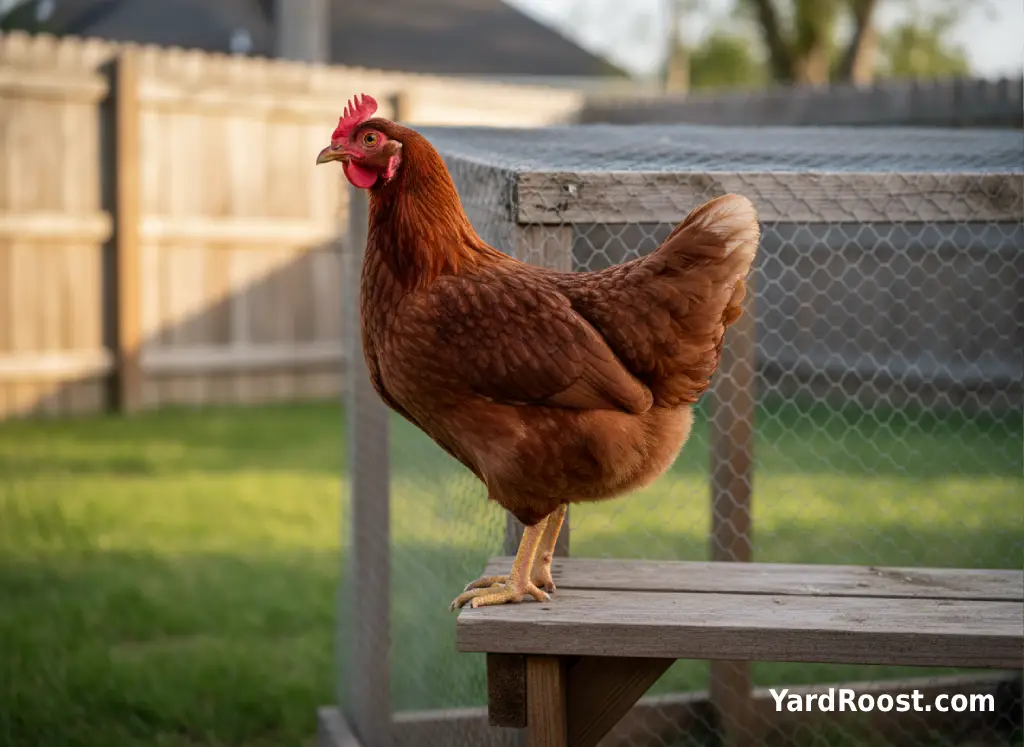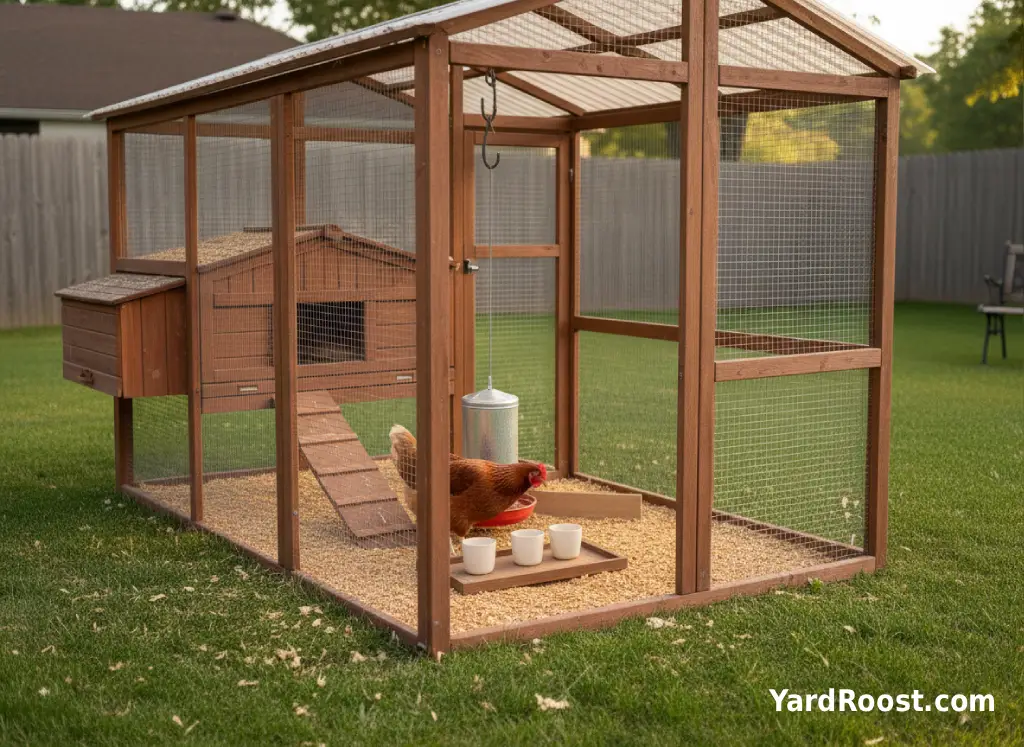
Rooster crowing can feel like a mystery when you’re new to chickens: why does a cockerel crow in the morning, why do roosters crow all day, and why do some decide 3 a.m. is an excellent time to practice their rooster crowing sound? The short version: crowing is communication. It’s a built-in behavior shaped by an internal body clock, social rank, and the need to claim territory and keep tabs on what’s happening around the flock.
Even if you only keep a small backyard group, your rooster is basically a tiny feathered town crier. He’s announcing “I’m here,” responding to other sounds, checking in on his hens, and sometimes reacting to stressors you don’t immediately notice (a new predator, a car door slam, a raccoon passing through, or a porch light shining into the coop).
We do keep things practical and safety-first—especially when it comes to noise-control gadgets and flock welfare. If your goal is to understand why does the cock crow and what you can realistically do about it, you’re in the right place.
Crowing Is Chicken Communication, Not a Sunrise Switch
Rooster crowing is a multi-purpose signal. It can be tied to dominance, territory, and “status updates” to the flock and any nearby chickens. It’s also a way roosters respond to each other—one crow often triggers another (the backyard version of a group text spiral). Research has found that social rank can affect who “leads” the timing of early crowing in groups. Sources we trust on the science side include peer-reviewed work published in Scientific Reports (Nature Portfolio) and Current Biology, and on the practical poultry-behavior side, land-grant resources like University of Maryland Extension.
Two quick, keeper-to-keeper takeaways:
- Crowing is normal. A “quiet rooster” is more like a lucky exception than a plan you can count on.
- It’s not only about dawn. Crowing can happen in the middle of the day (and night) because it’s also about communication and triggers—not just sunrise.
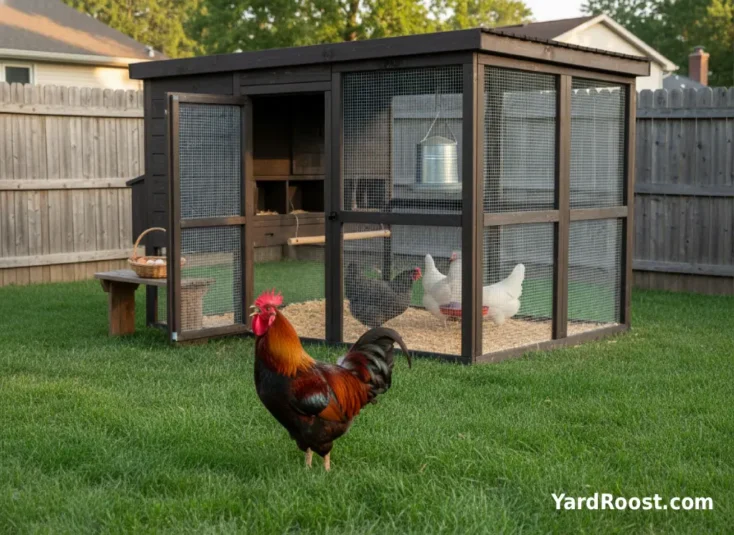
The Internal Clock: Why Roosters Crow at Dawn
If you’re curious about why roosters seem to crow right on cue in the morning, here’s the key idea: they have a circadian rhythm—an internal daily clock—that helps set their “time to crow.” Studies have shown that roosters can keep crowing on a schedule even without obvious external cues, which is why they can beat your alarm clock by a lot.
Light still matters, though. Dawn light can reinforce the timing, and artificial light can confuse it (more on that in the night-crowing section). If you’ve ever wondered why your bird seems to “know” the time even on cloudy days, that internal clock is a big part of the explanation.
Actionable tip: If you’re trying to reduce rooster crowing in the early morning, the most practical lever you control is light exposure. Any light leaking into the coop—motion lights, porch lights, a garage window—can shift or extend activity.
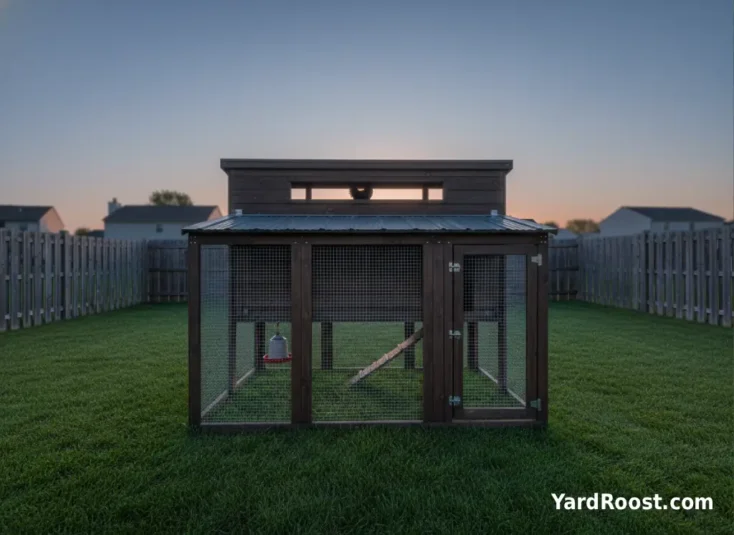
Dominance And Territory: Why One Rooster Starts And Others Join In
Crowing isn’t just “noise”—it’s social signaling. Roosters use calls to advertise their presence and territory, and to communicate status. In small groups, the top-ranking rooster may effectively “set the pace” for predawn crowing, while lower-ranking roosters follow. This fits what many keepers see: one bird “lights the fuse,” and the rest answer back.
Practical tip: If you keep more than one rooster (even temporarily), expect more crowing, not less. Separation can reduce direct face-to-face challenges, but you may still get “call and response.” A common mistake we see is assuming a second rooster will “keep the first one company” and make him calmer—sometimes it does the opposite.
If you’re mainly interested in eggs and not breeding, our guide on whether your hens actually need a rooster can help you decide if keeping one makes sense for your flock.
Why Does A Cockerel Crow All Day?
If your young rooster seems to be practicing his crow nonstop, it often comes down to a mix of maturity, practice, and stimulation. Many cockerels go through a phase where they crow more while their hormones and social role are settling in. They may also crow when:
- They’re responding to triggers: dogs barking, delivery trucks, kids playing, or another rooster down the street.
- They’re on patrol: moving the flock, announcing “all clear,” or reacting to something new.
- They’ve learned the routine: feed bucket = excitement = crowing.
Two keeper-tested ways to reduce “all day” crowing without doing anything extreme:
- Reduce visual “challenge” points. Block line-of-sight to neighboring birds or reflective surfaces (yes—some roosters will argue with their own reflection).
- Build predictability. Same feed times, fewer sudden disruptions near the run, and a calm approach at chores can reduce stimulus-crowing.
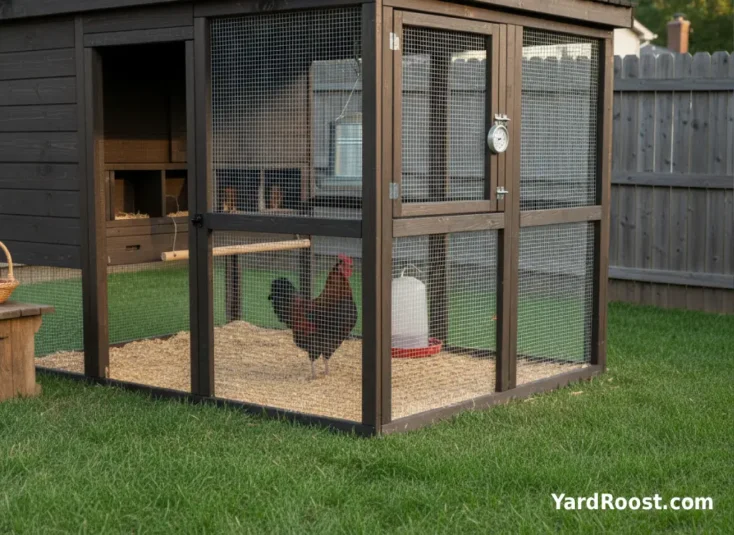
Why Do Roosters Crow at Night or at 3 a.m.?
Night crowing is usually about light, disturbance, or alarm. If your roosters are suddenly crowing in the middle of the night or around 3 a.m., look for these common triggers first:
- Artificial light: motion lights, porch lights, car headlights through slats, or a bright window facing the coop.
- Predator activity: raccoons, opossums, foxes, stray cats, owls—sometimes your rooster is reacting before you notice evidence.
- Sudden sounds: a neighbor’s door slam, a passing train, thunderstorms, or even a smoke alarm chirp.
Two fast checks that solve a lot of 3 a.m. crowing:
- Go outside at night and look for “accidental daylight.” If you can read your phone easily near the coop without using the screen light, it’s probably bright enough to keep birds more alert than you want.
- Inspect for predator pressure. Check for disturbed soil along the run edge, bent hardware cloth, fresh scratches near doors, and any sign of attempted entry. If night crowing suddenly ramps up for several nights in a row, take it seriously as a possible warning.
Editorial note: A common mistake we see is assuming night crowing is “bad behavior” and trying to punish it. It’s usually your setup (light or security) that needs adjusting, not your rooster’s attitude.
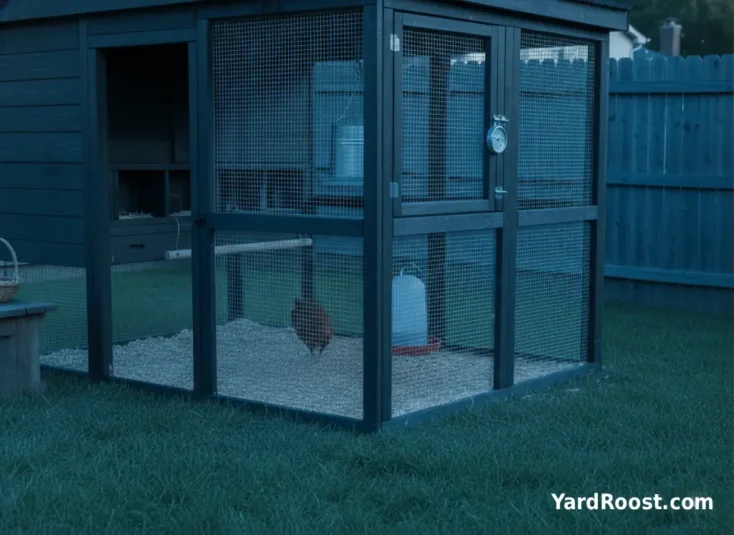
What Changes Crowing Volume and Frequency
Some roosters are naturally louder than others, but your environment can turn “normal crowing rooster” into “rooster is crowing nonstop.” Things that commonly increase crowing:
- More stimulation: heavy foot traffic, pets pacing the run, kids playing close by, or wildlife passing through.
- More competition: hearing another rooster, seeing neighboring flocks, or keeping multiple males.
- More light: long summer days, coop lights, or light leaks at night.
Two practical setup tweaks that often help:
- Re-think coop placement. If you can, place the coop farther from bedrooms and neighbor property lines, and aim the pop door away from the closest house.
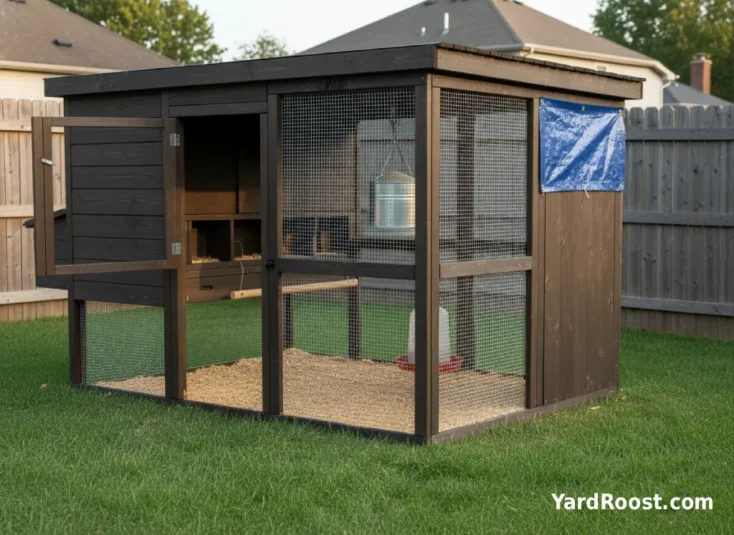
- Add a visual break. A solid panel on part of the run (not blocking ventilation) can reduce “I see everything and must announce everything” behavior.
How to Stop a Rooster From Crowing (Realistic Options)
Let’s be honest: you can’t reliably “train” a rooster to never crow. What you can do is reduce the early hours, reduce triggers, and choose flock strategies that fit your neighborhood and local rules.
Neighbor-friendly steps that usually make the biggest difference:
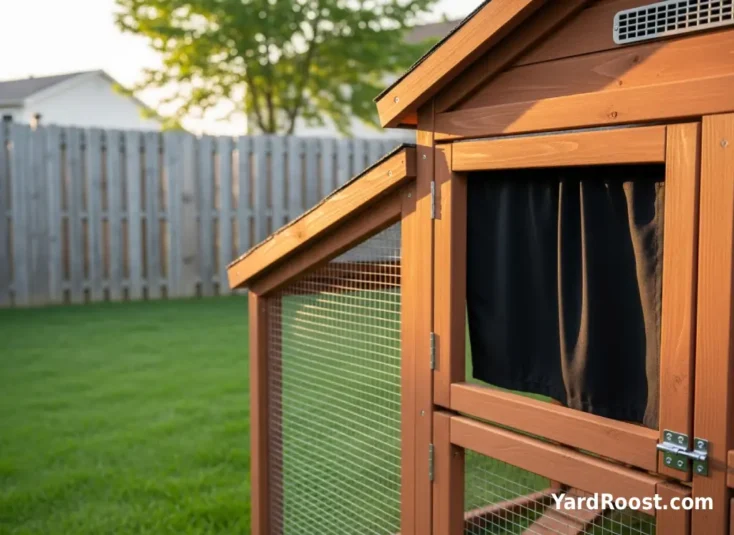
- Keep the coop dark at night. Block light leaks (without blocking ventilation). Think “dark at roost level,” with airflow up high.
- Delay morning exposure. If your setup allows, don’t open the coop/run at first light. Many keepers see fewer “announcement crows” when the rooster isn’t immediately reacting to outdoor stimuli.
- Manage stimulation. Reduce barking-dog pacing, limit predator attractants, and consider a visual barrier on the run.
- Choose your flock plan wisely. If you’re in a tight neighborhood, consider skipping a rooster entirely and focusing on friendly, quiet breeds for eggs.
About “no crow rooster collar” products: These are controversial. Any device that restricts the neck area can create welfare and safety risks if misused or if the bird isn’t monitored carefully. If you’re considering a collar because you’re desperate, treat it as a serious decision—not a quick fix—and talk with an avian veterinarian or an experienced poultry professional first. If you can’t keep a rooster without creating conflict or risk, rehoming to a more suitable location is often the kindest, safest outcome.
Also: always check local ordinances and HOA rules before committing to roosters. “But it’s normal farm noise” doesn’t help if your city code says otherwise.
Common Mistakes to Avoid
- Assuming roosters only crow at sunrise. They crow for communication, status, and in response to triggers—so plan for more than dawn.
- Letting artificial light hit the coop at night. This is one of the biggest causes of “why do roosters crow at night” headaches.
- Ignoring sudden increases in night crowing. It can be a sign of predator pressure—tighten security fast.
- Keeping multiple roosters in a small space “to calm them down.” Sometimes it increases competition and the crowing escalates.
- Buying a noise gadget first instead of fixing setup. Start with light control, coop placement, and predator-proofing before anything else.
Editorial note: We’ve seen plenty of keepers burn weeks chasing “silent rooster” hacks when the real culprit was a single porch light shining into the vents all night.
When to Get Professional Help
Crowing itself isn’t an illness. But you should consider professional help (or at least experienced guidance) when:
- Night crowing spikes suddenly and you can’t identify light or noise triggers—especially if you suspect predator harassment.
- Your rooster shows signs of distress (open-mouth breathing, persistent lethargy, or collapse). Those are urgent red flags for an avian vet.
- You’re considering restrictive devices (like collars) and aren’t confident you can monitor safely and consistently.
- Neighborhood conflict is escalating and you need realistic options, including rehoming plans.
If you don’t have an avian veterinarian nearby, your state’s land-grant university extension office can also be a solid starting point for poultry-keeping resources and local guidance.
The Bottom Line on Rooster Crowing
So, why do roosters crow? Because they’re built to communicate—guided by an internal clock, shaped by social rank, and triggered by light, noise, and perceived threats. That’s why a rooster may crow at dawn, answer another rooster during the day, or surprise you with a 3 a.m. announcement when a motion light pops on or a raccoon prowls the run.
If crowing is creating friction at home (or with neighbors), don’t start with gimmicks. Start with what you can control: keep the coop truly dark at night while maintaining good ventilation, reduce visual and sound triggers, and tighten security to lower nighttime disturbances. Then make the big-picture call—because sometimes the most responsible “how to get a rooster to stop crowing” answer is choosing a hens-only flock, or rehoming a rooster to a place where his job as town crier won’t cause problems.
Sources we trust for this topic include University of Maryland Extension (poultry behavior and vocalizations) and peer-reviewed research on rooster circadian timing and social rank published in journals like Current Biology and Scientific Reports.