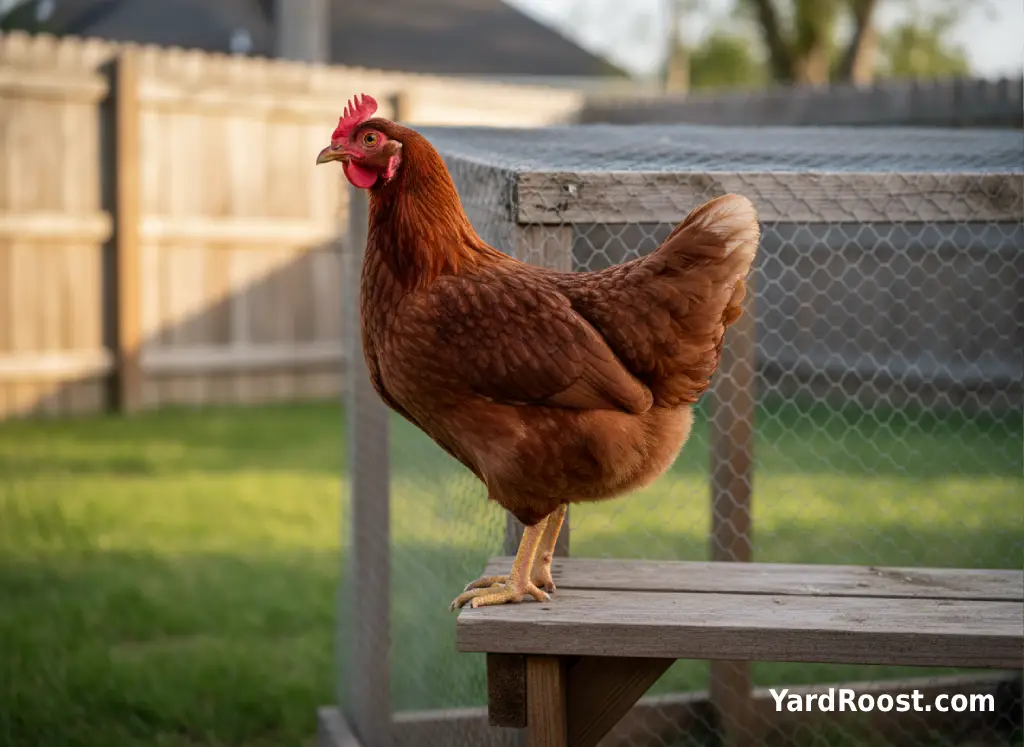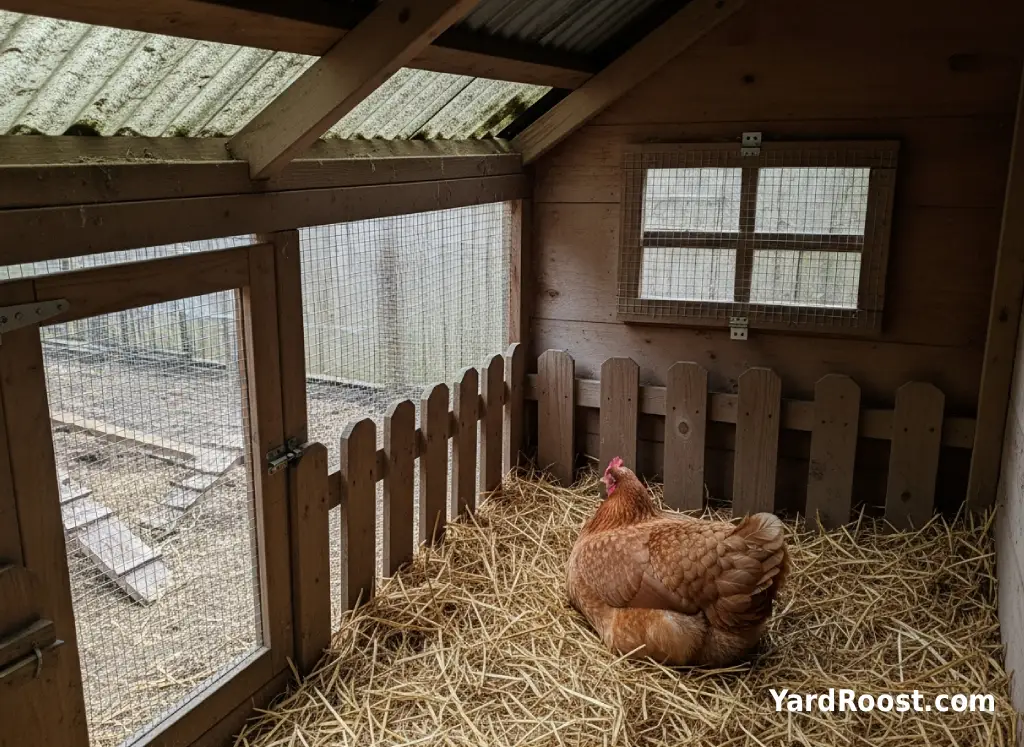
Ask ten chicken keepers if chickens are smart and you’ll get the same answer in different words: “They’re smarter than people give them credit for.” The confusion is usually about what kind of smart we mean. Chickens aren’t going to fetch a newspaper, but they absolutely learn routines, read the mood of a flock, remember who’s who, and solve small everyday puzzles (often faster than we expect). If you’ve ever watched a hen wait for you to open a gate, or seen a rooster call hens to a treat and then keep scanning the sky, you’ve already seen chicken intelligence in action.
This guide is for beginner-to-intermediate backyard keepers who want a realistic, no-fluff answer. We’ll walk through what researchers and poultry behavior experts say chickens can do, what you can observe at home, and why it matters for handling, enrichment, and flock management. We’ll also tackle the comparisons people love to ask—dogs, ducks, turkeys, and humans—without turning it into a goofy “IQ contest.”
What “Smart” Means for Chickens
Chicken “smarts” show up in a few practical categories:
- Learning and memory: remembering routines, places, and who is safe (or pushy).
- Social intelligence: navigating flock hierarchy, alliances, and personal space.
- Communication: using different calls and body language to influence others.
- Problem-solving: figuring out gates, feeders, hiding spots, and treat puzzles.
- Emotional “readiness”: responding to stress, safety cues, and the tone of the flock.
One important keeper takeaway: a chicken can be very intelligent and still do “chicken things” that look silly to humans—like sprinting at a falling leaf or yelling at a shiny bucket. Intelligence doesn’t erase prey-animal instincts.
Memory and Learning: How Intelligent Are Chickens Day to Day?
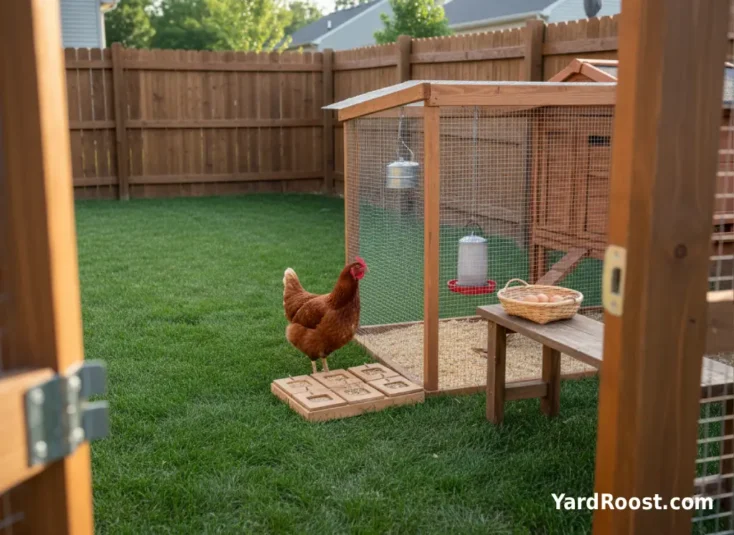
In a backyard setting, chicken intelligence is easiest to spot through learning speed. Chickens quickly connect patterns: the sound of a feed bin, the timing of the coop door, which bucket means treats, and which person is “the calm one.” They also learn from consequences—both good and bad. If a hen gets chased off the feeder in the same corner every day, she’ll start approaching from a different angle before the trouble starts.
What poultry behavior references consistently emphasize is that chickens are motivated learners: they forage even when food is available, they work for preferred activities, and they maintain stable social relationships when the environment stays steady. The Merck Veterinary Manual describes chickens as highly social, with a stable hierarchy (“pecking order”) that can be disrupted by changes like adding or removing birds—then rebuilt through re-established relationships.
Two practical ways to use this at home:
- Train a routine on purpose: do your “lock-up” and “treat time” in the same order for 7–10 days. Most flocks will start moving to the right place before you finish.
- Reduce confusion during changes: when you add a new feeder, waterer, or nest box, keep the old one in place for a few days. Chickens notice “wrong-shaped” objects and may avoid them at first.
Social Smarts: Pecking Order, Communication, and Chicken Politics
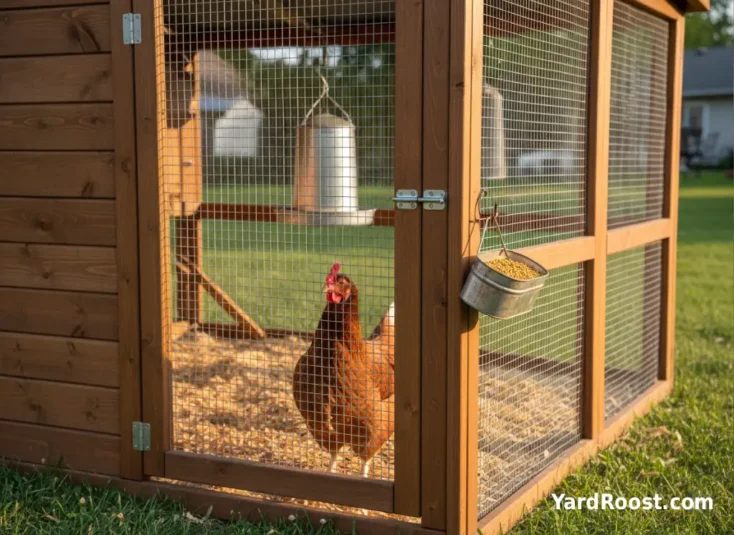
Chickens live in a social world, and a lot of their intelligence is social intelligence. The “pecking order” isn’t just random bullying; it’s a system that reduces constant fighting by establishing who yields space to whom. The Merck Veterinary Manual notes that once a hierarchy is established, it can stay stable and be maintained with gestures more than repeated fights—until something changes.
Chickens also communicate more than most beginners expect. Extension educators describe chickens using many different vocalizations and responding differently depending on the message. For example, the Alabama Cooperative Extension System notes that chickens have different alarm calls for aerial vs. ground threats and that flock members respond differently to each. The University of Maryland Extension also summarizes a variety of calls (including food-related and distress calls) and how vocalizations connect to behavior and welfare.
- Alarm calls: different warnings can trigger different body responses (freeze/crouch vs. stand tall and scan).
- Food-related calling: birds may “announce” food and recruit others.
- Pre-lay and post-lay sounds: hens use vocal routines around nesting and laying. If you’re new to chicken sounds, it also helps to know that hens lay eggs without a rooster—a rooster only matters for fertile, hatchable eggs.
A common mistake we see is people assuming a “quiet” chicken is a “dumb” chicken. Often it’s the opposite: calmer birds can be more observant, especially in a mixed flock. If you want to read chicken intelligence, watch spacing, timing, and who moves first—not just who makes noise.
Problem-Solving and Surprise Skills: Object Permanence and Simple “Math”
Here’s where the “are chickens intelligent animals?” question gets fun. In controlled research settings, young chicks show abilities that map to basic cognition building blocks—like tracking hidden objects and comparing small quantities. Peer-reviewed work available through the National Library of Medicine’s PubMed Central includes experiments where newly hatched chicks kept track of small sets of objects even when they disappeared behind screens, and in some designs the chicks’ choices were consistent with simple addition/subtraction of small numbers.
What this means for keepers (without turning your coop into a lab): chickens can learn “where it went,” “which side has more,” and “what happens next” when the patterns are consistent. That’s why they can be startlingly good at things like:
- Finding the one gap in a fence line you forgot to secure.
- Remembering which nesting box stays darkest in the afternoon.
- Waiting for a dominant hen to move before sneaking in for a bite.
Keep the claims realistic: “lab tasks with small numbers” doesn’t mean chickens are doing calculus. It means their brains are built to track the practical quantities and patterns that matter to a bird.
Are Chickens Smarter Than Dogs, Ducks, Turkeys, or Humans?
Comparisons are tricky because “smart” depends on what you ask an animal to do. Dogs are famously tuned to humans: they’re bred for working with us, reading gestures, and learning rules in human spaces. Chickens are tuned to flock life: scanning for danger, reading social rank, learning food-and-safety patterns, and communicating in fast, specific ways.
Ducks and turkeys also show strong learning and social behavior, but they’re built for different lifestyles (water, flock movement, perching preferences, body size, and temperament). Even the Merck Veterinary Manual highlights how species differ in key motivated behaviors (for example, ducks forage in water and heavy-bodied birds may prefer platforms over narrow perches), which hints at how “intelligence” gets expressed differently.
| Comparison | Fair Way to Think About It | What You’ll Notice as a Keeper |
|---|---|---|
| Chickens vs. Dogs | Different specialties, not a single scoreboard | Dogs read people; chickens read flocks and routines |
| Chickens vs. Ducks | Watch problem-solving in their “native” setup | Ducks excel around water; chickens excel with foraging and social rank |
| Chickens vs. Turkeys | Temperament and body size change the “look” of smarts | Turkeys may seem cautious and observant; chickens show quick social learning |
| Chickens vs. Humans | Not comparable in the same way | Chickens can be excellent at bird-relevant tasks (risk, food, social cues) |
If you want a keeper’s answer: chickens are smart animals in the ways that help a small bird survive—fast pattern learning, sharp social awareness, and strong motivation to explore.

Are Chickens Emotionally Intelligent?
“Emotionally intelligent” can mean a few things: responding to the emotions of others, adjusting behavior based on social context, and showing flexible coping when the environment changes. Chicken behavior research (including peer-reviewed reviews available via PubMed Central) discusses evidence that chickens experience a range of affective states and that social context matters—especially in parent-offspring settings and flock relationships.
In plain backyard terms, you’ll see emotional intelligence when:
- A nervous bird relaxes because a confident hen starts eating first.
- The flock freezes instantly when the “danger” call happens, even if they don’t see the threat.
- A bird avoids a bully without escalating, using timing and distance like a seasoned negotiator.
If your flock feels “dramatic,” that’s not proof they’re irrational. It’s often proof they’re sensitive to social and environmental cues. Your job is to make the environment predictable: consistent routines, enough space, and enrichment that redirects pecky energy.
Try These At-Home “Smart Chicken” Tests
You don’t need a fancy setup to see how smart your chickens are. Keep sessions short (2–5 minutes), use a safe treat, and stop before anyone gets frustrated.
- Step 1: Pick one calm bird and work inside the run so nobody can run off with the prize.
- Step 2: Do a “cup test.” Place a treat under one of three identical cups, then let her choose.
- Step 3: After a few easy wins, gently swap the cups’ positions once and see if she tracks the “where it went.”
- Step 4: Try a simple latch puzzle. Hang greens with a clip that requires a peck-and-pull motion (not a sharp hook).
- Step 5: Add a “wait” moment. Hold the treat in your closed hand for 2–3 seconds, then open when she pauses pecking.
- Step 6: End on a success. One win, then done.
Tip: if you have a pushy flock mate, separate the tester bird briefly. Social pressure can make a smart bird look “distracted.”
Common Mistakes to Avoid When Judging Chicken Intelligence
- Confusing fear with “stupidity”: a prey animal may freeze or flee first and think later. Give a nervous bird time and a predictable routine.
- Testing in a chaotic flock moment: if the flock is hungry, broody, or being harassed, you won’t see good learning. Choose calm times.
- Expecting dog-style obedience: chickens can learn cues, but they’re not wired to please humans the way many dogs are.
- Changing everything at once: moving feeders, waterers, and roosts all in one day can make birds look “clueless” when they’re really just recalibrating.
- Ignoring motivation: if the reward isn’t worth it, the smartest hen in the coop will walk away.
A common mistake we see is owners labeling one bird “the dumb one” and then never giving her a fair shot. Often that bird is simply lower in rank, more cautious, or less food-motivated. Change the context, and you’ll see different skills show up.

Why Chicken Intelligence Matters for Backyard Keepers
Smart chickens are easier to live with when you plan for their brains. They notice patterns, they learn fast, and they can also develop bad habits fast if the environment rewards them (hello, “egg-eating learned once”). The goal isn’t to prove your hens are geniuses—it’s to use what we know about learning, social behavior, and communication to build a calmer flock.
That looks like predictable routines, enough resources to reduce conflict, and enrichment that redirects boredom into natural behaviors like foraging and exploration. It also looks like respecting the social side: adding birds thoughtfully, avoiding unnecessary shake-ups, and giving timid birds a chance to eat and drink without constant pressure.
So, are chickens smart? Yes—especially in the ways that matter for flock life. When you treat them like thinking animals instead of feathered furniture, you’ll get better behavior, fewer conflicts, and a flock that feels noticeably more settled.