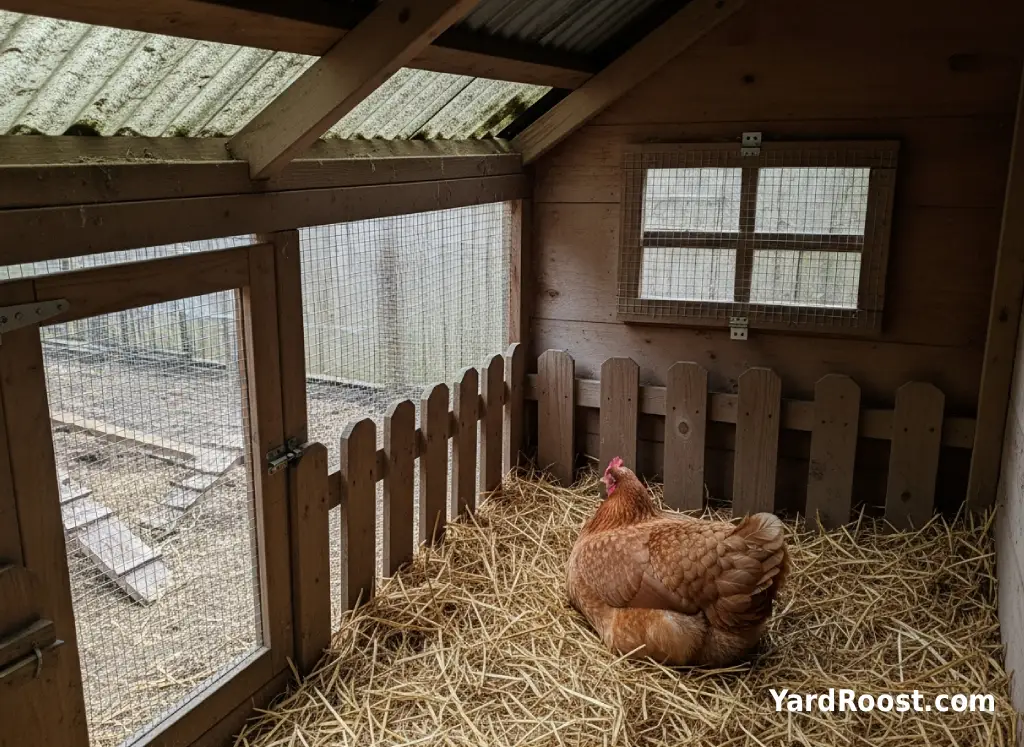
Most backyard keepers hear “chickens can’t fly” and assume fences are optional. Then a curious pullet proves otherwise—usually right when you’re carrying groceries or when the neighbor’s dog is out. Here’s the truth: chickens can fly, just not like songbirds or hawks. They’re built for short, powerful bursts—more of a hop-glide-flap combo—often used to reach a roost, escape something scary, or explore “the other side” of a fence.
The tricky part is that flight ability varies a lot by age, breed, feather type, and motivation. A heavy, calm hen might never test your fence, while a lighter bird (or a young bird that’s all wings and not much body weight yet) may surprise you. In this guide, we’ll cover how high chickens can fly (in practical backyard terms), how far they can fly, why chickens can’t fly well, whether Silkies can fly, and what to do if your chickens fly over fences.
Yes, Chickens Can Fly (Just Not for Long)
Domestic chickens are “ground birds” that prefer walking and running, but they can absolutely get airborne when it suits them. Think of it as a quick burst of lift—enough to pop onto a perch, clear an obstacle, or launch up to something higher, followed by a short glide down.
That lines up with how chicken bodies are described in animal physiology: chickens are used for short “fight-or-flight” bursts rather than sustained flight. Sources: University of Kentucky (Poultry Extension/eXtension) and university physiology references.
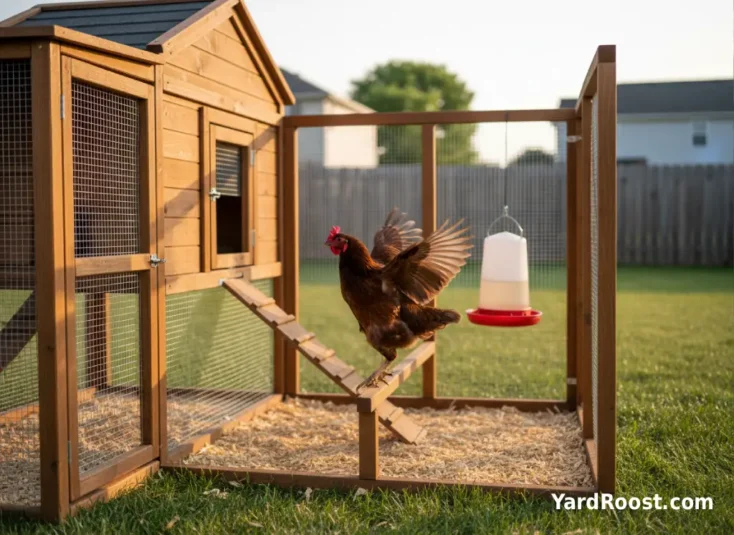
If your birds are getting out, don’t assume they’re “being naughty.” In many cases, they’re responding to something: boredom, a spook response, a tempting garden bed, or a roosting preference that’s higher than what you provided.
Why Chickens Can’t Fly Like Other Birds
Chickens have wings, but their bodies are optimized for life on the ground. Over generations, people selected chickens for meat, egg production, calm temperament, and size—not for flying away from predators. That selective breeding matters: a larger body and relatively small wing surface makes sustained flight inefficient.
They also use their muscles differently than strong fliers. Chickens can put out a quick burst of power (great for hopping up), but they tire fast, so their “flight” tends to be brief and purposeful—up to a roost, away from danger, or down from something high. Sources: university physiology references and Cooperative Extension poultry behavior resources.
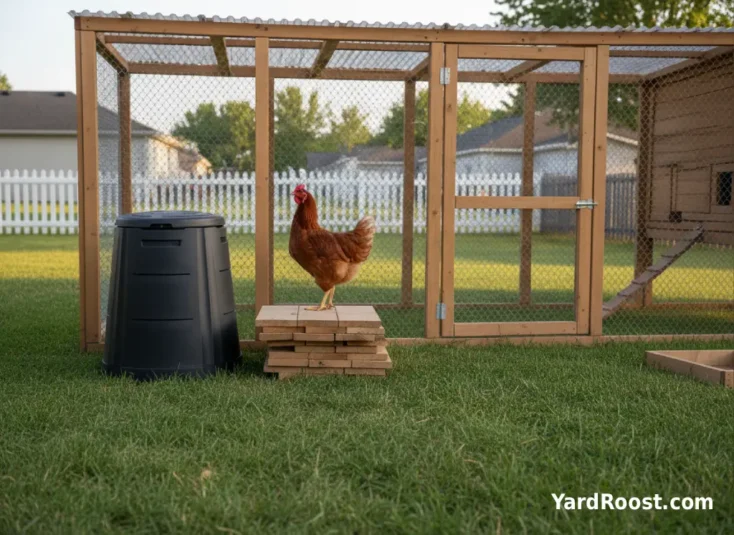
One backyard takeaway: if your setup invites “upward movement” (stacked items, tall compost bins, low tree limbs near a fence), a chicken doesn’t need to be a great flyer to escape. It just needs a series of stepping-stones.
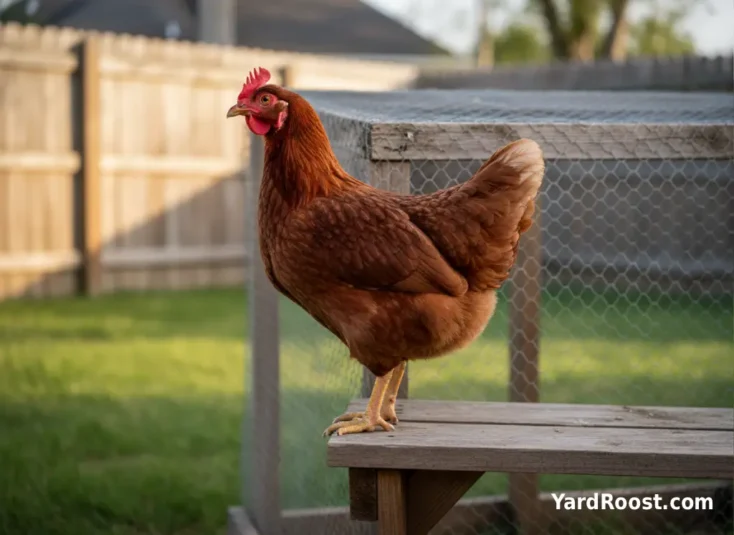
How High and How Far Can Chickens Fly in a Backyard?
This is the question everyone asks—especially after the first escape. The honest answer is: it depends on the bird and the situation. Most chickens aren’t going to “fly across the neighborhood,” but many can manage a short up-and-over move when motivated.
Here are practical, fact-grounded benchmarks you can plan around:
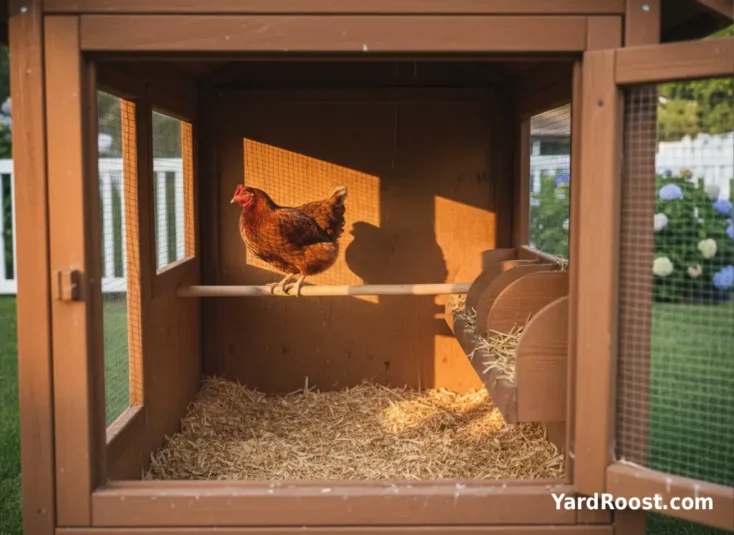
- Roosting/launch behavior: Chickens naturally start jumping up to higher surfaces as they grow, and they strongly prefer a roost. Many Extension plans place roosts roughly 18–36 inches off the floor, which most birds can reach easily. Sources: Texas A&M AgriLife Extension, Oregon State University Extension, and University of Maryland Extension.
- Fence reality: A “garden fence height” is not a guarantee. Chickens are often better at flying up onto something and then over, rather than clearing a tall barrier from a standstill.
- Distance: Backyard flight is usually a short burst—more hop-glide than travel—often triggered by a scare, a chase, or a desire to get to a higher perch quickly.
If you want a simple rule: plan containment as if your birds can reach the top edge of whatever they can jump to within a few feet—because that’s how most escapes happen.
Can Any Chickens Fly? Breed, Size, And Age Make a Big Difference
Some chickens are much more “air capable” than others. In general:
Lighter bodies + longer wing span = more lift. Bantams, leans breeds, and athletic types tend to be better at getting up and over. Heavy, broad-bodied birds tend to be less interested and less able—though they can still surprise you if startled.
Age matters too. A common mistake we see is underestimating young birds. Pullets can go through a stage where they’ve got a full wing span before they’ve “filled out” in body weight—so they test fences more than they will later.
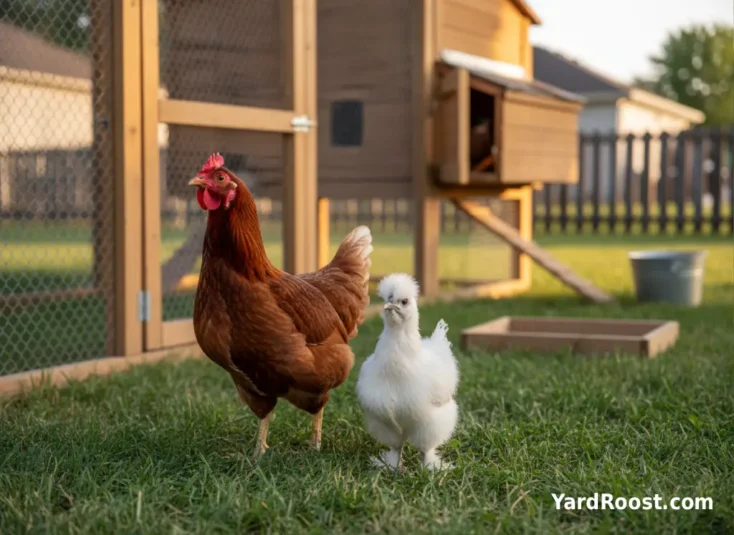
And yes, feather type can change the game. For example, very fluffy feathering can reduce lift and control for some birds, which is why some keepers find certain ornamental breeds less likely to escape. Instead of betting your garden on breed stereotypes, build your setup so any chicken in your flock stays safe and contained.
Can Chickens Fly Over Fences?
They can—and it’s not always a “high flight.” Chickens often escape by:
- Launching from something: a feeder, stump, compost bin, or a low coop roof near the fence line.
- Using corners: birds will hop up where fencing meets, then balance, then tip over the top.
- Spook flights: a sudden scare can trigger a stronger burst than you’ll see during calm daily behavior.
If your goal is simply “keep them in,” the best strategy is to remove launch points near the perimeter and give them a better reason to stay: shade, dust-bath spots, snacks hidden in leaf litter, and a comfortable roosting setup inside the secure area.
For predator safety, we’re big fans of fully covered runs when possible. It solves two problems at once: it reduces escapes and helps protect your flock.
How to Keep Chickens From Flying Out (Practical Options That Work)
If your chickens can fly over fences, you’ve got three broad options: change the environment, change the perimeter, or reduce flight ability. Most keepers end up combining two of the three.
Here’s a simple, backyard-tested sequence:
- Step 1: Remove “launch pads” within 3–6 feet of the fence. Move bins, low tables, stacked lumber, and anything your birds hop onto.
- Step 2: Make the inside more attractive. Add a dust bath (dry sand/soil), toss a handful of scratch into leaf litter, and provide shade—bored birds roam.
- Step 3: Add a top solution if escapes are frequent. A covered run, overhead netting, or an inward-angled topper can dramatically cut escapes.
- Step 4: Consider wing clipping for repeat offenders. Cooperative Extension sources describe clipping the primary feathers on one wing to make flight difficult; it must be repeated after molts. Sources: University of Kentucky (Poultry Extension/eXtension) and University of Maryland Extension.
A common mistake we see is clipping and then assuming the yard is “safe.” If a chicken gets out, it’s usually more vulnerable to predators, dogs, and traffic. Treat containment as a safety project, not just a convenience project.
If you’re new to wing clipping, ask an experienced chicken keeper or local farm store staff to show you the first time, and always avoid cutting anything that isn’t feather (if you’re unsure, stop). Cooperative Extension resources emphasize feather-only clipping and repeating after molts. Sources: University of Kentucky (Poultry Extension/eXtension) and University of Maryland Extension.

Can Wild Chickens Fly? What’s Different About Junglefowl and Feral Birds
Wild-type chickens (like red junglefowl, the wild ancestors of domestic chickens) rely more on flight for survival. They commonly roost in trees and use quick flights to get up off the ground at dusk. Academic field studies describe junglefowl flying up to roost trees as part of normal daily behavior. Sources: university-hosted academic field studies.
Feral domestic chickens can also become surprisingly “flighty” when they live more like wild birds—more alert, more motivated, and less accustomed to being handled. That’s why a bird that never tested the fence in your first month can suddenly become an escape artist after a predator scare or a change in routine.
Backyard takeaway: if your flock has access to trees near your fence line, they may choose a higher roost outdoors. That’s not just an escape issue—it can become a predator-risk issue.
Safety and Biosecurity When Chickens Roam Beyond Your Fence
When chickens roam, they don’t just find your neighbor’s mulch—they also increase contact with wild birds, wild bird droppings, and other backyard flocks. That raises both flock health risk and human hygiene risk.
Keep it simple and consistent:
- Wash hands after handling birds or eggs. The CDC emphasizes handwashing right after touching poultry, eggs, or anything in their environment.
- Limit wild-bird access to feed and water. USDA APHIS biosecurity guidance (Defend the Flock) stresses reducing contact between domestic poultry and wild birds.
- Quarantine new or returning birds. Extension guidance commonly recommends separating new birds for a period (often around 30 days) to reduce disease introduction risk.
Even if your flock is healthy-looking, good hygiene protects your household—especially kids. Sources: CDC (Healthy Pets, Healthy People) and USDA APHIS (Defend the Flock), plus Cooperative Extension biosecurity resources.
Common Mistakes to Avoid
- Assuming “my breed can’t fly.” Motivation (and youth) can beat breed stereotypes.
- Leaving climbable objects near the perimeter. Most escapes are a hop onto something, then over.
- Only fixing the fence height instead of the setup. Covered runs, toppers, and removing launch points often work better than “taller and taller.”
- Clipping without understanding molts. Extension sources note wing clipping must be repeated after each molt when feathers regrow.
- Letting roaming become routine. Roaming increases predator risk and contact with wild birds; treat it as a safety issue, not a personality quirk.
So—can chickens fly? Yes. Most can manage short bursts, especially upward to a roost or “up and over” when motivated. That doesn’t mean your flock will constantly escape, but it does mean your setup should assume they could.
If you’re choosing where to spend effort, start with the highest-impact fixes: remove launch points near the fence, make the inside of the run more interesting than the outside world, and consider a top solution (netting or a covered run) if escapes are frequent. Wing clipping can help in the right situation, and Cooperative Extension resources describe it as clipping primary feathers on one wing and repeating after molts—but it’s not a substitute for secure containment.
Most importantly, treat escape prevention as part of flock safety. A chicken outside your protected area is a chicken exposed to dogs, traffic, and wildlife. Build for boring reliability, and you’ll spend a lot less time chasing hens down the driveway.