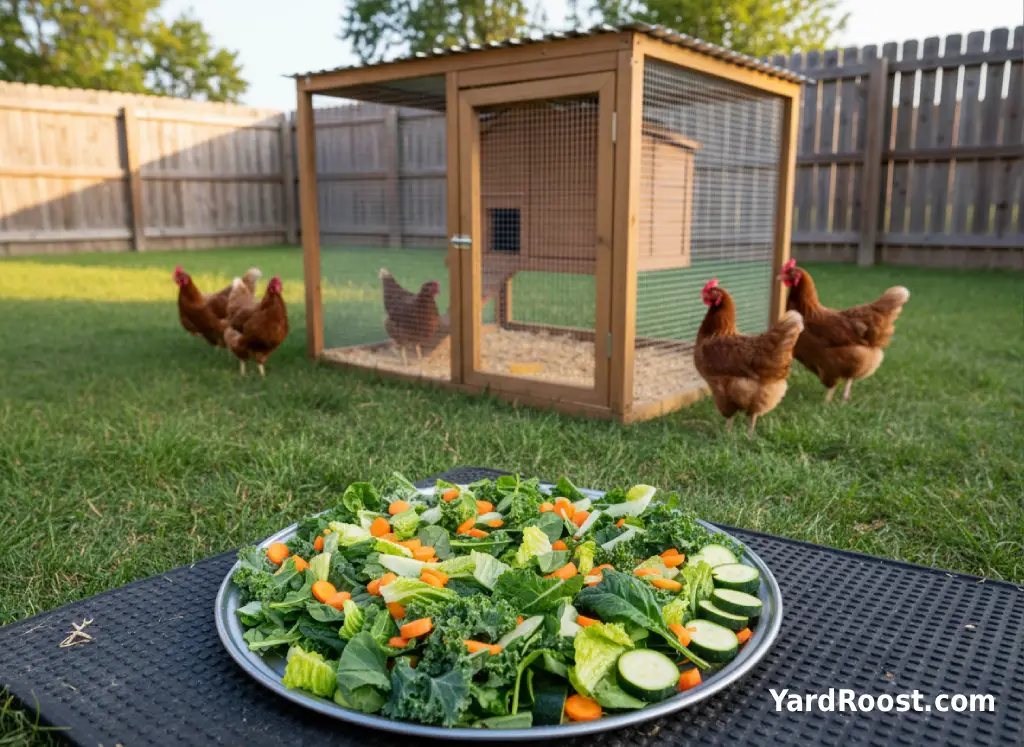
Yes—most backyard chickens can eat strawberries, and many flocks act like you just offered them tiny red treasure. Strawberries are mostly water with fiber and vitamins, which makes them a reasonable “fun treat” when your birds are already eating a complete ration. The key word is treat. Chickens do best when their daily calories come primarily from a balanced feed, and extras are kept truly extra. Extension sources repeatedly warn that too many scraps or “goodies” can crowd out the nutrition birds need for growth and egg production.
In this guide, we’ll cover the strawberry questions we hear most: can chickens eat strawberry tops, can chickens eat strawberry leaves, can chickens eat frozen strawberries, can chickens eat wild strawberries, and (big one) can chickens eat moldy strawberries. We’ll keep it practical and safety-first—because a common mistake we see is treating produce like a “health hack,” when it’s really just enrichment and variety. If your flock has ongoing diarrhea, weakness, or sudden appetite changes, don’t guess—loop in an avian vet.
Strawberries for Chickens: The Quick Answer
Strawberries are generally fine for chickens as an occasional treat. They’re soft, easy to peck, and usually well-tolerated in small amounts. The two main “gotchas” are (1) too much sugar/fruit at once can loosen droppings, and (2) spoiled or moldy fruit is a hard no.
What we aim for at YardRoost: strawberries should be occasional, served clean, and offered in a way that doesn’t encourage a run-wide fruit stomp-and-rot situation.

Which Parts Are Safe: Berry, Tops, and Leaves
Strawberry fruit: The red berry is the part most keepers feed, and it’s the simplest choice.
Strawberry tops (the green cap): If your birds snag a few tops while you’re prepping berries, it’s usually not a drama. But the tops aren’t the “best” part nutritionally, and large piles of fibrous greens can lead to messy droppings in some flocks. If you’re trying to answer “can chickens eat strawberry tops?” our practical take is: small amounts are fine, but don’t make tops the main event.
Strawberry leaves (and plant bits): Chickens are natural nibblers. If they peck at a strawberry plant while supervised (or you toss a few clean leaves), most birds will be okay—but we don’t recommend feeding big handfuls of strawberry plant material as a routine “green.” If you’re uncertain, stick to the fruit and compost the rest. (And if you use pesticides or sprays on plants, don’t feed those leaves at all.)
Bottom line: Fruit is the safest, easiest part to offer; tops/leaves should be incidental, not a staple.
How Much Strawberry Is Too Much?
A good rule that shows up across extension guidance is to keep treats modest so your birds still eat their balanced ration. One Texas A&M AgriLife poultry piece notes treats should make up less than 10% of the diet. Oklahoma State University Extension also cautions that frozen fruits/veggies used as hot-weather treats should be kept to no more than about 10% of the daily diet.
That “10%” guideline is perfect for strawberries: they’re fun, but they’re not a complete feed. Practically, that looks like:
- Offer strawberries after you’ve put out (or confirmed) their regular feed.
- Start small—think “a few bite-size pieces per bird,” not a whole carton dumped into the run.
- If droppings get watery, scale back fruit for a week and return to mostly feed.
A common mistake we see is using fruit to “get them to love you” every single day. It works… and then you wonder why they ignore feed and your coop smells like a smoothie accident.
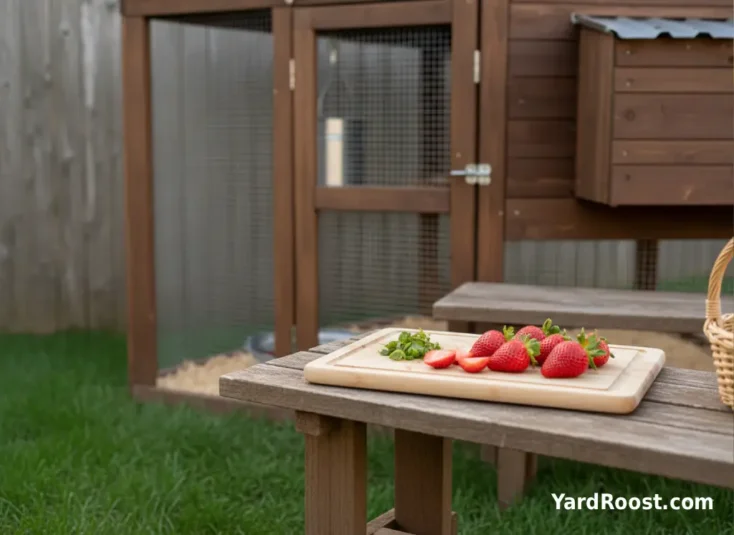
How to Serve Strawberries Safely
Strawberries are easy—until they aren’t. The goal is to keep the treat fun and keep your run from turning into a sticky ant buffet.
- Wash first. Rinse berries under running water to reduce dirt and residue, especially if they’re store-bought or from a public pick-your-own.
- Cut for smaller birds. For bantams or young pullets, slice into peckable pieces to reduce frantic gulping.
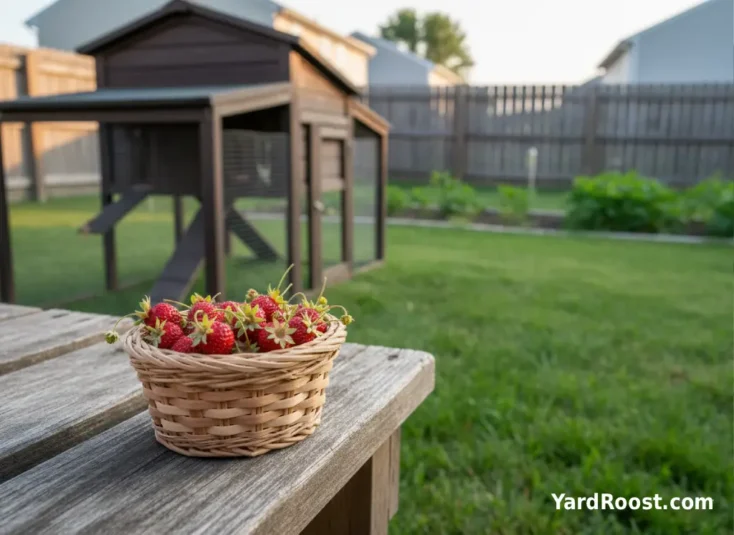
- Use a “clean treat zone.” Put strawberries in a dish, tray, or on a flat paver so they don’t grind into bedding.
- Set a short timer. Remove leftovers before they get stepped into mush (and before flies show up).
Editorial note: A common mistake we see is tossing fruit straight onto wet bedding “because it’s natural.” That’s how you end up with rot, gnats, and a run that smells like fermenting jam. Extension guidance warns against letting scraps rot due to risks like botulism and general illness from spoiled material.
At What Age Can Chickens Eat Strawberries?
There’s no universal “magic birthday” for strawberries, but here’s a safe, beginner-friendly approach that keeps nutrition on track:
For young chicks: Prioritize a complete chick starter so they get consistent protein, vitamins, and minerals while they’re growing. If you choose to introduce any fruit, keep it tiny and occasional, and make sure chicks are already eating their starter well.
For older chicks and pullets: Once they’re steady on their primary feed and actively foraging, you can offer small amounts of strawberry as an enrichment treat.
For adult hens: Strawberries fit best as an occasional “bonus,” not a daily staple. University guidance emphasizes that scraps and treats can’t meet all nutritional needs, so the balanced ration stays the foundation.
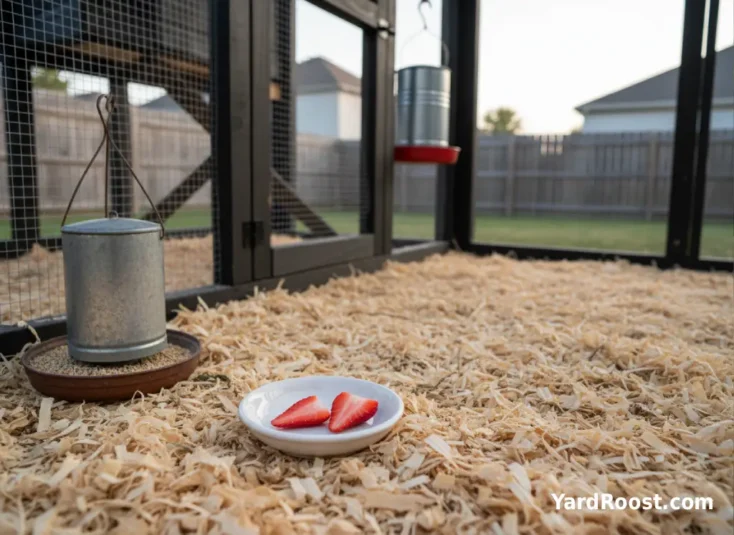
Can Chickens Eat Frozen Strawberries?
Frozen strawberries can be a nice hot-weather enrichment treat. The same rules apply: keep portions modest and don’t let frozen goodies replace real feed. Oklahoma State University Extension notes frozen fruits/vegetables can be used as cool treats, but recommends they stay to about 10% or less of the daily diet so birds still eat a balanced ration.
Practical tips:
- Offer frozen berries in a dish so they don’t melt into bedding.
- On very hot days, give frozen treats during the worst heat to keep birds busy while they rest—then focus on feeding the ration in cooler hours.
Can Chickens Eat Wild Strawberries?
Wild strawberries can be okay if (and it’s a big if) you’re confident in three things:
- Correct ID: You know it’s actually a wild strawberry and not a look-alike plant.
- No chemicals: The area hasn’t been sprayed with herbicides/pesticides (avoid roadsides, golf-course edges, and treated lawns).
- Clean harvest: Rinse and offer in small amounts, just like store-bought berries.
If you’re not 100% sure about identification or chemical exposure, skip it. Chickens have plenty of other safe enrichment options.
Can Chickens Eat Moldy Strawberries?
No—don’t feed moldy strawberries. If berries are moldy, slimy, or fermenting, toss them in compost (or trash) instead of “letting the chickens handle it.” Multiple extension resources warn against moldy or spoiled feed and scraps because molds can produce harmful mycotoxins and spoilage can lead to serious illness risks.
Also avoid the “just cut the mold off” approach. University of Kentucky extension material notes that molds can produce mycotoxins, and even if visible mold is removed, toxins may remain in the material.
If you accidentally fed questionable fruit and your birds develop sudden weakness, severe diarrhea, or can’t stand normally, treat it as urgent and contact an avian vet. (More on that below.)
Hygiene and Biosecurity When Feeding Fruit
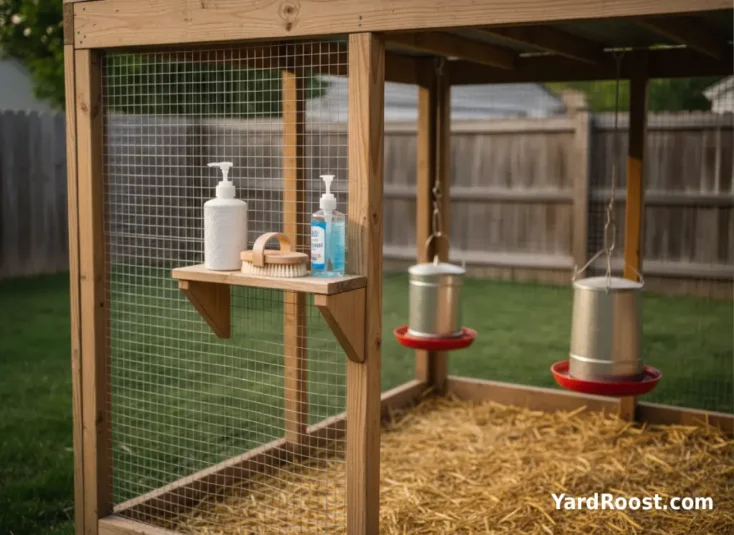
Fruit treats are a perfect moment to tighten up hygiene, especially if kids are involved. The CDC recommends washing hands with soap and water after touching backyard poultry, their eggs, or anything in their environment.
Two simple habits that reduce headaches:
- Feed fruit in one washable dish instead of scattering it everywhere.
- Keep a coop-side handwashing routine (or sanitizer as a backup) so you don’t track “coop hands” into your kitchen.
Common Mistakes to Avoid
- Dumping a pile of berries into the run. It turns into stomped mush fast; use a dish and remove leftovers.
- Making fruit a daily habit. Too many treats can crowd out balanced feed—extension guidance repeatedly stresses moderation.
- Feeding anything moldy “because chickens eat everything.” Mold and spoilage can create serious risks; toss it instead.
- Assuming “natural” equals “clean.” Wash berries, and follow CDC handwashing guidance around flocks.
A common mistake we see is trying to use treats to fix boredom while the run setup is the real issue. If your birds are frantic, add enrichment that doesn’t rot: hanging cabbage, scratch scattered in clean dry leaves, or a compost-safe peck block—then keep fruit as an occasional bonus.
When to Call an Avian Vet
Strawberries themselves aren’t usually a problem—but spoiled food, sudden diet swings, or an underlying issue can tip a bird into trouble. Contact an avian vet (or a qualified poultry veterinarian) if you notice:
- Severe or persistent diarrhea (especially if your bird becomes weak or dehydrated).
- Marked lethargy, refusing feed/water, or isolating for more than a day.
- Neurologic signs like inability to stand normally, unusual head/neck posture, or sudden collapse.
- Multiple birds affected after exposure to spoiled/moldy scraps—treat it as urgent.
Extension resources emphasize avoiding spoiled or moldy materials because the consequences can be serious.
Quick Strawberry Safety Table
| Strawberry Item | Okay for Chickens? | YardRoost Best Practice |
|---|---|---|
| Fresh strawberries | Yes (as a treat) | Wash, offer in a dish, remove leftovers; keep treats modest. |
| Strawberry tops | Usually in small amounts | Fine if incidental; avoid feeding large piles of tops/greens routinely. |
| Strawberry leaves/plant bits | Occasionally, with caution | Skip if sprayed; don’t make it a routine “green feed.” |
| Frozen strawberries | Yes (hot-weather treat) | Offer in a dish; keep treats to about 10% or less of daily diet. |
| Moldy or spoiled strawberries | No | Discard; mold can produce toxins and spoiled scraps can be dangerous. |
Sources we trust for the “big rules” in this article include CDC guidance for backyard poultry hygiene and multiple land-grant/extension resources emphasizing moderation with treats and strict avoidance of moldy/spoiled feed or scraps.
Strawberries can absolutely be part of a happy chicken routine—just keep them in their proper lane. Think of fruit as enrichment: something that adds variety, encourages natural pecking behavior, and gives you a quick way to do a headcount while everyone runs over. The flock-health wins come from the boring basics: a complete feed as the main diet, clean treat habits that don’t invite pests, and a firm “no” to anything moldy or rotting.
If you want the simplest system: wash the berries, offer a small amount in a dish, pick up leftovers before they turn to mush, and wash your hands after flock chores. If you remember only one rule, make it this: when in doubt about freshness, toss it—chickens are brave eaters, but mold and spoilage are not the place to experiment.