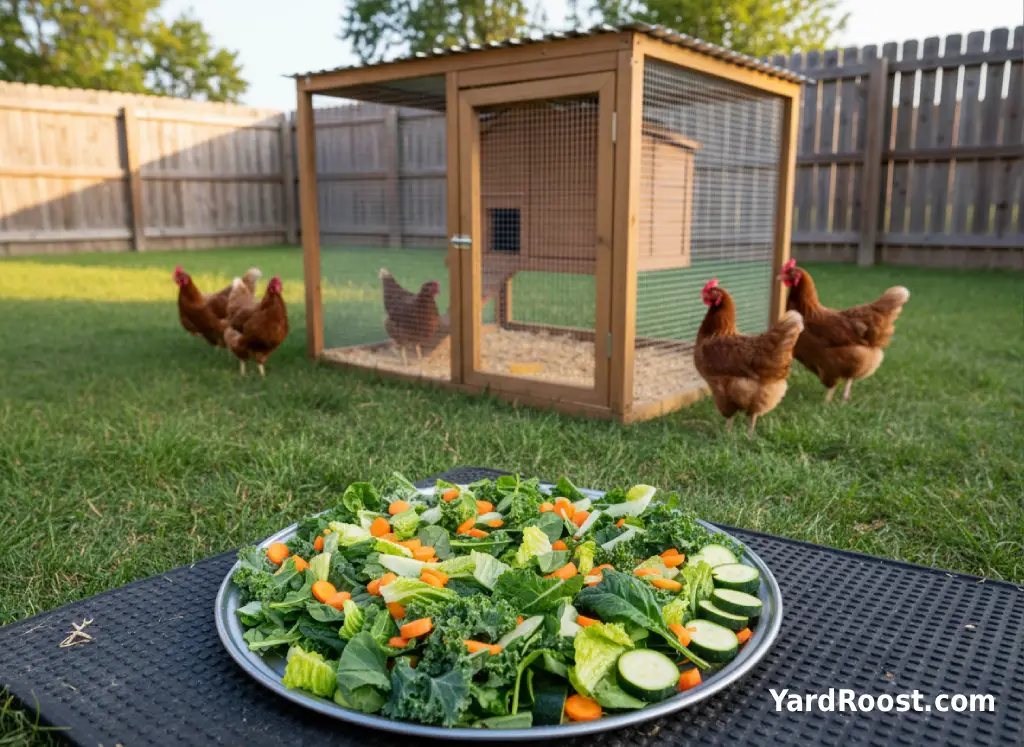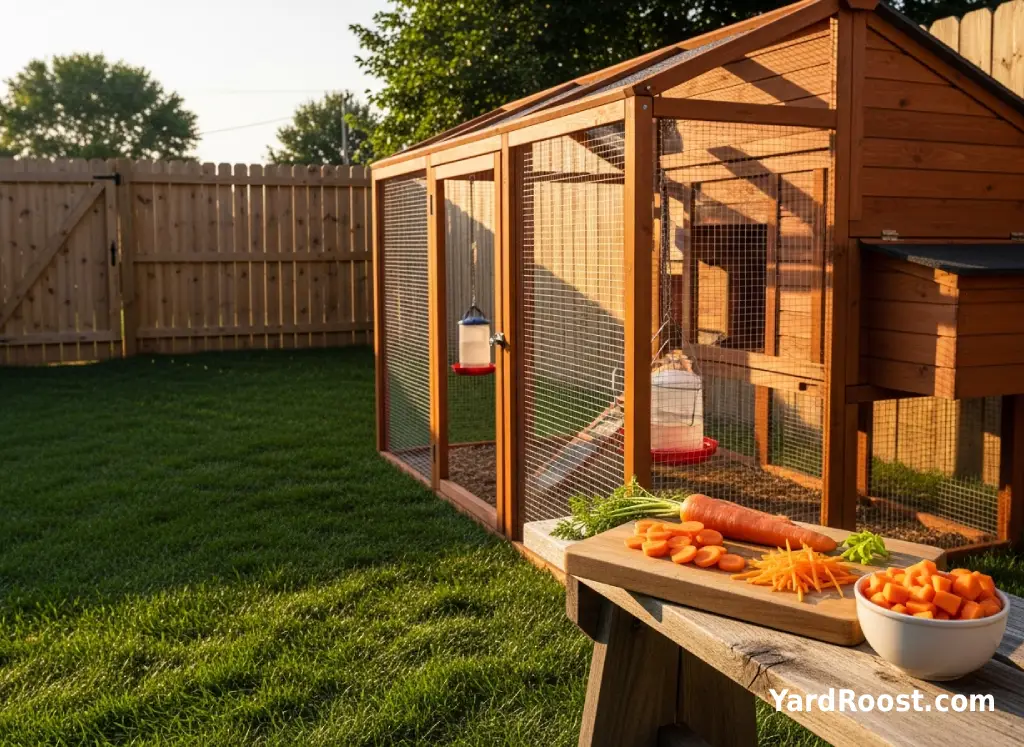
Yes—can chickens eat lettuce? Most backyard flocks can enjoy lettuce as an occasional treat. If you’ve ever watched hens patrol a garden bed, you already know the answer to do chickens eat lettuce is usually an enthusiastic “absolutely.” The trick is keeping it in the treat lane so it doesn’t crowd out balanced feed, and serving it in a way that doesn’t turn into a muddy, trampled salad bar.
Lettuce is mostly water and fiber, so it can be a nice boredom-buster and a little extra hydration in warm weather, especially when your birds are panting and the run feels like an oven. But too much can also mean watery droppings, picky eating, and wasted feed. And “lettuce” can mean a few different things—romaine, iceberg, spring mix, and even wild or prickly lettuce weeds that pop up along fences.
Quick Answer: Lettuce Is a Safe Treat With Limits
Can chickens have lettuce? In most cases, yes—plain, fresh garden lettuce (the kind you buy at the grocery store or grow yourself) is generally a safe, low-calorie treat when offered in moderation. The moderation part matters: poultry nutritionists commonly recommend keeping “extras” as a small portion of the day’s intake so birds still eat their complete ration. One common rule of thumb is the 90/10 approach: about 90% complete feed and up to 10% treats.
Two practical ways to apply that without measuring anything:
- Timing rule: Offer lettuce after you see birds eating their regular feed first (not first thing in the morning when they’re hungriest).
- Cleanup rule: Anything that hits the ground should be picked up fairly quickly—if treats sit around, get soggy, or start to rot, they can create real health risks.
Also, lettuce should be plain. Skip dressings, salty croutons, and anything oily or heavily seasoned. Chickens don’t need “human salad,” and those add-ins are where trouble starts.
Romaine vs. Iceberg: Which Lettuce Is Better?
When people ask can chickens eat romaine lettuce, the short answer is yes—and it’s usually the better pick compared to iceberg. Both are safe as treats, but they’re not equal in how useful they are.
| Lettuce Type | What It’s Like | Best Use for Chickens | Watch-Out |
|---|---|---|---|
| Romaine | Darker leaves, a bit more “real food” per bite | Chop and toss as a foraging treat; good enrichment | Long ribs can get trampled—chop to reduce waste |
| Iceberg | Very high water content and mild flavor | Occasional hydration-style treat in hot weather | Too much can mean watery droppings; not very filling |
| Leaf or Butter Lettuce | Soft, easy-to-tear leaves | Great “scatter treat” when shredded | Wilts fast—serve fresh and remove leftovers |
So, can chickens eat iceberg lettuce? Yes, but think “toy and hydration” more than “nutrition.” Iceberg is about 96% water, which is why it’s refreshing but easy to overdo.
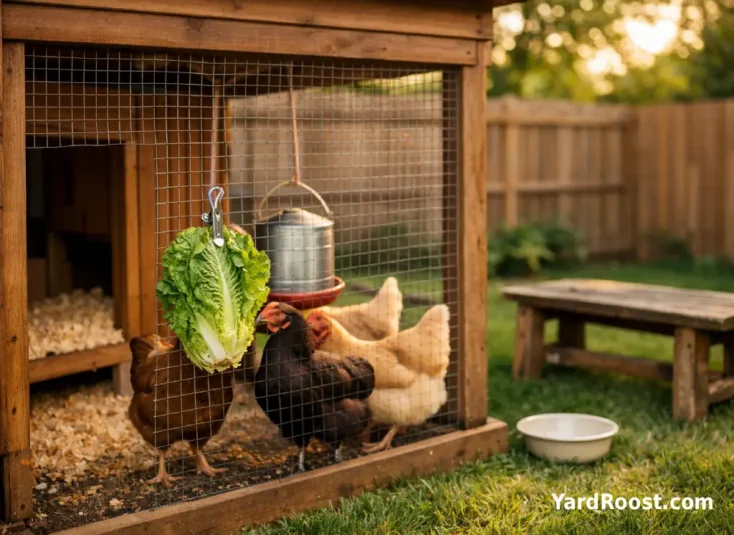
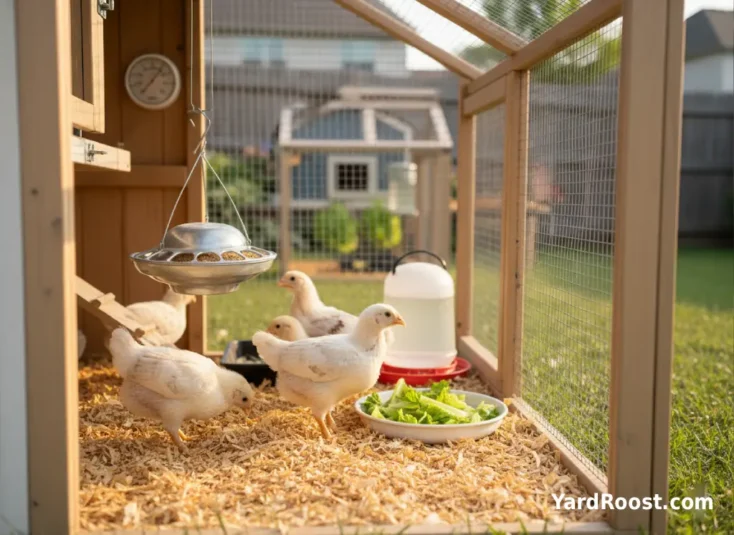
Do chickens like lettuce? Most do—especially when it’s presented as something to peck at (a hanging head) or scratch through (a shredded pile). A few birds ignore it at first; give them time and they usually come around once the boldest hen takes the first bite.
How to Serve Lettuce So It Stays Clean and Safe
If you want lettuce to be a win (not a gross mess), use a setup that keeps it off mud and manure. Here’s the simple routine we use:
- Wash and shake dry. Rinse store-bought lettuce to reduce grit and residue, then shake it so it’s not dripping.
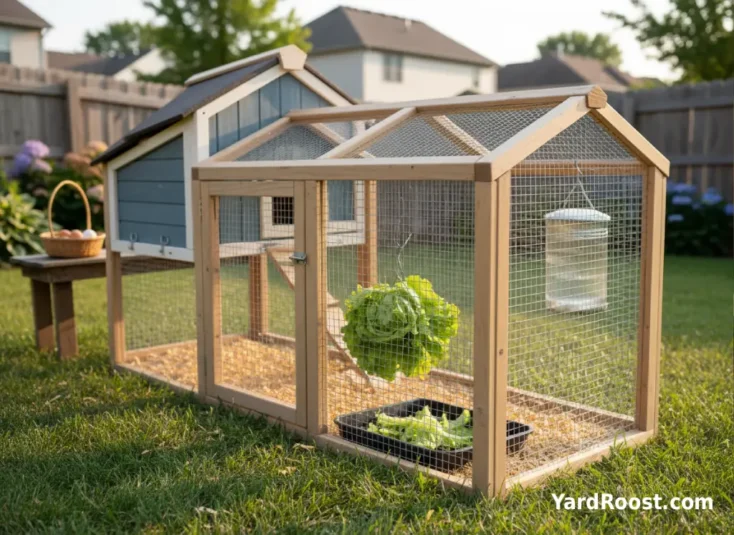
- Choose one serving style: clip a whole head to the run, or chop/shred and scatter in a clean area.
- Chop long ribs and stems. Long strips get stepped on, then ignored. Bite-size pieces get eaten.
- Use the 20-minute check. If it’s not being eaten, remove it before it warms, wilts, and starts spoiling. Extension guidance for table scraps emphasizes limiting extras and not letting scraps rot.
A common mistake we see is tossing a soggy bag of salad into the run “to clean out the fridge.” That’s how you end up with a slimy pile attracting flies—and spoiled food is a known risk factor for serious illness like botulism.
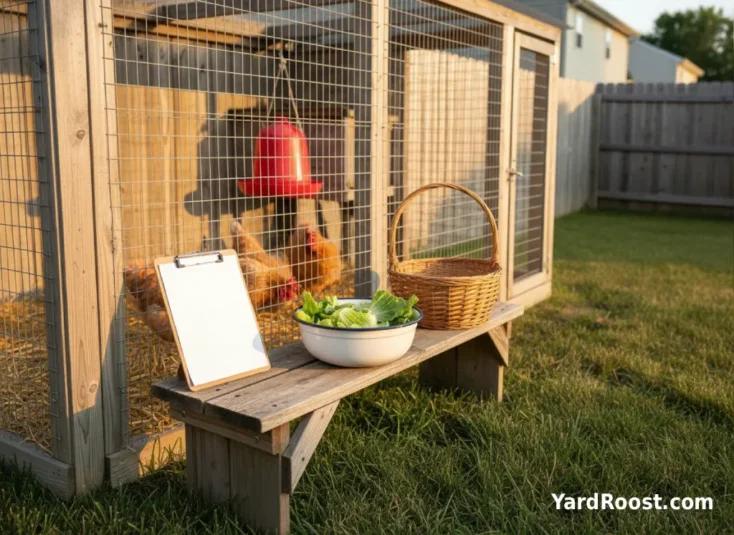
Want more treat ideas that won’t derail nutrition? Keep a short list on your coop clipboard and rotate options.
What Age Can Chickens Eat Lettuce?
What age can chickens eat lettuce? The safest, simplest approach for beginners is: keep chicks on a complete starter feed as their only feed until about 6 weeks old, then introduce small amounts of fresh greens like lettuce as occasional treats.
Why the caution? Baby birds have tiny stomachs and big nutritional needs. Treats (even “healthy” ones) can displace starter feed, and that’s the one thing you really want them eating consistently.
Once your chicks are around that 6-week mark:
- Start with a small handful of finely chopped lettuce for the whole group.
- Offer it after they’ve been eating starter/grower feed normally that day.
- If you notice looser droppings, cut the portion down or offer it less often.
If your birds are confined (no access to soil), it’s also smart to make sure they have appropriate grit available when you’re offering extras—extensions note grit helps birds grind and digest feed items like scratch grains.
Wild and Prickly Lettuce: When to Skip It
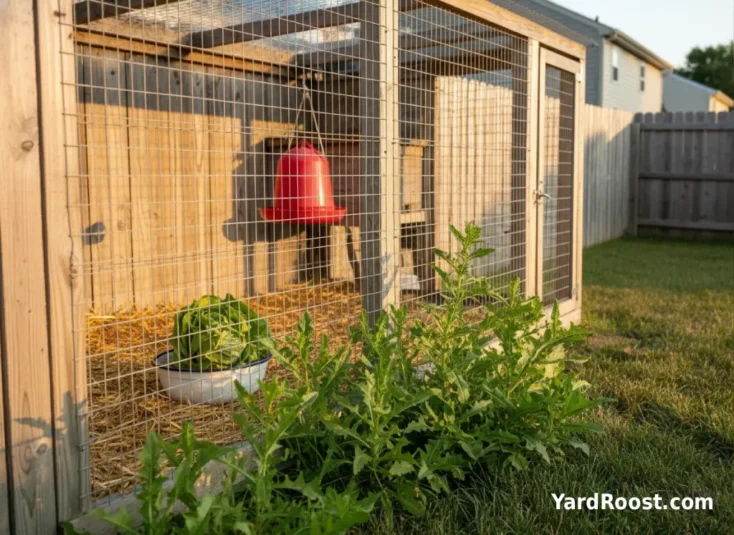
Two phrases cause a lot of confusion: can chickens eat wild lettuce and can chickens eat prickly lettuce. Sometimes people mean harmless-looking volunteer greens; sometimes they mean specific wild species sold or foraged as “wild lettuce.” The problem is identification and variability.
Here’s the safety-first rule we use: if you can’t confidently identify the plant as a safe edible lettuce you’d put in your own salad (or you can’t verify it hasn’t been sprayed), don’t feed it to your flock. Extension guidance also warns against feeding clippings or greens that may have been exposed to pesticides.
Why so strict? Some “wild lettuce” species (for example, Lactuca virosa) have a history of causing toxic effects in people, and reputable references distinguish wild species from common garden lettuce.
Bottom line: homegrown or store-bought lettuce you recognize is the easy win. Foraged “wild lettuce” and prickly roadside weeds are not worth the uncertainty—especially for small birds who can be more sensitive to plant compounds.
If Lettuce Upsets Your Flock: What You’ll Notice and What to Do
Lettuce is simple, but it can still cause “why is my coop so gross today?” moments. Here are the common patterns and the safer next steps—without guessing at diagnoses.
- Watery droppings: Often happens when birds eat a lot of high-water treats (iceberg is a usual suspect). First step: pause lettuce for a day or two, then reintroduce smaller amounts. Iceberg’s very high water content is one reason it can loosen stools when overfed.
- Not eating feed, only begging for greens: That’s a treat-balance issue. Offer complete feed first, then treats later, and keep treats to a small portion of the day’s intake.
- Messy, trampled lettuce left in the run: Remove leftovers promptly. Rotting scraps are specifically called out as a risk in poultry feeding guidance, and spoiled food can be associated with serious illness.
- Bullying at the “lettuce station”: If one hen guards the clip, add a second clip or scatter chopped lettuce in two spots so timid birds get a chance.
A common mistake we see is assuming “more greens” always equals “healthier chickens.” Extension guidance notes that excessive table scraps and greens can reduce intake of the balanced ration (and can even affect productivity). Treat lettuce like enrichment, not a replacement meal.
Common Mistakes to Avoid
- Feeding a whole bag of wilting salad mix. If it’s slimy, moldy, or smells “off,” toss it—don’t compost it in your run. Spoiled feed or decaying vegetable material is a known botulism risk.
- Letting lettuce replace real feed. Keep treats limited so your flock still eats a complete ration.
- Offering long, stringy strips. They get stepped on and wasted. Chop or shred instead.
- Assuming all “wild lettuce” is the same. Don’t feed unidentified roadside plants or anything that may have been sprayed.
Food Safety and Biosecurity When Feeding Kitchen Scraps
Any time you’re feeding kitchen scraps—lettuce included—think about two directions of “germs travel”: from your kitchen to the coop (spoiled food) and from the coop back to your household (Salmonella and friends). The CDC’s backyard poultry guidance is crystal clear: wash hands with soap and water after touching poultry or anything in their environment, and supervise kids with handwashing.
Our simple routine:
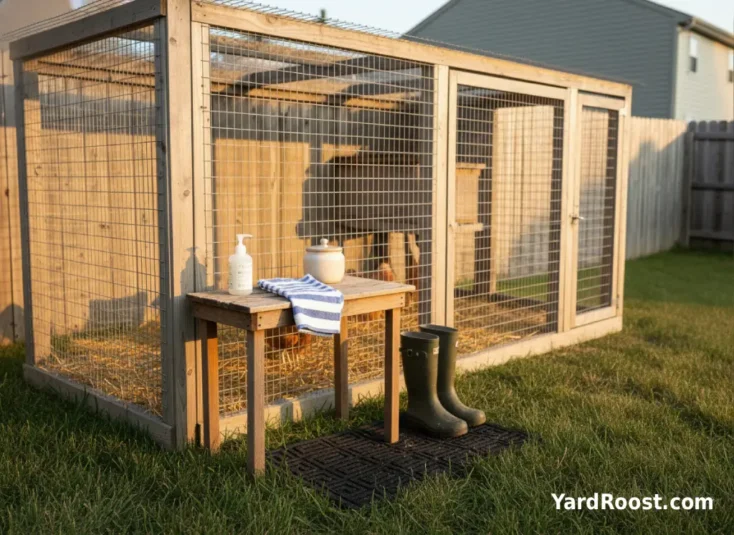
- Prep scraps in the kitchen, feed outdoors. Don’t bring coop bowls back onto food-prep counters.
- Use dedicated coop shoes. Leave them outside so you’re not tracking coop “stuff” indoors.
- Remove leftovers. Especially wet greens—don’t let them rot.
This section matters even if lettuce seems harmless. Clean routines are what keep “treat night” from becoming “why is everyone sick?” week.
When to Call an Avian Vet
Most lettuce issues are minor (mess, loose droppings, picky eating). But it’s worth knowing the red flags that should prompt professional help—especially if birds had access to spoiled food or a questionable pile of scraps.
- One or more birds are very lethargic, not eating, or isolating for more than a few hours.
- Persistent watery droppings plus weakness, dehydration, or weight loss.
- Signs of neuromuscular weakness (trouble standing, progressive paralysis, inability to hold the head up), especially after possible exposure to spoiled feed or decaying material—this can be an emergency. Botulism, for example, is associated with ingestion of toxin from decaying carcasses or vegetable material.
- A hard, distended crop that does not seem to empty overnight, or repeated vomiting/regurgitation.
Until you get help, the safest move is to remove questionable treats and return the flock to a simple, complete ration and clean water. Avoid home “cures” or medications unless an avian vet specifically directs you.
Lettuce can be a fun, safe add-on for backyard chickens when you keep it clean, keep it limited, and keep expectations realistic. Romaine and other darker lettuces are usually more worthwhile than iceberg, but even iceberg can be fine as an occasional hot-weather treat—as long as you don’t turn it into half the day’s calories. If your birds get loose droppings, act bored with it, or start refusing their feed, that’s your cue to scale back and simplify. And when anything smells off, looks slimy, or could be sprayed or unknown, skip it. Your flock will happily accept something safer.