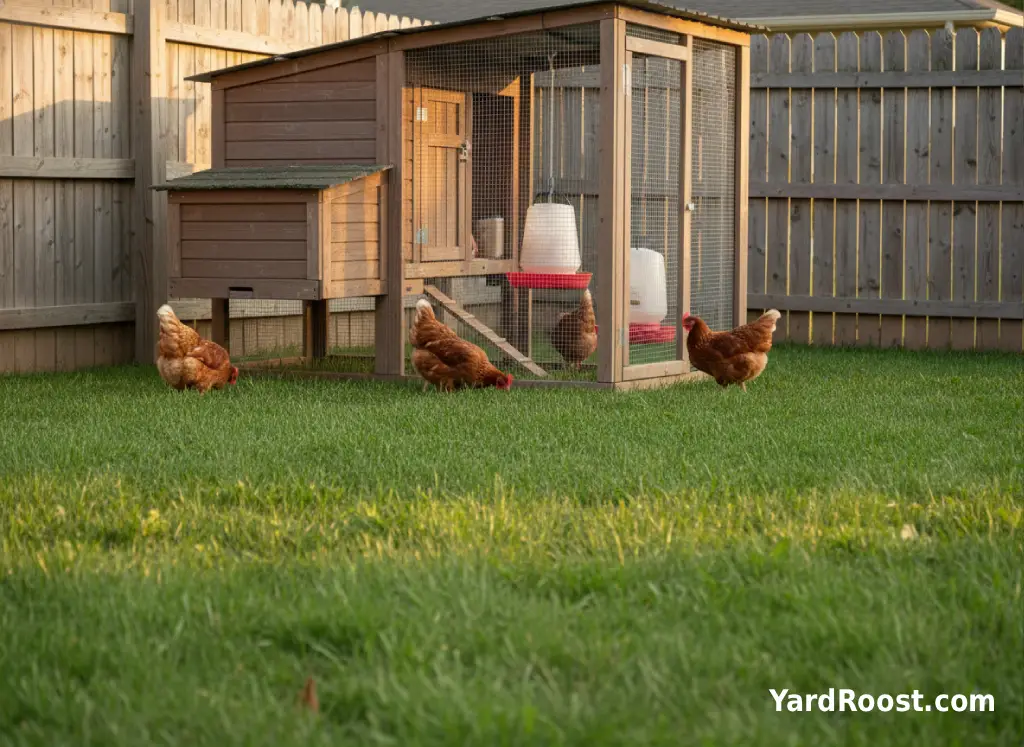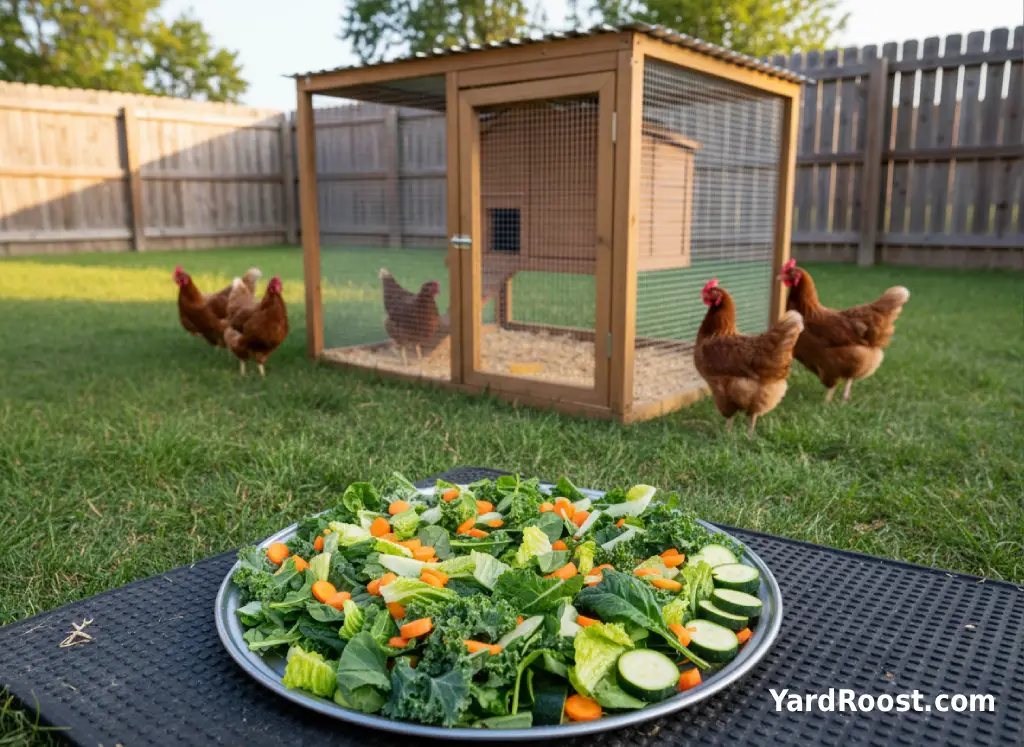
Chickens do eat grass, and most flocks are happy to peck at tender blades, fresh shoots, seed heads, and the bugs hiding in the lawn. That said, grass is not the same thing as complete feed. It works best as a bonus food and a natural foraging outlet, not the main thing filling the feeder. Research and extension material on pastured poultry consistently show that chickens forage on grasses and insects, but they still get only a modest share of their nutrition from forage compared with a balanced ration.
For backyard keepers, the practical question is not just whether chickens eat grass. It is whether the type of grass, the condition of the lawn, and the way you offer it are actually safe. Fresh pasture or a clean patch of yard is one thing. A bag of lawn clippings from a recently treated lawn is another. The same goes for grass seed: plain seed can be pecked at, but coated or treated seed should stay away from chickens. We see beginners get tripped up here because “natural” and “from the yard” can sound safer than they really are. A little caution goes a long way.
Why Chickens Eat Grass in the First Place
Grass gives chickens something they are built to do: peck, scratch, nibble, and keep moving. That foraging behavior matters almost as much as the food itself. Active birds naturally investigate tender leaves and shoots, and extension material on chicken behavior notes that foraging and feeding take up a large share of a chicken’s active time. Pastured poultry resources also describe grasses and legumes as part of a forage base that supports natural grazing behavior.
In a backyard flock, that usually shows up as hens taking quick bites of soft new growth, especially in the morning or after rain when the lawn is lush and insects are active. They are not grazing the way sheep or cattle do. They are sampling. That is why a healthy lawn can entertain a flock, reduce boredom, and add variety without replacing a proper layer or all-flock feed. The YardRoost rule of thumb is simple: let grass be an extra, not the menu.
A common mistake we see is assuming that a flock with yard access will “feed itself” on grass. Chickens still need a balanced ration available every day. If egg production dips, body condition drops, or birds spend all day roaming with empty feeders, the problem is usually not a lack of grass. It is that forage was treated like a substitute instead of a supplement.
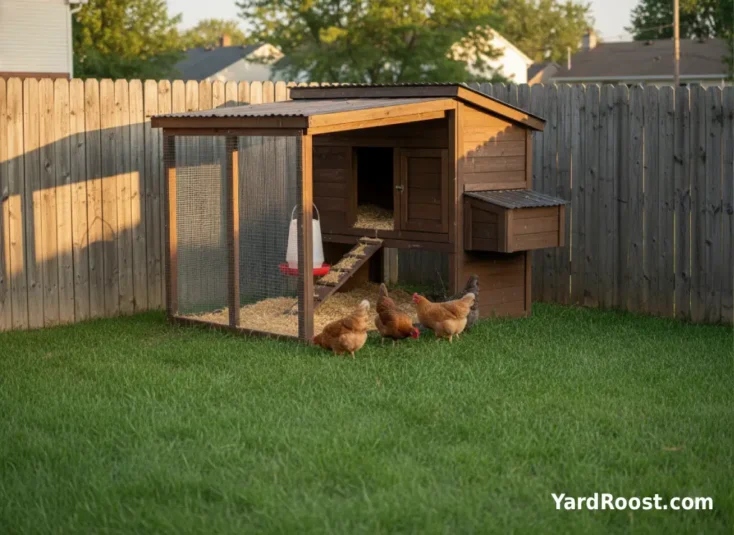
Is Grass Good for Chickens or Just Something They Peck At?
Grass can be useful, but it is not nutritionally complete. Pasture-based poultry sources note that chickens are not ruminants and get only a minimal amount of nutrition from foraging compared with a formulated feed. In practical terms, that means grass adds interest and some useful plant matter, but it should not crowd out the ration that provides the protein, energy, calcium, vitamins, and minerals your birds actually depend on.
Good use of grass looks like this: birds have access to short, clean, untreated growth, they nibble through the day, and they still return to the feeder regularly. Trouble starts when the yard is muddy, overgrazed, chemically treated, or packed with tall, stemmy grass that birds can tug into long strands. Younger, tender growth is more useful than coarse, overgrown patches.
- Keep complete feed available even when the flock is on grass all day.
- Favor short, leafy growth over tall, fibrous patches.
- Rotate access when a run gets worn down to bare dirt.
That rotation matters. Pasture guidance from UF/IFAS emphasizes that moving birds and protecting ground cover helps keep forage younger and reduces bare, worn areas. Even in a small backyard, resting a patch of grass can make a big difference.
Do Chickens Eat Grass Seed?
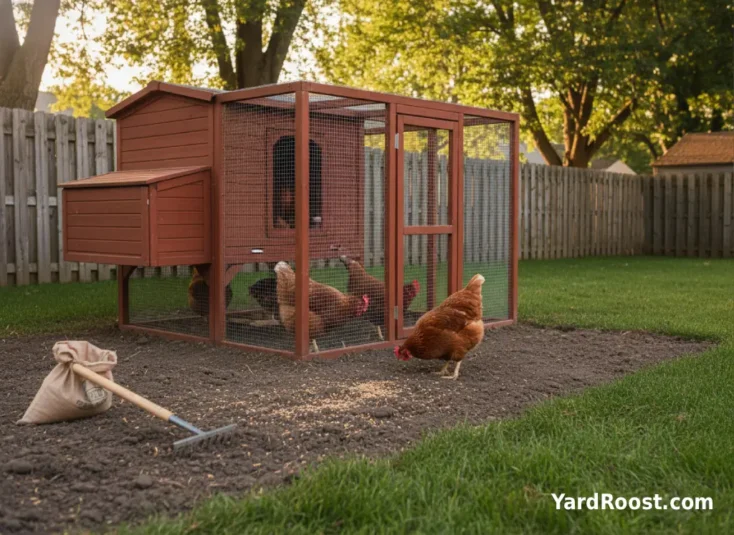
Yes, chickens will peck at grass seed. Plain, untreated seed is usually just another small item they find interesting. The bigger issue is not that they cannot eat it. The bigger issue is that newly seeded areas rarely stay newly seeded once chickens discover them. If you are trying to establish turf in or around a run, expect birds to scratch up loose seed unless the area is fenced off.
The part that deserves real caution is treated or coated seed. Lawn and pasture seed may be sold with fungicide, insecticide, or other coatings, and extension guidance on pesticides is clear that pesticides can be hazardous to animals as well as people and the environment. For backyard flocks, the safe call is straightforward: do not let chickens eat treated seed, and do not turn them onto a freshly seeded area unless you know exactly what product was used.
We also would not count grass seed as a meaningful diet addition. Birds may peck at some, but that does not make a lawn-seeding product an appropriate flock feed. If your goal is safe enrichment, intact grass is better than a bag of seed, and a protected patch of forage is better than letting birds raid a lawn project.
Do Chickens Eat Grass Clippings?
Chickens may peck at grass clippings, but clippings are where backyard keepers should slow down. Grazing standing grass is easier to monitor and usually a better option than dumping a pile of cut material into the run. Large piles of clippings can include long, stringy pieces, can hide weeds or treated plants, and do not give birds the same clean, pick-as-you-go choice that intact forage does. Because chickens only get limited nutrition from forage anyway, there is not much benefit in trying to replace grazing with bags of clippings.
The bigger red flag is lawn treatment. If the grass was sprayed, fertilized with a weed-and-feed product, or seeded with treated seed, keep the clippings away from the flock. Penn State Extension notes that pesticides are potentially hazardous to animals, which is reason enough not to gamble with a clipping pile from a recently treated yard.
A common mistake we see is tossing a full mower bag into the run because it feels like free greens. The safer version is much less dramatic: let birds nibble living grass in a clean area, or offer only a very small amount of untreated fresh clipping mixed into bedding or scattered thinly so you can watch how they handle it. If there is any doubt about lawn chemicals, skip it.
Why Chickens Eat Grass Even When Feed Is Available
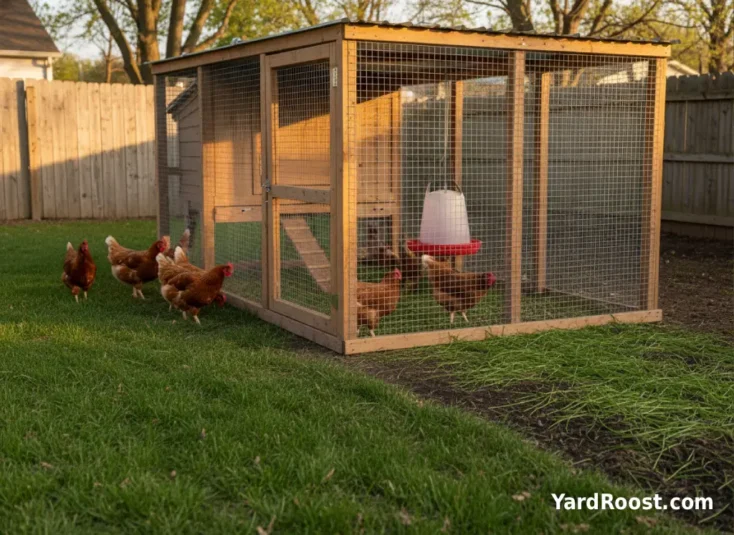
Because eating and foraging are not the same thing. A hen can have a full feeder and still spend part of the day scratching under weeds, pecking at grass tips, or grabbing a seed head. That is normal. It gives the bird something to do, helps satisfy curiosity, and changes the texture and variety of the day.
There is also a timing piece. Many birds pick at grass more when the growth is soft, when insects are active, or when they are first released into a fresh section of yard. You may notice a flock rush the lawn in spring and then show less interest once the patch gets tougher or more worn. Pasture resources emphasize tender regrowth and well-managed ground cover for exactly that reason.
For keepers, this is useful because grass can function as enrichment. A small movable fence, a rest-and-rotate schedule, or a patch planted just for supervised foraging can help reduce boredom and feather picking. We like this approach better than relying on random yard scraps, because you control both the plants and the condition of the area.
Do Chickens Eat Bermuda Grass?
Yes, chickens can eat Bermuda grass, especially when it is short and actively growing. UF/IFAS pasture guidance notes that in North Florida, warm-season perennial grasses like bahiagrass and bermudagrass can provide a suitable forage base for poultry. That does not make Bermuda grass a complete diet, but it does mean it can work as part of a managed foraging area.
The important detail is stage, not just species. Bermuda that is short, leafy, and regrowing is more attractive than Bermuda that is tall, coarse, and heat-stressed. If your birds ignore a Bermuda lawn in midsummer, that does not necessarily mean they dislike the species. It may just be too tough at that moment.
- Mow or rotate before the patch gets tall and stemmy.
- Rest worn spots so birds are not left standing on bare, compacted soil.
- Keep birds off any section recently sprayed or reseeded with treated products.
For southern keepers, Bermuda can hold up well to traffic compared with more delicate cool-season lawns. For small backyard flocks, that toughness is often the real advantage.
How to Let Chickens Forage on Grass Safely
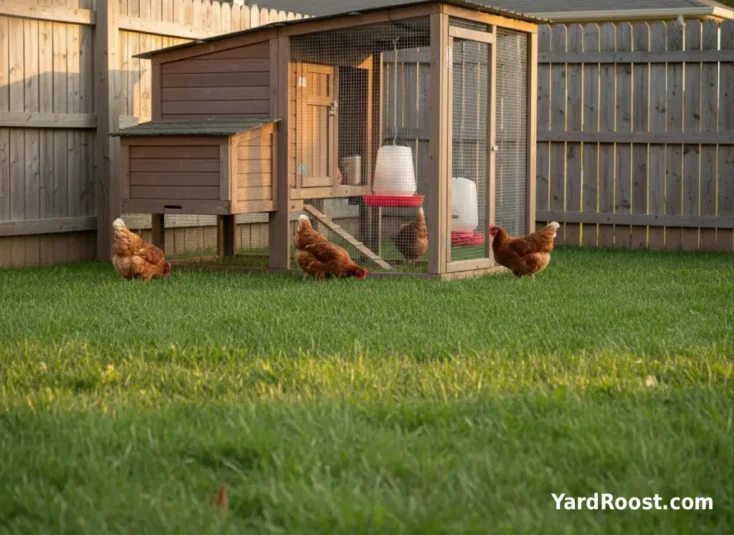
Safe grass access is mostly about control. You want to know what is growing there, what has been applied there, and how hard your birds are hitting the area. A little structure helps more than a big yard with no plan.
- Use untreated areas only. Skip lawns or patches recently sprayed with herbicides, insecticides, or combination lawn products. Pesticides can be hazardous to animals, so “probably fine” is not a good enough standard.
- Favor intact forage over piles. Let birds browse standing grass instead of relying on large clipping piles.
- Rotate access. Rest a patch before it turns to dirt. Pasture guidance shows rotation helps maintain younger forage and better ground cover.
- Keep feed available. Forage should add variety, not replace a complete ration.
- Watch hygiene. The CDC advises washing hands after handling poultry or anything in their environment, keeping poultry gear outside, and supervising kids carefully around flocks.
A common mistake we see is building the whole routine around the lawn and forgetting the flock still needs shade, clean water, and a dry place to get off wet ground. Grass access works best when it is part of a setup, not the setup itself.
Common Mistakes to Avoid
- Assuming grass can replace feed. It cannot. Chickens still need a balanced ration.
- Offering clippings from treated lawns. This is one of the easiest avoidable mistakes. If chemicals were used, do not feed the clippings.
- Letting birds destroy one small patch. Once a run is bare, you lose the benefit of forage and gain mud and wear.
- Using treated seed in a chicken area. Fence off newly seeded spots unless you know the seed is plain and untreated.
- Ignoring people safety. Chickens can carry Salmonella even when they look healthy and clean. Handwashing and keeping coop gear outside the house are basic must-dos.
Editorial note from the YardRoost team: beginners often focus on whether a chicken can eat something and skip the more important question, which is whether that item is the best way to offer it. With grass, the safest answer is usually the simplest one: clean, untreated, growing in the ground, with the feeder still nearby.
The Bottom Line on Chickens and Grass
So, do chickens eat grass? Absolutely. They peck at it, browse tender growth, and use it as part of their normal foraging routine. Plain grass, including Bermuda grass, can be a helpful extra when it is clean, untreated, and offered as standing forage. Grass seed is less of a nutrition question than a management question, and treated seed should be off-limits. Grass clippings are the category where caution matters most, especially if the lawn has been sprayed or fertilized.
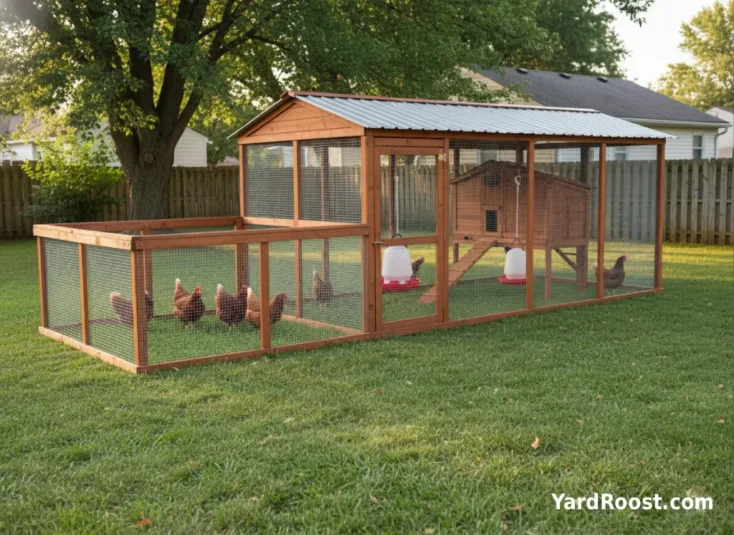
The most practical setup is also the least fancy: a safe patch of living grass, access to balanced feed, and a little rotation before the area gets wrecked. That gives your flock the fun of foraging without turning the lawn into a risk. Sources consulted for this article included the University of Kentucky Forage Extension, UF/IFAS Extension, CDC, Penn State Extension, and Alabama Extension.