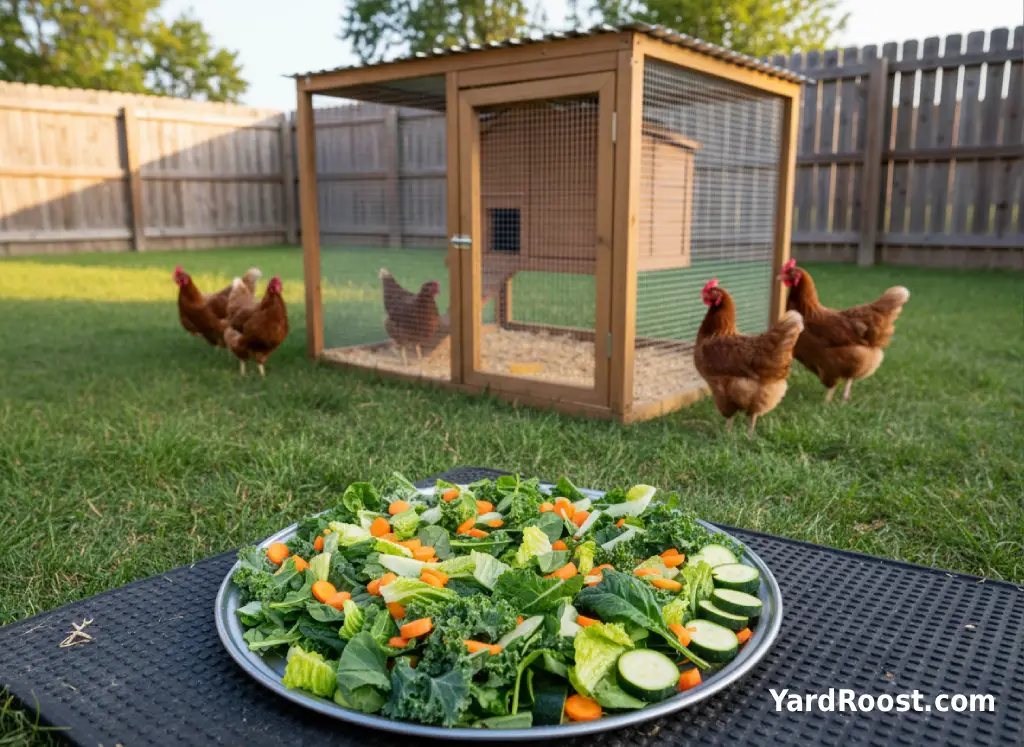
Yes—most backyard chickens can eat grapes. Think of grapes as a “fun snack,” not a “feed replacement.” They’re sweet, watery, and easy for chickens to love a little too much, so the real win is serving them safely and keeping your flock’s main diet balanced. Chickens do best on a complete, balanced poultry feed, with treats staying a small slice of the overall menu. University guidance aimed at backyard flocks commonly recommends keeping treats and scraps to no more than about 10% of the diet.
If you’re new to chicken treats, grapes are a nice option because they’re soft, easy to portion, and don’t have the “hard-to-digest” texture some scraps do. The main risks aren’t mysterious toxins—it’s the everyday stuff: choking if they try to swallow a whole grape, sticky messes that attract bugs or rodents, and filling up on sweets instead of their nutritionally complete feed. And as always with backyard poultry, treat time is also “hygiene time”: wash hands after handling birds, eggs, or anything in their coop/run area.
Can Chickens Eat Grapes?
Chickens are omnivores and will happily eat a wide range of foods—including fruits—when offered. That said, “can” doesn’t always mean “should as much as they want.” Grapes are best used as an occasional treat because they’re high in water and natural sugars and low in the protein, vitamins, and minerals that a complete poultry ration is designed to provide.
For most flocks, a few bites per bird is plenty. If you’re feeding grapes for the first time, start small and watch the group for loose droppings or a temporary “sugar zoomies” effect (lots of running and squabbling over the good stuff). If things get messy fast, you’ll know to scale back next time.
Why Grapes Make Sense as a Treat
Grapes shine as a treat because they’re soft, bite-sized once cut, and hydrating—handy during hot weather when birds may snack less aggressively. They can also be a practical “training treat” if you’re teaching your flock to come when called or hop into the run before dusk.
The key is using grapes to complement, not compete with, a balanced diet. Extension and veterinary guidance for backyard chickens emphasizes that a prepared, balanced feed should be the foundation.
Over-relying on scratch, table scraps, and treats can lead to nutritional problems and overweight birds, especially in smaller runs with limited exercise.
How to Serve Grapes Safely
If there’s one “do this every time” rule with grapes, it’s this: don’t toss in whole grapes and assume it’ll be fine. Chickens can be surprisingly ambitious swallowers—especially when they’re competing.
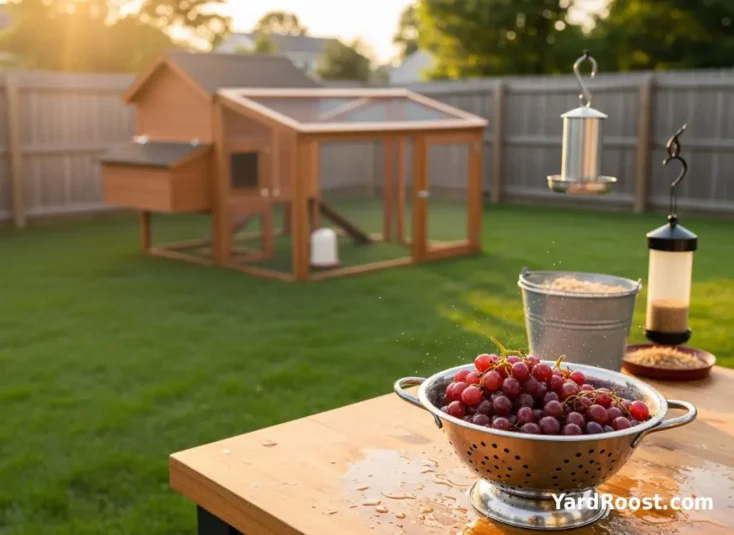
- Wash first: Rinse grapes well to remove dirt and reduce residues. If you’re unsure about spray history, skip them or peel and rinse thoroughly.
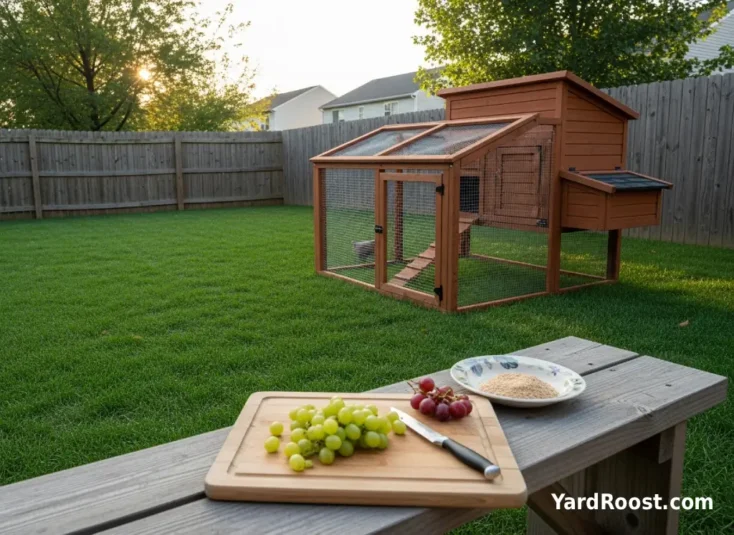
- Cut for safety: Halve grapes for standard-size hens; quarter them for bantams, younger birds, or any flock that tends to gulp. (Same logic used for human choking prevention: smaller pieces are safer.)
- Portion small: Offer a small handful for a typical backyard flock, then stop. Treats shouldn’t be more than about 10% of their overall intake.
- Use a “cleanable” feeding spot: Scatter on dry ground, a patio edge, or a treat tray—not deep bedding—so sticky grape bits don’t disappear and ferment.
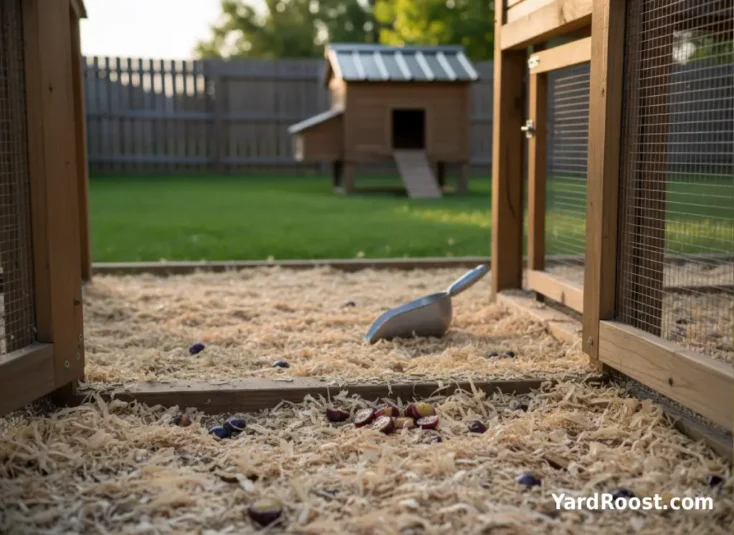
- Pick up leftovers: If grapes are still sitting after 15–20 minutes, remove them to avoid attracting pests.
A common mistake we see is giving a big bowl of grapes because the flock is “so excited.” The excitement is real—but so is the risk of bullying, gulping, and runny droppings. A better approach is fewer pieces, spread out over a wider area, so timid hens get a fair shot without a stampede.
Can Chickens Eat Grapes Whole?
It’s safer not to feed grapes whole. Even though many adult hens can manage a small grape, “can manage” isn’t the same as “zero risk,” especially when birds rush food and try to swallow quickly. Cutting grapes is a simple habit that removes most of the preventable danger.
If you’re thinking, “My birds have eaten whole grapes before,” you’re not alone. But consider this: flock behavior changes when resources are limited or excitement is high. One bird tries to steal; another gulps. That’s when choking risk goes up. Halves or quarters are the low-effort, high-reward move.
Can Chickens Eat Grape Seeds or Seeded Grapes?
Seeded grapes are generally fine as a treat if you’re already cutting them up. The bigger issue with seeds is mechanical—not chemical: seeds and thick skins can be harder for smaller birds to handle if they’re trying to gulp pieces quickly. Cutting grapes into smaller portions reduces that problem and helps you visually check for any odd, moldy, or fermented spots while you’re at it.
If your flock includes bantams or younger pullets, quarter grapes and don’t overdo frequency. If you notice birds tossing pieces and “gagging” (stretching the neck, repeated swallowing motions) during treat time, pause grape treats and switch to something softer and smaller for a while.
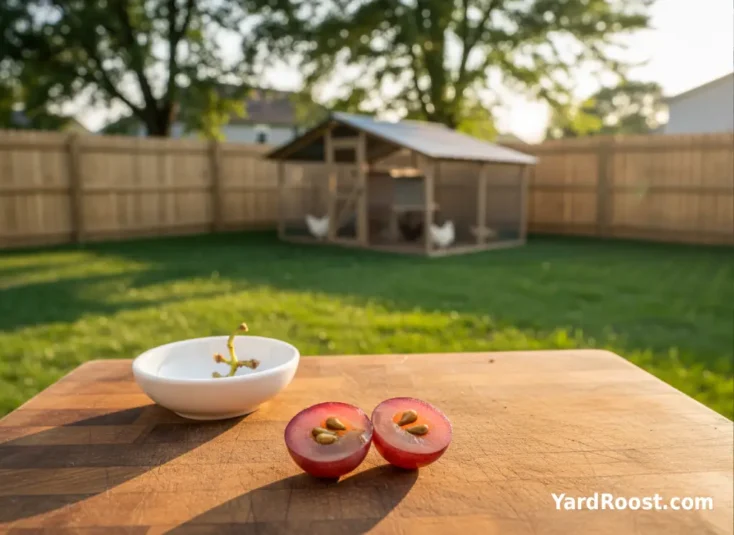
Green vs Red Grapes and Frozen Grapes
Green grapes and red grapes are both fine as occasional treats. Pick based on what you have, then focus on prep and portion control. A few practical notes:
- Green grapes: Often a bit firmer—cutting matters even more for smaller birds.
- Red grapes: Usually softer and easier to peck apart once halved or quartered.
- Frozen grapes: Great for hot afternoons, but only if they’re thawed slightly or cut before freezing so birds aren’t trying to swallow hard, slick “marbles.”
- Raisins: They’re basically concentrated sugar and can encourage gulping. If you use them at all, treat them like “sprinkles,” not a snack bowl.
Can Chickens Eat Grape Leaves or Vines?
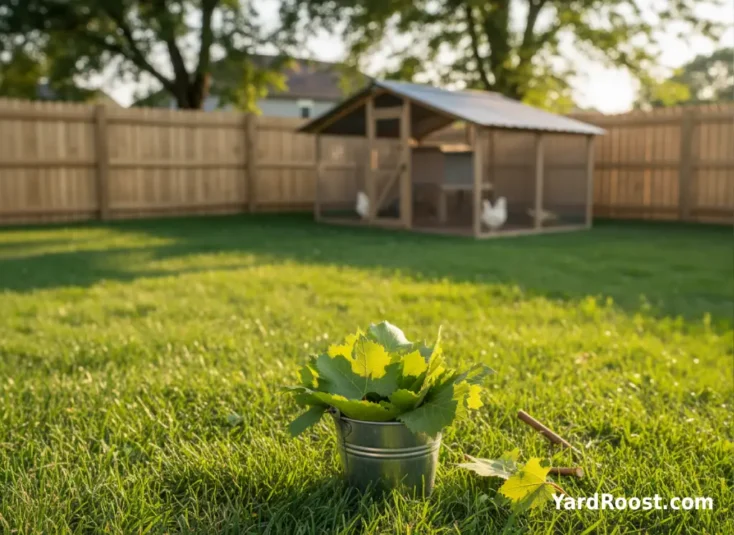
This is where we get extra cautious: grape leaves and vine trimmings aren’t a standard “go-to” chicken treat, and the biggest real-world risk is chemical exposure. Backyard grape plants are commonly treated with fungicides or other sprays in some regions. If you can’t confidently say, “No sprays, no dusting sulfur, no recent treatments,” don’t offer leaves or trimmings.
If you do have unsprayed leaves and want to try a nibble-sized offering, offer a small amount and remove leftovers. Avoid wilted, moldy, or fermented plant material—chickens are curious, but their digestive systems don’t need compost experiments.
Treat Rules That Keep Your Flock Healthy
If treats are starting to feel like a daily routine, anchor yourself with a simple nutrition rule: a balanced commercial ration should be the main food, and treats (including fruit) should stay limited. For a broader rundown on what to feed chickens and how much, keep in mind that university and veterinary guidance for backyard flocks commonly advises keeping treats/scratch/scraps at no more than about 10% of the overall diet.
| Rule of Thumb | What It Looks Like With Grapes |
|---|---|
| Treats stay “small” | A small handful of halved/quartered grapes, not a bowlful |
| Feed comes first | Offer treats after birds have access to their complete feed |
| Clean up quickly | Remove leftovers after 15–20 minutes to reduce pests and mess |
| Watch body condition | If hens are getting “round,” cut back treats and encourage foraging time |
Overdoing scratch and scraps can contribute to overweight birds and nutrition-related issues in backyard flocks, especially when exercise is limited.
Common Mistakes to Avoid
- Feeding whole grapes: Increases choking risk—halve or quarter instead.
- Letting grapes replace real feed: Treats should be limited; keep the ration as the foundation.
- Dumping treats in one pile: Causes bullying and gulping—spread pieces out.
- Leaving leftovers: Sticky fruit attracts pests and can ferment—remove after 15–20 minutes.
- Offering questionable produce: Skip anything moldy, leaking, or “wine-smelling.”
- Ignoring hygiene: Wash hands after handling birds, eggs, or coop/run items.
When to Call an Avian Vet
We’re not veterinarians, and food questions can turn into health questions quickly if a bird swallows wrong or a treat causes digestive upset. If you’re concerned, it’s always okay to get professional help early—especially with breathing or swallowing problems.
- Possible choking signs: repeated gagging motions, open-mouth breathing, distress after treat time, collapse, or a bird that can’t settle.
- Concerning digestive signs: persistent watery droppings for more than a day, lethargy, refusal to eat, or significant dehydration.
- Flock-level red flags: multiple birds suddenly acting sick after a shared treat or access to spoiled food.
If you suspect choking, severe weakness, or breathing trouble, treat it as urgent. While you wait for help, remove treats, ensure easy access to water, and keep the bird calm and separate from flock pressure.
Public health note: If anyone in the household is cleaning up after sick birds or handling coop materials, follow CDC handwashing guidance to reduce Salmonella risk.
Bottom Line: Grapes Are Fine, but Prep Matters
Grapes can be a safe, flock-pleasing treat for backyard chickens—as long as you keep them occasional, washed, and cut. Halves or quarters lower choking risk and help prevent the frantic “gulp-and-steal” behavior that treats can trigger. Seeded and seedless grapes are typically workable if you’re cutting them anyway, and green vs red mostly comes down to firmness and what your birds prefer.
What matters more than grape color is your overall feeding rhythm: balanced poultry feed first, treats second, and treats staying limited so birds don’t crowd out the nutrition they need. Backyard chicken resources from universities and veterinary references repeatedly warn that too many treats and scraps can contribute to weight and nutrition problems over time.
Finally, remember that treat time is also a great time to do a quick “flock scan”—bright eyes, normal breathing, steady movement, and no one getting bullied off the good stuff. Small habits like cutting grapes and cleaning up leftovers are the kind of boring-sounding routines that keep flocks thriving.