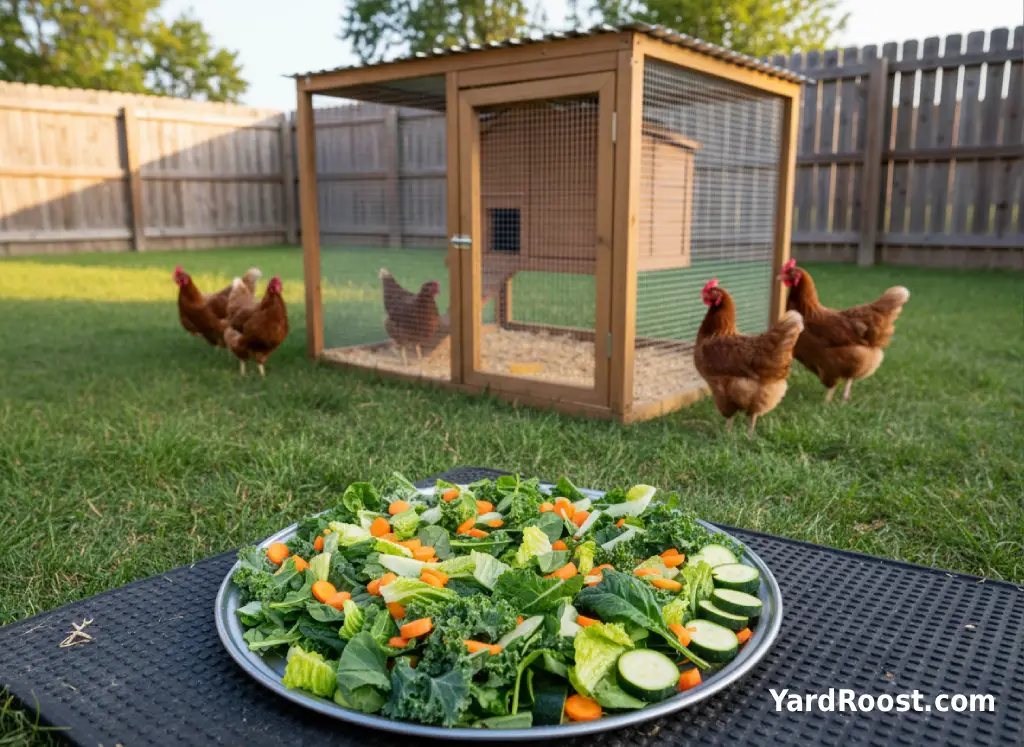
Bread is one of those “pantry leftovers” that backyard chickens act like they were born to love. The good news: yes, chickens can eat bread as an occasional treat. The not-so-fun news: bread is mostly filler, and the wrong kind (especially moldy bread or heavily seasoned bread) can create real problems fast.
If you’re raising a small flock, your best rule is simple: treats shouldn’t crowd out balanced feed. University of Minnesota Extension notes that chickens enjoy kitchen scraps like bread, but treats don’t supply all their nutritional needs and are best kept in moderation. And when anything is moldy, that’s a hard no—molds can produce mycotoxins that can negatively affect poultry health (poultry.extension.org). We’ll keep this practical: what types of bread are okay, what to avoid, and how to feed bread without creating a picky, carb-loaded flock.
The Quick Answer: Bread Is a Treat, Not a Feed
Chickens can eat bread, but it shouldn’t become a habit or a “free-choice snack.” Bread is mostly carbohydrates and can fill birds up before they eat the protein, vitamins, and minerals they’re supposed to get from a complete feed.
What “moderation” looks like in a backyard setting:
- Keep bread occasional (think “sometimes treat,” not daily).
- Keep portions small: a few bite-size pieces per bird is plenty.
- Feed bread after they’ve eaten their ration so it doesn’t replace real nutrition.
A common mistake we see is using bread to “keep chickens busy” in the run. It works—until your best layers start ignoring feed, egg production dips, or you end up with birds that beg at the back door instead of foraging.
How to Feed Bread Without Causing Problems
If you want to offer bread, your goal is “easy to eat, hard to mess up.” Bread that turns into sticky clumps, gets soaked, or sits around will invite waste and risk.
Use this simple routine:
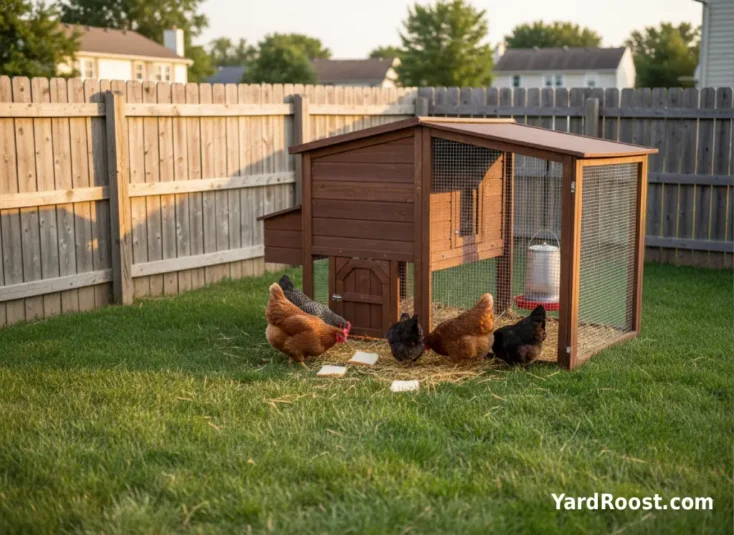
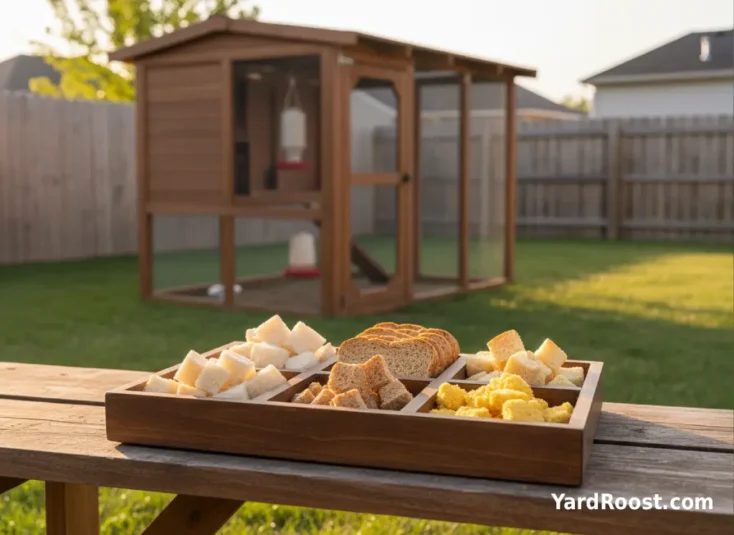
- Tear it small (bite-size pieces). Big chunks encourage gulping and can ball up when wet.
- Offer it dry and in a pan, not on muddy ground where it turns into paste.
- Feed what they’ll finish quickly. If pieces sit around, remove them before they get damp or dirty.
- Keep clean water available so birds can drink after treats.
Want a “busy chicken” alternative that behaves better than bread? Scatter a small amount of scratch grains in dry litter so they have to work for it.
White, Wheat, Sourdough, and Cornbread: What Changes and What Doesn’t
If you’re wondering can chickens eat white bread or can chickens eat wheat bread, the answer is basically the same: yes, but only as a treat. Whole wheat usually has a bit more nutrition than white, but it’s still not a replacement for balanced feed.
Can chickens eat sourdough bread? Typically, small amounts of plain sourdough are fine as a treat too. The practical difference is texture: sourdough can be chewier, so keep pieces smaller to reduce “gulping.”
Can chickens eat corn bread? Plain cornbread (not sugary, not buttery, not topped) can be offered in small pieces. The moment it turns into a sticky, damp crumble in a run, it’s not worth the mess—feed tiny amounts and remove leftovers.
Tip: If any bread is heavily salted, sweetened, or loaded with fats, skip it. Treats should stay simple.
Bread Crumbs: The Fastest Way to Create a Rodent Problem
Can chickens eat bread crumbs? Yes—crumbs are easy for birds to grab. The catch is management. Crumbs disappear into bedding, corners, and cracks… and that’s basically an invitation for mice and rats.
If you use crumbs, do it like this:
- Use a dish or pan, not a scatter on the ground.
- Offer only what they’ll finish quickly.
- Do a quick 5-minute sweep check afterward—if you still see crumbs, you fed too much.
If rodents are already a concern at your coop, bread crumbs should be off the menu.
Garlic Bread: Skip It and Keep Treats Plain
Can chickens eat garlic bread? We don’t recommend it. Garlic bread is usually a combo of butter/oil, salt, and concentrated seasoning—exactly the kind of “people food” that can upset a chicken’s normal diet.
There’s also a bigger caution with Allium plants (like onions and garlic): Merck Veterinary Manual notes that ingestion of onions/garlic (raw, cooked, or concentrated forms) can cause oxidative damage to red blood cells in animals and lead to anemia. That doesn’t mean a chicken will collapse from a tiny taste, but it does mean garlic isn’t a treat worth pushing—especially in concentrated or frequent amounts.
Bottom line: if it’s seasoned, buttery, salty, or “pizza-adjacent,” keep it for people.
Banana Bread and Sweet Breads: Tiny Portions Only
Prompt: A tidy suburban backyard in Ohio with green lawn and a simple wooden privacy fence. Inside a covered chicken run with stained wood framing and galvanized hardware cloth, a small treat dish holds a single small cube of plain banana bread (no frosting), offered as a rare treat. Clean straw and pine shavings are visible, with the coop doorway and a hanging feeder and waterer in the background. Warm late-afternoon golden-hour sunlight, soft natural shadows, gentle depth of field. Realistic DSLR photo, 50mm lens, f/2.8 aperture, natural color tones, subtle background blur. Ohio Backyard Coop Style — no people, no text, no logo, no watermark.
Alt: A single small cube of plain banana bread offered in a treat dish inside a clean backyard chicken run.
Can chickens eat banana bread? They’ll try—and they’ll love it. But sweet breads are the definition of “treat treat.” Sugar and fats can crowd out better nutrition quickly, and sticky pieces can make a mess in bedding.
If you decide to offer banana bread (or similar sweet bread):
Keep it rare, keep it tiny, and avoid anything with frosting, chocolate, or sugar glazes. One small bite per bird is plenty. If you wouldn’t call it “plain,” don’t feed it to chickens.
Rye Bread: Okay as a Treat, but Don’t Make Rye a Habit
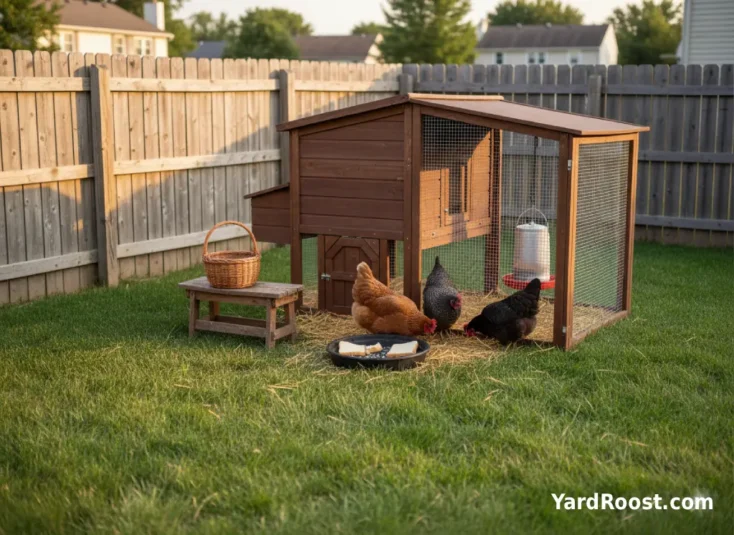
Prompt: A tidy suburban backyard in Ohio with green lawn and a simple wooden privacy fence. Inside a covered run made from stained wood and galvanized hardware cloth, a shallow feed pan holds a few small torn pieces of rye bread while a hanging layer pellet feeder is visible behind to emphasize treats vs feed. Clean straw bedding, coop door, and a rustic bench with an egg basket are softly in the background. Warm late-afternoon golden-hour sunlight, soft natural shadows, gentle depth of field. Realistic DSLR photo, 50mm lens, f/2.8 aperture, natural color tones, subtle background blur. Ohio Backyard Coop Style — no people, no text, no logo, no watermark.
Alt: Small torn pieces of rye bread in a feed pan inside a covered run, with a layer pellet feeder visible behind.
Can chickens eat rye bread? In small treat amounts, usually yes. The reason we’re cautious is that rye as a major diet ingredient can be problematic for growing poultry at higher inclusion levels. Poultry Extension notes rye grain is generally not recommended at high levels for growing birds because compounds in rye can interfere with digestion and nutrient use.
That’s a “formulation” issue more than a “one-off rye toast” issue. So, treat-sized pieces of rye bread are fine, but don’t turn rye-based breads into a frequent routine—especially for young, growing birds.
Hard No: Can Chickens Eat Moldy Bread?
Prompt: A tidy suburban backyard in Ohio with green lawn and a simple wooden privacy fence. On a rustic bench near the coop, a clearly moldy loaf of bread is shown being discarded into a sealed trash bag (no hands visible), while clean chicken feed is stored safely in a lidded metal bin nearby. The covered run with galvanized hardware cloth is in the background, softly blurred. Warm late-afternoon golden-hour sunlight, soft natural shadows, gentle depth of field. Realistic DSLR photo, 50mm lens, f/2.8 aperture, natural color tones, subtle background blur. Ohio Backyard Coop Style — no people, no text, no logo, no watermark.
Alt: A sealed trash bag beside a coop bench holding a discarded moldy bread loaf, with clean feed stored in a lidded bin nearby.
Can chickens eat moldy bread? Don’t do it. Mold can produce mycotoxins, and mycotoxins in poultry feed are a known health risk (poultry.extension.org). With backyard flocks, the safest move is to treat moldy bread the same way you’d treat moldy feed: toss it.
Also, don’t rely on “I’ll just cut the mold off.” Mold growth and toxins aren’t always confined to the visible fuzzy spot, and poultry are not the place to experiment with food waste hacks.
If you want to reduce waste, choose safer options: freeze extra bread for your household, compost it properly, or send it out with trash. Your flock’s digestive and immune systems will thank you.
How Much Bread Is Too Much? A Simple Treat Guide
Prompt: A tidy suburban backyard in Ohio with green lawn and a simple wooden privacy fence. On a rustic bench near the chicken coop, a scoop of complete pellet feed sits beside a tiny pile of torn bread pieces to show proper proportion; a paper checklist is present but with no readable text. The covered run, hanging feeder, and waterer are softly blurred in the background. Warm late-afternoon golden-hour sunlight, soft natural shadows, gentle depth of field. Realistic DSLR photo, 50mm lens, f/2.8 aperture, natural color tones, subtle background blur. Ohio Backyard Coop Style — no people, no text, no logo, no watermark.
Alt: A scoop of pellets beside a tiny pile of bread pieces on a coop bench, showing that bread should stay a small treat.
If bread is showing up a lot, it’s worth having a “treat policy” so your flock stays on balanced feed. Many poultry nutrition resources use a simple guideline: keep treats to a small portion of the overall diet so you don’t dilute nutrients from complete feed.
| Situation | Better Choice | What to Do With Bread |
|---|---|---|
| Healthy adult layers on a complete feed | Veg scraps, a small scratch scatter | Offer plain bread rarely, in bite-size pieces |
| Molting, thin birds, or poor laying | Focus on complete feed first | Skip bread until condition and production stabilize |
| Young growers/pullets | Grower feed consistency matters | Keep bread minimal; don’t make it frequent |
| Wet weather or messy run | Dry treats that don’t paste | Avoid bread—it turns into sludge and attracts pests |
If your birds act like bread is the only thing worth eating, that’s your cue to reset: feed first, treats second, and make treats work for you (scatter in litter, hang a cabbage, or offer garden scraps).
Common Mistakes to Avoid
Prompt: A tidy suburban backyard in Ohio with green lawn and a simple wooden privacy fence. At the coop entry, a small lidded container used for treats sits on a rustic bench (no visible text), and the ground is clean with no loose food scraps. The covered run with galvanized hardware cloth, hanging feeder, and waterer are visible behind. Warm late-afternoon golden-hour sunlight, soft natural shadows, gentle depth of field. Realistic DSLR photo, 50mm lens, f/2.8 aperture, natural color tones, subtle background blur. Ohio Backyard Coop Style — no people, no text, no logo, no watermark.
Alt: A tidy coop entry with a lidded treat container on a bench and no loose food scraps on the ground.
- Feeding moldy bread “because they’ll eat it anyway.” Don’t. Mold and mycotoxins are a real poultry risk (poultry.extension.org).
- Throwing whole slices into the run. Big soggy wads get trampled, molded, and wasted—tear it small if you offer it at all.
- Feeding bread daily. This is how balanced feed gets ignored and nutrition slips quietly.
- Using crumbs as “chicken confetti.” Crumbs are rodent bait. Use a dish or skip crumbs entirely.
- Offering seasoned bread (like garlic bread). Keep treats plain; avoid salty, buttery, heavily seasoned human foods.
A common mistake we see is “treat stacking”—bread in the morning, scratch at lunch, kitchen scraps at dinner. Each one seems small, but together they can crowd out the feed that actually supports eggs, feathers, and immune function.
When to Call an Avian Vet
Prompt: A tidy suburban backyard in Ohio with green lawn and a simple wooden privacy fence. Near the chicken coop, a calm hen stands by a hanging feeder while a small notebook and a smartphone rest on a rustic bench (no visible text), suggesting symptom tracking and contacting an avian vet. The covered run with galvanized hardware cloth is softly blurred in the background. Warm late-afternoon golden-hour sunlight, soft natural shadows, gentle depth of field. Realistic DSLR photo, 50mm lens, f/2.8 aperture, natural color tones, subtle background blur. Ohio Backyard Coop Style — no people, no text, no logo, no watermark.
Alt: A calm hen near a feeder with a notebook and phone on a coop bench, suggesting tracking symptoms and calling an avian vet.
Bread itself isn’t usually the “big bad,” but bread can contribute to problems when it replaces balanced feed, becomes moldy, or encourages birds to gulp sticky clumps. If any of the following show up—especially after a treat-heavy day—get professional help:
- Repeated vomiting-like behavior (feed or liquid coming back up), or a bird that seems uncomfortable and keeps stretching its neck
- Refusing feed for more than a day or acting unusually withdrawn, fluffed up, or weak
- Sudden, severe diarrhea or signs of dehydration
- Any concern after mold exposure (moldy bread, moldy feed, or damp spoiled scraps)
While you’re arranging care, the safest first steps are simple: remove questionable treats, offer only fresh water and complete feed, keep the bird warm and calm, and note what changed (new treats, spoiled food, weather stress). For flock-wide health and handling hygiene, the CDC’s backyard poultry guidance is worth bookmarking—especially if kids help with treats.
Keep It Safe for People, Too: Treat Time Hygiene
Prompt: A tidy suburban backyard in Ohio with green lawn and a simple wooden privacy fence. Near the coop gate, a simple outdoor handwashing setup is visible with a pump bottle of soap and a clean towel; a small lidded treat container sits on a rustic bench nearby. The covered run with galvanized hardware cloth, hanging feeder, and waterer are in the background. Warm late-afternoon golden-hour sunlight, soft natural shadows, gentle depth of field. Realistic DSLR photo, 50mm lens, f/2.8 aperture, natural color tones, subtle background blur. Ohio Backyard Coop Style — no people, no text, no logo, no watermark.
Alt: A simple handwashing setup near a coop gate with soap and a towel, next to a lidded treat container.
Feeding treats is hands-on—and that matters because backyard poultry can carry germs that make people sick. The CDC recommends washing hands with soap and water after touching poultry, their eggs, or anything in the area where they live and roam. That includes treat bowls, crumb pans, and the “bread bag” you carried out to the coop.
Two easy habits that make a difference:
- Keep hand sanitizer or a handwashing option near the coop.
- Don’t let little kids eat snacks while “helping feed the chickens.” Treat time should end with handwashing, every time.
Conclusion: Bread Is Fine—If You Keep It Boring and Rare
Prompt: A tidy suburban backyard in Ohio with green lawn and a simple wooden privacy fence. A small, well-built backyard chicken coop with a covered run made from stained wood and galvanized hardware cloth. Several hens forage calmly in clean straw with a hanging pellet feeder and waterer clearly visible; there are no food scraps left on the ground, emphasizing good treat management. Warm late-afternoon golden-hour sunlight, soft natural shadows, gentle depth of field. Realistic DSLR photo, 50mm lens, f/2.8 aperture, natural color tones, subtle background blur. Textures visible: wood grain, hardware cloth mesh, bedding texture, feather details. Ohio Backyard Coop Style — no people, no text, no logo, no watermark.
Alt: A tidy Ohio backyard coop at golden hour with hens foraging and a pellet feeder visible, showing treats aren’t left on the ground.
So—can chickens eat bread? Yes, and most flocks will happily vacuum it up. The smart approach is treating bread like “chicken junk food”: plain, small, and occasional. Choose simple breads (white, wheat, sourdough, or plain cornbread) in tiny pieces, and keep the fancy stuff—garlic bread, buttery bread, sugary banana bread—either off the menu or extremely rare.
Your two hard rules are the ones that prevent nearly every headache: never feed moldy bread, and don’t let bread replace balanced feed. If crumbs are attracting pests or bread is turning into a wet mess, it’s not doing your coop any favors. With a little restraint, you can use bread as a quick bonding treat and still keep your flock eating what supports strong laying, healthy feathers, and steady energy.