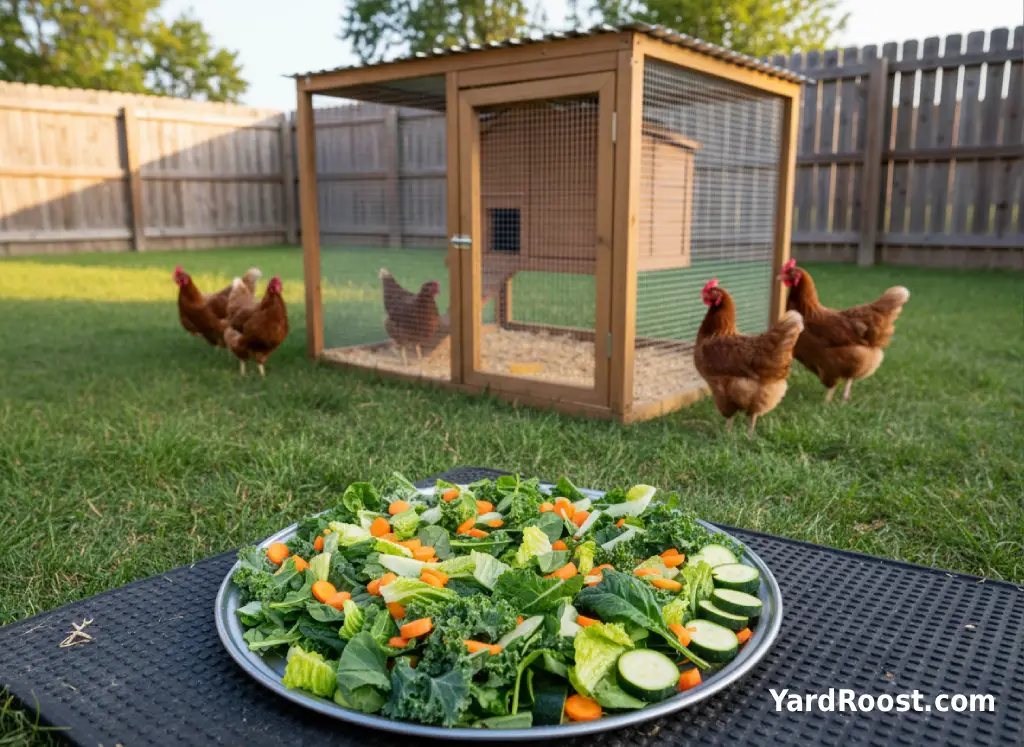
Yes—most backyard chickens can eat bananas, and many flocks consider them a high-value treat. The key word is treat. Bananas are soft, sweet, and easy for chickens to gulp down, which makes it tempting to hand out big chunks “because they love it.” But too many sugary treats can crowd out balanced layer feed and leave you with picky eaters (or watery droppings and a messy run). The sweet spot is using bananas like you’d use scratch: an occasional bonus that doesn’t replace real nutrition.
We’ll cover bananas, banana peels (skins/peelings), banana bread, and the surprisingly common mix-up: “banana peppers” are not bananas at all. We’ll also share a couple of simple prep habits that keep your coop cleaner and your flock safer. YardRoost note: we’re not veterinarians—this is practical, safety-first guidance for small backyard flocks. If your birds seem ill or are declining quickly, an avian vet is the right move.
Can Chickens Eat Bananas?
Bananas are generally fine for chickens when served in moderation. They’re soft (so they’re easy to eat), and they’re a handy way to use up an overripe banana before it turns into fruit flies on your counter.
The bigger issue isn’t “toxicity”—it’s balance. Chickens do best when most of what they eat is a complete feed for their life stage (starter/grower/layer), with treats kept small so they don’t dilute nutrition. A solid rule of thumb used in poultry guidance is to keep scratch (and treat-like extras) to about 10% or less of daily intake.
Two practical ways to keep bananas in the “treat lane”:
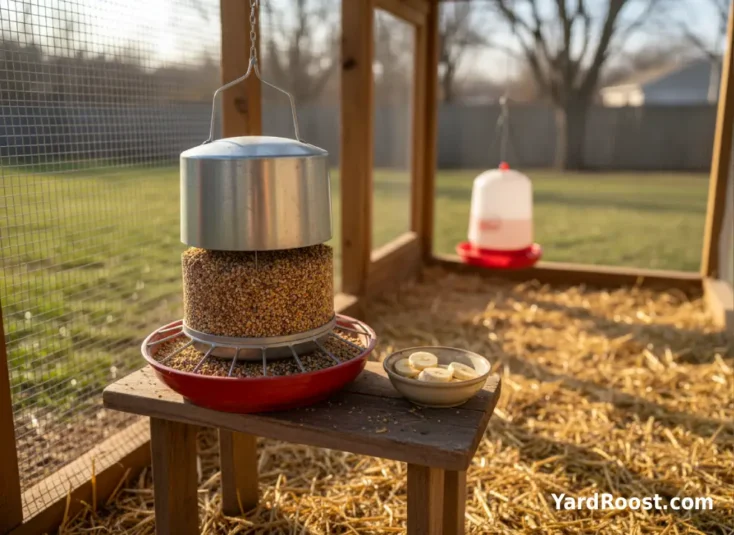
- Offer bananas after your birds have had access to their regular feed for the day, not first thing in the morning.
- If your flock starts ignoring pellets/crumbles and sprinting for the banana, scale the treats back for a week and reset the habit.
How to Serve Bananas Without Making a Mess
Bananas are the definition of “easy treat,” but they can turn into a sticky, trampled mess fast—especially if you toss a whole banana into the run and walk away. The trick is serving them in a way that chickens can finish quickly, without smearing it into bedding.
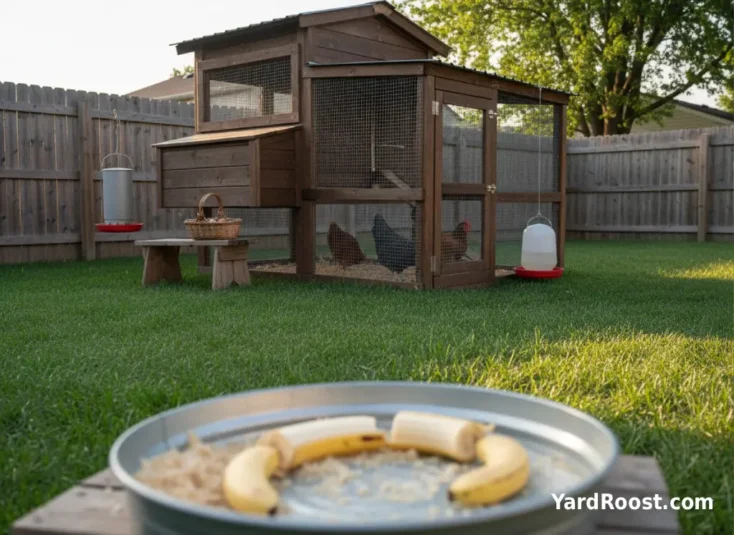
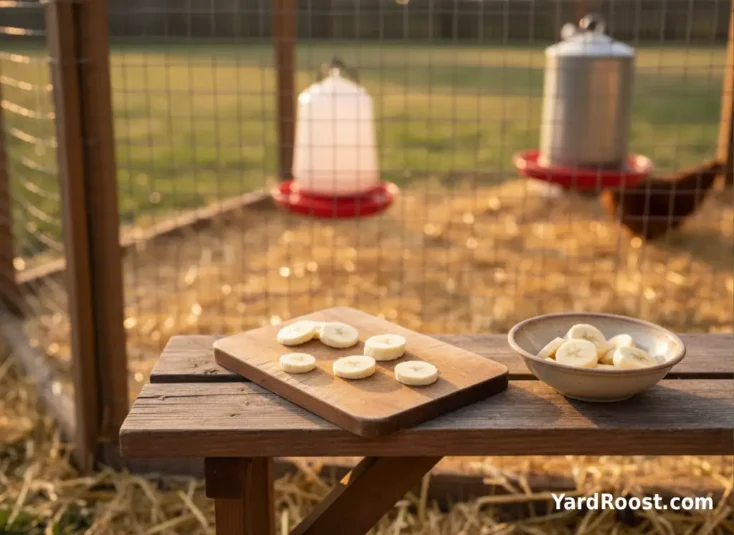
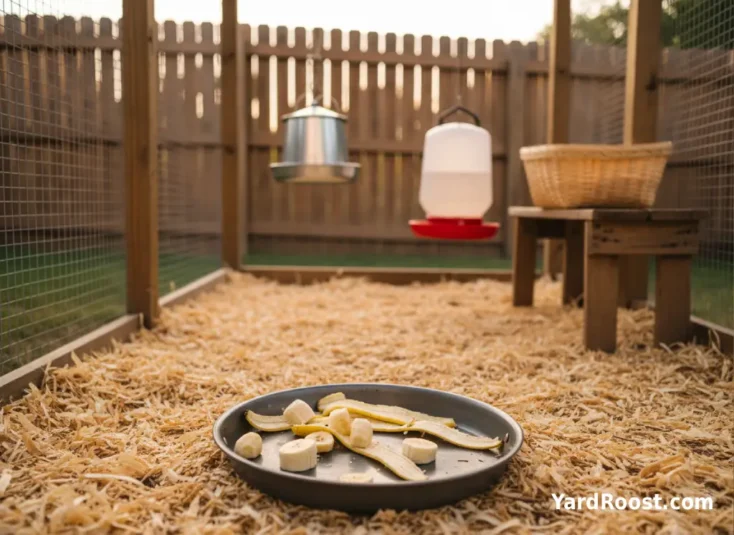
- Cut or mash for fast cleanup: Slice into thin coins or mash and smear a small amount onto a flat dish. If it’s gone quickly, great. If it’s still sitting there later, you offered too much.
- Use the “quick-finish” test: Offer only what the flock will finish in about 20 minutes, then remove leftovers. This mirrors common scratch/treat guidance and helps prevent flies and rodents.
- Keep it off the ground when it’s muddy: Put banana pieces in a low pan or on a flat stone so it doesn’t become banana-mud-paste.
A common mistake we see is turning fruit treats into an all-day buffet. Any soft food left out too long can sour, attract pests, and encourage bullying (a few birds guarding the “banana pile”). Smaller portions plus quick pickup keeps the peace.
Can Chickens Eat Banana Peels, Skins, or Peelings?
Yes—many chickens can eat banana peels (banana skins/peelings), but peels are tougher and less appealing than the fruit itself. If you drop a whole peel into the run, a lot of flocks will ignore it, stomp on it, and turn it into a slippery litter mat.
Make peels “chicken-friendly” with three steps:
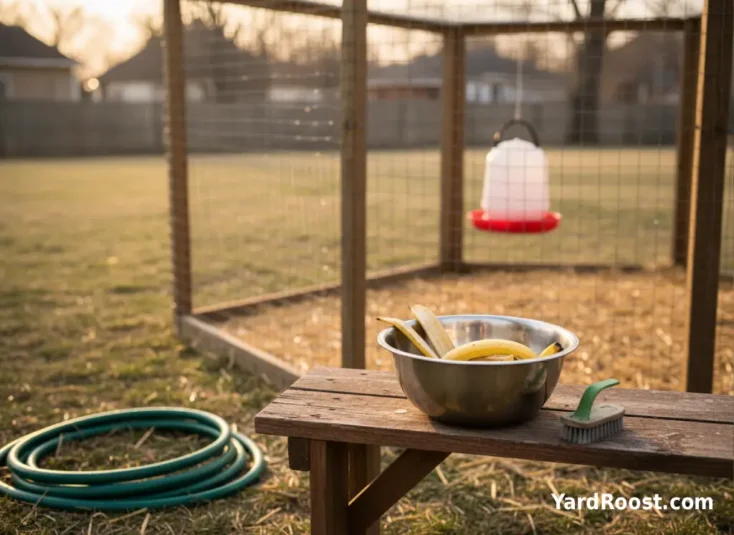
- Wash well: Rinse and scrub the peel to reduce surface residues and dirt (especially if it came from a grocery store display). If you can’t wash it well, skip feeding it.
- Chop small: Cut into thin strips or small squares so birds can grab-and-go instead of tugging on a long peel like a rope toy.
- Offer sparingly: Treat rules still apply—peels are an extra, not a feed replacement. Keeping treat-like extras at about 10% or less helps prevent diluting the balanced diet.
Skip peels that are: moldy, slimy, heavily bruised/black with off smells, or coated in sticky dessert toppings. When in doubt, compost it instead of feeding it.
Bananas and “Banana Peppers” Are Not the Same Thing
Banana peppers are a type of pepper (not a banana), and they’re usually mild—though they can be served fresh, pickled, or cooked.
From a bird biology standpoint, many birds are far less sensitive to the “heat” compound in peppers (capsaicin) than mammals are. That’s why spicy peppers are often used in bird seed blends to deter squirrels.
So can chickens eat banana peppers? Often yes, especially fresh pieces in small amounts—but preparation matters:
If they’re pickled or packed in brine/oil, skip them. Pickled peppers can be very salty and may include additives that don’t belong in chicken treats. If they’re fresh, offer a few small pieces and watch the flock’s droppings the next day; if stools loosen, scale back and keep peppers as a rare extra.
Can Chickens Eat Bananas and Banana Peels Together?
Yes—if you’re offering both fruit and peel, the safest approach is to treat it like one combined snack. Keep the total portion small, serve it in a pan, and pick up leftovers promptly.
One simple habit that helps: separate “fresh treat days” from “clean-up days.” If your run is wet, muddy, or you’re already seeing flies, skip the banana (and other soft foods) until things dry out. Treats should add enjoyment, not create a sanitation project.
Can Chickens Eat Banana Bread?
Banana bread is where we recommend extra caution. Most banana bread recipes are high in added sugar and often include salt, butter/oil, chocolate chips, or nuts. Those ingredients aren’t “poison,” but they’re an easy way to overdo treats fast—and bread products can mold quickly, which is a hard no for chickens.
If you decide to offer banana bread at all: keep it rare, offer only a tiny piece for the flock, and remove anything uneaten quickly. Avoid loaves with chocolate, heavy frosting/glaze, or anything that smells “off.” If the bread is stale, damp, or even slightly moldy, compost it—don’t “let the chickens handle it.”
What Bananas Add (And What They Don’t)
Bananas are mostly a palatable energy treat—great for enrichment, not a nutritional foundation. The main job of a treat is to keep chickens interested and occupied (especially in winter or during a run-bound week), while the complete feed carries the protein, calcium, vitamins, and amino acids that support eggs and feathering.
Scratch grains and other extras can dilute the nutrient density of a complete ration if fed too heavily—meaning your birds may fill up on “fun calories” and eat less of what supports steady laying and overall condition.
If egg shells are getting thinner, your flock looks ragged during molt, or they’re leaving feed behind in favor of treats, that’s your cue to tighten up the snack routine (bananas included) and make sure balanced feed is the easy, always-available option.
Common Mistakes to Avoid
Bananas are simple—until they aren’t. Most problems come from serving size and timing, not the fruit itself.
- Mistake: Offering a whole banana per bird. Fix: Treat it like a flock snack, not a meal—smaller pieces, served in a pan, removed promptly.
- Mistake: Tossing peels in unwashed. Fix: Wash and chop, or skip the peel entirely.
- Mistake: Using banana bread to “use it up.” Fix: Compost questionable baked goods; only offer tiny amounts of plain bread, and only rarely.
- Mistake: Feeding treats first thing. Fix: Make complete feed the “main course,” treats the bonus afterward.
A common mistake we see is assuming “if it’s healthy for humans, it’s always healthy for chickens.” Chickens don’t balance their own diets like we wish they would. Your job is to keep the fun stuff fun—and keep the nutrition boringly consistent.
Clean Treat Habits and Salmonella Safety
Any time food, hands, and birds mix, hygiene matters—especially if kids help with treats. The CDC recommends washing hands with soap and water right after touching backyard poultry, eggs, or anything in their environment.
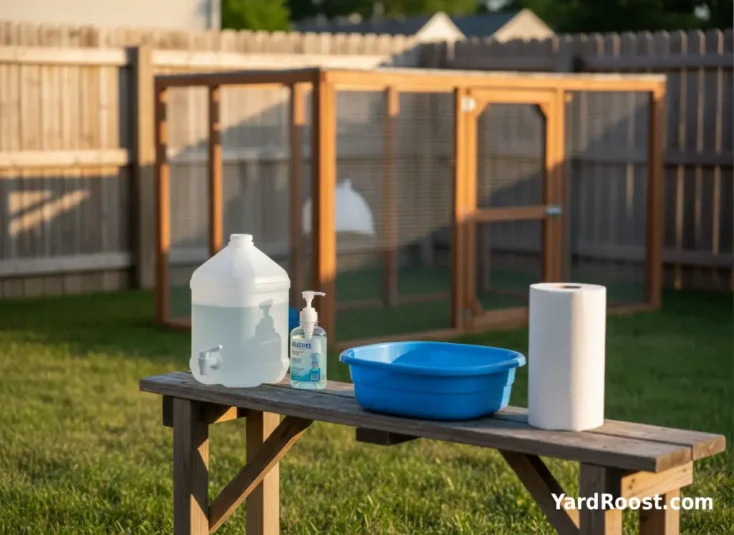
Two coop-side habits that help: Keep hand sanitizer near the coop for quick use (then wash with soap and water when you can), and don’t eat/drink while you’re handing out treats. Also, treat pans should be rinsed and dried—soft fruit residue is basically an invitation for flies.
When to Call an Avian Vet
Most banana-related issues are mild and fixable by simply stopping treats for a day or two and keeping the diet consistent. But it’s smart to know the “don’t wait” signs. Consider calling an avian vet if you see any of the following—especially if multiple birds are affected:
- Marked lethargy, weakness, or staying on the roost during the day
- Persistent watery diarrhea beyond a short, treat-related upset
- Not eating or not drinking
- Blood in droppings, repeated vomiting-like regurgitation, or sudden weight loss
- Worsening symptoms in a chick, elderly hen, or a bird already recovering from stress
Bring details: what was fed (banana, peel, bread, pickled pepper), how much, and when. That timeline helps a professional sort out whether you’re looking at a simple diet upset or something unrelated that needs attention.
Bottom Line: Bananas Are a Great Treat When You Keep Them Small
Chickens can eat bananas, and they can often handle banana peels too—as long as you treat both as occasional extras. Keep the portion small, serve it in a pan, and remove leftovers so you don’t create a sticky pest magnet. If you want to offer peels, wash and chop them so they’re actually edible instead of becoming run décor.
For “banana peppers,” remember they’re peppers, not bananas. Fresh pieces are usually fine in small amounts, but skip pickled/brined versions. For banana bread, think “rare and tiny,” if at all—processed ingredients and mold risk are the main concerns.
If you stick to the simple guardrails—balanced feed first, treats around 10% or less, and good hygiene—you’ll get the fun of treat time without the downside. And if anything about your flock’s behavior or droppings feels off and doesn’t resolve quickly after stopping treats, loop in an avian vet and bring your notes. Your future self (and your coop bedding) will thank you.