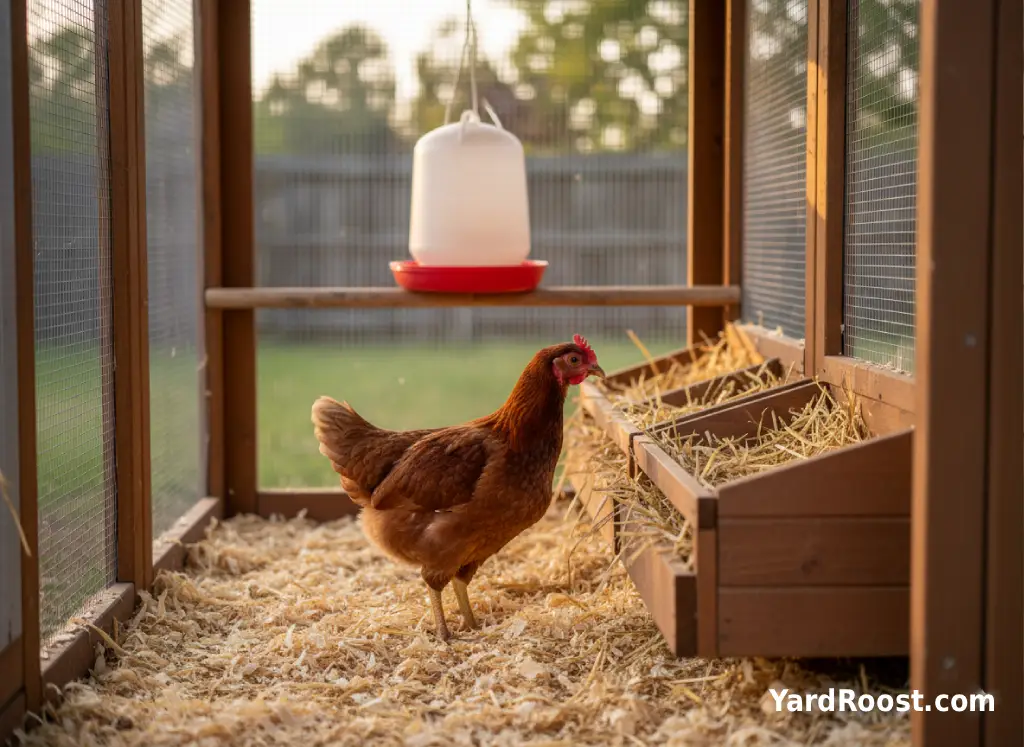
Backyard eggs are a huge perk of keeping chickens, but every keeper eventually discovers a forgotten egg under a bale of straw or in a favorite “secret” nest. That’s when most people reach for the egg float test or “egg test in water” to decide whether the egg is still good. Used correctly, the floating egg test can tell you a lot about age and quality, but it is not a perfect egg freshness test and it cannot guarantee food safety on its own.
This article walks through how to test if eggs are good using water, what should happen when you test an egg in water, and how to back up the float test with safer checks like cracking into a bowl and using your nose and eyes. We’re not veterinarians or food safety inspectors, but we follow guidance from USDA and university extensions to help you handle your eggs safely at home.
What the Egg Float Test Actually Shows
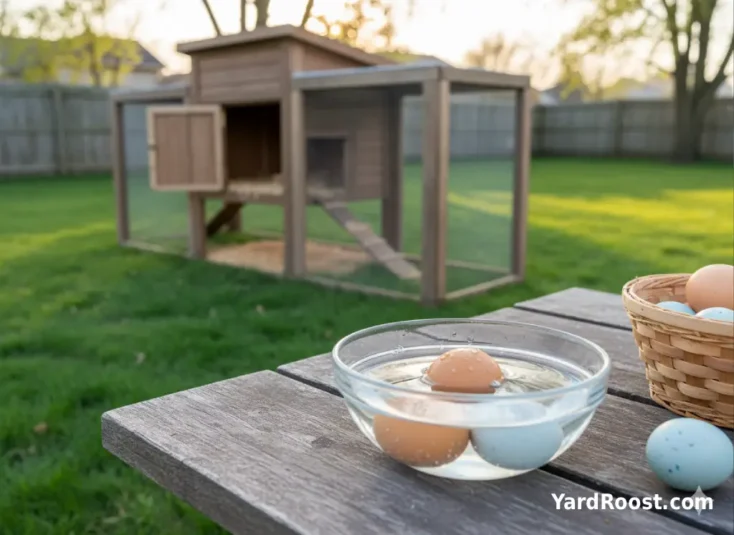
The classic egg float test (or “egg test in water”) looks simple: you place an egg in a bowl of water and see if it sinks or floats. What you’re really testing is the size of the egg’s internal air cell. As an egg ages, moisture and carbon dioxide slowly move out through the shell, and air moves in. That growing air pocket makes the egg more buoyant over time. University and extension sources consistently note that a floating egg is older but not automatically unsafe. Nebraska Extension and other land-grant universities point out that floating eggs are often lower in quality but may still be fine if they smell and look normal once cracked.
It’s important to separate two ideas:
- Freshness/quality: how long the egg has been stored and how well the white and yolk hold together.
- Safety: whether harmful bacteria like Salmonella are present.
The egg water test is mainly about freshness, not safety. An egg can sink and still be contaminated, or float and still be safe to eat. That’s why every float test should be followed by a crack-and-sniff check in a separate bowl before you decide to keep or toss an egg.
How to Do the Egg Float Test Step by Step
If you want to test an egg in water, a careful setup helps you get consistent results and keeps things sanitary. Here’s a simple way to run the egg float test at home:
- Use a clean bowl or deep glass you only use in the kitchen, not one that has been in the coop or run.
- Fill it with cool tap water deep enough that an egg can be fully submerged by at least an inch.
- Start with eggs that are intact, not obviously cracked or heavily soiled. Toss eggs with thin cracks; germs can move through the shell more easily.
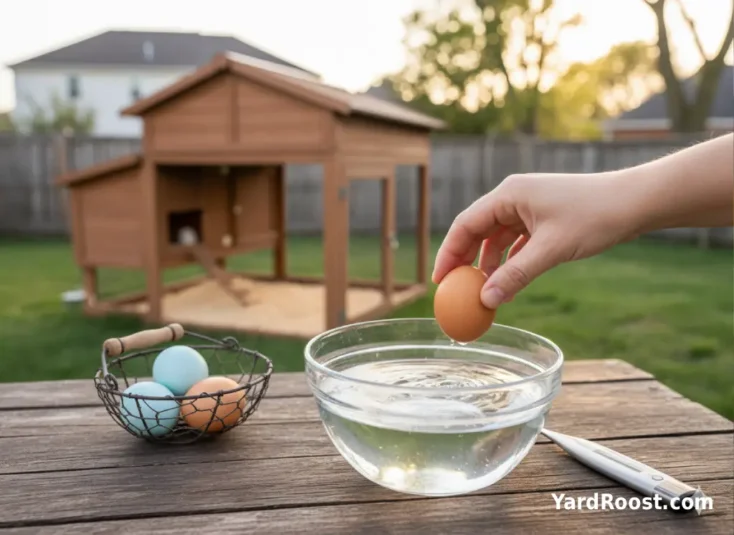
- Gently lower one egg at a time into the water so you don’t crack it against the bowl.
- Let the egg settle and watch what it does without stirring the water.
After the egg has settled, note whether it sinks or floats and how it sits (more on how to read that in the next section). Then, dry the shell with a clean towel and place it in a “test me later” carton in the fridge until you’re ready to crack-and-sniff. If you plan to cook it soon, crack the egg into a small bowl first so one bad egg doesn’t ruin a whole batter or pan of scrambled eggs.
A common mistake we see is using hot or very warm water from the sink. Stick to cool water; sudden temperature changes can stress the shell and membrane and may make the results less consistent.
Should Eggs Float or Sink? Reading the Results
Once you’ve done the egg water test, you’ll see one of a few patterns. Here’s a simple way backyard keepers often interpret what they see:
| What the Egg Does | What It Usually Means | Common Next Step |
|---|---|---|
| Sinks and lies flat | Very fresh egg | Crack into a bowl and use if smell and appearance are normal |
| Sinks but stands on end | Older egg, larger air cell | Good candidate for boiling or baking if it passes crack-and-sniff |
| Floats to the top | Egg is quite old | Crack into a separate bowl; discard if anything looks or smells off |
Extension publications from Alaska, Arizona, and Kansas State all repeat the same basic message: a floating egg is old, but that doesn’t automatically mean it’s spoiled. The safest advice is to treat floaters as “suspect” and crack them into a small bowl, looking for an off-odor, unusual discoloration, or a very runny, separated appearance. If anything looks or smells wrong, discard the egg.
- If you notice a strong sulfur or rotten smell: toss the egg immediately.
- If the white is cloudy but otherwise normal: many sources consider this fine in a fresh egg.
- If the white is pink, green, or iridescent, or the yolk is oddly discolored: discard the egg.
Editorial note: A common mistake we see is treating the floating egg test as a strict “yes/no” egg tester. In reality, it’s more of a rough screening tool. Always let your eyes and nose have the final say.
Limits of the Egg Float Test (And Safer Freshness Checks)
The floating egg test is popular because it’s quick and a little bit fun, but university and USDA-linked resources caution that it’s not a reliable egg safety test. It tells you that the egg has lost moisture and gained air, which points to age, but it doesn’t measure bacteria. An egg can pass the egg float test and still be contaminated, or fail it and still technically be safe to cook if it has been stored correctly and shows no signs of spoilage.
Safer freshness checks to use along with (or instead of) the float test include:
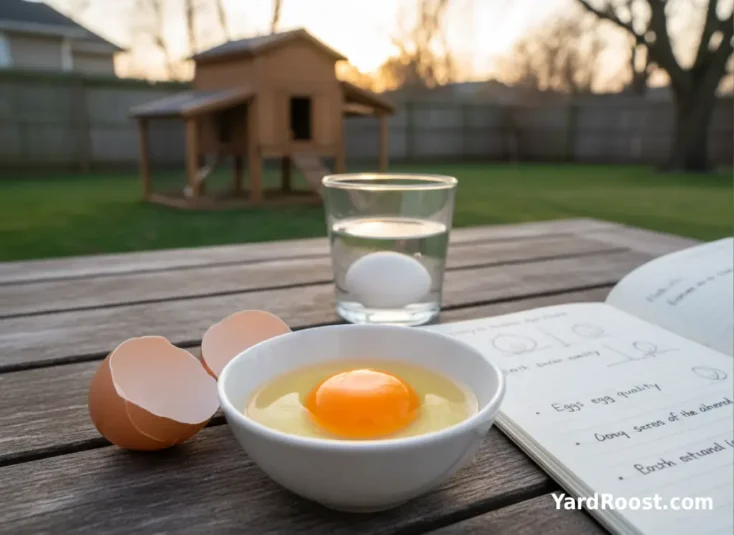
- Crack-and-sniff: Crack each egg into a small bowl before adding it to a recipe. A spoiled egg almost always has a strong, unpleasant odor, either raw or cooked, according to USDA-referenced extension materials.
- Look closely: Check for pink, green, or iridescent egg whites, moldy spots, or a weirdly colored yolk. These are all reasons to throw the egg away.
- Know its age: If you’re collecting daily and refrigerating promptly, you can usually trust the calendar more than the float test for freshness.
For backyard keepers who enjoy gadgets, candling lights can be used to check shell integrity and internal quality in stored eggs, not just hatching eggs, though it takes practice. For most home kitchens, though, you’ll get the best results by combining good storage, crack-and-sniff, and common sense rather than relying on the egg test in water alone.
Storing Backyard Eggs So the Float Test Stays Boring
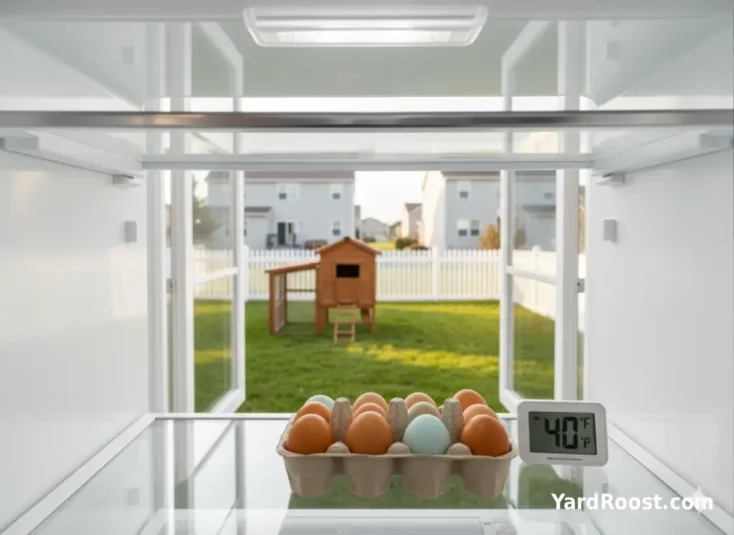
The better you store your eggs, the less you’ll need to worry about elaborate egg testers. USDA food safety guidance recommends keeping eggs refrigerated at 40°F or below and following the general “2-hour rule” for perishable foods: don’t leave them at room temperature for more than 2 hours (1 hour if it’s above 90°F). Extension publications commonly suggest that properly refrigerated shell eggs stay good for about 3–5 weeks for best quality.
Backyard-specific tips:
-
- Collect eggs at least once a day (twice in very hot or very cold weather) to avoid long periods in the “danger zone” between 40°F and 140°F where bacteria grow fastest. If you’re trying to plan your routine, it helps to know what daily egg output typically looks like as hens age and seasons change.
- Keep nest boxes clean and bedded with dry material like pine shavings or straw; Colorado State University Extension notes that clean nests help keep eggs cleaner and reduce breakage.
- Don’t wash eggs with cold water; CDC guidance suggests brushing off dirt with a brush, or a dry cloth instead.
- Store eggs in cartons in the main body of the fridge, not in the door where temperatures fluctuate more.
If you do wash heavily soiled eggs, many extension sources recommend refrigerating them promptly and using them sooner, since washing can remove the natural protective coating on the shell. Exact timelines vary by source, so when in doubt, use washed eggs first and rely on your nose and eyes before cooking.
Common Mistakes to Avoid With the Egg Float Test
The float test for eggs is so simple that it’s easy to cut corners. Here are some pitfalls we see a lot in backyard flocks:
- Using dirty or cracked eggs in the water test. Cracks and heavy dirt make it easier for germs to move through the shell. Toss badly cracked eggs instead of testing them.
- Assuming “floating = rotten.” As several university extensions explain, floating mostly means the egg is old, not automatically spoiled. Always back up the float test with a crack-and-sniff in a separate bowl.
- Skipping refrigeration because “the float test will tell me.” No simple water test can undo hours or days of warm storage if eggs have been left out too long.
- Reusing dirty test water. Change the water if it gets bits of shell, feathers, or dirt in it.
- Testing dozens of eggs then mixing them all together. If one is bad, you won’t know which one caused the smell or contamination.
One pattern we often see is keepers trusting a single “egg tester” too much—whether it’s the egg water test, a gadget, or a rule of thumb. The safest approach is to combine good storage, a reasonable timeline, and your senses.
Quick Safety and Hygiene Tips for Backyard Eggs
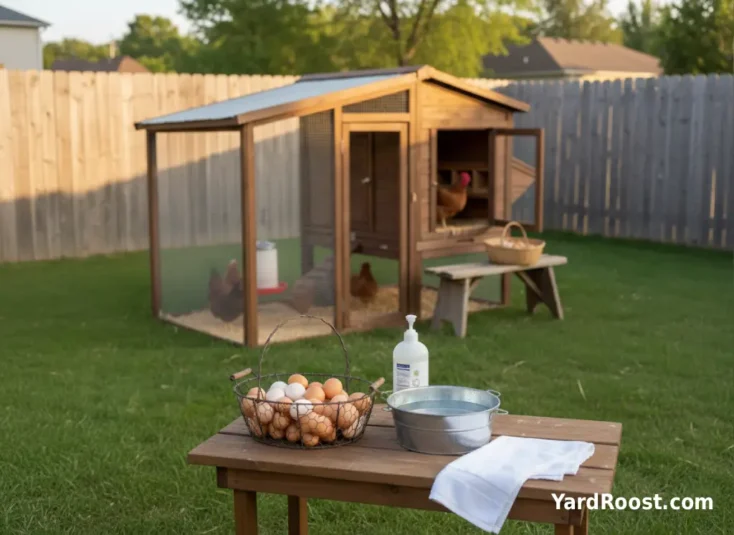
Because eggs can carry Salmonella even when they look and smell fine, safe handling matters just as much as any egg freshness test. The CDC consistently reminds backyard poultry owners to wash hands with soap and water right after handling chickens, their eggs, or anything in the coop or run area.
Simple, flock-friendly habits include:
- Washing your hands for at least 20 seconds after collecting eggs or cleaning nest boxes.
- Keeping a dedicated pair of “coop shoes” that never go inside the house.
- Supervising young children around birds and eggs; they are more likely to become seriously ill from Salmonella.
- Not eating or drinking in the coop or run area.
- Refrigerating eggs promptly and discarding any that are badly cracked or obviously dirty inside once cracked.
If someone in your household is pregnant, very young, very old, or has a weakened immune system, talk with your healthcare provider about extra precautions. When in doubt about an egg, it’s always cheaper to throw it away than to gamble on a foodborne illness.
Bringing It All Together: Using the Egg Float Test Wisely
The egg float test is a handy little trick to have in your backyard chicken toolkit, but it works best as one piece of a bigger egg-safety picture. Floating eggs are usually older thanks to a larger air cell; sinking eggs are usually fresher. Extension and USDA-linked resources agree, though, that the simple “egg test in water” is not a guaranteed safety test. The real power comes from combining good storage (refrigeration at 40°F or below, timely collection, clean nest boxes), a reasonable time window of about 3–5 weeks in the fridge for best quality, and a careful crack-and-sniff each time you cook.
When you find a mystery egg in a hidden nest, think of the floating egg test as a first filter, not a final judge. Use water to get a sense of age, then let your nose, your eyes, and your calendar decide what happens next. With a little practice, you’ll get comfortable reading what your eggs are telling you—and you’ll waste fewer good eggs while staying on the safe side.