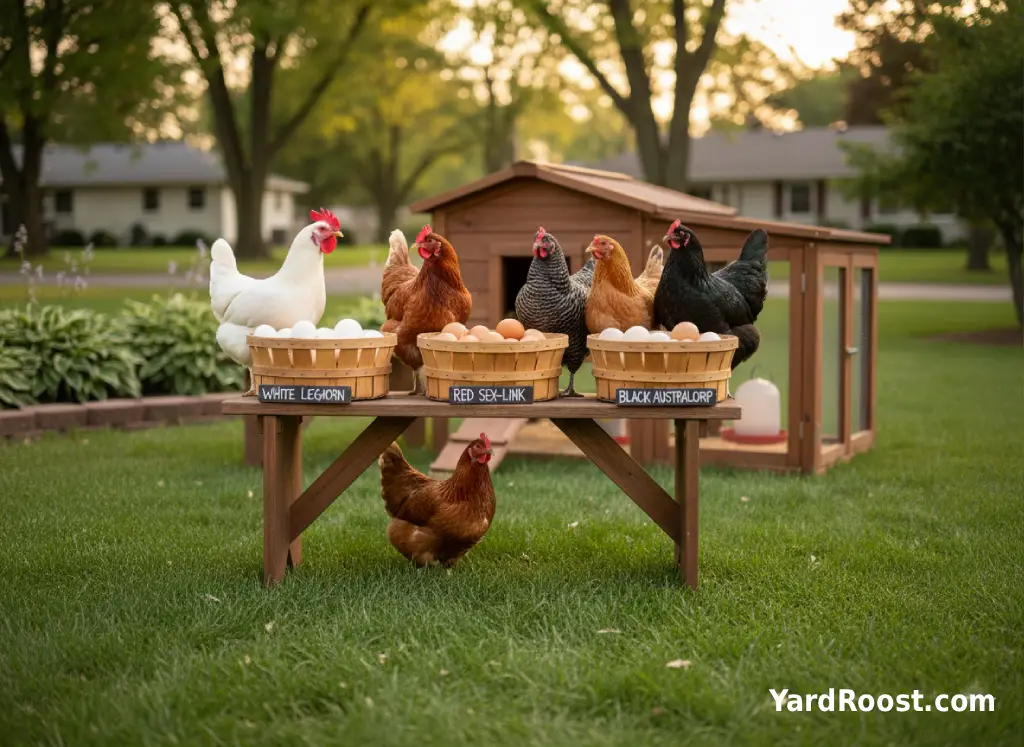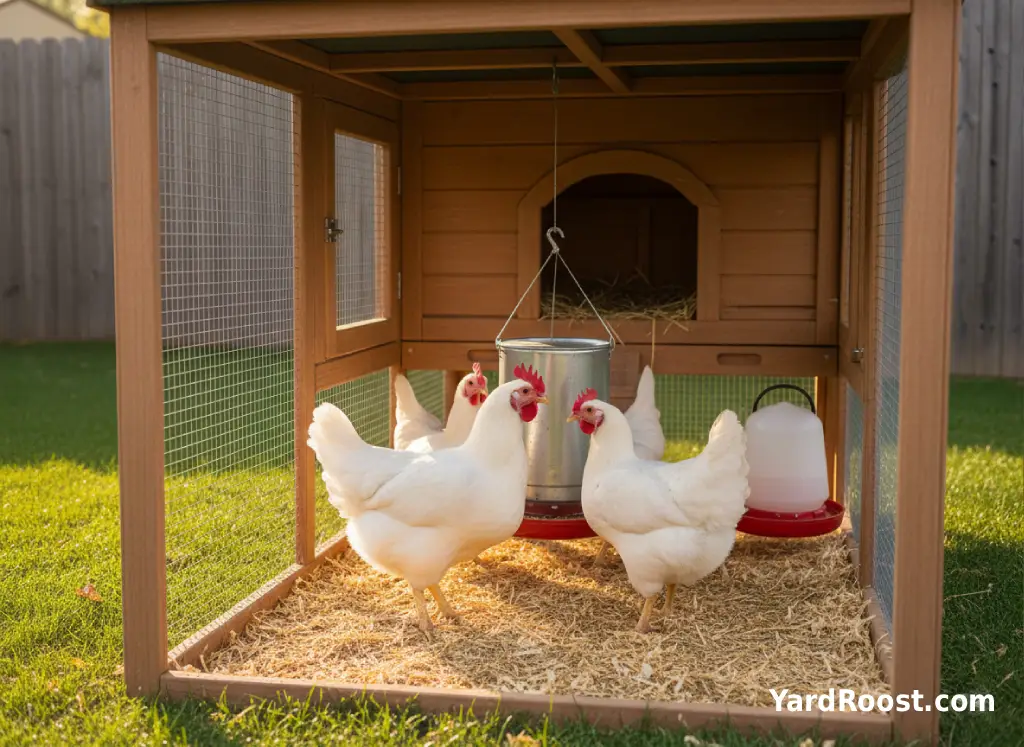
Golden Comet chickens have become a go-to choice for small backyard flocks across the US, especially for families who want steady brown eggs without a lot of drama. These birds are technically hybrids rather than a traditional “breed,” but they combine high egg production, mellow temperaments, and easy sexing at hatch in a way that suits busy, real-life chicken keepers. Under the Golden Comet name you’re usually getting a type of red sex-link layer—bred so that males and females hatch out different colors, which lets hatcheries and buyers sort pullets from cockerels with high accuracy.
Whether you’ve already ordered a batch of Golden Comet chicks, are comparing them to other brown-egg layers, or just keep seeing “red sex link” on hatchery lists, this guide will walk through what these birds are, how they lay, what they’re like to live with, and how to set them up for a healthy, low-stress life in your coop.
What Is A Golden Comet Chicken?
Despite the name, Golden Comets are not a recognized heritage breed. They are a type of red sex-link hybrid, usually created by crossing a red rooster (often New Hampshire or Rhode Island Red–type) with a white or silver female such as White Plymouth Rock. The cross uses a color gene tied to the sex chromosome so that male chicks hatch a different color than female chicks.
This matters for you as a backyard keeper because it means:
- You can order almost all pullets with very few surprise roosters.
- You’re getting birds that were selected for egg production first, looks second.
- If you breed Golden Comets to each other, the chicks will not “breed true” into more Golden Comets.
You’ll also see Golden Comets marketed under names like “Golden Buff,” “Gold Sex Link,” “Red Sex Link,” or “Cinnamon Queen,” depending on the hatchery’s specific cross. The exact parent lines vary, but the end result is similar: a small to medium brown-egg layer that matures early and lays heavily for the first couple of years.
A common mistake we see is people thinking Golden Comets are a rare or exotic heritage breed because of the fancy name. They’re wonderful birds, but plan for them like a commercial-style layer, not a show bird, and expect their heaviest laying to be in their first two seasons.
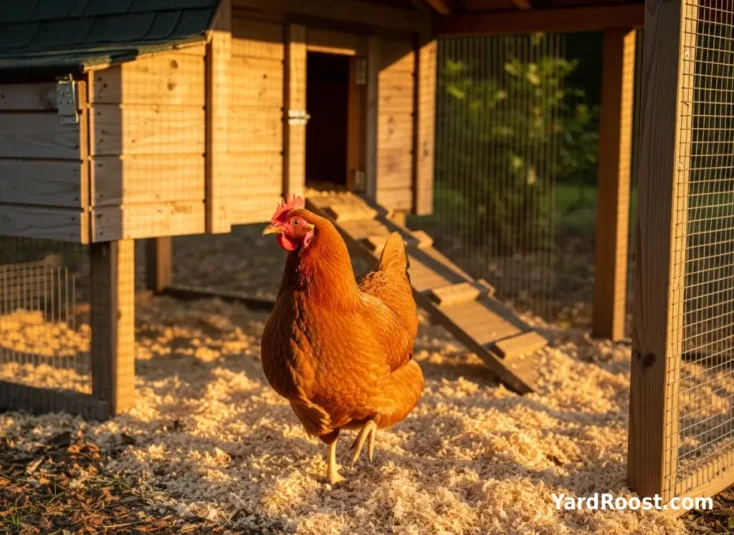
Golden Comet Chickens At A Glance
Here’s a quick overview of what Golden Comets bring to a backyard flock.
| Trait | Typical For Golden Comets* |
|---|---|
| Egg color | Brown shells (light to medium) |
| Egg size | Medium to large |
| Egg production | High; many commercial-type layers are selected for around 280–300 eggs per year in ideal conditions |
| Adult hen weight | Roughly 4 lb (small to medium hybrid layer) |
| Temperament | Generally friendly, curious, people-tolerant |
| Comb type | Single comb (needs winter frostbite protection in very cold areas) |
*Because Golden Comets are hybrids, exact numbers vary by hatchery line and management. Think of these as typical ranges, not fixed promises.
Many extension publications note that brown-egg hybrid layers developed from red breeds (like Rhode Island or New Hampshire lines) are among the top performers for small-scale egg production. If your main goal is reliable eggs and you’re less concerned about looks, Golden Comets fit that “working hen” category very well.
Golden Comet Chicken Eggs: Color, Size, And Production
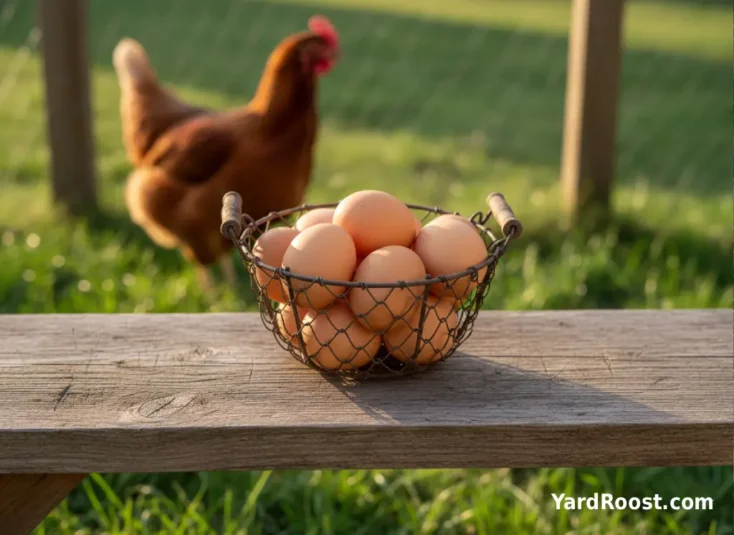
Golden Comets are usually chosen for one big reason: eggs. As red sex-link hybrids, their females lay brown-shelled eggs, similar in color to many classic brown-egg breeds. Shell color is purely cosmetic—extension resources consistently point out that brown eggs are no more nutritious than white eggs; the color comes from pigments in the shell, not from the inside of the egg.
What to expect from Golden Comet laying performance:
- Start of lay: Like many light, egg-type birds, pullets typically begin laying somewhere around 18–22 weeks of age when well grown and properly managed. If you want a clearer timeline of when different breeds start laying, it helps to compare hybrids and heritage breeds side by side.
- Year one and two: Expect very frequent eggs—often 5+ eggs per week in their prime, similar to other commercial-style brown-egg layers.
- After year two: Production usually drops off more sharply than with slower heritage breeds as their reproductive system slows.
If you track eggs closely, you may see shell quality dip slightly during hot weather, during small feed changes, or when hens are just coming into lay. Extension sources for laying flocks emphasize steady, complete layer feed with enough calcium and clean water at all times to support shell quality and hen health.
Practical tip: For backyard flocks, it’s common to keep Golden Comets for their first two or three strong laying years and then introduce a new batch of pullets so you always have some birds in peak production without over-crowding the coop.
Raising Golden Comet Chicks
One of the nice things about Golden Comet chicks is how early you can tell boys from girls. In most red sex-link lines, female chicks hatch a deeper reddish-gold color while males are paler or creamy yellow. Hatcheries rely on this for nearly 100% sexing accuracy, which means you can usually order “pullets only” with confidence.
Once they arrive, care is basically the same as for any layer chicks:
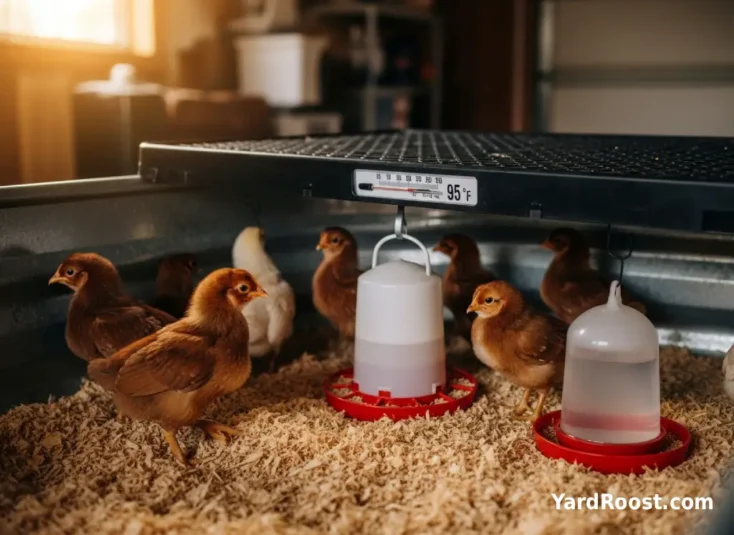
- Heat: Start your brooder at around 90–95°F at chick level for the first week, then lower the temperature by about 5°F each week until they’re fully feathered and comfortable at normal room temps.
- Space: Make sure chicks have enough room to move away from the heat source if they’re too warm; crowding under the lamp or plate can cause piling and stress.
- Feed: Offer a chick starter feed with appropriate protein for the first weeks, keeping it fresh and dry. Many extension guides suggest starter for roughly 6–8 weeks before transitioning to a grower or developer ration.
- Water: Use shallow chick waterers and scrub them daily so litter and droppings don’t build up.
A common mistake we see is keeping the brooder either blazing hot or drafty cold. Watch the chicks: evenly spread and quietly peeping usually means the temperature is right. Huddling tightly under the heat source suggests they’re cold; hugging the edges and panting means too hot.
As Golden Comet chicks grow, they feather quickly and often outpace slower heritage breeds in size and development, which is another clue that you’re dealing with a production-type hybrid rather than a traditional show bird.
Housing And Space Needs For Golden Comets
Golden Comets are hardy, active birds, but they’re not especially large, so they fit well into modest suburban coops. University and extension resources for backyard layers generally recommend:
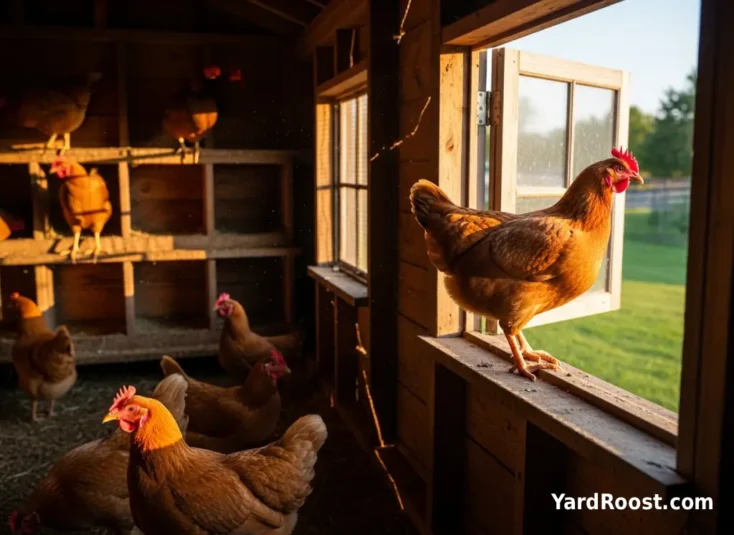
- Indoor coop space: Around 3–4 square feet per laying hen inside the coop for comfort and good air quality.
- Outdoor run space: About 8–10 square feet per bird is a useful target for backyard runs, even though true pasture systems need more.
- Nest boxes: One box for every 4–6 hens, roughly 12×12×12 inches, filled with clean shavings or straw.
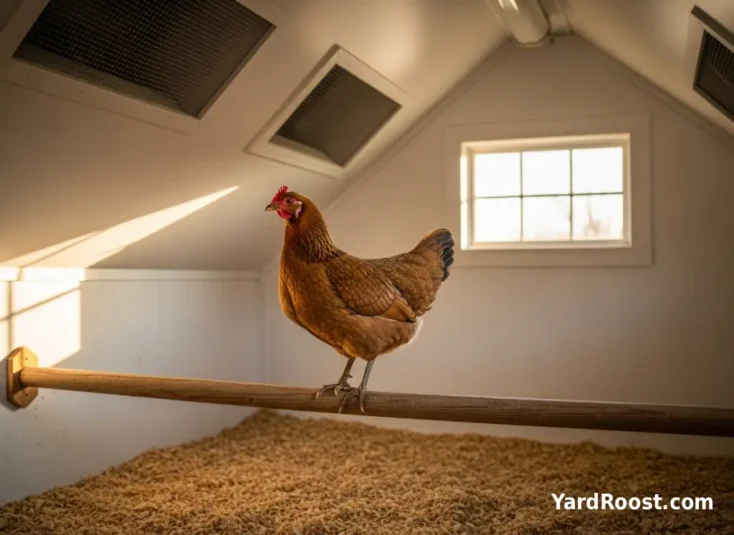
Because Golden Comets are such high producers, good ventilation matters. Make sure your coop has high vents (above roost level) so moisture and ammonia can escape without chilling the birds—especially in winter.
Most Golden Comets handle both heat and cold well if they’re kept dry and out of drafts. In very cold climates, watch their single combs for frostbite risk; simple tricks like closing off direct drafts, using dry bedding, and making sure water doesn’t spill under roosts go a long way.
Temperament, Handling, And Flock Mates
Golden Comets tend to be people-friendly, curious birds that are easy to hand-feed and calm around children, especially if they’re handled gently from chickhood. Many backyard keepers find that these hens are the first to come running when you open the coop door or rattle a treat container.
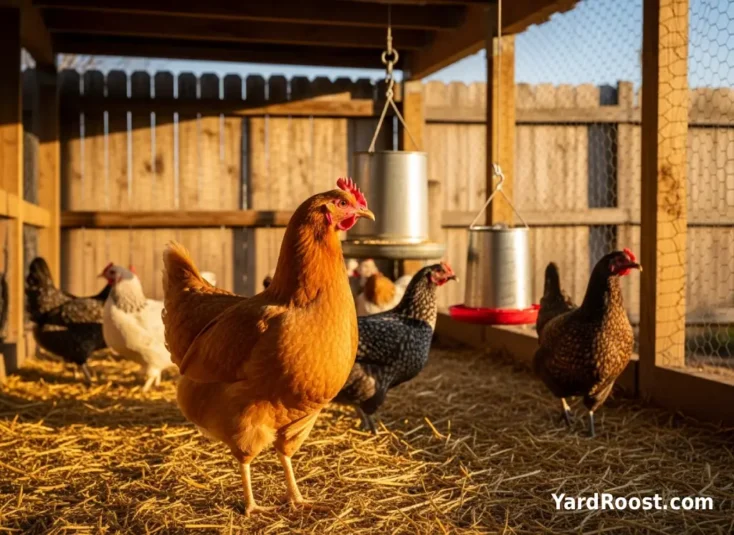
Within the flock, they usually sit somewhere in the middle of the pecking order. They’re assertive enough not to be pushed around by every bird, but not so dominant that they terrorize more timid breeds. They integrate well with other standard-size layers like Australorps, Plymouth Rocks, or Easter Eggers, provided you give enough space and multiple feeders so no single hen can guard all the food.
Because they’re fairly light and active, Golden Comets enjoy a chance to scratch, dust bathe, and roam. If your space or predator situation doesn’t allow full free-range, try to offer at least a modest run plus a few “enrichment” touches like a dust bath area, a log or branch to hop on, or scatter-fed scratch grains on occasion.
When adding Golden Comet pullets to an established flock, use a “see but don’t touch” setup (wire divider in the run) for a week or so and then mix them after dark on the roosts. That usually softens the pecking order drama for everyone involved.
Health, Lifespan, And When To Call An Avian Vet
Like most hybrid layers, Golden Comets are bred for strong early performance rather than extreme longevity. Many live several years in backyard settings, but their most productive laying is typically concentrated in the first two to three seasons. Extension publications note that high-producing hens in general can be more prone to reproductive issues as they age, simply because of how hard they’ve worked.
You can’t prevent every problem, but you can stack the odds in their favor with:
- A complete, age-appropriate feed (starter → grower → layer) rather than a “scratch and scraps” diet.
- Dry, draft-free housing with good ventilation and enough space per bird.
- Basic biosecurity: quarantining new birds, washing hands after handling chickens, and discouraging visitors from walking into your coop area in dirty shoes.
When to call an avian vet or experienced poultry vet clinic:
- A hen is fluffed up, not eating, and isolating from the flock for more than a day.
- Sudden, severe lameness, inability to stand, or repeated falling over.
- Labored breathing, open-mouthed panting in normal temperatures, or gurgling sounds.
- Large drops in egg production from multiple hens, especially if paired with diarrhea or lethargy.
- Unusual swelling, foul-smelling discharge, or significant wounds that you’re not sure how to manage.
None of these signs are specific to Golden Comets; they’re general red flags for any backyard flock. When in doubt, it’s worth calling a poultry-experienced vet or your state veterinary extension office for guidance. For disease-related concerns, organizations like USDA APHIS and state animal health agencies also provide information and may want to know about sudden, unexplained deaths in flocks.
Common Mistakes To Avoid With Golden Comets
Golden Comets are forgiving birds, but a few missteps can make life harder for both you and the flock.
- Thinking they’ll lay heavily forever. Production-type hybrids are sprinters, not marathoners. Plan for a noticeable decline in eggs after the first couple of strong seasons and have a replacement plan instead of being surprised.
- Overcrowding the coop. Because they are smaller hens, it’s easy to think “one more won’t hurt.” Cramming birds into less than about 3 square feet each indoors raises stress, pecking, and odor.
- Feeding mostly scratch grains or kitchen scraps. High-producing hens really do need a balanced ration. Use scratch as a treat, not the main diet.
- Ignoring ventilation. A tightly sealed coop with no high vents can trap ammonia and moisture, which is especially hard on productive layers.
- Not planning for roosters. While sex-linking is very reliable, hatcheries can still make mistakes. Have a plan for what you’ll do if a “pullet” crows at 5 AM one morning.
One pattern we see is folks starting with a full flock of all Golden Comets because the catalog promised “up to 300 eggs a year!” Then, two years later, they feel guilty because all their sweet hens have slowed down at the same time. Mixing in some longer-lived heritage layers from the start can help smooth out the egg curve over time.
Are Golden Comet Chickens Right For Your Backyard Flock?
If your main goal is a dependable basket of brown eggs from friendly, easy-to-manage chickens, Golden Comets deserve a serious look. They slot beautifully into many small suburban flocks: small enough to fit in modest coops, active but not wild, and sociable enough to make daily chores enjoyable instead of stressful.
They’re especially appealing if you:
- Want strong early egg production without a lot of feed waste.
- Prefer brown eggs and don’t care much about fancy feather patterns.
- Appreciate birds that are easy to sex at hatch so you can avoid unwanted roosters.
On the flip side, Golden Comets might not be ideal if you want a breed to show, if you’re focused on long-term multi-year laying at a slower pace, or if you hope to breed your own chicks that look just like their parents. In those cases, consider pairing a few Golden Comets with some true-breed hens that better fit those goals; our comparison pieces at /best-egg-laying-chickens/ can help you narrow that down.
For many backyard keepers, though, adding a small squad of Golden Comet hens is an easy way to turn kitchen scraps and chicken feed into a steady stream of breakfast eggs and cheerful clucking in the yard. Set them up with good housing, a balanced diet, and basic health awareness, and they’ll reward you with exactly what most families want from their flock: lots of eggs, low drama, and a few feathered “buddies” that always seem happy to see you.